

Kirjahaku
Etsi kirjoja tekijän nimen, kirjan nimen tai ISBN:n perusteella.
1000 tulosta hakusanalla Bertram Lesser



The Paths of Glory; a Collection of Poems Written During the war, 1914-1919
Bertram Lloyd
Hutson Street Press
2025
sidottu

The Paths of Glory; a Collection of Poems Written During the war, 1914-1919
Bertram Lloyd
Hutson Street Press
2025
pokkari


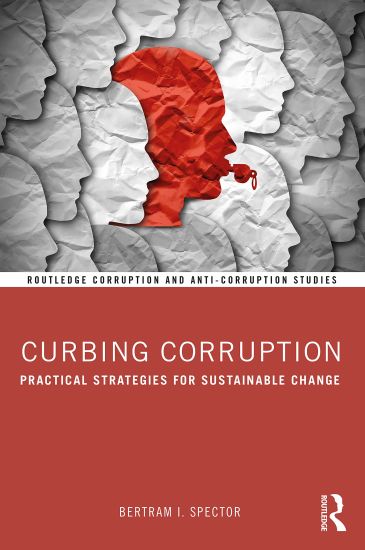
Many anti-corruption efforts have had only a minimal effect on curbing the problem of corruption. This book explains why that is, and shows readers what works in the real world in the fight against corruption, and why. Counter-corruption initiatives often focus on the legal, institutional, and contextual factors that facilitate corrupt behavior, but these have had only nominal impacts, because most of these reforms can be circumvented by government officials, powerful citizens, and business people who are relentless in their quest for self-interest. This book argues that instead, we should target the key individual and group drivers of corrupt behavior and, through them, promote sustainable behavioral change. Drawing on over 25 years of practical experience planning, designing, and implementing anti-corruption programs in over 40 countries, as well as a wealth of insights from social psychological, ethical, and negotiation research, this book identifies innovative tools that target these core human motivators of corruption, with descriptions of pilot tests that show how they can work in practice. Anti-corruption is again becoming a priority issue, prompted by the emergence of more authoritarian regimes, and the public scrutiny of government responses to the COVID-19 pandemic. Straddling theory and practice, this book is the perfect guide to what works and what doesn’t, and will be valuable for policymakers, NGOs, development practitioners, and corruption studies students and researchers.

Many anti-corruption efforts have had only a minimal effect on curbing the problem of corruption. This book explains why that is, and shows readers what works in the real world in the fight against corruption, and why. Counter-corruption initiatives often focus on the legal, institutional, and contextual factors that facilitate corrupt behavior, but these have had only nominal impacts, because most of these reforms can be circumvented by government officials, powerful citizens, and business people who are relentless in their quest for self-interest. This book argues that instead, we should target the key individual and group drivers of corrupt behavior and, through them, promote sustainable behavioral change. Drawing on over 25 years of practical experience planning, designing, and implementing anti-corruption programs in over 40 countries, as well as a wealth of insights from social psychological, ethical, and negotiation research, this book identifies innovative tools that target these core human motivators of corruption, with descriptions of pilot tests that show how they can work in practice. Anti-corruption is again becoming a priority issue, prompted by the emergence of more authoritarian regimes, and the public scrutiny of government responses to the COVID-19 pandemic. Straddling theory and practice, this book is the perfect guide to what works and what doesn’t, and will be valuable for policymakers, NGOs, development practitioners, and corruption studies students and researchers.

This book explores the dynamics of international negotiations from the perspectives of researchers and practical negotiators. Reinforcing the idea that the study of negotiation is not merely an academic endeavor, the essays reflect the author’s lifetime experiences as a negotiation researcher and provider of analytical support to international negotiation teams. Addressing a wide range of critical issues, such as creativity and experimentation, psychological dynamics, avoiding incomplete agreements, engineering the negotiation context, reframing negotiations for development conflicts, understanding what matters when implementing agreements, utilizing decision support systems, engaging new actors, and expanding core values, each chapter opens new doors on our conceptual and practical understanding of international negotiations. The author introduces new ways of understanding and explaining the negotiation process from different intellectual perspectives. The goal of this book is to resolve many critical unanswered questions by stimulating new research on these dynamics and developing new approaches that can help negotiation practitioners be more effective. The book will be used in university courses on international negotiation and conflict resolution, and provide a useful resource for researchers, policymakers, practitioners, NGOs, donor organizations, and grant-giving organizations.

This book explores the dynamics of international negotiations from the perspectives of researchers and practical negotiators. Reinforcing the idea that the study of negotiation is not merely an academic endeavor, the essays reflect the author’s lifetime experiences as a negotiation researcher and provider of analytical support to international negotiation teams. Addressing a wide range of critical issues, such as creativity and experimentation, psychological dynamics, avoiding incomplete agreements, engineering the negotiation context, reframing negotiations for development conflicts, understanding what matters when implementing agreements, utilizing decision support systems, engaging new actors, and expanding core values, each chapter opens new doors on our conceptual and practical understanding of international negotiations. The author introduces new ways of understanding and explaining the negotiation process from different intellectual perspectives. The goal of this book is to resolve many critical unanswered questions by stimulating new research on these dynamics and developing new approaches that can help negotiation practitioners be more effective. The book will be used in university courses on international negotiation and conflict resolution, and provide a useful resource for researchers, policymakers, practitioners, NGOs, donor organizations, and grant-giving organizations.

This book investigates two critical political science domains: international negotiation processes and the establishment of good governance practices, using real-world examples. The author’s observations, analyses, and recommendations provide a unique blend of researcher and practitioner experiences that were implemented in conjunction with government authorities, businesses, the media, and citizen groups in over 40 countries.The book examines negotiation process dynamics from several perspectives: the inclusion of new actors; the impact of psychology, creativity, and values; the significance of post-agreement negotiations; and how negotiations that resolve civil wars need to incorporate explicit good governance provisions. From the governance perspective, the book analyzes the age-old problem of corruption, which is often a major factor responsible for bad governance practices, economic dysfunction, and widespread poverty. It explores the importance of strengthening citizen advocacy for reforms, designing and implementing anti-corruption strategies for fragile states, customizing anti-corruption strategies through targeted risk assessments, and deconstructing the negotiation give-and-take in corrupt transactions to reduce their impact. Each chapter incorporates the author’s practitioner experiences with his research contributions, along with examples of events he experienced when implementing programs around the world.This unique volume will be used in university courses on international negotiation, conflict resolution, governance practices, international development, and comparative politics, as well as providing a useful resource for researchers, policymakers, practitioners, NGOs, donor organizations, and grant-giving organizations.
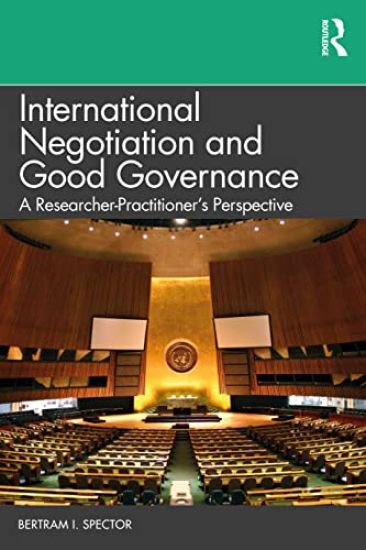
This book investigates two critical political science domains: international negotiation processes and the establishment of good governance practices, using real-world examples. The author’s observations, analyses, and recommendations provide a unique blend of researcher and practitioner experiences that were implemented in conjunction with government authorities, businesses, the media, and citizen groups in over 40 countries.The book examines negotiation process dynamics from several perspectives: the inclusion of new actors; the impact of psychology, creativity, and values; the significance of post-agreement negotiations; and how negotiations that resolve civil wars need to incorporate explicit good governance provisions. From the governance perspective, the book analyzes the age-old problem of corruption, which is often a major factor responsible for bad governance practices, economic dysfunction, and widespread poverty. It explores the importance of strengthening citizen advocacy for reforms, designing and implementing anti-corruption strategies for fragile states, customizing anti-corruption strategies through targeted risk assessments, and deconstructing the negotiation give-and-take in corrupt transactions to reduce their impact. Each chapter incorporates the author’s practitioner experiences with his research contributions, along with examples of events he experienced when implementing programs around the world.This unique volume will be used in university courses on international negotiation, conflict resolution, governance practices, international development, and comparative politics, as well as providing a useful resource for researchers, policymakers, practitioners, NGOs, donor organizations, and grant-giving organizations.

This book provides a comprehensive introduction to the international negotiation system – its key elements and processes, what major issues and challenges it faces today, and its impacts on international relations. As a major catalyst of global dynamics, negotiation can resolve conflicts and promote cooperation peacefully. It is important to understand how it works.First, the book analyzes the principal factors that interact to move the negotiation system forward – the issues and context, actors, structures, strategies, and outcomes. Then, this book considers four basic subprocesses of international negotiation – getting to the table, conducting negotiations, developing implementation plans as part of the negotiation, and continuing negotiations in the post-agreement period. Relevant research is presented in each chapter to elaborate on these dynamics and offer case studies of negotiations addressing intrastate conflict, the environment, terrorism, anticorruption and good governance, and post-agreement issues. In addition, the book examines major conflictual conundrums currently facing the world in the Middle East and Ukraine to explore opportunities for negotiated solutions.This book provides a solid mix of theory, research, and real-world cases that offers readers a comprehensive appreciation of the field and how it is put to use on a practical level. It will serve as an excellent basic text for university classes in international relations, peace studies, conflict resolution, and international negotiation.
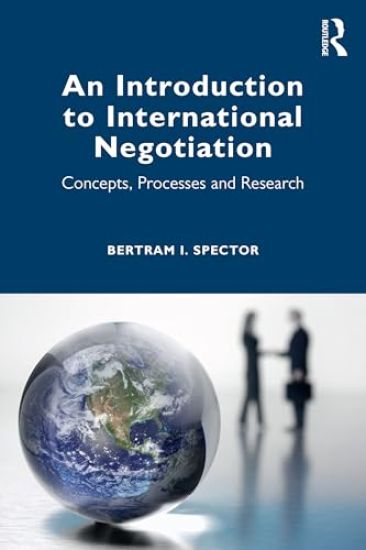
This book provides a comprehensive introduction to the international negotiation system – its key elements and processes, what major issues and challenges it faces today, and its impacts on international relations. As a major catalyst of global dynamics, negotiation can resolve conflicts and promote cooperation peacefully. It is important to understand how it works.First, the book analyzes the principal factors that interact to move the negotiation system forward – the issues and context, actors, structures, strategies, and outcomes. Then, this book considers four basic subprocesses of international negotiation – getting to the table, conducting negotiations, developing implementation plans as part of the negotiation, and continuing negotiations in the post-agreement period. Relevant research is presented in each chapter to elaborate on these dynamics and offer case studies of negotiations addressing intrastate conflict, the environment, terrorism, anticorruption and good governance, and post-agreement issues. In addition, the book examines major conflictual conundrums currently facing the world in the Middle East and Ukraine to explore opportunities for negotiated solutions.This book provides a solid mix of theory, research, and real-world cases that offers readers a comprehensive appreciation of the field and how it is put to use on a practical level. It will serve as an excellent basic text for university classes in international relations, peace studies, conflict resolution, and international negotiation.


Sporting Trips Of A Subaltern (1906)
Bertram Robert Mitford Glossop
KESSINGER PUBLISHING, LLC
2009
pokkari

How To Collect Postage Stamps (1907)
Bertram Tapscott Knight Smith
KESSINGER PUBLISHING, LLC
2009
nidottu


Applied Probabilistic Calculus for Financial Engineering
Bertram K. C. Chan
Wiley-Blackwell
2017
sidottu
Illustrates how R may be used successfully to solve problems in quantitative finance Applied Probabilistic Calculus for Financial Engineering: An Introduction Using R provides R recipes for asset allocation and portfolio optimization problems. It begins by introducing all the necessary probabilistic and statistical foundations, before moving on to topics related to asset allocation and portfolio optimization with R codes illustrated for various examples. This clear and concise book covers financial engineering, using R in data analysis, and univariate, bivariate, and multivariate data analysis. It examines probabilistic calculus for modeling financial engineering—walking the reader through building an effective financial model from the Geometric Brownian Motion (GBM) Model via probabilistic calculus, while also covering Ito Calculus. Classical mathematical models in financial engineering and modern portfolio theory are discussed—along with the Two Mutual Fund Theorem and The Sharpe Ratio. The book also looks at R as a calculator and using R in data analysis in financial engineering. Additionally, it covers asset allocation using R, financial risk modeling and portfolio optimization using R, global and local optimal values, locating functional maxima and minima, and portfolio optimization by performance analytics in CRAN. Covers optimization methodologies in probabilistic calculus for financial engineeringAnswers the question: What does a "Random Walk" Financial Theory look like?Covers the GBM Model and the Random Walk ModelExamines modern theories of portfolio optimization, including The Markowitz Model of Modern Portfolio Theory (MPT), The Black-Litterman Model, and The Black-Scholes Option Pricing Model Applied Probabilistic Calculus for Financial Engineering: An Introduction Using R s an ideal reference for professionals and students in economics, econometrics, and finance, as well as for financial investment quants and financial engineers.