Kirjojen hintavertailu. Mukana 12 083 983 kirjaa ja 12 kauppaa.

Kirjahaku

Etsi kirjoja tekijän nimen, kirjan nimen tai ISBN:n perusteella.

1000 tulosta hakusanalla Brian D. Meeks

The Canadian in America: Real-Life Tax and Financial Insights Into Moving and Living in the U.S.
?Approximately 50,000 Canadians move to the U.S. every year. Already, there are hundreds of thousands of ex-Canadians living south of the border. The similarity in language, currency, culture, services, and products of these two countries can lead Canadians in the U.S. to mistakenly think that its laws and customs are also the same. It is these areas where The Canadian in America will be crucial to anyone either contemplating a move or already living in the U.S. Can a Canadian qualify for U.S. Medicare at age 65? Is a Canadian will valid in the U.S.? What coverage does your provincial health plan give you in the U.S.? Can you collect Canadian Old Age Security if you move to the U.S.? The Canadian in America answers all these questions and more, focusing on the areas of difference between Canadian and U.S. laws: taxation, investment, health care, wills, and estates. It covers eight areas of financial planning: immigration planning, customs planning, cash management, income tax planning, retirement, estate planning, risk management, and investments. Author and financial advisor Brian D. Wruk explains, in clear and simple language, ways in which one can avoid cross-border complications. For example, in moving across the border, you must contend with the Canadian tax code, the U.S. tax code, and the Canada/U.S. Tax Treaty which overrides the other two in certain areas. A simple move can result in a huge tax liability (sometimes double or triple taxation). This book is an invaluable resource for Canadians who have married U.S. citizens; moved for their employment; are professional athletes or entertainers; are simply seeking a warmer climate to retire to; or are U.S. citizens moving back home from Canada.

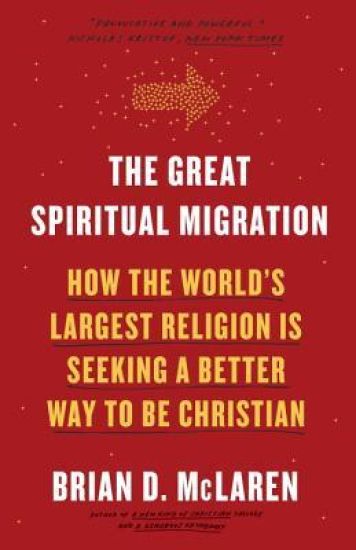
The Great Spiritual Migration: How the World's Largest Religion Is Seeking a Better Way to Be Christian
The Christian story, from Genesis until now, is fundamentally about people on the move--outgrowing old, broken religious systems and embracing new, more redemptive ways of life. It's time to move again. Brian McLaren, a leading voice in contemporary religion, argues that-- notwithstanding the dire headlines about the demise of faith and drop in church attendance--Christian faith is not dying. Rather, it is embarking on a once-in-an-era spiritual shift. For millions, the journey has already begun. Drawing from his work as global activist, pastor, and public theologian, McLaren challenges readers to stop worrying, waiting, and indulging in nostalgia, and instead, to embrace the powerful new understandings that are reshaping the church. In The Great Spiritual Migration, he explores three profound shifts that define the change: ∙ Spiritually, growing numbers of Christians are moving away from defining themselves by lists of beliefs and toward a way of life defined by love∙ Theologically, believers are increasingly rejecting the image of God as a violent Supreme Being and embracing the image of God as the renewing Spirit at work in our world for the common good ∙ Missionally, the faithful are identifying less with organized religion and more with organizing religion--spiritual activists dedicated to healing the planet, building peace, overcoming poverty and injustice, and collaborating with other faiths to ensure a better future for all of us With his trademark brilliance and compassion, McLaren invites readers to seize the moment and set out on the most significant spiritual pilgrimage of our time: to help Christianity become more Christian.
We Fight for Peace

We Fight for Peace

Brian D. McKnight

Kent State University Press
2014
sidottu
At midnight on January 24, 1954, the last step was taken in the armistice to end the war in Korea. That night, the neutral Indian guards who had overseen the prisoner of war repatriation process abandoned their posts, leaving their charges to make their own decisions. The vast majority of men allowed to choose a new nation were Chinese and North Koreans who elected the path of freedom. There were smaller groups hoping that the communist bloc would give them a better life; among these men were twenty-one American soldiers and prisoners of war. “We Fight for Peace” tells their story.During the four months prior to the armistice, news had spread throughout the United States and the world that a group of twenty-three Americans was refusing repatriation. In the interim, two of the twenty-three soldiers had escaped. Once back behind American lines, the first voluntary repatriate, Edward Dickenson, was given celebrity treatment with the hope that this positive experience would entice the others to return to the United States. Just one more American POW, Claude Batchelor,chose repatriation.In the United States, Dickenson, who was being treated at Walter Reed Medical Center, was placed under arrest and charged with a variety of collaboration related crimes. Weeks later, Batchelor was similarly arrested. Over the course of the coming months, Dickenson and Batchelor, against the backdrop of Joseph McCarthy’s Army Hearings, were prosecuted, convicted, and imprisoned. In the ensuing years, Dickenson and Batchelor, both of whom had voluntarily returned to the United States, watched from their jail cells as most of the remaining twenty-one Americans trickled back home, protected by the dishonorable discharges they received. Exhaustively researched and meticulously documented, “We Fight for Peace” is the first comprehensive scholarly work on this controversial event in international history.
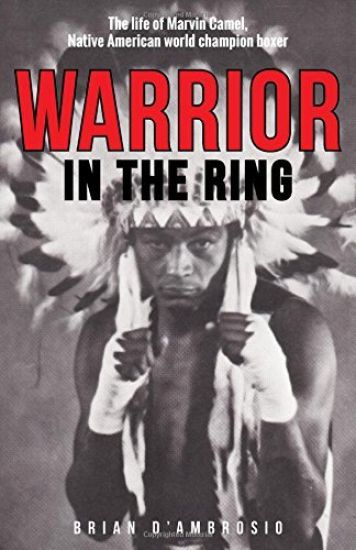
Warrior in the Ring

Warrior in the Ring

Brian D'Ambrosio

Riverbend Publishing
2014
nidottu
In the Golden Age of boxing, Marvin Camel--a mixed blood from the Flathead Indian Reservation in Montana--defied all obstacles of race, poverty, and geographical isolation to become the first Native American to win a world boxing title. Complex and wildly charismatic, Camel combined tremendous physical talent with staggering self-discipline--forged by the sting of his father's belt--to claw his way to the top, twice winning world titles in the newly minted cruiserweight division and fighting on the same cards as boxing icons Roberto Duran, Larry Holmes, Sugar Ray Leonard, and Bob Foster. Camel's journey was an amazing example of gritty determination: punishing runs on Montana's back roads, relentless training in make-shift gyms, sleeping in beat-up cars before fights in glittering Las Vegas, and even training and fighting for a world championship in a foreign country, alone. Always, Camel willingly represented his state and his people, proudly wearing his eagle-feather headdress into the ring. Yet with success came sacrifice and pain, both physical and personal, but in life as in the boxing ring, Camel emerged bloody but unbowed. With irresistible detail gleaned from years of frank interviews with Camel, his family and friends, his former opponents, and seasoned boxing insiders, Brian D'Ambrosio's gripping biography captures the drama, danger, beauty, and ugliness of boxing, of Indian life on reservations, and especially, of the life of a stereotype-shattering man who inspired his people and boxing fans everywhere with his courage, achievements, and great warrior heart.
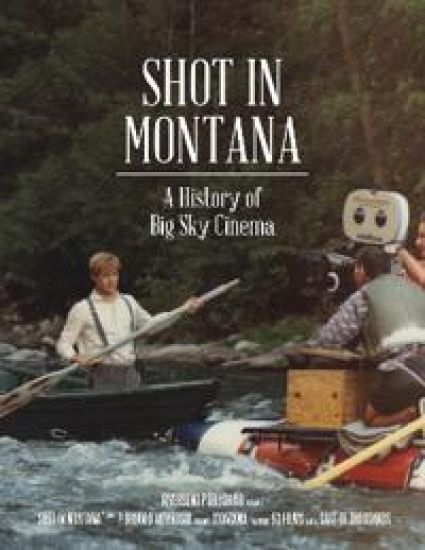
Shot in Montana

Shot in Montana

Brian D'Ambrosio

Riverbend Publishing
2016
nidottu
For nearly a century, movies have been made in Montana. The state played itself in Cattle Queen of Montana, Thunderbolt and Lightfoot, Winter in the Blood, and the iconic A River Runs Through It, and it doubled for an Arctic ice pack in Firefox, Nebraska in Nebraska, the authentic Old West in Heaven's Gate, and even heaven in What Dreams May Come. Montana's Kootenai River swallowed up Academy Award-winning actress Meryl Streep in The River Wild, a stunt double for Leonardo DiCaprio tumbled down Kootenai Falls in The Revenant, and Forrest Gump ran through Glacier National Park. The city of Butte played itself in Evel Knievel, substituted for San Francisco's Chinatown in Thousand Pieces of Gold, and hosted a zombie apocalypse in Dead 7. Charles Bronson's Telefon blew up a school in Great Falls, Jack Nicholson and Marlon Brando battled in the badlands of The Missouri Breaks, and Far and Away's Oklahoma land rush with Tom Cruise and Nicole Kidman actually thundered across Montana prairie. From megahits with the biggest Hollywood stars to acclaimed independent films and forgettable flops, nearly a hundred movies have been made, in whole or in part, in Montana, and for the first time this treasure trove of filmmaking has been thoroughly researched and documented. Montana author Brian D'Ambrosio (Warrior in the Ring) describes every movie, including the actors, directors, and shooting locations, and reveals fascinating stories and incidents that took place behind the cameras. Featuring 120 photos and interviews with actors and filmmakers, Shot in Montana is a blockbuster adventure through the Treasure State's cinematic history.
Bearings

Bearings

Brian D McLaren

Wipf Stock Publishers
2012
pokkari
Synopsis: How does Jesus, and the ancient Scriptures he held sacred, help us get our bearings in this multifarious, complicated, conflicted, and increasingly endangered planet? First, seek theological insight that can guide our practice. In "Navigating the Meanings of Being a Christian," Mark Deleaney invites us on his journey of theological reflection twenty years after his certainties were shaken by a life-changing encounter in an Indian slum. In "Evangelism in a Pluralist Society," Ross Farley applies his experience of evangelism in sensitive contexts to a careful review of evangelism in the New Testament and finds that what we call evangelism bears little relationship to the Gospel and Acts. On the subject of HIV epidemics, Greg Manning and Dave Andrews have joined the struggle to reduce HIV infection rates and witnessed the stigmatization of vulnerable people based on misapplied Christian moral teaching. In "Supporting HIV Prevention as People of Faith," they consider the Sermon on the Mount as a valuable framework for dealing sensitively and effectively with people vulnerable to HIV infection. Second, critically reflect on possible distortions that come from our own perspectives. In his essay "Liberation Theologians Speak to Evangelicals," Charles Ringma shows how Liberation Theologians can shed light on the inadequacies of the evangelical movement in its perspective on God's love for the poor. Helen Beazley's essay "Antidote for a Poisoned Planet?" examines whether stewardship--the dominant framework informing evangelical perspectives on the environment--can alone radically reorient Christians in their relationship to creation so necessary for its renewal. Third, look for the challenges in the Bible that critique our current orientations and call us to be reconverted. In "An Evangelical Approach to Interfaith Engagement," Dave Andrews takes one of our most precious articles of exclusive faith, "Jesus is the Way," and makes it a framework for inclusive interfaith dialogue by exploring the "Way" that Jesus in the Gospels advocated engaging with people from other traditions and religions. In "Australia--Whose Land?" Peter Adams allows himself to be utterly transformed by the Bible's clear ethical teaching, which, he convincingly argues, must be applied in all its fullness to the injustice of Europeans towards indigenous Australians. Author Biography: Dave Andrews is an Australian Christian anarchist author, speaker, social activist, and community worker who, along with his wife, Ange, and their family have lived and worked in intentional communities with marginalized groups of people in Australia, Afghanistan, Pakistan and India for over forty years. Along with friends, Dave and Ange started Aashiana, Sahara, and Sharan--three Christian community organizations working with slum dwellers, sex workers, and people with HIV/AIDS in India. He is also a part of Waiters Union, an inner-city Christian community network working with Indigenous Australians, refugees and people with disabilities in Australia. Dave is also an Elder for Servants to Asia's Urban Poor, an educator for TEAR Australia, a Christian international aid and development agency, and a lecturer at the University of Queensland and Christian Heritage College.
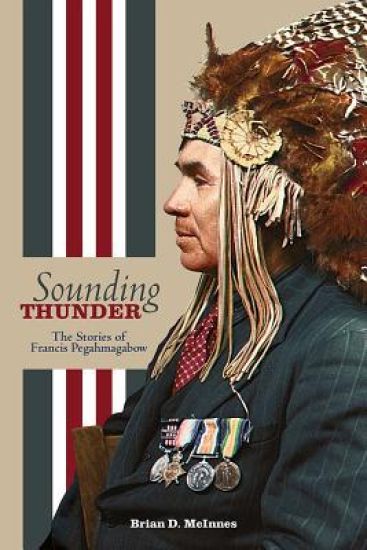
Sounding Thunder

Sounding Thunder

Brian D. McInnes

Michigan State University Press
2016
nidottu
Francis Pegahmagabow (1889–1952), an Ojibwe of the Caribou clan, was born in Shawanaga First Nation, Ontario. Enlisting at the onset of the First World War, he served overseas as a scout and sniper and became Canada’s most decorated Indigenous soldier. After the war, Pegahmagabow settled in Wasauksing First Nation, Ontario, where he married and raised six children. He served his community as both Chief and Councillor and was a founding member of the Brotherhood of Canadian Indians, the first national Indigenous political organization. In 1949 and 1950, he was elected the Supreme Chief of the National Indian Government. Francis Pegahmagabow’s stories describe many parts of his life and are characterized by classic Ojibwe narrative. They reveal aspects of Francis’s Anishinaabe life and worldview. Interceding chapters by Brian McInnes provide valuable cultural, spiritual, linguistic, and historical insights that give a greater context and application for Francis’s words and world. Presented in their original Ojibwe as well as in English translation, the stories also reveal a rich and evocative relationship to the lands and waters of Georgian Bay. In Sounding Thunder, Brian McInnes provides a new perspective on Pegahmagabow and his experience through a unique synthesis of Ojibwe oral history, historical record, and Pegahmagabow family stories.
Enteric Glia

Enteric Glia

Brian D. Gulbransen

Morgan Claypool Publishers
2014
nidottu
The enteric nervous system (ENS) is a complex neural network embedded in the gut wall that orchestrates the reflex behaviors of the intestine. The ENS is often referred to as the “little brain” in the gut because the ENS is more similar in size, complexity and autonomy to the central nervous system (CNS) than other components of the autonomic nervous system. Like the brain, the ENS is composed of neurons that are surrounded by glial cells. Enteric glia are a unique type of peripheral glia that are similar to astrocytes of the CNS. Yet enteric glial cells also differ from astrocytes in many important ways. The roles of enteric glial cell populations in the gut are beginning to come to light and recent evidence implicates enteric glia in almost every aspect of gastrointestinal physiology and pathophysiology. However, elucidating the exact mechanisms by which enteric glia influence gastrointestinal physiology and identifying how those roles are altered during gastrointestinal pathophysiology remain areas of intense research. The purpose of this e-book is to provide an introduction to enteric glial cells and to act as a resource for ongoing studies on this fascinating population of glia.
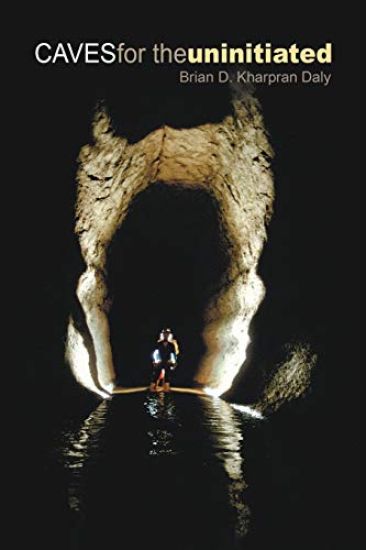
Caves for the Uninitiated

Caves for the Uninitiated

Brian D Kharpran Daly

Strategic Book Publishing Rights Agency, LLC
2013
pokkari
Caves for the Uninitiated is the story of a group of young people, who after exploring a cave for the first time, become fascinated with the world of caves and caving. Inspired and awed by the beauty and splendor of this mysterious underground realm, this group of young fledgling cavers goes on to spend several days with a pair of veteran caving experts. The seasoned experts share their own knowledge of caves; cave conservation and caving as a sport with the young people. At the end of this brief period of instruction, several of the boys and girls decide to take up caving themselves. While it is delivered as a charming work of fiction, Caves for the Uninitiated also contains valuable, real-world information about caves and cave sciences. It was based upon the actual experiences of Author Brian D. Kharpran Daly, who has been exploring caves in his native Meghalaya for over 20 years, and knows this underground world intimately. Brian D. Kharpran Daly was born in Shillong, the capitol of Meghalaya, a small Indian state. A former economic investigator and CEO of the Shillong Co-operative Urban Bank Ltd., he retired in 2012.As a founding member of the Meghalaya Adventurers' Association, he has been exploring caves since 1992. In 2002 he was awarded the prestigious Tenzing Norgay National Adventure Award by the Government of India for his work in discovering and documenting the caves of Meghalaya. Publisher's website: http://sbpra.com/BrianDKharpranDaly
Principles of Web Design

Principles of Web Design

Brian D. Miller; Jason Ackerman

Skyhorse Publishing
2022
pokkari
Learn everything there is to know, from project planning through marketing and analytics, about Web design!Principles of Web Design is a book about the fundamentals of clear graphic communication within the context of Web design. Author Brian D. Miller is a sought-after expert in developing product and digital branding strategies for emerging startups and Fortune 500 organizations. In Principles of Web Design, he will teach the reader the tricks of the trade and everything one should know about web design through easy, step-by-step guides and with full-color illustrations. The book has three sections, which follow the cycle of a typical Web project: PLAN: This section focuses on the predesign phase of a Web project. Everything from project planning and brief writing to information architecture and responsive grid creation will be covered.DESIGN: The second section of Priciples of Web Design explores the enduring principles of design and the nuances that are specific to the field of Web design. OPTIMIZE: Finally, we close the loop and discover ways to enable your client to maximize the investment they’ve made in their Web site with marketing and analytics.