Kirjojen hintavertailu. Mukana 11 708 839 kirjaa ja 12 kauppaa.

Kirjahaku

Etsi kirjoja tekijän nimen, kirjan nimen tai ISBN:n perusteella.

1000 tulosta hakusanalla Brian H Appleton

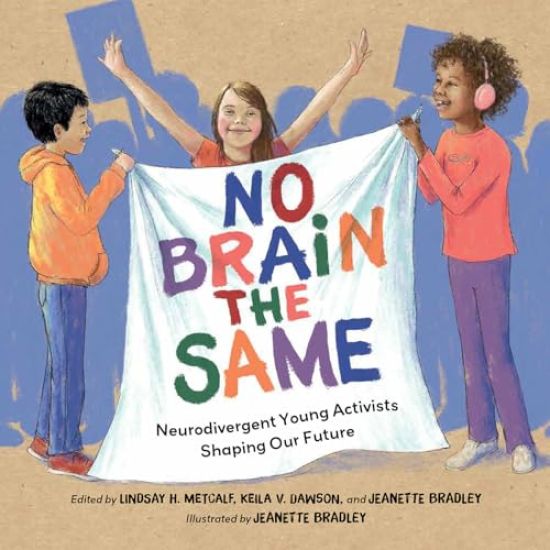
No Brain the Same

No Brain the Same

Lindsay H. Metcalf; Keila V. Dawson

CHARLESBRIDGE PUBLISHING,U.S.
2026
sidottu
Through powerful poems, this book honors neurodivergent youth activists transforming their communities and invites kids to act--continuing the spirit of No Voice Too Small and No World Too Big. Featuring Billie Eilish, Dara McAnulty, and Ly Xīnzh n M. Zhangsūn Brown, these fourteen poems spotlight neurodivergent activists inspiring kids ages 5 to 9 to make change. These fourteen neurodivergent activists began their work when they were young and continue it now, changing systems, politics, policies, and more. The book features poems written by poets who have something in common with each activist. Fourteen poems by CooXooEii Black, Vanessa Brantley-Newton, e.E. Charlton-Trujillo, Liv Mammone, Lyn Miller-Lachmann, K. A. Reynolds, and others honor activists from all over the world and the United States. Additional text goes into detail about each activist's life and how readers can get involved. Activists introduced: Connor DeWolfe by e.E. Charlton-Trujilo Helena Donato-Sapp by Vanessa Brantley-Newton Billie Eilish by Devin Murphy Mia Armstrong by Fiona Morris Sadie McCallum by Liv Mammone Adam Wolfond by Hannah Emerson Liam Garner by Jen Malia Ly Xīnzh n M. Zhangsūn Brown by A. J. Sass Jazmine Wildcat by CooXooIee Black Andy Smith by Lyn Miller-Lachmann Molly Seidel by Jeanette Bradley Dara McAnulty by Sally J. Pla Mollie Davis by Jordan Scott Cillian O'Conner by K. A. Reynolds
Advances in Brain Cancer for Clinicians and Scientists
Advances in Brain Cancer for Clinicians and Scientists provides a rapid update for the busy clinician or scientist interested in learning about the latest advances in brain cancer research. This book is useful for scientists wishing to learn more about clinical advances, clinicians wanting to update themselves on scientific advances, or physicians or trainees who see patients irregularly, but still wish to stay up-to-date. The field of brain tumor research is exploding with new scientific information, and treatments are rapidly changing as new genetic discoveries and technological advances emerge. This book provides a single source for a unified update in this area that includes treatment protocols for brain tumor patients from many different perspectives.
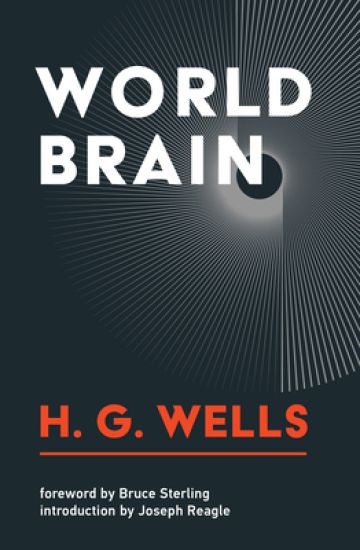
World Brain

World Brain

H.G. Wells; Bruce Sterling

MIT Press
2021
nidottu
In 1937, H. G. Wells proposed a predigital, freely available World Encyclopedia to represent a civilization-saving World Brain. In a series of talks and essays in 1937, H. G. Wells proselytized for what he called a World Brain, as manifested in a World Encyclopedia--a repository of scientifically established knowledge--that would spread enlightenment around the world and lead to world peace. Wells, known to readers today as the author of The War of the Worlds and other science fiction classics, was imagining something like a predigital Wikipedia. The World Encyclopedia would provide a summary of verified reality (in about forty volumes); it would be widely available, free of copyright, and utilize the latest technology. Of course, as Bruce Sterling points out in the foreword to this edition of Wells's work, the World Brain didn't happen; the internet did. And yet, Wells anticipated aspects of the internet, envisioning the World Brain as a technical system of networked knowledge (in Sterling's words, a hypothetical super-gadget). Wells's optimism about the power of information might strike readers today as na vely utopian, but possibly also inspirational.
An AGI Brain for a Robot

An AGI Brain for a Robot

John H. Andreae

Academic Press Inc
2021
nidottu
An AGI Brain for a Robot is the first and only book to give a detailed account and practical demonstration of an Artificial General Intelligence (AGI). The brain is to be implemented in fast parallel hardware and embodied in the head of a robot moving in the real world. Associative learning is shown to be a powerful technique for novelty seeking, language learning, and planning. This book is for neuroscientists, robot designers, psychologists, philosophers and anyone curious about the evolution of the human brain and its specialized functions. The overarching message of this book is that an AGI, as the brain of a robot, is within our grasp and would work like our own brains. The featured brain, called PP, is not a computer program. Instead, PP is a collection of networks of associations built from J. A. Fodor’s modules and the author’s groups. The associations are acquired by intimate interaction between PP in its robot body and the real world. Simulations of PP in one of two robots in a simple world demonstrate PP learning from the second robot, which is under human control. "Both Professor Daniel C. Dennett and Professor Michael A. Arbib independently likened the book ‘An AGI Brain for a Robot’ to Valentino Braitenberg’s 1984 book ‘Vehicles: Experiments in Synthetic Psychology’." Daniel C. Dennett, Professor of Philosophy and Director of Center for Cognitive Studies, Tufts University. Author of "From Bacteria to Bach and Back: The Evolution of Minds." "Michael Arbib, a long time expert in brain modeling, observed that sometimes a small book can catch the interest of readers where a large book can overwhelm and turn them away. He noted, in particular, the success of Valentino Braitenberg’s ‘Vehicles’ (for which he wrote the foreword). At a time of explosive interest in AI, he suggests that PP and its antics may be just the right way to ease a larger audience into thinking about the technicalities of creating general artificial intelligence." Michael A Arbib, Professor Emeritus of Computer Science, Biomedical Engineering, Biological Sciences and Psychology, University of Southern California. Author of "How the Brain Got Language". "Robots seem to increasingly invade our lives, to the point that sometimes seems threatening and other-worldly. In this small book, John Andreae shows some of the basic principles of robotics in ways that are entertaining and easily understood, and touch on some of the basic questions of how the mind works." Michael C. Corballis, Professor of Psychology, University of Auckland. Author of "The Recursive Mind". "A little book that punches far beyond its weight." Nicholas Humphrey, Emeritus Professor of Psychology, London School of Economics. Author of "Soul Dust: The Magic of Consciousness". "A bold and rich approach to one of the major challenges for neuroscience, robotics and philosophy. Who will take up Andreae’s challenge and implement his model?" Matthew Cobb, Professor of Zoology, University of Manchester. Author of "The Idea of the Brain". "Here is a book that could change the direction of research into artificial general intelligence in a very productive and profitable way. It describes a radical new theory of the brain that goes some way towards answering many difficult questions concerning learning, planning, language, and even consciousness. Almost incredibly, the theory is operational, and expressed in a form that could—and should—inspire future, novel, research in AI that transcends existing paradigms." Ian H. Witten, Professor of Computer Science, Waikato University. Author with Eibe Frank of "Data Mining: Practical Machine Learning Tools and Techniques".
The Ecological Brain

The Ecological Brain

Luis H. Favela

TAYLOR FRANCIS LTD
2023
sidottu
The Ecological Brain is the first book of its kind, using complexity science to integrate the seemingly disparate fields of ecological psychology and neuroscience. The book develops a unique framework for unifying investigations and explanations of mind that span brain, body, and environment: the NeuroEcological Nexus Theory (NExT).Beginning with an introduction to the history of the fields, the author provides an assessment of why ecological psychology and neuroscience are commonly viewed as irreconcilable methods for investigating and explaining cognition, intelligent behavior, and the systems that realize them. The book then progresses to its central aim: presenting a unified investigative and explanatory framework offering concepts, methods, and theories applicable across neural and ecological scales of investigation. By combining the core principles of ecological psychology, neural population dynamics, and synergetics under a unified complexity science approach, NExT offers a compressive investigative framework to explain and understand neural, bodily, and environmental contributions to perception-action and other forms of intelligent behavior and thought.The book progresses the conversation around the role of brains in ecological psychology, as well as bodies and environments in neuroscience. It is essential reading for all students of ecological psychology, perception, cognitive sciences, and neuroscience, as well as anyone interested in the history and philosophy of the brain/mind sciences and their state-of-the-art methods and theories.
The Ecological Brain

The Ecological Brain

Luis H. Favela

TAYLOR FRANCIS LTD
2023
nidottu
The Ecological Brain is the first book of its kind, using complexity science to integrate the seemingly disparate fields of ecological psychology and neuroscience. The book develops a unique framework for unifying investigations and explanations of mind that span brain, body, and environment: the NeuroEcological Nexus Theory (NExT).Beginning with an introduction to the history of the fields, the author provides an assessment of why ecological psychology and neuroscience are commonly viewed as irreconcilable methods for investigating and explaining cognition, intelligent behavior, and the systems that realize them. The book then progresses to its central aim: presenting a unified investigative and explanatory framework offering concepts, methods, and theories applicable across neural and ecological scales of investigation. By combining the core principles of ecological psychology, neural population dynamics, and synergetics under a unified complexity science approach, NExT offers a compressive investigative framework to explain and understand neural, bodily, and environmental contributions to perception-action and other forms of intelligent behavior and thought.The book progresses the conversation around the role of brains in ecological psychology, as well as bodies and environments in neuroscience. It is essential reading for all students of ecological psychology, perception, cognitive sciences, and neuroscience, as well as anyone interested in the history and philosophy of the brain/mind sciences and their state-of-the-art methods and theories.
Learning Disabilities and Brain Function

Learning Disabilities and Brain Function

William H. Gaddes; G.W. Hynd; Dorothy Edgell

Springer-Verlag New York Inc.
1993
sidottu
The present edition of this book is a revision and expansion of the first two editions which appeared in 1980 and 1985, and in German translation in 1991. More than half of the present volume includes new material, and what has been retained from the former editions has been largely rewritten and updated with new research findings. A completely new chapter has been added on "Attention Deficit Disorder. " The author of the earlier editions (W.H.G.) has been joined by a coauthor (D.E.), and their combined elementary, high school, and university teaching and clinical experience totals approximately seventy-five years. Both of us have directed our professional en­ ergies to understanding the puzzle of human learning, especially academic learning, of those students who, despite apparently nor­ mal intelligence and opportunity, have varying degrees of difficulty in acquiring ideas and skills that are easily mastered by others. Until about fifty years ago there was a common tendency to equate academic success with intelligence, and those students who could not meet the demands of the prescribed program were usually required to repeat the same grade with a repetition of the same discouraging treatment that had been unsuccessful the first time.
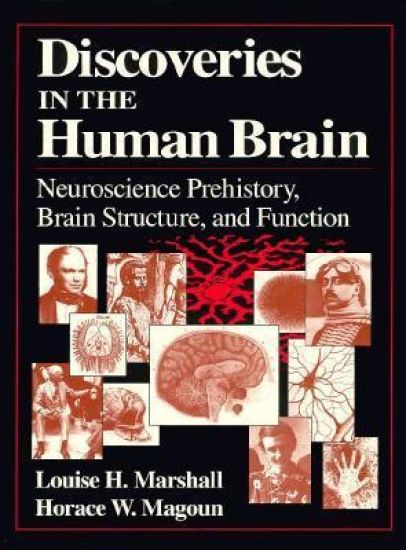
Discoveries in the Human Brain

Discoveries in the Human Brain

Louise H. Marshall; Horace W. Magoun

Humana Press Inc.
1997
sidottu
170u can climb back up a stream of radiance to the sky, and back through history up the stream of time. 1 -Robert Frost topics that he judged to be important in brain his­ From the last years of the second millennium, tory leading into the end of the century, and was we can look back on antecedent events in neuro­ undertaken in response to the enthusiasm gener­ science with amazement that so much of modern ated by exhibition at several national and interna­ biomedical science was anticipated, or even said or done, in an earlier time. That surprise can be tional meetings of a series oflarge posters for which matched by appreciation for what the pioneer Magoun wrote a 27-page brochure. The posters investigators, with no inkling that they were creat­ were viewed by a multitude of young neuroscien­ ing a discipline, contributed to its emergence as a tists who wanted more, as well as by mature inves­ productive force in human progress. In today's tigators who were warmly pleased to see familiar names and faces from the past. The acclaim was reductionist atmosphere, in which research at the molecular level is producing breathtaking new accompanied by a veritable deluge of requests for knowledge throughout biology, the student may an illustrated, expanded publication.
Belonging After Brain Injury

Belonging After Brain Injury

Katie H. Williams

TAYLOR FRANCIS LTD
2022
sidottu
Belonging After Brain Injury: Relocating Dan explores the life of the author’s brother who has dealt with the effects of a severe traumatic brain injury (TBI) for over four decades. It recounts the institutional, psychological, and social labyrinths he and his family have navigated following the TBI he sustained at the age of eighteen.This insightful volume offers a holistic account of the impact of TBI on the survivor and his family. It reveals the difficulties a TBI survivor has had to endure and provides practical information about physical, psychological, and psychosocial symptoms and their consequences. Dan’s story offers new perspectives and strategies that will help alleviate seemingly intractable problems and highlights the central importance of forming connections with others in order to lead a fuller life. The author’s account of her own journey, learning to help care for and advocate for Dan, offers an invaluable guide for TBI survivors and those who care for and support them.Belonging After Brain Injury: Relocating Dan will be of interest to TBI survivors and their families. Its rich insights will be essential reading for medical and mental health professionals, as well those involved in the care and rehabilitation of TBI survivors and families.
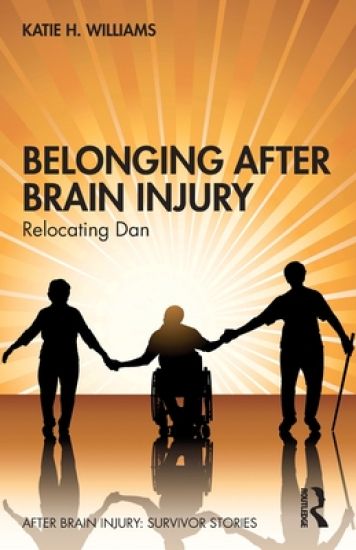
Belonging After Brain Injury

Belonging After Brain Injury

Katie H. Williams

TAYLOR FRANCIS LTD
2022
nidottu
Belonging After Brain Injury: Relocating Dan explores the life of the author’s brother who has dealt with the effects of a severe traumatic brain injury (TBI) for over four decades. It recounts the institutional, psychological, and social labyrinths he and his family have navigated following the TBI he sustained at the age of eighteen.This insightful volume offers a holistic account of the impact of TBI on the survivor and his family. It reveals the difficulties a TBI survivor has had to endure and provides practical information about physical, psychological, and psychosocial symptoms and their consequences. Dan’s story offers new perspectives and strategies that will help alleviate seemingly intractable problems and highlights the central importance of forming connections with others in order to lead a fuller life. The author’s account of her own journey, learning to help care for and advocate for Dan, offers an invaluable guide for TBI survivors and those who care for and support them.Belonging After Brain Injury: Relocating Dan will be of interest to TBI survivors and their families. Its rich insights will be essential reading for medical and mental health professionals, as well those involved in the care and rehabilitation of TBI survivors and families.
The Law on Brain Technologies in Warfare

The Law on Brain Technologies in Warfare

William H. Boothby

EDWARD ELGAR PUBLISHING LTD
2026
sidottu
In this timely book, William Boothby evaluates how existing legal principles and rules apply to various emerging brain technologies. In particular, he explores the legal and ethical implications of the use of such technologies in the context of warfare. The book sets out the complex challenges posed by the use of brain-computer interfaces - an innovation which enables both the monitoring and influencing of innermost brain activity, including the use of thought-controlled weapons - and the use of artificial brains in warfare, highlighting how the rapid advancement of science necessitates clear legal boundaries. Key questions addressed include the legal acceptability of direct brain-to-brain human interaction, the repercussions of enhancing soldiers’ brains and the types of devices prohibited for use on adversaries, as well as broader issues of identity, security and autonomy. Boothby identifies the positions taken by states and international bodies across the globe, mapping out future system projections and assessing their legal implications. The Law on Brain Technologies in Warfare is an essential read for developers, producers, manufacturers and suppliers of brain technologies, as well as practitioners who provide legal advice to the military and governments. It will also be an important reference point for scholars in the fields of military law, humanitarian law, technology law and international law. It is also a crucial resource for those involved in the policy development and application of brain technologies in military and security contexts.
An Odyssey Through the Brain, Behavior and the Mind

An Odyssey Through the Brain, Behavior and the Mind

Case H. Vanderwolf

Springer-Verlag New York Inc.
2003
sidottu
Much of contemporary behavioral or cognitive neuroscience is concerned with discovering the neural basis of psychological processes such as attention, cognition, consciousness, perception, and memory. In sharp divergence from this field, An Odyssey Through the Brain, Behavior and the Mind can be regarded as an elaborate demonstration that the large scale features of brain electrical activity are related to sensory and motor processes in various ways but are not organised in accordance with conventional psychological concepts. It is argued that much of the traditional lore concerning the mind is based on prescientific philosophical assumptions and has little relevance to brain function. The first ten chapters of An Odyssey Through the Brain, Behavior and the Mind give a personal account of how the various discoveries that gave rise to these views came to be made. This is followed by discussions of brain organization in relation to behavior, learning and memory, sleep and consciousness, and the general problem of the mind.