
Kirjahaku
Etsi kirjoja tekijän nimen, kirjan nimen tai ISBN:n perusteella.
1000 tulosta hakusanalla Byron Perry

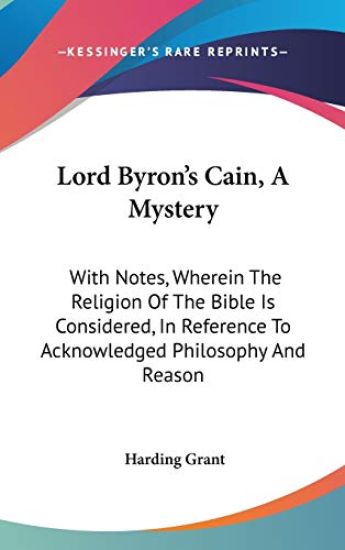
Lord Byron's Cain, A Mystery: With Notes, Wherein The Religion Of The Bible Is Considered, In Reference To Acknowledged Philosophy And Reason
Harding Grant
KESSINGER PUBLISHING, LLC
2007
sidottu
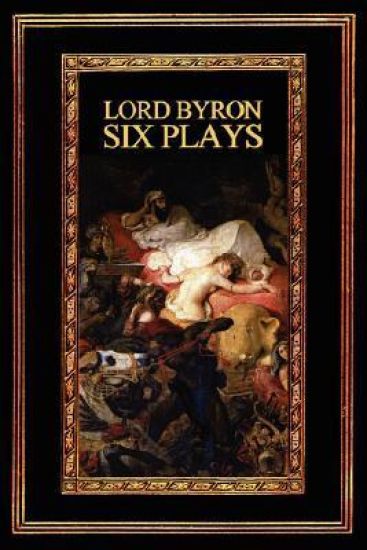
Although known primarily for his poetry, Lord Byron (1788-1824) also had a keen interest in the theatre and wrote a number of verse dramas, mostly during his Italian exile. While these plays went largely unnoticed during Byron's lifetime, they have since been recognized by critics for their sublime poetic and dramatic qualities. This collection brings together six of Byron's finest plays: Manfred, Cain, Heaven and Earth, Marino Faliero, Sardanapalus, and The Two Foscari.
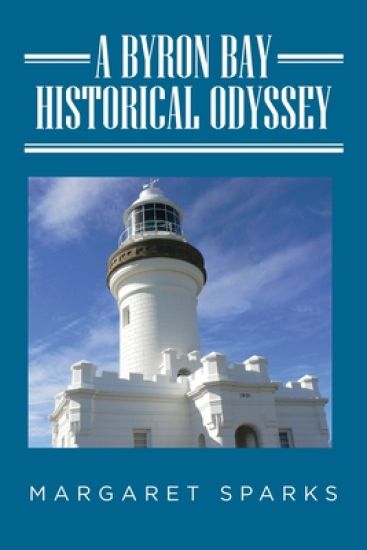
Byron Bay is my birthplace and Is a famous and unique town in Australia.I write of the reclaiming of the land to produce food for the Australia, to export to United Kingdom and America forces when World War II threatened. Residents are passionate Environmental Activists staging our first protest and continuing to this day. Tourists flock from near and far to ride the surf, visit the Health Resorts, enjoy the alternate hippie style of life and pause to marvel at the lush green valleys and mystical mountains.I write to encourage to get to know this diverse and unique part of Australia then come to look, experience and share our passion, to support the brave activists and to enjoy a unique way of life.
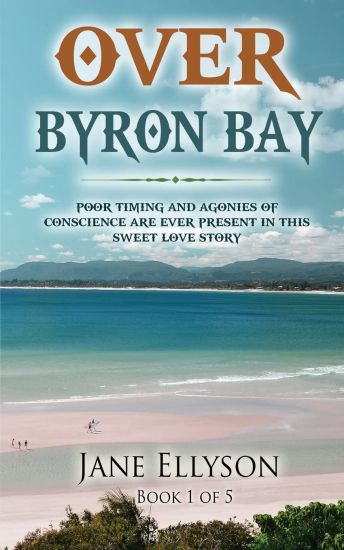
Inconvenient timing and tragedy draws together and then tears apart two friends. Will they risk their friendship for love? Or will their secrets and past mistakes be too formidable? It is the story of friendship. A deep friendship that neither Melissa Brinkley nor Andrew Wyatt were prepared to risk for love. It is a story of heartbreak and hope. Of two people with extraordinarily bad timing. It is a story or relationships within and between families. It is a turbulent story of running away and of new beginnings set between Bangalow, Boston, Brisbane and Byron Bay. A debut novel which will take the reader on an emotional roller coaster ride.
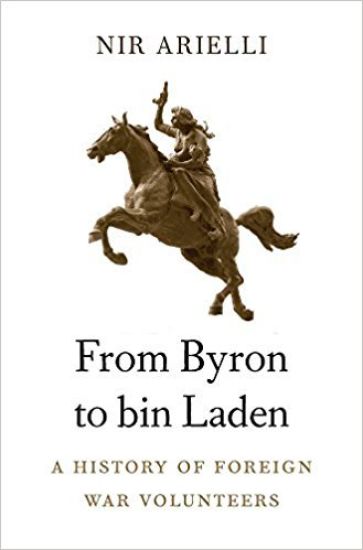
What makes people fight and risk their lives for countries other than their own? Why did diverse individuals such as Lord Byron, George Orwell, Che Guevara, and Osama bin Laden all volunteer for ostensibly foreign causes? Nir Arielli helps us understand this perplexing phenomenon with a wide-ranging history of foreign-war volunteers, from the wars of the French Revolution to the civil war in Syria.Challenging narrow contemporary interpretations of foreign fighters as a security problem, Arielli opens up a broad range of questions about individuals’ motivations and their political and social context, exploring such matters as ideology, gender, international law, military significance, and the memory of war. He shows that even though volunteers have fought for very different causes, they share a number of characteristics. Often driven by a personal search for meaning, they tend to superimpose their own beliefs and perceptions on the wars they join. They also serve to internationalize conflicts not just by being present at the front but by making wars abroad matter back at home. Arielli suggests an innovative way of distinguishing among different types of foreign volunteers, examines the mixed reputation they acquire, and provides the first in-depth comparative analysis of the military roles that foreigners have played in several conflicts.Merging social, cultural, military, and diplomatic history, From Byron to bin Laden is the most comprehensive account yet of a vital, enduring, but rarely explored feature of warfare past and present.

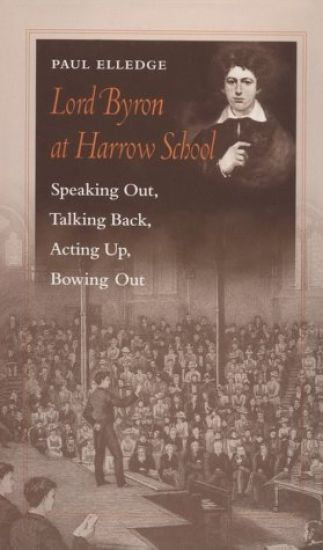
How did Byron become "Byron"? In Lord Byron at Harrow School: Speaking Out, Talking Back, Acting Up, Bowing Out, Paul Elledge locates one origin of the poet's personae in the dramatic recitations young Byron performed at Harrow School. This is the first book-length scholarly examination of the four critically formative years of Byron's public school experience, 1801 to 1805, when Harrow enjoyed high subscription and fame under Dr. Joseph Drury, headmaster. Finding its genesis in the boy's intrepid appearance on three Speech Day programs, the book argues that Byron's early performances addressed anxieties, conflicts, rivalries, and ambitions that were instrumental in shaping the poet's character, career, and verse. Elledge carefully examines the historical and biographical contexts to Byron's Harrow performances, showing their relevance to Byron's physical and psychic landscapes at the time-his connections to his mother and half-sister, his headmasters and tutors, his Harrow intimates and rivals, his lameness, his London theatrical spectatorship. Byron's performances in the characters of King Latinus from the Aeneid, Zanga the Moor from Edward Young's The Revenge, and King Lear provide an opportunity to examine his early experiments with self-presentation: as Elledge argues, these performances are "auditions or trials of performative and autotherapeutic strategies, subsequently refined and polished in the mature verse." Throughout, Elledge reads the boy for the sake of reading the poet; he shows how young Byron's introduction to theatricality at Harrow School prepared him to make a confident and spectacular debut on Europe's cultural stage. "His selection of texts for declaiming-the discourse of two kings and a show-stealing, scene-chewing villain-participates in a larger pattern of deliberate self-fashioning that began at least as early as Byron's Harrow years and evolved into the elaborate mode and vogue of self-representation that partially, with his hefty patronage, helped to define the era. To discern his initial experiments with identity formation, to watch his auditions, his inaugural performances of "Byron"-in the provincial run, so to speak, before his London premiere-to track the emergence of these constructs from a confluence of wondrous adolescent energies is to understand anew why and how enduringly certain events and relationships wrote themselves into the text that Byron famously became."-from the Prologue
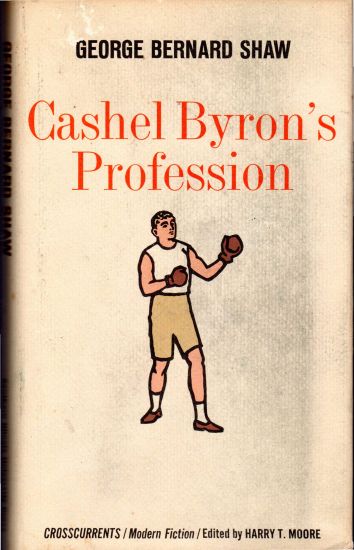
George Bernard Shaw (1856-1950) was an Irish playwright, critic, polemicist and political activist. Born in Dublin, he moved to London when he turned twenty. Having rejected formal schooling, he educated himself by independent study in the reading room of the British Museum; he also began his career there by writing novels for which he could not find a publisher. His first success was as a music and literary critic, but he was drawn to drama and authored more than sixty plays during his career. Typically his work is leavened by a delightful vein of comedy, but nearly all of it bears earnest messages. He remains the only person to have been awarded both a Nobel Prize (1925) for his contribution to literature and an Oscar (1938) for Pygmalion.