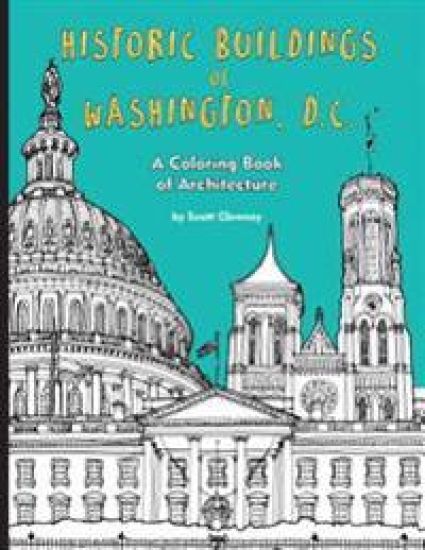
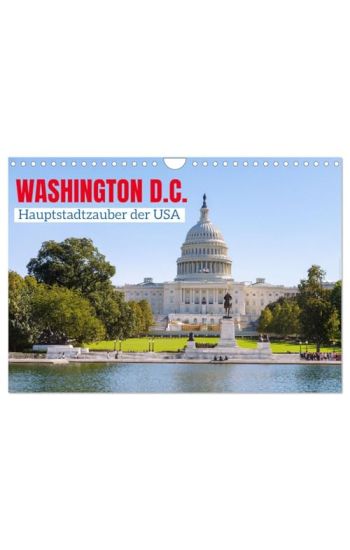
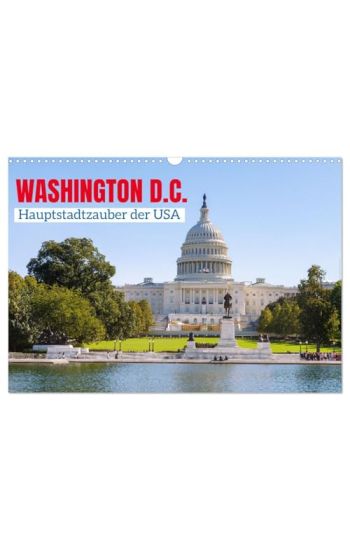
Discover iconic buildings and buildings off the beaten path that give shape to Washington, D.C., our nation's capital. Collect your crayons, colored pencils, pens, or markers and reimagine the White House, Union Station, and other architectural landmarks. Make a mark with your own colorful and creative expression
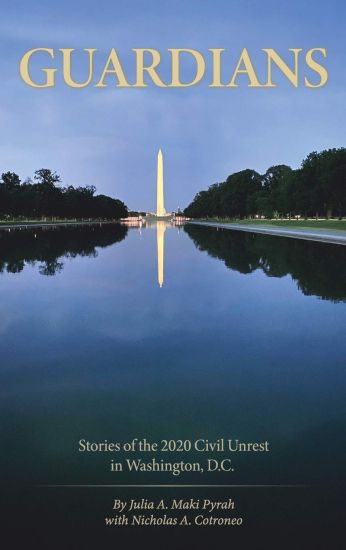
Guardians is a new first-hand account from Air National Guardsman Julia Maki Pyrah, who describes her experiences on the streets of DC protecting the people of our nation's capital and their right to assemble, while attempting to stop the destruction of monuments and local businesses from those that were looking to cause it harm. Maki, a Navy veteran that now serves in the DC Air National Guard, shares in candid detail her view of the events from a unique perspective on the streets of D.C."The normal complement of Secret Service in and around the White House, combined with the Metropolitan Police and Park Police were not going to cut it. They needed more support... and quickly," explains Maki. As she continues her duties and notices small acts of defiance by groups of people prior to riot escalation, she remarks, "It was a smallrebellion of sorts, the beginning of people becoming untouchable by authorities." With contributions from other Guardsmen in her unit, she describes the reality of the challenges that were faced by putting her suburb-mom life on hold, as duty called during this unusual activation of Guardsmen from all over the country.
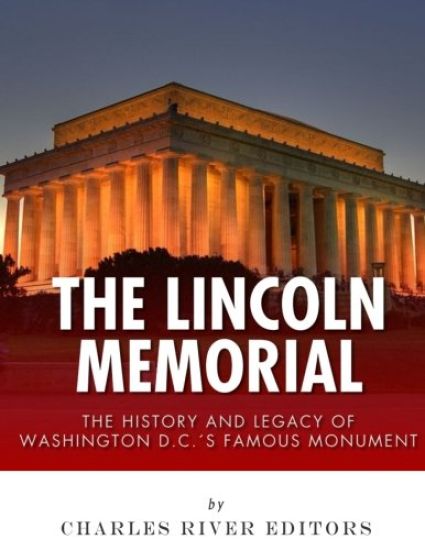
*Includes pictures *Includes accounts of the memorial's construction by people who worked on it *Explains how the memorial's site was chosen and how it was built *Includes a table of contents "IN THIS TEMPLE AS IN THE HEARTS OF THE PEOPLE FOR WHOM HE SAVED THE UNION THE MEMORY OF ABRAHAM LINCOLN IS ENSHRINED FOREVER" - The epitaph by Royal Cortissoz engraved in the Lincoln Memorial People have always loved symbols and monuments. Even before there was any sort of written language, there were places and things considered sacred, whether it was the Mesopotamians' ziggurats or the Egyptians' pyramids. Thus, it had long been a practice to make some sort of memorial to those who had died as a way to remember and honor them. Abraham Lincoln is one of the most famous Americans in history and one of the country's most revered presidents. Schoolchildren can recite the life story of Lincoln, the "Westerner" who educated himself and became a self made man, rising from lawyer to leader of the new Republican Party before becoming the 16th President of the United States. Lincoln successfully navigated the Union through the Civil War but didn't live to witness his crowning achievement, becoming the first president assassinated when he was shot at Ford's Theater by John Wilkes Booth on April 14, 1865. Given the importance of Abraham Lincoln to the country, it's no surprise that plans to build monuments to him began within months of his death. There are countless ways that the Great Emancipator has been commemorated across America, but the most famous is the Lincoln Memorial, which would not be completed until well over half a century after his death. Lincoln had called upon Americans to bind up their wounds in his Second Inaugural Address, and in many ways the memorial was the result of the country's sectional reconciliation, making it all the more fitting. In the end, the time it took to complete the memorial was worth the wait, as the finished product included a masterfully sculpted statue of Lincoln sitting in the middle of a giant structure that immediately brings to mind an Ancient Greek or Roman temple. Situated across the National Mall from the Washington Monument, the Lincoln Memorial is perfectly positioned, and thanks to Lincoln's presidency and freeing of the slaves, the memorial has become a poignant symbol for protests, especially at the height of the Civil Rights Movement when Martin Luther King, Jr. gave his "I Have a Dream" speech. The Lincoln Memorial: The History of Washington D.C.'s Famous Monument chronicles the construction and history of one of America's most famous memorials. Along with pictures of important people, places, and events, you will learn about the Lincoln Memorial like never before, in no time at all.
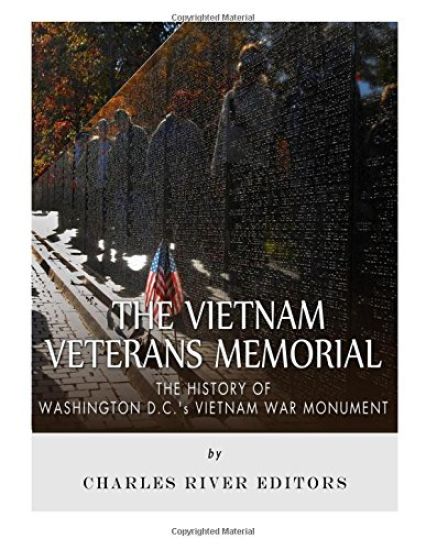
*Includes pictures *Includes accounts of the memorial's history written by people who worked on the project *Includes a bibliography for further reading *Includes a table of contents Before the Vietnam War, most Americans would have been hard pressed to locate Vietnam on a map. South Vietnamese President Diem's regime was extremely unpopular, and war broke out between Communist North Vietnam and South Vietnam around the end of the '50s. Kennedy's administration tried to prop up the South Vietnamese with training and assistance, but the South Vietnamese military was feeble. A month before his death, Kennedy signed a presidential directive withdrawing 1,000 American personnel, and shortly after Kennedy's assassination, new President Lyndon B. Johnson reversed course, instead opting to expand American assistance to South Vietnam. Johnson had sent fewer than 5,000 Marines to Vietnam in early 1965, but he quickly upped it to 200,000 by the end of the year. There was no going back. Although hundreds of thousands protested the war in 1967, including Martin Luther King, Jr., a majority of the public still supported it, due in large part to the Johnson's administration public confidence. But as General Westmoreland talked of victory at the end of 1967, the Viet Cong launched a massive assault across South Vietnam in January 1968. Known as the Tet Offensive, the Viet Cong suffered hundreds of thousands of casualties, and the American forces never lost a battle, but American support for the war still plummeted. By the end of the decade, Vietnam had left tens of thousands of Americans dead, spawned a counterculture with millions of protesters, and destroyed a presidency. And more was still yet to come. The Vietnam War remains one of the most controversial events in American history, and it bitterly divided the nation, so it's somewhat ironic that the most famous monument commemorating the war is also one of the most serene spots in the nation's capital. Indeed, the famous Vietnam Wall is a place of almost eerie silence where even children cease their chatter. Rising out of the ground like an ancient obelisk, it calls upon its visitors to stop talking and to look and gaze upon the magnitude of America's great mistake, a war that began in whispers and ended in tears. As professors Cheree Carlson and John Hocking pointed out in their 1987 paper, "'A Message for My Brother: ' The Vietnam Veterans' Memorial as Rhetorical Situation," "The Vietnam Veterans Memorial is not a 'traditional; war memorial. No shining flags fly no bronze statue of brave heroes stands tall beside it no heroism is lauded. In fact, it is not a memorial to the war at all but rather a memorial to the 2.7 million Americans who served in Vietnam and especially to those who were killed...it focuses our attention on those who did not survive the war. The Vietnam War is reduced to its inevitable result. The Memorial suggests the message 'In war young men die; here are their names.'" At the same time, the monument speaks volumes not just about the nature of war but the utter catastrophe that occurred in Southeast Asia. Whereas the World War II memorial has a grand design that honors contributions and soldiers by state, visitors who may have come from there or the bustling Lincoln Memorial nearby are often struck by the length of the wall, a solemn but powerful reminder that Vietnam claimed nearly 60,000 American lives. Given that, it should come as no surprise that the Vietnam Veterans Memorial is one of the most visited places in the city, with millions coming and paying tribute each year. The Vietnam Veterans Memorial: The History of Washington D.C.'s Vietnam War Monument traces the history and construction of the famous wall. Along with pictures of important people, places, and events, you will learn about the history of the Vietnam Veterans Memorial like never before, in no time at all.
Reprint of the original, first published in 1859. The publishing house Anatiposi publishes historical books as reprints. Due to their age, these books may have missing pages or inferior quality. Our aim is to preserve these books and make them available to the public so that they do not get lost.
Reprint of the original, first published in 1859. The publishing house Anatiposi publishes historical books as reprints. Due to their age, these books may have missing pages or inferior quality. Our aim is to preserve these books and make them available to the public so that they do not get lost.
Reprint of the original, first published in 1859. The publishing house Anatiposi publishes historical books as reprints. Due to their age, these books may have missing pages or inferior quality. Our aim is to preserve these books and make them available to the public so that they do not get lost.
Reprint of the original, first published in 1859. The publishing house Anatiposi publishes historical books as reprints. Due to their age, these books may have missing pages or inferior quality. Our aim is to preserve these books and make them available to the public so that they do not get lost.
Reproduction of the original. The publishing house Megali specialises in reproducing historical works in large print to make reading easier for people with impaired vision.