
Kirjahaku
Etsi kirjoja tekijän nimen, kirjan nimen tai ISBN:n perusteella.
1000 tulosta hakusanalla Dane Mainella



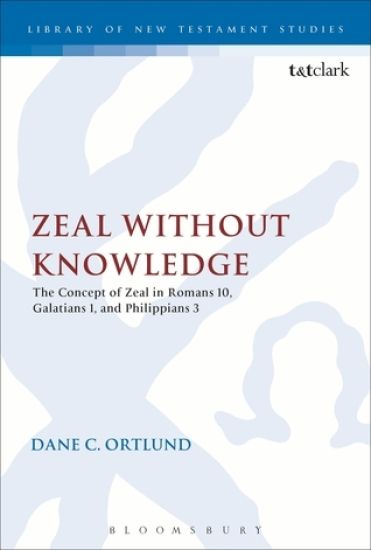
This book examines the concept of ‘zeal' in three Pauline texts (Rom 10:2; Gal 1:14; Phil 3:6) as a way-in to discussion of the ‘New Perspective' on Paul. The concept of zeal has been discussed in a sustained way by James D. G. Dunn, who argues that Paul was drawing on a long and venerable tradition of Jewish zeal for the nation of Israel, that is, a concern to maintain Israel's distinction from the surrounding nations by defending and reinforcing its boundaries. Ortlund interacts with Dunn, agreeing that this concern for distinctiveness was a crucial, and neglected, concern of Paul's before his conversion. Nevertheless, Ortlund contends that Dunn has presented an overly narrow understanding of Pauline zeal that does not sufficiently locate zeal in the broader picture of general obedience to Torah in Jewish tradition. As such, Ortlund shows in this work that zeal refers most immediately to general obedience to Torah - including, but not to be centrally circumscribed as, ethnic distinction.
This book examines the concept of 'zeal' in three Pauline texts (Rom 10:2; Gal 1:14; Phil 3:6) as a way-in to discussion of the 'New Perspective' on Paul. The concept of zeal has been discussed in a sustained way by James D. G. Dunn, who argues that Paul was drawing on a long and venerable tradition of Jewish zeal for the nation of Israel, that is, a concern to maintain Israel's distinction from the surrounding nations by defending and reinforcing its boundaries. Ortlund interacts with Dunn, agreeing that this concern for distinctiveness was a crucial, and neglected, concern of Paul's before his conversion. Nevertheless, Ortlund contends that Dunn has presented an overly narrow understanding of Pauline zeal that does not sufficiently locate zeal in the broader picture of general obedience to Torah in Jewish tradition. As such, Ortlund shows in this work that zeal refers most immediately to general obedience to Torah - including, but not to be centrally circumscribed as, ethnic distinction.
Hey, I'm Dane Greene I started writing when I was 16. To say I was talented, or my first project where anything close to readable would be a lie. If it were not for my love of writing I would never have improved, but here I am. If you were to ask me today if I was a good writer, I would tell you that I am better than I was yesterday. A total clich , but it's true for me. I'm always trying to improve my skills as a writer, and love to hear honest opinions of my stories. My biggest work is Rage: a story of survival. It took me many years to complete and I am proud of the work I put into finishing it. If you have read it, I hope you enjoyed it, if not I hope you do.


Britain and Empire, 1880-1945 traces the relationship between Britain and its empire during a period when the two spheres intersected with one another to an unprecedented degree. The story starts with the imperial expansion of the late nineteenth century and ends with the Second World War, at the end of which Britain was on the brink of decolonisation.The author shows how empire came to figure into almost every important development that marked Britain?s response to the upheavals of the late nineteenth century and first half of the twentieth century. He examines its influence on foreign policy, party politics, social reforms, cultural practices, and national identity. At the same time, he shows how domestic developments affected imperial policies.Written in an engaging and accessible manner, this book: integrates British and imperial history in a single narrative provides a useful synthesis of recent historical research in the area analyses topics ranging from ideology and culture to politics and foreign affairs contains a chronology, glossary, who?s who and guide to further readingBritain and Empire, 1880-1945 provides an up-to-date, accessible survey, ideal for students coming to the subject for the first time.

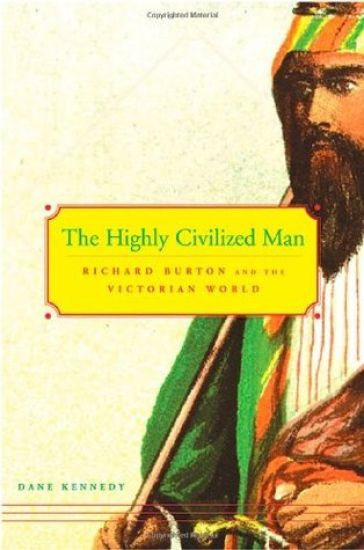
Richard Burton was one of Victorian Britain's most protean figures. A soldier, explorer, ethnographer, and polyglot of rare power, as well as a poet, travel writer, and translator of the tales of the Arabian Nights and the Kama Sutra, Burton exercised his abundant talents in a diverse array of endeavors. Though best remembered as an adventurer who entered Mecca in disguise and sought the source of the White Nile, Burton traveled so widely, wrote so prolifically, and contributed so forcefully to his generation's most contentious debates that heprovides us with a singularly panoramic perspective on the world of theVictorians.One of the great challenges confronting the British in the nineteenth century was to make sense of the multiplicity of peoples and cultures they encountered in their imperial march around the globe. Burton played an important role in this mission. Drawing on his wide-ranging experiences in other lands and intense curiosity about their inhabitants, he conducted an intellectually ambitious, highly provocative inquiry into racial, religious, and sexual differences that exposed his own society's norms to scrutiny.Dane Kennedy offers a fresh and compelling examination of Burton and his contribution to the widening world of the Victorians. He advances the view that the Victorians' efforts to attach meaning to the differences they observed among other peoples had a profound influence on their own sense of self, destabilizing identities and reshaping consciousness. Engagingly written and vigorously argued, The Highly Civilized Man is an important contribution to our understanding of a remarkable man and a crucial era.

For a British Empire that stretched across much of the globe at the start of the nineteenth century, the interiors of Africa and Australia remained intriguing mysteries. The challenge of opening these continents to imperial influence fell to a proto-professional coterie of determined explorers. They sought knowledge, adventure, and fame, but often experienced confusion, fear, and failure. The Last Blank Spaces follows the arc of these explorations, from idea to practice, from intention to outcome, from myth to reality.Those who conducted the hundreds of expeditions that probed Africa and Australia in the nineteenth century adopted a mode of scientific investigation that had been developed by previous generations of seaborne explorers. They likened the two continents to oceans, empty spaces that could be made truly knowable only by mapping, measuring, observing, and preserving. They found, however, that their survival and success depended less on this system of universal knowledge than it did on the local knowledge possessed by native peoples.While explorers sought to advance the interests of Britain and its emigrant communities, Dane Kennedy discovers a more complex outcome: expeditions that failed ignominiously, explorers whose loyalties proved ambivalent or divided, and, above all, local states and peoples who diverted expeditions to serve their own purposes. The collisions, and occasional convergences, between British and indigenous values, interests, and modes of knowing the world are brought to the fore in this fresh and engaging study.

Design for Independence, Inspiration, and Innovation: The New York State Association of Independent Schools at 70
Dane L. Peters
Nysais
2017
nidottu
In 2014, Independent by Design, a history of the New York State Association of Independent School (NYSAIS) from its inception in 1947 to 2014 was published. I can imagine a reader asking why I would work on a new volume about NYSAIS just three years later. The answer is twofold. For one, the past three years represent a period of significant organizational growth and development. This new level of momentum and focus has not only established NYSAIS as a thought-leader in the field, operating at a high level among independent school associations world-wide, it also comes at a time when education itself is undergoing a significant tectonic shift. That this surge also comes at a time when NYSAIS is celebrating its seventieth anniversary makes it all that more noteworthy. One way to look at this volume is as an important postscript to the earlier volume. But it also serves as the opening chapter of NYSAIS's next seventy years of operation. The ability of the organization to make significant adjustments in an era of deep social change and disruption while staying true to its seventy-year-old mission is a clear sign of a healthy organizational future. To say our current era is interesting would be an under-statement. There are a number of forces at work, of course. But a key one is the way multiple generations, with their particular mindsets, overlap and interact. When I was first teaching, for instance, we lived in a world essentially of three generations- The Greatest Generation, Baby Boomers, and Generation X. Today, our world is five generations strong-The Greatest Generation, Baby Boomers, Generation X, Millennials (GenerationY), and Generation Z. For a long time, the Baby Boomers more or less called the shots, but the shift is now on-with the Baby Boomers moving into retirement and the younger generations having both a greater presence and greater influence. And all signs suggest that this influence will only get stronger. Writing for the Independent School Magazine Blog in 2016, NAIS president-elect Donna Orem underscored this ongoing shift in leadership. "'Who will lead' is a refrain we hear routinely in the media as the workforce changes hands from the Baby Boomers and Generation X to the Millennials," she writes. "The leading edge of the Baby Boomer generation reached retirement age in 2011. According to the Pew Research Center, 10,000 Boomers will retire each day through the year 2030." This generational shift also corresponds with the dizzying rise of technological innovation. Technology is changing just about everything in our culture, including communications, manufacturing, the workplace environment, entertainment, shopping, and, of course, education. The schools that NYSAIS serves are all multigenerational. They all wrestle with the shifts in education brought on in part by technology, by brain-science research, and by changing cultural perspectives about the role of education in society. For its part, NYSAIS is influenced by all of this-and the progress it makes every day is testimony to the attentiveness and hard work of the staff. Design for Independence, Inspiration, and Innovation: The New York State Association of Independent Schools at 70 presents the changes that have taken place over the past three years within the organization. Granted, this is a short time period, but NYSAIS's seventieth anniversary and the rapid, impressive changes are more than enough justification for this book-as a birthday celebration, as testimony to the hard work of the current staff, and as an exploration of the evolving role of school associations.

A deeply researched political history that finds a new origin story to today’s deeply entrenched partisanship. Cash reminds us that the “forgotten war” in Korea was also the occasion for the “forgotten debate” between liberals and conservatives. When it comes to the origins of today’s sharp partisan divide, most have pointed to the usual suspects—Newt Gingrich’s Republican Revolution in 1994, Watergate, and the Vietnam War. In The Forgotten Debate, Dane J. Cash suggests that we need to look further back in history. He argues that we can trace the roots of the current ideological divide in America to the period of the Korean War. The 1950s were hardly a time of “liberal consensus,” as Cash maintains that liberals themselves were quite divided about the proper course of action in Korea and in the Cold War more generally. Left liberals supported containment policy and its manifestation as a limited war in Korea, whereas hawkish liberals favored a much more aggressive strategy, particularly one vis-à-vis Communist China, which was largely indistinguishable from the position taken by avowed conservatives. The seeds of neoconservatism were thus sown much earlier than is typically appreciated. Furthermore, conservative voices were galvanized by what they perceived to be American timidity (and ultimately failure) in prosecuting the Korean War. Their frustrations about Korea and American weakness toward China led them to develop a unilateralist, “America First” foreign policy, which coalesced into a coherent movement several years prior to the founding of William F. Buckley, Jr.’s National Review in 1954—generally considered to be the genesis of modern conservatism. Drawing on a range of opinion journals, The Forgotten Debate shows that conflict, rather than consensus, marked elite attitudes to the Korean War. Cash thus reminds us that the divisions in society today have a much longer history than we typically realize. The Korean War is often ignored and overshadowed by later developments, like the civil rights movement and the Vietnam War, but many of our current ideological positions were forged in that forgotten period.

Dane Love takes a look at how life has changed in Ayr in the 20th century and contrasts old images of the town with new ones.
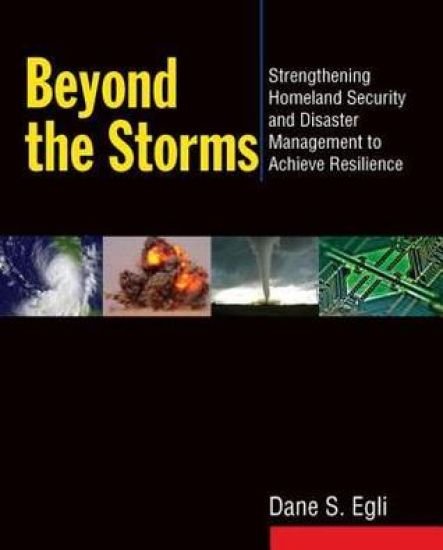
This book deals with both actual and potential terrorist attacks on the United States as well as natural disaster preparedness and management in the current era of global climate change. The topics of preparedness, critical infrastructure investments, and risk assessment are covered in detail. The author takes the reader beyond counterterrorism statistics, better first responder equipment, and a fixation on FEMA grant proposals to a holistic analysis and implementation of mitigation, response, and recovery efforts. The recent Oklahoma tornadoes and West Texas storage tank explosion show the unpredictability of disaster patterns, and the Boston Marathon bombings expose the difficulty in predicting and preventing attacks. Egli makes a compelling case for a culture of resilience by asserting a new focus on interagency collaboration, public-private partnerships, and collective action. Building upon the lessons of the 9/11 attacks, hurricane Katrina, and the Deepwater Horizon oil spill, the basic findings are supported by a creative mix of case studies, which include superstorm Sandy, cascading power outages, GPS and other system vulnerabilities, and Japan's Fukushima disaster with its sobering aftermath. This book will help a new generation of leaders understand the need for smart resilience.