America's #1 bestseller - First time in paperback There are some places you visit, and some places you never leave behind. Danielle Steel's new novel follows a devoted father and the daughter he raises in the fascinating upstairs-downstairs world of a glamorous Manhattan hotel. HOTEL VEND ME The hotel was old, run-down. But to Swiss-born hotelier Hugues Martin, it is a rough diamond tucked away on a quiet New York City street. So Hugues scrapes together everything he has to purchase the building--and transforms it into one of the world's finest luxury hotels. Under Hugues's exacting supervision, the Hotel Vend me is soon renowned for its unparalleled service and discretion--the ideal refuge for the rich and famous--and a perfect home for Hugues's family, until his young wife abandons him, leaving Hugues the single parent to their four-year-old daughter. Still, Heloise grows up happily amid a colorful milieu of celebrities, socialites, politicians, world travelers, and the countless hotel employees who all adore her. As the years pass and unexpected challenges arise, Hugues and the hotel are the center of Heloise's life. She longs to follow in her father's footsteps and one day run the Hotel Vend me. The lessons she learns at his side will carry her through it all, illuminating a story no reader will forget. Welcome to the Hotel Vend me.
A chubby little girl with blond hair, blue eyes, and ordinary looks, Victoria Dawson has always felt out of place in her family, especially in body-conscious L.A. Her father, Jim, is tall and slender, and her mother, Christina, is a fine-boned, dark-haired beauty. Both are self-centered, outspoken, and disappointed by their daughter’s looks. When Victoria is six, she sees a photograph of Queen Victoria, and her father has always said she looks just like her. After the birth of Victoria’s perfect younger sister, Gracie, her father liked to refer to his firstborn as “our tester cake.” With Gracie, everyone agreed that Jim and Christina got it right.While her parents and sister can eat anything and not gain an ounce, Victoria must watch everything she eats, as well as endure her father’s belittling comments about her body and see her academic achievements go unacknowledged. Ice cream and oversized helpings of all the wrong foods give her comfort, but only briefly. The one thing she knows is that she has to get away from home, and after college in Chicago, she moves to New York City.Landing her dream job as a high school teacher, Victoria loves working with her students and wages war on her weight at the gym. Despite tension with her parents, Victoria remains close to her sister. And though they couldn’t be more different in looks, they love each other unconditionally. But regardless of her accomplishments, Victoria’s parents know just what to say to bring her down. She will always be her father’s “big girl,” and her mother’s constant disapproval is equally unkind.When Grace announces her engagement to a man who is an exact replica of their narcissistic father, Victoria worries about her sister’s future happiness, and with no man of her own, she feels like a failure once again. As the wedding draws near, a chance encounter, an act of stunning betrayal, and a family confrontation lead to a turning point.Behind Victoria is a lifetime of hurt and neglect she has tried to forget, and even ice cream can no longer dull the pain. Ahead is a challenge and a risk: to accept herself as she is, celebrate it, and claim the victories she has fought so hard for and deserves. Big girl or not, she is terrific and discovers that herself.
At thirty-nine, director Tallie Jones is a Hollywood legend, whose award-winning films enjoy both critical and commercial success. With no interest in the glitz of Los Angeles, Tallie centers her life on her work and her devoted inner circle: her family, her producing partner and live-in lover, and her longtime personal assistant and best friend.As Tallie is in the midst of her most ambitious film yet, small disturbances begin to ripple through her world. An audit reveals troubling discrepancies in the records maintained by Tallie’s trusted accountant. Mysterious receipts hint at activities of which she has no knowledge. Soon it becomes clear that someone close to Tallie has been steadily funneling away enormous amounts of her money. After an escalating series of shattering revelations, Tallie must face the harsh truth behind her seemingly perfect life: that sometimes trust can be the greatest illusion of all.
NEW YORK TIMES BESTSELLER Five children meet on the first day of kindergarten. In the years that follow, they become friends and more than friends. Together, they will find strength, meet challenges, face life's adventures, endure loss, face stark realities, and open their hearts. In this moving novel, #1 New York Times bestselling author Danielle Steel traces their unforgettable journey--full of tests and trials--as three boys and two girls discover the vital bonds that will last a lifetime. FRIENDS FOREVER Gabby, Billy, Izzie, Andy, and Sean--each bursting with their own personality, strikingly different looks and talents, in sports, science, and the arts. Each drawn by the magical spark of connection that happens to the young. At the exclusive Atwood School, on a bright September day, starting in kindergarten they become an inseparable group known to outsiders as the Big Five. In this rarefied world, five families grow closer, and five children bloom beside one another, unaware of the storms gathering around them. As they turn from grade-schoolers to teenagers, seemingly perfect lives are buffeted by unraveling families, unfortunate missteps, and losses and victories great and small. And, one by one, they turn back to the Big Five to regain their footing and their steady course. But as they emerge from Atwood and enter the college years, the way forward is neither safe nor clear. As their lives separate and diverge, the challenges and risks become greater, the losses sharper, and the right paths harder to choose, in a journey of friendship, survival, and love. In what may be her most intricate and emotionally powerful novel yet, Danielle Steel tells a heart-wrenching, ultimately triumphant story that spans decades, weaves together a vivid cast of characters, and captures the challenges we face in life--sometimes, if we're lucky, with a friend forever by our side.
In the picturesque mountains of Squaw Valley, Colorado, a girl's dreams are about to be shattered. At just seventeen, Lily Thomas is already a ski champion training for the Olympics, her heart set on winning the gold. But in one moment, Lily's future is changed forever - her hopes for Olympic triumph swept away in a tragic accident. Her father, Bill, refuses to accept Lily's fate, while her neurosurgeon, Dr Jessie Matthews, is adamant that all hope is not lost. But when Jessie endures a tragedy of her own, her spirit is truly tested. Then Bill decides to build a rehab facility for his daughter and transforms countless other lives too. But will courage and kindness be enough to make winners of them all? An inspirational story of courage and triumph from one of the world's greatest storytellers. It is a perfect read for fans of Susan Lewis, Jodi Picoult and Penny Vincenzi.
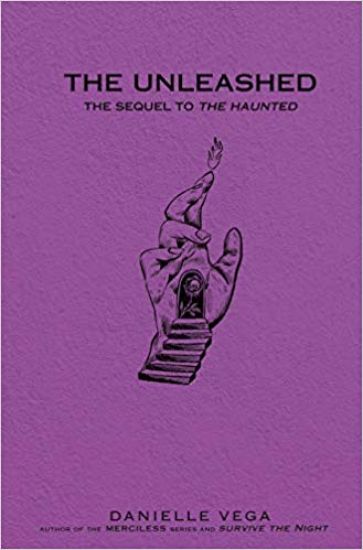
After everything that went down at Steele House, Hendricks just wants her life to return to normal. Prom is coming up and the school is in full preparation mode. Hendricks tries to pitch in, to mimic her best friend Portia’s enthusiasm, but the events of the last few months still haunt her. Steele House. Raven. Eddie. Hendricks believes Eddie is still out there. She just has to find a way to reach him. Together with her friends, she forms a circle of seven and attempts to summon his spirit. Suddenly things start happening again. Flickering lights in the school library. Mysterious girls roaming the halls. The same song playing on a loop wherever she goes. It all culminates in a violent attack and Hendricks realises what they summoned may not be Eddie at all. The one thing she does know is that Steele House was only the beginning. And whatever they’ve unleashed is more dangerous than anything they’ve ever seen before.
As The Devil Wears Prada demystified the world of high fashion, this funny and insightful debut novel dishes the crazy and captivating Manhattan art scene. When painter Jeffrey Finelli is run over by a cab, the art world clamors for the instantly in-demand work by the late “emerging artist”—especially an enormous painting called Lulu Meets God and Doubts Him.Gallery receptionist and aspiring artist Mia McMurray fi nds herself at the center of the hype. She is an amused witness as a Birkin-toting collector, a well-muscled Irish artist, a real estate baron, and Lulu herself, the artist’s niece and muse, battle over the brand-new masterpiece. In the midst of the madness, Mia finds her own creative expression and artistic identity, not to mention love.
How to apply digital writing skills effectively in the classroom, from the prestigious National Writing Project As many teachers know, students may be adept at text messaging and communicating online but do not know how to craft a basic essay. In the classroom, students are increasingly required to create web-based or multi-media productions that also include writing. Since writing in and for the online realm often defies standard writing conventions, this book defines digital writing and examines how best to integrate new technologies into writing instruction. Shows how to integrate new technologies into classroom lessonsAddresses the proliferation of writing in the digital ageOffers a guide for improving students' online writing skills The book is an important manual for understanding this new frontier of writing for teachers, school leaders, university faculty, and teacher educators.
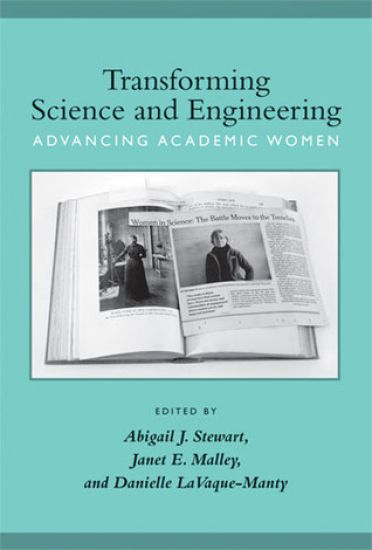
"If you have thrown up your hands in despair after trying to retain women science and engineering in the academy, read this book. It offers detailed descriptions of a wide array of tried-and-true programs that have been tested out by the NSF ADVANCE program."---Joan C. Williams, 1066 Foundation Chair & Distinguished Professor of Law Director, Center for WorkLife Law University of California"Solid and practical, this volume details the first years of NSF funded institutional change to remake gender dynamics inside U.S. science. What works? What doesn't? And why?"---Londa Schiebinger, John L. Hinds Professor of History of Science and Barbara D. Finberg Director, Michelle R. Clayman Institute for Gender Research at Stanford University, and author of Has Feminism Changed Science?"This book's time has come. Transforming Science and Engineering is important, and lots of people can learn from what has happened in the ADVANCE universities."---Lotte Bailyn, Professor of Management, Behavioral and Policy Sciences Department, Sloan School of Management, MIT; author of Breaking the Mold: Redesigning Work for Productive and Satisfying Lives; and coauthor of Beyond Work-Family Balance: Advancing Gender Equity and Workplace Performance"This collection profiles 16 NSF ADVANCE grant successes, sandwiched between an interview with Dr. Alice Hogan and Dr. Lee Harle's summary of cost-effective practices from ADVANCE programs, giving so many 'biggest bang for the buck' examples in so few pages that it will easily justify both the cost of the book and the reading time. These accounts do not continue the too-common vague referrals to 'unhealthy environment' or 'chilly climate,' but rather expound the situations before and after the interventions, something necessary in order to transplant the programs, or even to use the programs for idea generation. Transforming Science and Engineering is a model of excellence, and will be extremely useful for those women, men, faculty, or administrators wanting to help their universities move into the 21st century and attract to their campuses qualified women and men who want opportunities to attain their full potentials."---Donna J. Nelson, Associate Professor of Chemistry, University of OklahomaIn 2001, the National Science Foundation's ADVANCE Institutional Transformation program began awarding five-year grants to colleges and universities to address a common problem: how to improve the work environment for women faculty in science and engineering. Drawing on the expertise of scientists, engineers, social scientists, specialists in organizational behavior, and university administrators, this collection is the first to describe the variety of innovative efforts academic institutions around the country have undertaken.Focusing on a wide range of topics, from how to foster women's academic success in small teaching institutions, to how to use interactive theater to promote faculty reflection about departmental culture, to how a particular department created and maintained a healthy climate for women's scientific success, the contributors discuss both the theoretical and empirical aspects of the initiatives, with emphasis on the practical issues involved in creating these approaches. The resulting evidence shows that these initiatives have the desired effects. The cases represented in this collection depict the many issues women faculty in science and engineering face, and the solutions that are presented can be widely accepted at academic institutions around the United States. The essays in Transforming Science and Engineering illustrate that creating work environments that sustain and advance women scientists and engineers benefits women, men, and underrepresented minorities.Abigail J. Stewart is Sandra Schwartz Tangri Distinguished University Professor of Psychology and Women's Studies at the University of Michigan.Janet E. Malley is a psychologist and Associate Director of the Institute for Research on Women and Gender at the University of Michigan.Danielle LaVaque-Manty, former Research Associate at the Institute for Research on Women and Gender at the University of Michigan, teaches composition at U-M's Sweetland Writing Center.Cover photo: Joanne Leonard
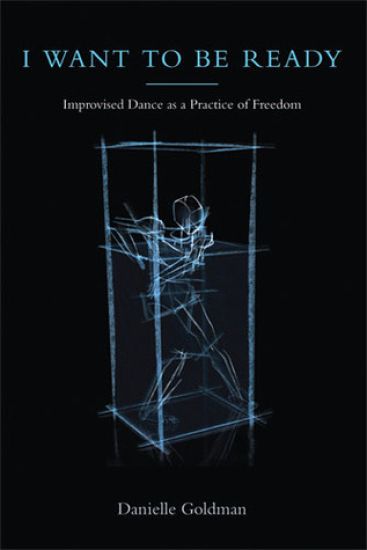
"Danielle Goldman's contribution to the theory and history of improvisation in dance is rich, beautiful and extraordinary. In her careful, rigorously imaginative analysis of the discipline of choreography in real time, Goldman both compels and allows us to become initiates in the mysteries of flight and preparation. She studies the massive volitional resources that one unleashes in giving oneself over to being unleashed. It is customary to say of such a text that it is 'long-awaited' or 'much anticipated'; because of Goldman's work we now know something about the potenza, the kinetic explosion, those terms carry. Reader, get ready to move and be moved."---Fred Moten, Duke University"In this careful, intelligent, and theoretically rigorous book, Danielle Goldman attends to the 'tight spaces' within which improvised dance explores both its limitations and its capacity to press back against them. While doing this, Goldman also allows herself---and us---to be moved by dance itself. The poignant conclusion, evoking specific moments of embodied elegance, vulnerability, and courage, asks the reader: 'Does it make you feel like dancing?' Whether taken literally or figuratively, I can't imagine any other response to this beautiful book."---Barbara Browning, New York University"This book will become the single most important reflection on the question of improvisation, a question which has become foundational to dance itself. The achievement of I Want to Be Ready lies not simply in its mastery of the relevant literature within dance, but in its capacity to engage dance in a deep and abiding dialogue with other expressive forms, to think improvisation through myriad sites and a rich vein of cultural diversity, and to join improvisation in dance with its manifestations in life so as to consider what constitutes dance's own politics." ---Randy Martin, Tisch School of Arts at New York University I Want To Be Ready draws on original archival research, careful readings of individual performances, and a thorough knowledge of dance scholarship to offer an understanding of the "freedom" of improvisational dance. While scholars often celebrate the freedom of improvised performances, they are generally focusing on freedom from formal constraints. Drawing on the work of Michel Foucault and Houston Baker, among others, Danielle Goldman argues that this negative idea of freedom elides improvisation's greatest power. Far from representing an escape from the necessities of genre, gender, class, and race, the most skillful improvisations negotiate an ever shifting landscape of constraints. This work will appeal to those interested in dance history and criticism and also interdisciplinary audiences in the fields of American and cultural studies. Danielle Goldman is Assistant Professor of Dance at The New School and a professional dancer in New York City, where she recently has danced for DD Dorvillier and Beth Gill.Cover art: Still from Ghostcatching, 1999, by Bill T. Jones, Paul Kaiser, and Shelley Eshkar. Image courtesy of Kaiser/Eshkar.
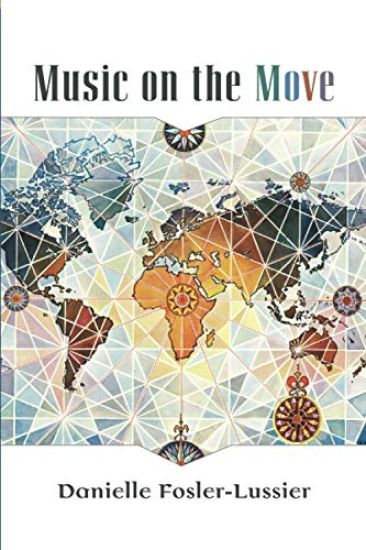
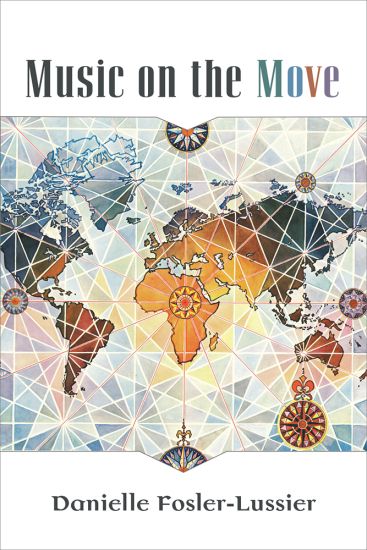
Music is a mobile art. When people move to faraway places, whether by choice or by force, they bring their music along. Music creates a meaningful point of contact for individuals and for groups; it can encourage curiosity and foster understanding; and it can preserve a sense of identity and comfort in an unfamiliar or hostile environment. As music crosses cultural, linguistic, and political boundaries, it continually changes. While human mobility and mediation have always shaped music-making, our current era of digital connectedness introduces new creative opportunities and inspiration even as it extends concerns about issues such as copyright infringement and cultural appropriation. With its innovative multimodal approach, Music on the Move invites readers to listen and engage with many different types of music as they read. The text introduces a variety of concepts related to music’s travels—with or without its makers—including colonialism, migration, diaspora, mediation, propaganda, copyright, and hybridity. The case studies represent a variety of musical genres and styles, Western and non-Western, concert music, traditional music, and popular music. Highly accessible, jargon-free, and media-rich, Music on the Move is suitable for students as well as general-interest readers.
"Danielle Goldman's contribution to the theory and history of improvisation in dance is rich, beautiful and extraordinary. In her careful, rigorously imaginative analysis of the discipline of choreography in real time, Goldman both compels and allows us to become initiates in the mysteries of flight and preparation. She studies the massive volitional resources that one unleashes in giving oneself over to being unleashed. It is customary to say of such a text that it is 'long-awaited' or 'much anticipated'; because of Goldman's work we now know something about the potenza, the kinetic explosion, those terms carry. Reader, get ready to move and be moved."---Fred Moten, Duke University"In this careful, intelligent, and theoretically rigorous book, Danielle Goldman attends to the 'tight spaces' within which improvised dance explores both its limitations and its capacity to press back against them. While doing this, Goldman also allows herself---and us---to be moved by dance itself. The poignant conclusion, evoking specific moments of embodied elegance, vulnerability, and courage, asks the reader: 'Does it make you feel like dancing?' Whether taken literally or figuratively, I can't imagine any other response to this beautiful book."---Barbara Browning, New York University"This book will become the single most important reflection on the question of improvisation, a question which has become foundational to dance itself. The achievement of I Want to Be Ready lies not simply in its mastery of the relevant literature within dance, but in its capacity to engage dance in a deep and abiding dialogue with other expressive forms, to think improvisation through myriad sites and a rich vein of cultural diversity, and to join improvisation in dance with its manifestations in life so as to consider what constitutes dance's own politics." ---Randy Martin, Tisch School of Arts at New York University I Want To Be Ready draws on original archival research, careful readings of individual performances, and a thorough knowledge of dance scholarship to offer an understanding of the "freedom" of improvisational dance. While scholars often celebrate the freedom of improvised performances, they are generally focusing on freedom from formal constraints. Drawing on the work of Michel Foucault and Houston Baker, among others, Danielle Goldman argues that this negative idea of freedom elides improvisation's greatest power. Far from representing an escape from the necessities of genre, gender, class, and race, the most skillful improvisations negotiate an ever shifting landscape of constraints. This work will appeal to those interested in dance history and criticism and also interdisciplinary audiences in the fields of American and cultural studies. Danielle Goldman is Assistant Professor of Dance at The New School and a professional dancer in New York City, where she recently has danced for DD Dorvillier and Beth Gill.Cover art: Still from Ghostcatching, 1999, by Bill T. Jones, Paul Kaiser, and Shelley Eshkar. Image courtesy of Kaiser/Eshkar.
Music is a mobile art. When people move to faraway places, whether by choice or by force, they bring their music along. Music creates a meaningful point of contact for individuals and for groups; it can encourage curiosity and foster understanding; and it can preserve a sense of identity and comfort in an unfamiliar or hostile environment. As music crosses cultural, linguistic, and political boundaries, it continually changes. While human mobility and mediation have always shaped music-making, our current era of digital connectedness introduces new creative opportunities and inspiration even as it extends concerns about issues such as copyright infringement and cultural appropriation. With its innovative multimodal approach, Music on the Move invites readers to listen and engage with many different types of music as they read. The text introduces a variety of concepts related to music’s travels—with or without its makers—including colonialism, migration, diaspora, mediation, propaganda, copyright, and hybridity. The case studies represent a variety of musical genres and styles, Western and non-Western, concert music, traditional music, and popular music. Highly accessible, jargon-free, and media-rich, Music on the Move is suitable for students as well as general-interest readers.
Looks into the private dwellings of the creative talents in Paris individuals from the music, fashion, design, film and art worlds. This title includes coverage that ranges from elevated bohemianism of the Left Bank to the trendy Marais and edgier Belleville and 13th and reflect the cosmopolitan melting pot that influences Paris' design trends.
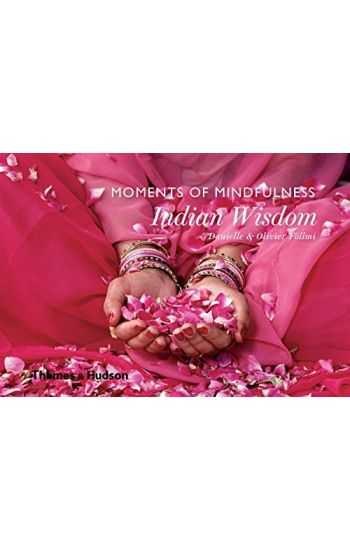
Follmi travelled far and wide to witness the celebrations, landscapes, rituals and traditions of cultures all over the world, discovering new ways of seeing as he sought to understand and capture through photography the connections linking the people to their ancestral lands. This book deals with his work.
Each book in the Moments of Mindfulness series pairs the wise words of a great writer, master, philosopher or poet with Olivier Foellmi's beautiful and moving photographs. Foellmi travelled far and wide to witness the celebrations, landscapes, rituals and traditions of cultures all over the world, discovering new ways of seeing as he sought to understand and capture through photography the connections linking the people to their ancestral lands. The effect is transcendental and transformative, awakening our senses and preparing our souls to receive these simple yet profound teachings.
An yearbook which presents the wise words of a leading personality in Far Eastern thought or literature for every day of the year, accompanied by photographs of Asia's people and places.
"Music Divided" explores how political pressures affected musical life on both sides of the iron curtain during the early years of the cold war. In this groundbreaking study, Danielle Fosler-Lussier illuminates the pervasive political anxieties of the day through particular attention to artistic, music-theoretical, and propagandistic responses to the music of Hungary's most renowned twentieth-century composer, Bela Bartok. She shows how a tense period of political transition plagued Bartok's music and imperiled those who took a stand on its aesthetic value in the emerging socialist state. Her fascinating investigation of Bartok's reception outside of Hungary demonstrates that Western composers, too, formulated their ideas about musical style under the influence of ever-escalating cold war tensions. "Music Divided" surveys Bartok's role in provoking negative reactions to 'accessible' music from Pierre Boulez, Hermann Scherchen, and Theodor Adorno. It considers Bartok's influence on the youthful compositions and thinking of Bruno Maderna and Karlheinz Stockhausen, and it outlines Bartok's legacy in the music of the Hungarian composers Andras Mihaly, Ferenc Szabo, and Endre Szervanszky. These details reveal the impact of local and international politics on the selection of music for concert and radio programs, on composers' choices about musical style, on government radio propaganda about music, on the development of socialist realism, and on the use of modernism as an instrument of political action.
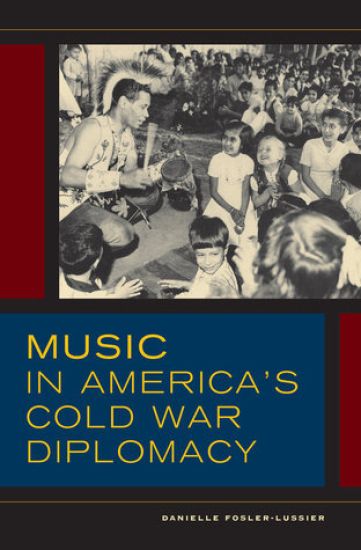
During the Cold War, thousands of musicians from the United States traveled the world, sponsored by the U.S. State Department's Cultural Presentations program. Performances of music in many styles classical, rock 'n' roll, folk, blues, and jazz competed with those by traveling Soviet and mainland Chinese artists, enhancing the prestige of American culture. These concerts offered audiences around the world evidence of America's improving race relations, excellent musicianship, and generosity toward other peoples. Through personal contacts and the media, musical diplomacy also created subtle musical, social, and political relationships on a global scale. Although born of state-sponsored tours often conceived as propaganda ventures, these relationships were in themselves great diplomatic achievements and constituted the essence of America's soft power. Using archival documents and newly collected oral histories, Danielle Fosler-Lussier shows that musical diplomacy had vastly different meanings for its various participants, including government officials, musicians, concert promoters, and audiences. Through the stories of musicians from Louis Armstrong and Marian Anderson to orchestras and college choirs, Fosler-Lussier deftly explores the value and consequences of musical diplomacy."
Millions of low-income African Americans in the United States lack access to health care. How do they treat their health care problems? In Health Care Off the Books, Danielle T. Raudenbush provides an answer that challenges public perceptions and prior scholarly work. Informed by three and a half years of fieldwork in a public housing development, Raudenbush shows how residents who face obstacles to health care gain access to pharmaceutical drugs, medical equipment, physician reference manuals, and insurance cards by mobilizing social networks that include not only their neighbors but also local physicians. However, membership in these social networks is not universal, and some residents are forced to turn to a robust street market to obtain medicine. For others, health problems simply go untreated. Raudenbush reconceptualizes U.S. health care as a formal-informal hybrid system and explains why many residents who do have access to health services also turn to informal strategies to treat their health problems. While the practices described in the book may at times be beneficial to people’s health, they also have the potential to do serious harm. By understanding this hybrid system, we can evaluate its effects and gain new insight into the sources of social and racial disparities in health outcomes.