Kirjojen hintavertailu. Mukana 12 390 323 kirjaa ja 12 kauppaa.

Kirjahaku

Etsi kirjoja tekijän nimen, kirjan nimen tai ISBN:n perusteella.

1000 tulosta hakusanalla David E. Garland

Final Covers for Solid Waste Landfils and Abandoned Dumps

Final Covers for Solid Waste Landfils and Abandoned Dumps

David E. Daniel; Robert M Koerner

AMERICAN SOCIETY OF CIVIL ENGINEERS
1997
sidottu
This guide takes a practical approach to the subject and provides an overview of regulations in the USA and Germany. It covers topics including: The individual components of candidate cover systems Examples of cross-sections of final covers on hazardous waste, non-hazardous waste and abandoned dumps Details of a water balance methodology Design examples on slope stability Elements of theory, designs and emerging systems Related considerations and summary
Residential Land Development Practices

Residential Land Development Practices

David E. Johnson

American Society of Civil Engineers
2021
nidottu
The development of raw land into buildable lots can be filled with opportunities as well as pitfalls. In Residential Land Development Practices, Fourth Edition, Johnson draws on more than 40 years of experience as an engineer, consultant, and lecturer to prepare an easy-to-use guide to the basic concepts of land planning, subdivision design, and residential standards.This edition has been updated with five new chapters reflecting the social and economic changes in the last ten years. The new material includes sustainable land development concepts; the municipal government's changing landscape; the developer, consultant, regulator relationship; due diligence practices; and land development as part of the engineering curriculum.Added to the core topics of bidding, financing, marketing, project management, and field operations, this new edition provides a comprehensive guide for land development beginners or seasoned professionals to better understand the complexities of the residential land development business.
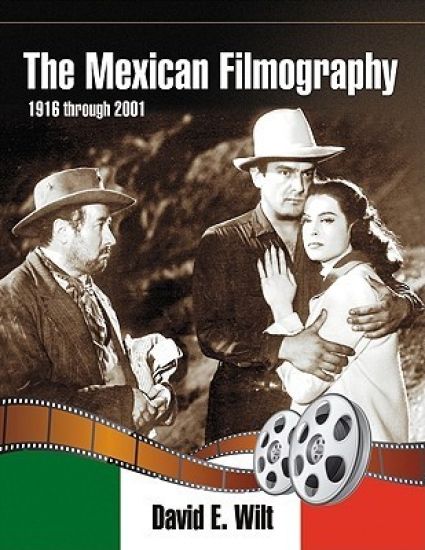
The Mexican Filmography, 1916 through 2001

The Mexican Filmography, 1916 through 2001

David E. Wilt

McFarland Co Inc
2010
pokkari
Mexican cinema has largely been overlooked by international film scholars because of a lack of English-language information and the fact that Spanish-language information was difficult to find and often out of date. This comprehensive filmography helps fill the need. Arranged by year of release and then by title, the filmography contains entries that include basic information (film and translated title, production company, genre, director, cast), a plot summary, and additional information about the film. Inclusion criteria: a film must be a Mexican production or co-production, feature length (one hour or more, silent films excepted), fictional (documentaries and compilation films are not included unless the topic relates to ­Mexican cinema; some docudramas and films with recreated or staged scenes are included), and theatrically released or intended for theatrical release.
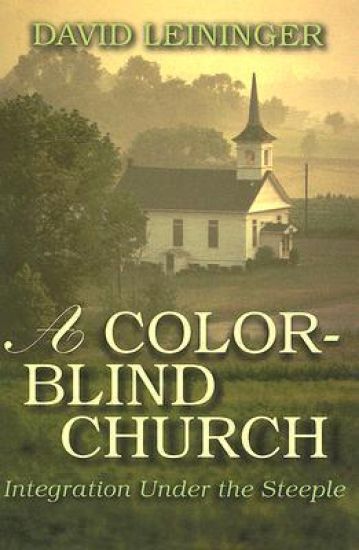
A Color-Blind Church: Integration Under the Steeple

A Color-Blind Church: Integration Under the Steeple

David E. Leininger

CSS Publishing Company
2007
nidottu
In this refreshingly honest and authentic analysis of what continues to be a persistent dilemma in the modern church, David Leininger offers his take on why 11:00 on Sunday morning is still the most segregated hour in America. Although attitudes toward racial issues have changed in recent decades, Leininger shows us how much they have stayed the same with a startlingly contemporary story. A Color-Blind Church represents wise advice from an experienced pastor reflecting on his own early years of ministry and how he would handle a similar "prophetic" opportunity in our time. This book will be a good mentoring tool for present and future pastors on how to deal with potentially controversial issues in the church. William J. Carl III President, Pittsburgh Theological Seminary Conflict is often painful -- but it can also stimulate growth in ways that might never have occurred without it. A Color-Blind Church tells the gripping story of two churches in the little village of Liberty Hill, South Carolina -- one black, one white, both Presbyterian -- and the struggle generated by an attempt to bring them into closer fellowship. From his firsthand perspective, Leininger examines numerous contentious issues this unique opportunity raised, reflects on what he might have done differently and the lessons he learned, and offers specific advice on how to successfully build bridges when bringing together disparate faith communities. A Color-Blind Church is a real treat As one who lived through this period in the history of Presbyterians in the South, it is encouraging to read Leininger's account of real live congregations being confronted with the racial divide in our church and seeking to find a way together to embody Christ's call to unity. This is a well-written book that shares both the dreams and the nobility of those who tried to make reunion come alive in new ways and the inevitable barriers that have grown up through centuries of history and are not quickly overcome. A Color-Blind Church is both a very interesting window into the recent history of Presbyterians in the South and a helpful set of learnings for all who seek to be about change in the church. I heartily commend this book Clifton Kirkpatrick Stated Clerk of the General Assembly, Presbyterian Church (USA) David E. Leininger is the pastor of First Presbyterian Church in Warren, Pennsylvania. He has also served congregations in North and South Carolina, Florida, and Georgia. His sermons have appeared in the Best Sermons 4 anthology (Harper-Collins), and he has been a contributor to the online preaching service The Immediate Word (www.sermonsuite.com). Leininger is a graduate of Edison State University, Lutheran Theological Southern Seminary, and Erskine Theological Seminary.
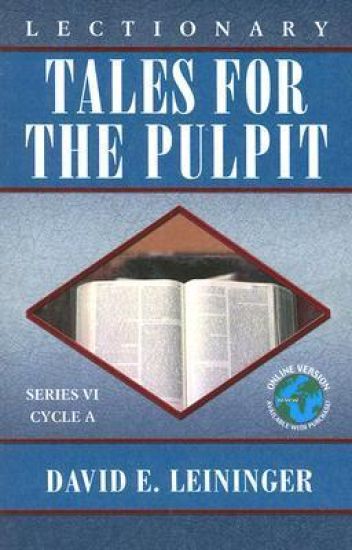
Lectionary Tales for the Pulpit, Series VI, Cycle A

Lectionary Tales for the Pulpit, Series VI, Cycle A

David E Leininger

CSS Publishing Company
2007
pokkari
Whether you pick up this book as relaxed devotional reading or are searching for a last-minute sermon illustration, you'll be delighted with the imaginative and inspirational stories in the newest installment in CSS' popular Lectionary Tales for the Pulpit series. David Leininger takes you right to the heart of the scriptures with a rich variety of captivating material illustrating Cycle A lectionary texts. His thought-provoking reflections are certain to enrich your spiritual life -- and point out the myriad ways in which God is at work in our daily lives. This volume is sure to become a favorite resource for pastors and laypersons alike. Some of the intriguing chapters are: - The Quintessential Evangelist - What Boggles Your Mind? - Who Woulda Thunk It? - The Blame Game - Under the Rainbow - How Not To Be the Father of the Year - The Bush Is Still Burning - Leaping Lepers David E. Leininger is the pastor of First Presbyterian Church in Warren, Pennsylvania. He has also served congregations in North and South Carolina, Georgia, and Florida. Prior to entering the ministry, Leininger worked for almost 20 years in radio and television. Leininger's sermons have appeared in the Best Sermons 4 anthology (Harper-Collins), and he has been a contributor to the online services StoryShare and The Immediate Word (www.sermonsuite.com). He is the author of A Color-Blind Church (CSS), an intriguing account of the attempted merger of two congregations -- one black, one white -- in a small community following the reunion of the northern and southern streams of the Presbyterian Church (USA) in 1983. Leininger is a graduate of Edison State University, Lutheran Theological Southern Seminary, and Erskine Theological Seminary.
Lectionary Tales for the Pulpit

Lectionary Tales for the Pulpit

David E Leininger

CSS Publishing Company
2008
muu
Whether used for relaxed devotional reading or as a source of stimulating sermon illustrations, this installment of CSS' popular Lectionary Tales for the Pulpit series is certain to enrich your spiritual life. David Leininger takes you right to the heart of the scriptures with imaginative and inspirational stories based on Cycle B lectionary texts. His thought-provoking reflections illuminate the handiwork of God in the modern world -- and they provide an invaluable resource for the daily life and ministry of pastors and laypersons alike. Some of the intriguing chapters are: - Christmas in the Crossfire - A Gospel for Losers - Our Magnificent, Mysterious, Mischievous God - God's Day Off - Handling Freedom - God's Battleship - Sermons in Stone - A Disaster of Biblical Proportions - The View from Jesus' Pew ... and many more David E. Leininger is the pastor of First Presbyterian Church in Warren, Pennsylvania. He has also served congregations in North and South Carolina, Georgia, and Florida. Prior to entering the ministry, Leininger had a successful career for almost two decades in radio and television. He is the author of God of Justice, A Color-Blind Church, and Lectionary Tales for the Pulpit (Series VI, Cycle A), and his sermons have appeared in the Best Sermons 4 anthology (HarperCollins). Leininger has also been a contributing writer for the online services StoryShare and The Immediate Word (www.sermonsuite.com).
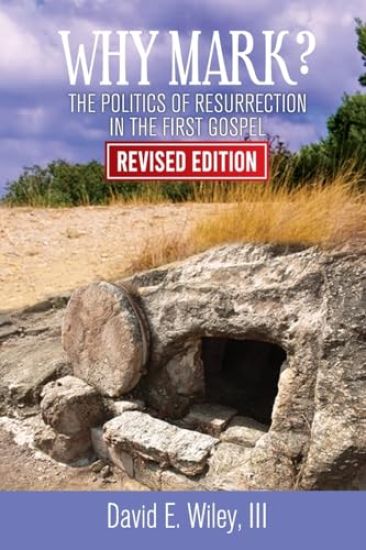
Why Mark?

Why Mark?

David E Wiley

CSS Publishing Company
2024
pokkari
In this expanded and revised edition of Why Mark? David E. Wiley, III invites readers to delve deeper into the gospel of Mark, unlocking new layers of understanding and insight into the life, message, and resurrection of Jesus. Wiley's critical exploration challenges readers to re-examine perspectives on the first gospel writer and early followers of Jesus.Wiley substantiates arguments with footnotes, aiding and guiding newcomers through further exploration of the first Gospel. New material addresses the birth of Jesus, potential Gnostic influence, and corrections to errors from the first edition. Relocated chapters on Mark's treatment of resurrection appearances offer a refined narrative flow. A new section explores the priority of Mark, methodically comparing it with Matthew and Luke to provide a unique and insightful perspective. Why Mark? The Politics of Resurrection in the First Gospel - Second Edition is an indispensable resource for pastors, small groups, and thoughtful believers unafraid to tackle profound questions, offering a compelling journey into the heart of Mark's gospel.David E. Wiley, III pastored churches in New York and New Jersey for thirty plus years. Wiley received his M.Div. and D.Min. from Drew Theological Seminary and is now retired from the United Methodist church. Dave enjoys his family and golfing in retirement.
Endocrine Disruption in Fish

Endocrine Disruption in Fish

David E. Kime

Springer
1998
sidottu
The last half-century has shown a dramatic increase in the standard of living of millions of people in Europe, North America and many parts of the Third World. This has, in many ways been brought about by scientific and technical developments which were initiated in the 1940s and 1950s. Promises were then made that nuclear energy would provide electricity so cheap that it would not need metering, pesticides would end malnutrition throughout the world and plastics and other synthetic chemicals would revolutionise our manufacturing industry and our way of life. Whilst some of these promises have been fulfilled, the problems of long-term health risks to humans and wildlife arising from the use, production and disposal of these products were either unknown or deliberately understated. Nuclear power is rendered economically unviable when the real cost of decommissioning and storage of waste for several millenia is included, and the effects on health of both humans and wildlife of early pesteradication programmes with organochlorine pesticides were well documented in Rachel Carson's "Silent Spring". Evidence of the effects of aerosols and refrigerants on depletion of the ozone layer has led to restriction on the use of CFCs, and there is now increasing evidence of climate change resulting from our profligate use of fossil fuels.
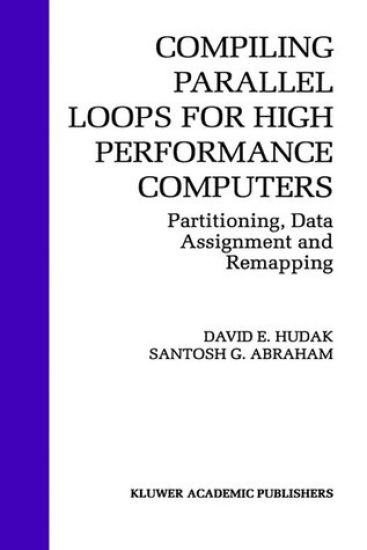
Compiling Parallel Loops for High Performance Computers

Compiling Parallel Loops for High Performance Computers

David E. Hudak; Santosh G. Abraham

Springer
1992
sidottu
4. 2 Code Segments . . . . . . . . . . . . . . . 96 4. 3 Determining Communication Parameters . 99 4. 4 Multicast Communication Overhead · 103 4. 5 Partitioning . . . . . . · 103 4. 6 Experimental Results . 117 4. 7 Conclusion. . . . . . . · 121 5 COLLECTIVE PARTITIONING AND REMAPPING FOR MULTIPLE LOOP NESTS 125 5. 1 Introduction. . . . . . . . . 125 5. 2 Program Enclosure Trees. . 128 5. 3 The CPR Algorithm . . 132 5. 4 Experimental Results. . 141 5. 5 Conclusion. . 146 BIBLIOGRAPHY. 149 INDEX . . . . . . . . 157 LIST OF FIGURES Figure 1. 1 The Butterfly Architecture. . . . . . . . . . 5 1. 2 Example of an iterative data-parallel loop . . 7 1. 3 Contiguous tiling and assignment of an iteration space. 13 2. 1 Communication along a line segment. . . 24 2. 2 Access pattern for the access offset, (3,2). 25 2. 3 Decomposing an access vector along an orthogonal basis set of vectors. . . . . . . . . . . . . . . . . . . 26 2. 4 An analysis of communication patterns. 29 2. 5 Decomposing a vector along two separate basis sets of vectors. 31 2. 6 Cache lines aligning with borders. 33 2. 7 Cache lines not aligned with borders. 34 2. 8 nh is the difference of nd and nb. 42 2. 9 nh is the sum of nd and nb. 42 2. 10 The ADAPT system. 44 2. 11 Code segment used in experiments. . 46 2. 12 Execution rates for various partitions. 47 2. 13 Execution time of partitions on Multimax. 48 2. 14 Performance increase as processing power increases. 49 2. 15 Percentage miss ratios for various aspect ratios and line sizes.
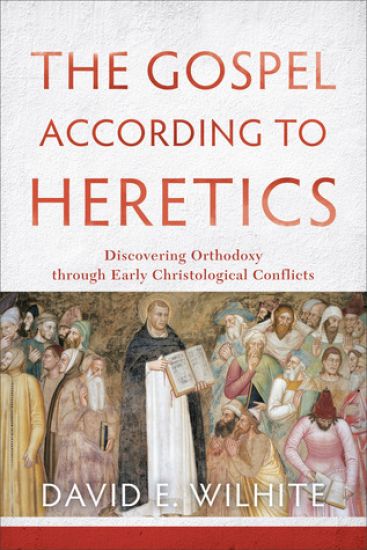
The Gospel according to Heretics – Discovering Orthodoxy through Early Christological Conflicts
Since what Christian doctrine denies can be as important as what it affirms, it is important to understand teachings about Jesus that the early church rejected. Historians now acknowledge that proponents of alternative teachings were not so much malicious malcontents as they were misguided or even misunderstood. Here a recognized expert in early Christian theology teaches orthodox Christology by explaining the false starts (heresies), making the history of theology relevant for today's church. This engaging introduction to the christological heresies is suitable for beginning students. In addition, pastors and laypeople will find it useful for apologetic purposes.
The Great Giveaway

The Great Giveaway

David E. Fitch

Baker Books, a division of Baker Publishing Group
2005
nidottu
"North American evangelicals learned to do church in relation to modernity," asserts David Fitch. Furthermore, evangelicals have begun to model their ministries after the secular sciences or even to farm out functions of the church whenever it seems more efficient. As a result, the church, too often, has stopped being the church.In The Great Giveaway, Fitch examines various church practices and shows how and why each function has been compromised by modernity. Discussing such ministries as evangelism, physical healing, and spiritual formation, Fitch challenges Christians to reclaim these lost practices so that the church can regain its influence. Pastors, leaders, and students who minister to the postmodern world will find in this book fresh insight that will stir the hearts of many and spark much-needed discussion about the evangelical church.
The Hidden Hand of American Hegemony

The Hidden Hand of American Hegemony

David E. Spiro

Cornell University Press
1999
sidottu
Between 1973 and 1980, the cost of crude oil rose suddenly and dramatically, precipitating convulsions in international politics. Conventional wisdom holds that international capital markets adjusted automatically and remarkably well: enormous amounts of money flowed into oil-rich states, and efficient markets then placed that new money in cash-poor Third World economies. David Spiro has followed the money trail, and the story he tells contradicts the accepted beliefs. Most of the sudden flush of new oil wealth didn't go to poor oil-importing countries around the globe. Instead, the United States made a deal with Saudi Arabia to sell it U.S. securities in secret, a deal resulting in a substantial portion of Saudi assets being held by the U.S. government. With this arrangement, the U.S. government violated its agreements with allies in the developed world. Spiro argues that American policymakers took this action to prop up otherwise intolerable levels of U.S. public debt. In effect, recycled OPEC wealth subsidized the debt-happy policies of the U.S. government as well as the debt-happy consumption of its citizenry.
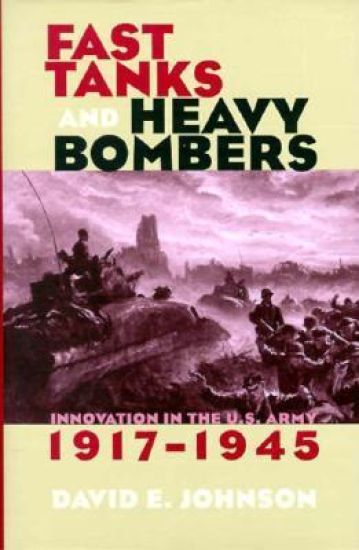
Fast Tanks and Heavy Bombers

Fast Tanks and Heavy Bombers

David E. Johnson

Cornell University Press
1998
sidottu
The U.S. Army entered World War II unprepared. In addition, lacking Germany's blitzkrieg approach of coordinated armor and air power, the army was organized to fight two wars: one on the ground and one in the air. Previous commentators have blamed Congressional funding and public apathy for the army's unprepared state. David E. Johnson believes instead that the principal causes were internal: army culture and bureaucracy, and their combined impact on the development of weapons and doctrine. Johnson examines the U.S. Army's innovations for both armor and aviation between the world wars, arguing that the tank became a captive of the conservative infantry and cavalry branches, while the airplane's development was channeled by air power insurgents bent on creating an independent air force. He maintains that as a consequence, the tank's potential was hindered by the traditional arms, while air power advocates focused mainly on proving the decisiveness of strategic bombing, neglecting the mission of tactical support for ground troops. Minimal interaction between ground and air officers resulted in insufficient cooperation between armored forces and air forces. Fast Tanks and Heavy Bombers makes a major contribution to a new understanding of both the creation of the modern U.S. Army and the Army's performance in World War II. The book also provides important insights for future military innovation.
Fast Tanks and Heavy Bombers

Fast Tanks and Heavy Bombers

David E. Johnson

Cornell University Press
2003
pokkari
The U.S. Army entered World War II unprepared. In addition, lacking Germany's blitzkrieg approach of coordinated armor and air power, the army was organized to fight two wars: one on the ground and one in the air. Previous commentators have blamed Congressional funding and public apathy for the army's unprepared state. David E. Johnson believes instead that the principal causes were internal: army culture and bureaucracy, and their combined impact on the development of weapons and doctrine. Johnson examines the U.S. Army's innovations for both armor and aviation between the world wars, arguing that the tank became a captive of the conservative infantry and cavalry branches, while the airplane's development was channeled by air power insurgents bent on creating an independent air force. He maintains that as a consequence, the tank's potential was hindered by the traditional arms, while air power advocates focused mainly on proving the decisiveness of strategic bombing, neglecting the mission of tactical support for ground troops. Minimal interaction between ground and air officers resulted in insufficient cooperation between armored forces and air forces. Fast Tanks and Heavy Bombers makes a major contribution to a new understanding of both the creation of the modern U.S. Army and the Army's performance in World War II. The book also provides important insights for future military innovation.
Nature's Flyers

Nature's Flyers

David E. Alexander; Steven Vogel

Johns Hopkins University Press
2002
sidottu
David E. Alexander's fascination with the many animals and plants that have harnessed the air is evident in Nature's Flyers: Birds, Insects, and the Biomechanics of Flight, a detailed account of our current scientific understanding of the primary aspects of flight in nature. Instead of relying on elaborate mathematical equations, Alexander explains the physical basis of flight with sharp prose and clear diagrams. Drawing upon bats, birds, insects, pterosaurs, and even winged seeds, he details the basic operating principles of wings and then moves progressively through more complex modes of animal flight, including gliding, flapping, and maneuvering. In addition to summarizing the latest thinking about flight's energy costs, Alexander presents a holistic view of flight and its ramifications as he explores the ecology and evolution of flying animals, addressing behaviorally important topics such as migration and navigation. With somewhat surprising answers, the author then concludes his study by examining the extent to which natural flight has been inspiring or instructive for the architects of human flight-airplane designers and engineers.
Nature's Flyers

Nature's Flyers

David E. Alexander; Steven Vogel

Johns Hopkins University Press
2005
pokkari
David E. Alexander's fascination with the many animals and plants that have harnessed the air is evident in Nature's Flyers: Birds, Insects, and the Biomechanics of Flight, a detailed account of our current scientific understanding of the primary aspects of flight in nature. Instead of relying on elaborate mathematical equations, Alexander explains the physical basis of flight with sharp prose and clear diagrams. Drawing upon bats, birds, insects, pterosaurs, and even winged seeds, he details the basic operating principles of wings and then moves progressively through more complex modes of animal flight, including gliding, flapping, and maneuvering. In addition to summarizing the latest thinking about flight's energy costs, Alexander presents a holistic view of flight and its ramifications as he explores the ecology and evolution of flying animals, addressing behaviorally important topics such as migration and navigation. With somewhat surprising answers, the author then concludes his study by examining the extent to which natural flight has been inspiring or instructive for the architects of human flight-airplane designers and engineers.