Kirjojen hintavertailu. Mukana 12 016 292 kirjaa ja 12 kauppaa.

Kirjahaku

Etsi kirjoja tekijän nimen, kirjan nimen tai ISBN:n perusteella.

1000 tulosta hakusanalla David R Addleman

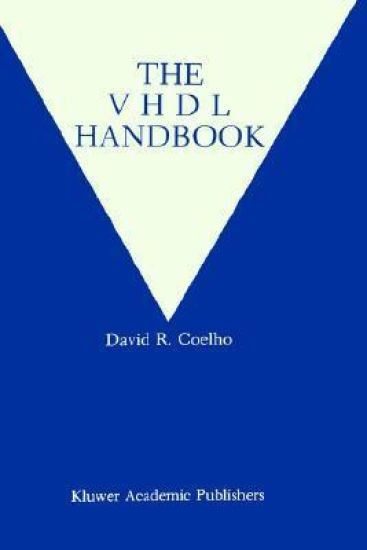
The VHDL Handbook

The VHDL Handbook

David R. Coelho

Springer
1989
sidottu
This book is intended to be a working reference for electronic hardware de­ signers who are interested in writing VHDL models. A handbook/cookbook approach is taken, with many complete examples used to illustrate the fea­ tures of the VHDL language and to provide insight into how particular classes of hardware devices can be modelled in VHDL. It is possible to use these models directly or to adapt them to similar problems with minimal effort. This book is not intended to be a complete reference manual for the VHDL language. It is possible to begin writing VHDL models with little background in VHDL by copying examples from the book and adapting them to particular problems. Some exposure to the VHDL language prior to using this book is recommended. The reader is assumed to have a solid hardware design background, preferably with some simulation experience. For the reader who is interested in getting a complete overview of the VHDL language, the following publications are recommended reading: • An Introduction to VHDL: Hardware Description and Design [LIP89] • IEEE Standard VHDL Language Reference Manual [IEEE87] • Chip-Level Behavioral Modelling [ARMS88] • Multi-Level Simulation of VLSI Systems [COEL87] Other references of interest are [USG88], [DOD88] and [CLSI87] Use of the Book If the reader is familiar with VHDL, the models described in chapters 3 through 7 can be applied directly to design problems.
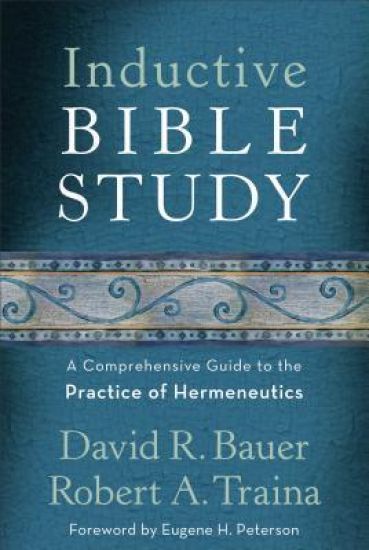
Inductive Bible Study – A Comprehensive Guide to the Practice of Hermeneutics

Inductive Bible Study – A Comprehensive Guide to the Practice of Hermeneutics

David R. Bauer; Robert A. Traina; Eugene Peterson

Baker Academic, Div of Baker Publishing Group
2014
nidottu
Following up Robert Traina's classic Methodical Bible Study, this book introduces the practice of inductive Bible study to a new generation of students, pastors, and church leaders. The authors, two seasoned educators with over sixty combined years of experience in the classroom, offer guidance on adopting an inductive posture and provide step-by-step instructions on how to do inductive Bible study. They engage in conversation with current hermeneutical issues, setting forth well-grounded principles and processes for biblical interpretation and appropriation. The process they present incorporates various methods of biblical study to help readers hear the message of the Bible on its own terms.
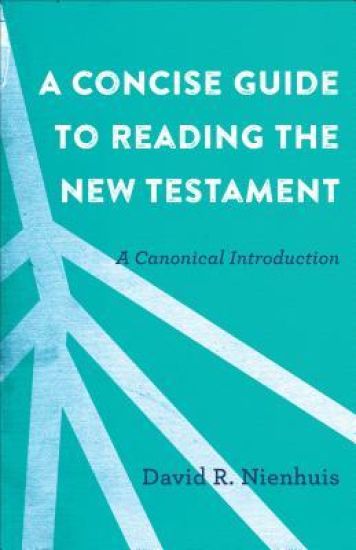
A Concise Guide to Reading the New Testament – A Canonical Introduction

A Concise Guide to Reading the New Testament – A Canonical Introduction

David R. Nienhuis

Baker Academic, Div of Baker Publishing Group
2018
nidottu
The New Testament came together, and comes to us, not as a randomly sorted set of individual books but as a definitely shaped and ordered whole. This concise, theological introduction to the New Testament sheds light on the interpretive significance of the canon's structure and sequence and articulates how the final shape of the canon is formative for Christian discipleship. Providing an essential overview often missing from New Testament books and courses, this book will serve as an accessible supplement to any New Testament or Bible introduction textbook.
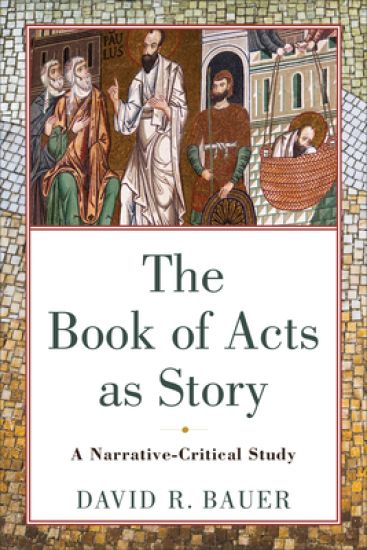
The Book of Acts as Story – A Narrative–Critical Study

The Book of Acts as Story – A Narrative–Critical Study

David R. Bauer

Baker Academic, Div of Baker Publishing Group
2021
nidottu
A senior New Testament scholar and teacher helps students understand the historical, literary, and theological issues of the book of Acts and introduces key concepts in the field of narrative criticism. This volume captures the message of the book of Acts by taking seriously the book's essential character as a powerful story through which Luke communicates profound theological truth. While giving attention to historical background, its purpose is to lead readers through a close reading that yields fresh insights into passages throughout Acts.
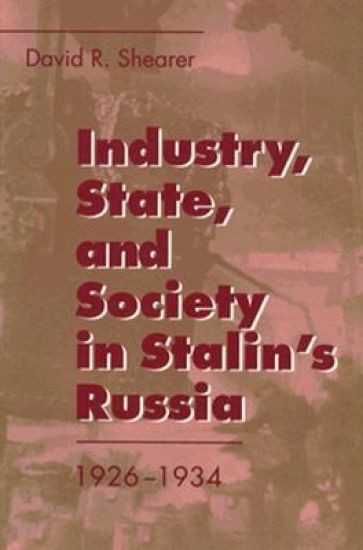
Industry, State, and Society in Stalin's Russia, 1926–1934

Industry, State, and Society in Stalin's Russia, 1926–1934

David R. Shearer

Cornell University Press
1997
pokkari
In his reexamination of the origins of the Stalinist state during the formative period of rapid industrialization in the late 1920s and early 1930s, David R. Shearer argues that a centralized state-controlled economic system was the consciously conceived political creation of Stalinist leaders rather than the inevitable by-product of socialist industrialization. Focusing on the different economic and bureaucratic cultures within the industrial system, Shearer reconstructs the debates in 1928 and 1929 over administrative, financial, and commercial reform. He uses information from recently opened archives to show that attempts by the state's trading organizations to create a commercial economy enjoyed wide support, offering a model that combined planning and rapid industrialization with social democracy and economic prosperity. In an effort to crush the syndicate movement and establish tight political control over the economy, Stalinist leaders intervened with a program of radical reforms. Shearer demonstrates that professional engineers, planners and industrial administrators in many cases actively supported the creation of a powerful industrial state unhampered by domestic social and economic constraints. The paradoxical result, Shearer shows, was a loss of control. The overly centralized system that emerged during the first Five-Year Plan was rendered incoherent by periodic economic crises and the continuing influence of partially suppressed social and market forces.
The Book of Lamentations

The Book of Lamentations

David R. Slavitt

Johns Hopkins University Press
2001
pokkari
Distinguished poet and translator David R. Slavitt here provides a translation of and meditation upon the Book of Lamentations, the biblical account of the destruction of the Temple in Jerusalem in 587 B.C.,on the ninth day of the Jewish month of Av-Tish'a b'Av. (Six centuries later the Romans destroyed the second Temple on the same day.) Most of the Jewish population was deported to Babylon, and the ensuing period came to be known as the Babylonian Captivity. According to tradition, the Book of Lamentations was written in response to this political, social, and religious crisis. The five poems composing the book express Israel's sorrow, brokenness, and bewilderment before God. Tish'a b'Av is the day on which observant Jews fast and pray. And mourn. As Slavitt observes in his meditation:" It is forbidden on Tish'a b'Av even to study the Torah, except for the Book of Job and the Book of Lamentations. This is the day on which we grieve for every terrible thing that happens in this world. It is the worst day of the year."Slavitt's meditation provides a context for reading the scriptural text. Cast in the same style as the Hebrew poetry, his meditation recounts how sorrow and catastrophe have characterized so much of the history of the Jewish people, from their enslavement in Egypt to the Holocaust of Nazi Germany. Few translations of this remarkable book of the Bible attempt to reproduce in English, as Slavitt does here, the Hebrew acrostics. In the original, each verse begins with a different letter of the Hebrew alphabet in sequential order; Slavitt elegantly reproduces this effect using the first 22 letters of the English alphabet. More than a structural or mnemonic device, Slavitt argues, the acrostics are "a serious assertion that the language itself is speaking, that the speech is inspired, and that there is, beyond all the disaster and pain the book recounts, an intricacy and an orderly coherence."
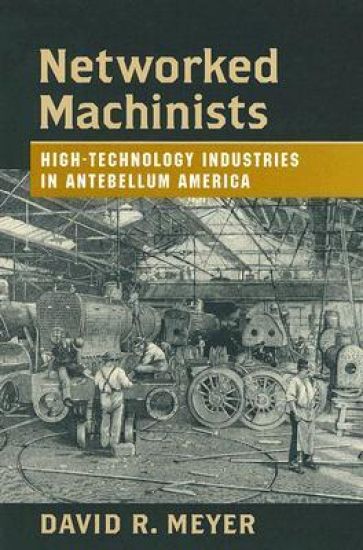
Networked Machinists

Networked Machinists

David R. Meyer

Johns Hopkins University Press
2007
sidottu
A century and a half before the modern information technology revolution, machinists in the eastern United States created the nation's first high technology industries. In iron foundries and steam-engine works, locomotive works, machine and tool shops, textile-machinery firms, and firearms manufacturers, these resourceful workers pioneered the practice of dispersing technological expertise through communities of practice. In the first book to study this phenomenon since the 1916 classic, English and American Tool Builders, David R. Meyer examines the development of skilled-labor exchange systems, showing how individual metalworking sectors grew and moved outward. He argues that the networked behavior of machinists within and across industries helps explain the rapid transformation of metalworking industries during the antebellum period, building a foundation for the sophisticated, mass production/consumer industries that figured so prominently in the later U.S. economy.
Reading the Epistles of James, Peter, John and Jude as Scripture

Reading the Epistles of James, Peter, John and Jude as Scripture

David R. Nienhuis

William B Eerdmans Publishing Co
2013
nidottu
Through a detailed examination of the historical shaping and final canonical shape of seven oft-neglected New Testament letters, Reading the Epistles of James, Peter, John, and Jude as Scripture introduces readers to the historical, literary, and theological integrity of this indispensable apostolic witness.While most scholars today interpret biblical texts in terms of their individual historical points of composition, David Nienhuis and Robert Wall argue that a theological approach to this part of Scripture is better served by attending to these texts' historical point of canonization -- those key moments in the ancient church's life when apostolic writings were grouped together to maximize the Spirit's communication of the apostolic rule of faith to believers everywhere.Reading the Epistles of James, Peter, John, and Jude as Scripture is the only treatment of the Catholic Epistles that approaches these seven letters as an intentionally designed and theologically coherent canonical collection.
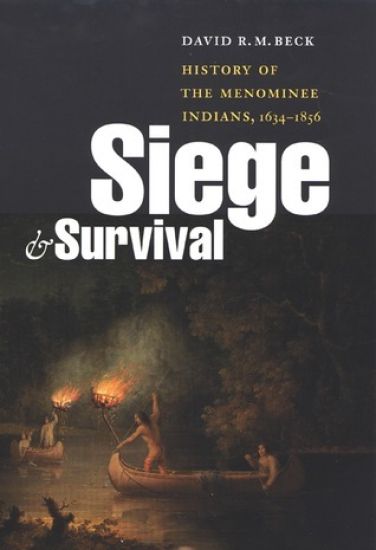
Siege and Survival

Siege and Survival

David R. M. Beck

University of Nebraska Press
2002
sidottu
The Menominee Indians, or "wild rice people," have lived for thousands of years in the region that is now called Wisconsin and are the oldest Native American community that still lives there. But the Menominee's struggle for survival and rights to their land has been long and hard. David R. M. Beck draws on interviews with tribal members, stories recorded by earlier researchers, and exhaustive archival research to give us a full account of the Menominee's early history. Beginning in the seventeenth century, the Menominee's traditional way of life was intensely pressured by a succession of outsiders. Native nations attacked other Native nations, forcing their dislocation, and Europeans introduced the fur trade to the area, disrupting the traditional economy and way of life. In the nineteenth century Anglo-Americans poured into the Old Northwest and surrounded the Menominee; as a result the Menominee people were confined to a reservation in 1854. Beck examines these crucial early events from an ethnohistorical perspective, adding Menominee voices to the story and showing how numerous individuals and leaders in the trading era and later worked diligently to survive. The story is a complicated one: some Menominees encouraged radical cultural change, while others—as well as some non-Menominees—aided the community in its struggle to maintain traditions. Beck provides the most complete written history to date of this enduring Indian nation.
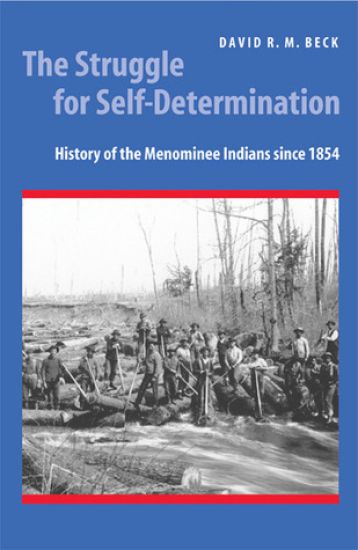
The Struggle for Self-Determination

The Struggle for Self-Determination

David R. M. Beck

University of Nebraska Press
2007
pokkari
Drawing on meticulous archival research and a close working relationship with the Menominee Historic Preservation Department, David R. M. Beck picks up where his earlier work, Siege and Survival: History of the Menominee Indians, 1634–1856, ended. The Struggle for Self-Determination begins with the establishment of a small reservation in the Menominee homeland in northeastern Wisconsin at a time when the Menominee economic, political, and social structure came under aggressive assault. For the next hundred years the tribe attempted to regain control of its destiny, enduring successive policy attacks by governmental, religious, and local business sources. The Menominee's rich forests became a battleground on which they refused to cede control to the U.S. government. The struggle climaxed in the mid-twentieth century when the federal government terminated its relationship with the tribe. Throughout this time the Menominee fought to maintain their connection to their past and to regain control of their future. The lessons they learned helped them through their greatest modern disaster—termination—and enabled them to reconstruct a government and a reservation as the twentieth century drew to a close. The Struggle for Self-Determination reinterprets that story and includes the viewpoint of the Menominee in the telling of it.
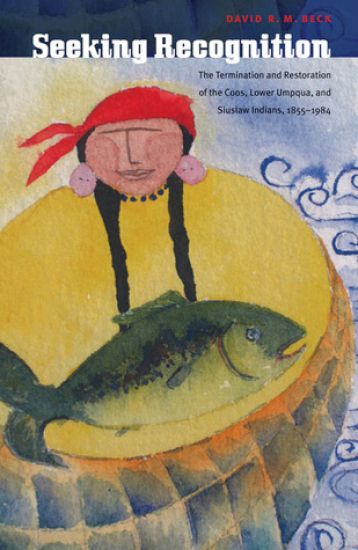
Seeking Recognition

Seeking Recognition

David R. M. Beck

University of Nebraska Press
2009
sidottu
In 1855 the Coos, Lower Umpqua, and Siuslaw tribes of Oregon signed the Empire Treaty with the United States, which would have provided them rights as federally acknowledged tribes with formal relationships with the U.S. government. The treaty, however, was never ratified by Congress; in fact, the federal government lost the document. Tribal leaders spent the next century battling to overcome their quasi-recognized status, receiving some federal services for Indians but no compensation for the land and resources they lost. In 1956 the U.S. government officially terminated their tribal status as part of a national effort to eliminate the government's relationship with Indian tribes. These tribes vehemently opposed termination yet were not consulted in this action. In Seeking Recognition, David R. M. Beck examines the termination and eventual restoration of the Confederated Tribes at Coos, Lower Umpqua, and Siuslaw some thirty years later, in 1984. Within this historical context, the termination and restoration of the tribes take on new significance. These actions did not take place in a historical vacuum but were directly connected with the history of the tribe's efforts to gain U.S. government recognition from the very beginning of their relations.
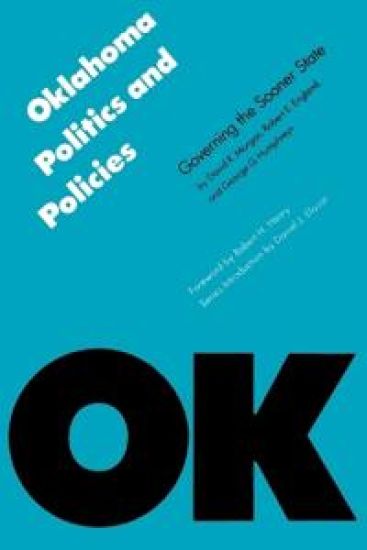
Oklahoma Politics and Policies

Oklahoma Politics and Policies

David R. Morgan; Robert E. England; George G. Humphreys; Robert H. Henry

University of Nebraska Press
1991
sidottu
'A first-rate overview of Oklahoma politics. Interesting, informative, and current, this work is a superb contribution to the literature on state politics' - Lelan McLemore, author of "Task-Related Norms in a State Legislature: The Case of Oklahoma." Oklahoma is a plains state exemplifying the Middle American virtues of family, lodge, and church; a southern state in the path of the power shift from the industrial East to the energy-rich sunbelt; a western state of modern cowboys and rodeos. Small wonder its political culture is so varied. The authors of "Oklahoma Politics and Policies" contend that Oklahoma is a paradox - a state struggling for a clear sense of identity where the old and new vie for the allegiance of its citizens. David R. Morgan, Robert E. England, and George O. Humphreys examine the history of Oklahoma and the place of Native Americans in this former Indian Territory; the state's links to the federal government; its executive, legislative, and judicial systems; political parties and interest groups; local government; and the current policy issues that confront its citizens. They assess the attempts of Oklahomans to revive their economy. The 1990s will be bright, the authors suggest, if Oklahomans can put aside internal conflicts and the politics of negativism in approaching economic and social problems more pragmatically. David R. Morgan is a professor of political science at the University of Oklahoma and the author of "Managing Urban America (1979)" and, with others, "The Oklahoma Voter (1977)". Robert E. England is a professor of political science at Oklahoma State University; he is a coauthor of "Race, Class, and Education: The Politics of Second Generation Discrimination" (1989). George O. Humphreys, research director of the Oklahoma House of Representatives, is the author of "Taylorism in France, 1904-1920: The Impact of Scientific Management on Factory Relations and Society" (1986).
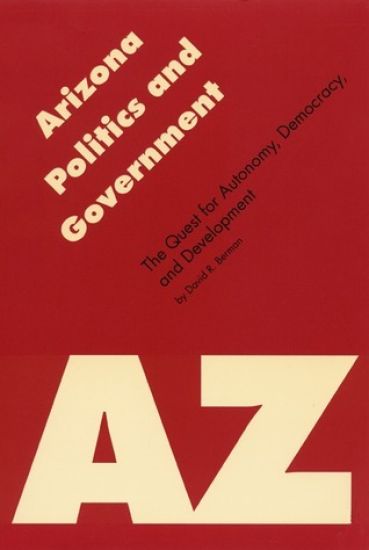
Arizona Politics and Government

Arizona Politics and Government

David R. Berman

University of Nebraska Press
1998
pokkari
Arizona Politics and Government analyzes the development and operation of one of the country’s fastest-growing states. David R. Berman cogently explains the distinctive history and culture of Arizona politics, thoroughly describing the development, structure, and operation of major components of the governing system. According to Berman, three forces have shaped the history, structure, and present character of Arizona politics: autonomy, the push for democracy, and economic development. Arizonans’ belief in autonomy, derived from the traditional western individualism of settlers, has deeply influenced the role of their government, their views of outsiders, and intergovernmental relations. Concerns about democracy produced several progressive reforms in the early twentieth century, heightened awareness of the dangers of special-interest influence and corruption, and resulted in a long struggle to open the political system. A quest for economic development has been another major force in state politics, becoming especially significant during the last few decades.
Oklahoma Politics and Policies

Oklahoma Politics and Policies

David R. Morgan; Robert E. England; George G. Humphreys; Robert H. Henry

University of Nebraska Press
1991
pokkari
Oklahoma is a plains state exemplifying the Middle American virtues of family, lodge, and church; a southern state in the path of the power shift from the indus-trial East to the energy-rich sunbelt; a western state of modern cowboys and rodeos. Small wonder its political culture is so varied. The authors of Oklahoma Politics and Policies contend that Oklahoma is a paradox—a state struggling for a clear sense of identity where the old and new vie for the allegiance of its citizens. David R. Morgan, Robert E. England, and George O. Humphreys examine the history of Oklahoma and the place of Native Americans in this former Indian Territory; the state's links to the federal government; its executive, legislative, and judicial systems; political parties and interest groups; local government; and the current policy issues that confront its citizens. They assess the attempts of Oklahomans to revive their economy. The 1990s will be bright, the authors sug-gest, if Oklahomans can put aside internal conflicts and the politics of negativism in approaching economic and social problems more pragmatically.
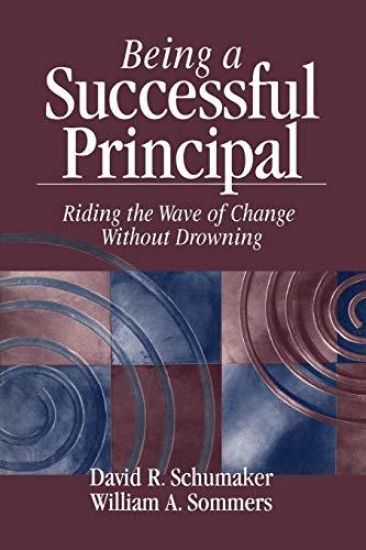
Being a Successful Principal

Being a Successful Principal

David R. Schumaker; Sommers William A.

Corwin Press Inc
2000
nidottu
The book is intended to provide practical solutions to everyday problems that principals encounter. It is also a guideline for becoming a true leader and leading for school change. The authors organize the book around three principals of Cognitive Coaching: developing trust, learning, and holonomy. Each chapter will have a theme, research citations for further reading, and anecdotal stories about what worked in real schools. This is not a book of theory, but a book built on the lived experiences of school principals.
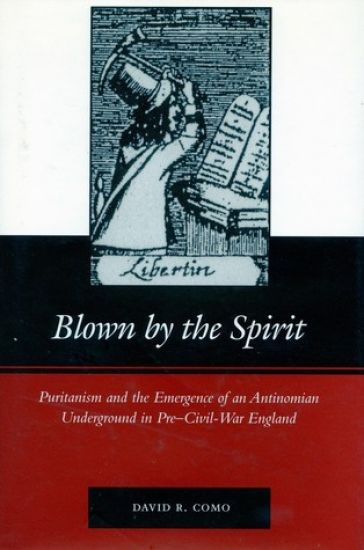
Blown by the Spirit

Blown by the Spirit

David R. Como

Stanford University Press
2004
sidottu
This study explores the intersection of politics, religious thought, and religious culture in pre-revolutionary England, using hitherto unknown or overlooked manuscripts and printed material to reconstruct and contextualize a forgotten but highly significant antinomian religious subculture that evolved at the margins of the early seventeenth-century puritan community. By reconstructing this story, Blown by the Spirit offers a major revision of current understanding of Puritanism and the puritan community. In the process, the author illuminates the obscure and tangled question of the origins of civil-war radicalism, thereby helping to explain the course, consequences, and ultimate failure of the English revolution.
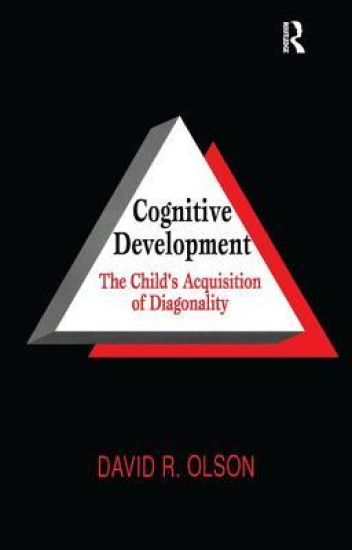
Cognitive Development

Cognitive Development

David R. Olson

Psychology Press
1996
nidottu
When this book was first published, David Olson was examining the developing representation and use of diagonals in the context of much larger questions, questions also explored by Vygotsky, Cassirer, Gombrich, and Bruner. These include such issues as conceptual development, conceptual change, and stage-like transitions in one's knowledge and belief. Some of these problems remain at virtually the same stage of solution to this day. Other problems have indeed been solved or at least come closer to solution, leading the author to think about the precise cognitive representations that allowed for the cognitive growth he examined in such scrupulous detail. The author hopes that both readers and re-readers of this volume will be led to wonder -- as he did while working on the book -- just what there is about a simple diagonal that makes its reproduction so difficult. In so doing, readers will again be reminded of the remarkable resources that children bring to bear on their understanding of the world as well as the blind spots that no simple telling can quite fill in.
Executed on a Technicality

Executed on a Technicality

David R. Dow

Beacon Press
2006
pokkari
When David Dow took his first capital case, he supported the death penalty. He changed his position as the men on death row became real people to him, and as he came to witness the profound injustices they endured: from coerced confessions to disconcertingly incompetent lawyers; from racist juries and backward judges to a highly arbitrary death penalty system. It is these concrete accounts of the people Dow has known and represented that prove the death penalty is consistently unjust, and it's precisely this fundamental-and lethal-injustice, Dow argues, that should compel us to abandon the system altogether.
Equinox and Other Poems

Equinox and Other Poems

David R. Slavitt

Louisiana State University Press
1989
nidottu
In his newest volume of verse, David R. Slavitt offers some of his finest poetry to date. Equinox is a collection of twenty-five poems on various subjects. They are occasional, the that most of them are the result of specific moments of experience, whether of an art work, as in ""Canaletto's Ruin,"" or a moment of natural beauty, as in ""The Field of Light"":The road, past Worcester and sundown, unwound in hollows' evergreen shadows, velvet billows: the firm earth melted under the wheels. But then, at a turn onto high ground, I entered into a field of light. Light was its crop, a yield of gold that oozed up like the sweat of plums.Throughout the collection, Slavitt explores the tensions between lawful order and murderous chaos, the desire to preserve things against inevitable decline, even the conflict between honest desire and the parody of it, as manifested in ""Refinement"": ""Ours are plenty's penalties, gout, girth, / atherosclerosis, kidney stones, / and ennui..."" And he offers meditations on the relations between generations, as in ""Circus Costumes,"" in which he recalls his grandfather, and ""Letter to a Grandchild.""In the title poem, Slavitt presents a moving and controlled portrayal of the difficulties of coming to terms with death, especially the violent death, of a loved one:A balance shifts, and we can feel the night heavy in the scale, darkness and cold will weigh with us from now on . . .Wise and profound, frequently warm and occasionally bitter, these are the poems of a master craftsman.