Kirjojen hintavertailu. Mukana 11 244 527 kirjaa ja 12 kauppaa.

Kirjahaku

Etsi kirjoja tekijän nimen, kirjan nimen tai ISBN:n perusteella.

1000 tulosta hakusanalla Doris Howe

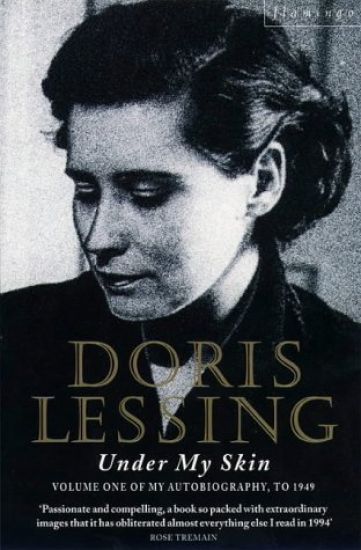
Under My Skin

Under My Skin

Doris Lessing

HARPERCOLLINS PUBLISHERS
1995
nidottu
The first volume of the autobiography of Doris Lessing, author of ‘The Grass is Singing’ and ‘The Golden Notebook’, and Winner of the Nobel Prize for Literature 2007. Winner of the James Tait Black Prize 1994. Doris Lessing’s autobiography begins with her childhood in Africa and ends on her arrival in London in 1949 with the typescript of her first novel in her suitcase. It charts the evolution first of her consciousness, then of her sexuality and finally of her political awareness with an almost overwhelming immediacy, and is as distinctive and challenging as anything she has ever written. It is already recognised as one of the great autobiographies of the twentieth century.
Mara and Dann

Mara and Dann

Doris Lessing

HARPERCOLLINS PUBLISHERS
2000
nidottu
A visionary novel from Doris Lessing, winner of the Nobel Prize for Literature. It is sooner than you might think. And the Earth’s climate is much changed – it’s colder than ever before in the north, and unbearably dry and hot in the south. Mara, who is seven, and her four-year-old brother Dann find themselves somewhere very strange, not home … They are taken in by a kindly, grandmotherly woman, but this new life is hard: hunger, dirt, thirst and danger are the children’s constant companions. Drought and fire carry off their adoptive home and force them to set off northward into the unknown, to experience a series of adventures that bring them to an altogether altered world, where they can start to learn and build anew. Doris Lessing has written a compelling, troubling and entertaining novel that, through the remarkable odyssey of a brother and sister living in the imagined future, manages to tell us a great deal about the present we perceive only dimly and scarcely know how to value.
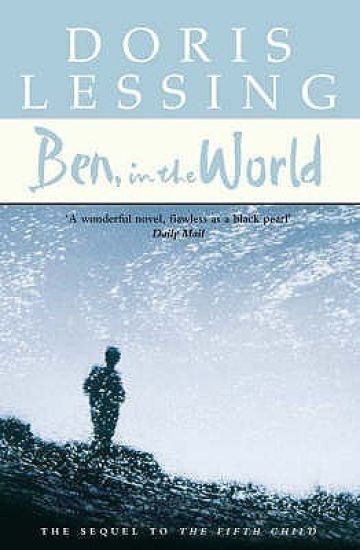
Ben, in the World

Ben, in the World

Doris Lessing

HARPERCOLLINS PUBLISHERS
2001
nidottu
From Doris Lessing, winner of the Nobel Prize for Literature, the sequel to one of her most celebrated novels, ‘The Fifth Child’. ‘The Fifth Child’, Doris Lessing’s 1988 novel, made a powerful impact on publication. Its account of idyllic marital and parental bliss shattered by the arrival of the feral fifth child of the Lovatts made for unnerving and compulsive reading. That child, Ben, is the central character of this sequel, which picks up the fable at the end of his childhood and takes our primal, misunderstood, maladjusted teenager out into the world. He meets mostly with mockery, fear and incomprehension, but with just enough kindness and openness to keep him afloat as his adventures take him from London to the south of France and on to South America in his restless quest for community, companionship and peace. Lessing employs a plain, unadorned prose fit for fables; again, we have a childlike perspective at the heart of the book; again, the world in all its malevolence and misapprehension swirls around at the edge, while, occasionally, a strong character steps forward to try to set a good example.
The Diaries of Jane Somers

The Diaries of Jane Somers

Doris Lessing

HARPERCOLLINS PUBLISHERS
2002
nidottu
First published in 1984, under a pseudonym, as ‘The Diary of a Good Neighbour’ and ‘If the Old Could …’, now published as ‘The Diaries of Jane Somers’, this is in many ways classic Lessing. As resonant with social and political themes as ‘The Golden Notebook’, Lessing returns to the realism of her early fiction with the wisdom and experience of maturity. The diaries introduce us to Jane, an intelligent and beautiful magazine editor concerned with success, clothes and comfort. But her real inadequacy is highlighted when first her husband, then her mother, die from cancer and Jane feels strangely removed. In an attempt to fill this void, she befriends ninety-something Maudie, whose poverty and squalor contrast so radically with the glamour and luxury of the magazine world. The two gradually come to depend on each other – Maudie delighting Jane with tales of London in the 1920s and Jane trying to care for the rapidly deteriorating old woman. ‘The Diary of Jane Somers’ contrasts the helplessness of the elderly with that of the young as Jane is forced to care for her nineteen-year-old drop-out niece Kate who is struggling with an emotional breakdown. Jane realises that she understands young people as little as she so recently did the old.
To Room Nineteen

To Room Nineteen

Doris Lessing

HARPERCOLLINS PUBLISHERS
2002
nidottu
From "To Room Nineteen", a study of a controlled middle class marriage "grounded in intelligence", to the shocking "A Woman on the Roof", where a workman becomes obsessed with a pretty sunbather, this collection of stories bears witness to Doris Lessing's perspective on the human condition.
The Grandmothers

The Grandmothers

Doris Lessing

HARPERCOLLINS PUBLISHERS
2004
nidottu
Four novellas by Doris Lessing, winner of the Nobel Prize for Literature, that once again show her to be unequalled in her ability to capture the truth of the human condition. The title story, ‘The Grandmothers’, is an astonishing tour de force, a shockingly intimate portrait of an unconventional extended family and the lengths to which they will go to find happiness and love. Written with a keen cinematic eye, the story is a ruthless dissection of the veneer of middle-class morality and convention. ‘Victoria and the Staveneys’, takes us through 20 years of the life of a young underprivileged black girl in London. A chance meeting introduces her to the Staveneys – a liberal white middle-class family – and, seduced, she falls pregnant by one of the sons. As her daughter grows up, Victoria feels her parental control diminishing as the attractions of the Staveneys’ world exert themselves. An honest and often uncomfortable look at race relations in London over the past few decades, Lessing reaffirms her brilliance at demonstrating the effect of society on the individual. With these novellas, and ‘The Reason for It’ and ‘A Love Child’, Lessing proves once again that she is one of our most valuable and insightful living authors.
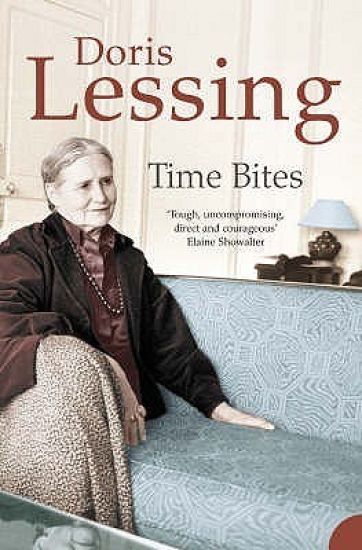
Time Bites

Time Bites

Doris Lessing

HARPERCOLLINS PUBLISHERS
2005
nidottu
Assembled here for the first time in book form are the very best occasional writings from the winner of the Nobel Prize for Literature. A selection of the very best of Doris Lessing's essays: articles on writers as diverse as Jane Austen, Muriel Spark, Virginia Woolf, D. H. Lawrence and Mikael Bulgakov sit alongside autobiographical looks at the beliefs that have shaped Lessing’s thinking. There are adoring and adorable pieces on the beloved cats that she has allowed to share her life, and insightful looks at the Africa in which she grew up, and London and England, the place where she made her home. The range of subjects, cultures and periods within these essays is huge, but the collection is utterly consistent in one key regard: Doris Lessing’s clear-eyed vision and clearly expressed prose are present throughout. There is a huge amount of wisdom and entertainment in these pages, shot through with Lessing’s infectiously forthright, zestful and impish spirit.
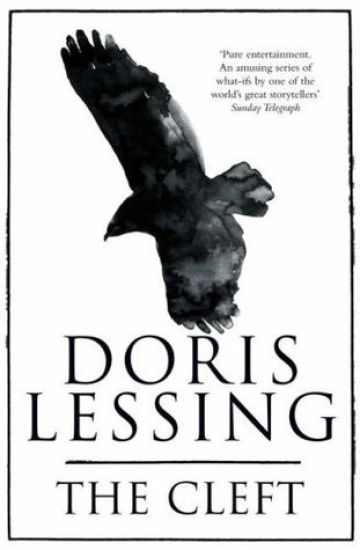
The Cleft

The Cleft

Doris Lessing

HARPERCOLLINS PUBLISHERS
2008
nidottu
Doris Lessing, winner of the Nobel Prize for Literature, invites us to imagine a mythical society free from sexual intrigue, free from jealousy, free from petty rivalries: a society free from men. An old Roman senator embarks on what may be his last endeavour: the retelling of the story of human creation. He recounts the history of the Clefts, an ancient community of women living in an Edenic, coastal wilderness, in the valley of an overshadowing mountain. The Clefts have no need, or knowledge, of men – childbirth is controlled through the cycles of the moon, and their children are always female. But with the birth of a strange, new child – a boy – the harmony of their community is thrown into jeopardy. At first, the Clefts are awestruck by this seemingly malformed child, but as more and more of these threateningly unfamiliar males appear, they are rejected, and are exposed on the nearby mountainside, sacrificed to the patrolling eagles overhead. Unbeknownst to the Clefts, however, these baby males survive, aided by the eagles, and thrive on the other side of the mountain. It is not until a curious young Cleft named Maire goes beyond the geographical, and emotional, divide of the mountain that this disquieting fact is uncovered – forcing the Clefts to accept the prospect of a now shared world, and the possible vengeance of the wronged males. In this fascinating and beguiling novel, Lessing confronts head-on the themes that inspired much of her early writing: how men and women, two similar and yet thoroughly distinct creatures, manage to live side by side in the world, and how the specifics of gender affect every aspect of our existence.
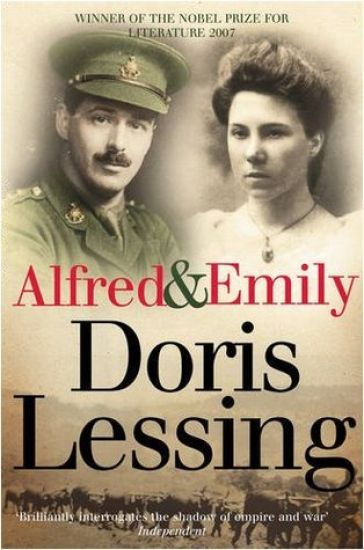
Alfred and Emily

Alfred and Emily

Doris Lessing

HARPERCOLLINS PUBLISHERS
2009
nidottu
Doris Lessing’s first book after winning the Nobel Prize for Literature revisits her childhood in Southern Africa and the lives, both fictional and factual, that her parents led. ‘I think my father'’s rage at the trenches took me over, when I was very young, and has never left me. Do children feel their parents' emotions? Yes, we do, and it is a legacy I could have done without. What is the use of it? It is as if that old war is in my own memory, my own consciousness.’ In this extraordinary book, Doris Lessing explores the lives of her parents, both of them irrevocably damaged by the Great War. Her father wanted the simple life of an English farmer, but shrapnel almost killed him in the trenches, and thereafter he had to wear a wooden leg. Her mother Emily's great love was a doctor who drowned in the Channel, and she spent the war nursing the wounded in the Royal Free Hospital. In the first half of this book, Lessing imagines the lives her parents might have made for themselves had there been no war, a story that has them meeting at a village cricket match as children but leading separate lives. This is followed by a piercing examination of their lives as they actually came to be in the shadow of that war, their move to Rhodesia, a damaged couple hulking over Lessing’s childhood in a strange land. ‘Here I still am,’ says Doris Lessing, ‘trying to get out from under that monstrous legacy, trying to get free.’
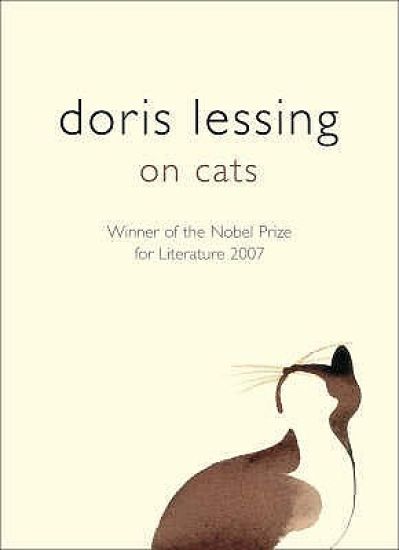
On Cats

On Cats

Doris Lessing

HARPERCOLLINS PUBLISHERS
2008
nidottu
A collection of charming and celebrated writings about cats, from Doris Lessing, winner of the Nobel Prize for Literature. Doris Lessing’s love affair with cats began at a young age, when she became intrigued with the semi-feral creatures on the African farm where she grew up. Her fascination remained undiminished by the handsome domesticated creatures who shared her flats and her life in London and grew into real love with El Magnifico, the awkwardly lovable cat who in his later years suffered the great indignity of becoming a three-legged beast. Consisting of Lessing’s celebrated collection of stories, ‘Particularly Cats and Rufus’, and the poignant though unsentimental memoir, ‘The Old Age of El Magnifico’, this book is a brilliant evocation of the feline world.
Golden Notebook

Golden Notebook

Doris Lessing

Harper Collins UK
2013
pokkari
The landmark novel of the Sixties â?? a powerful account of a woman searching for her personal, political and professional identity while facing rejection and betrayal.
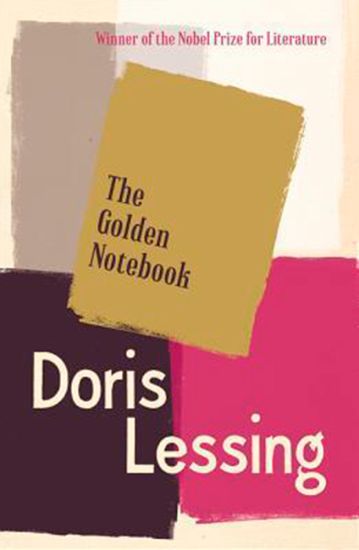
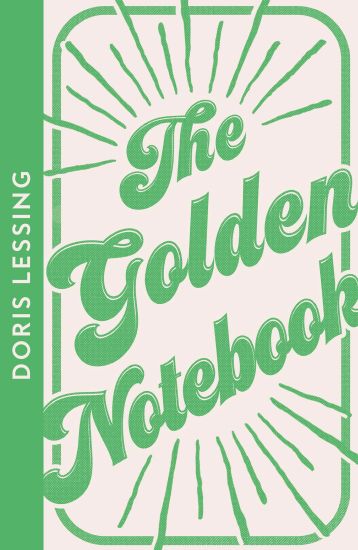
The Golden Notebook

The Golden Notebook

Doris Lessing

HARPERCOLLINS PUBLISHERS
2022
nidottu
Introducing the Collins Modern Classics, a series featuring some of the most significant books of recent times, books that shed light on the human experience – classics which will endure for generations to come. In 1950s London, novelist Anna Wulf struggles with writer’s block. Divorced with a young child, and fearful of going mad, Anna records her experiences in four coloured notebooks: black for her writing life, red for political views, yellow for emotions, blue for everyday events. But it is a fifth notebook – the golden notebook – that finally pulls these wayward strands of her life together. Widely regarded as Doris Lessing’s masterpiece and one of the greatest novels of the twentieth century, ‘The Golden Notebook’ is wry and perceptive, bold and indispensable.