Kirjojen hintavertailu. Mukana 11 342 296 kirjaa ja 12 kauppaa.

Kirjahaku

Etsi kirjoja tekijän nimen, kirjan nimen tai ISBN:n perusteella.

1000 tulosta hakusanalla Edgard Auguin

Edgar Allan Poe

Edgar Allan Poe

Robert A. Lee

Barnes Noble Books-Imports, Div of Rowman Littlefield Pubs., Inc
1989
sidottu
Contents: Introduction, A. Robert Lee; Reflections On, and In, "The Fall of the House of Usher," Mark Kinkead-Weekes; Doodling America: Poe's "MS. Found in a Bottle," Harold Beaver; Poe's Stories of Premature Burial: "That Ere Kind of Style," Arnold Goldman; Poe's Comic Vision and Southwestern Humour, James Justus; Was the Chevalier Left-Handed? Poe's Dupin Stories, Robert Giddings; A Serious Case? Poe's The Narrative of Arthur Gordon Pym, A. Robert Lee; "A Strange Sound, As of a Harp-string Broken": The Poetry of Edgar Allan Poe, David Murray; Law, Lawlessness and Philosophy in Edgar Allan Poe, Eric Mottram; "I am a Virginian": Edgar Allan Poe and the South, Richard Gray; Poe in France: A Myth Revisited, John Weightman
Edward Steichen

Edward Steichen

WW Norton Co
2008
sidottu
Edward Steichen (1879-1973) is unquestionably one of the most prolific, influential, and indeed controversial names in the history of photography. He was admired by many for his achievements as a fine-art photographer, while impressing countless others with the force of his commercial accomplishments. The influence of his legendary exhibition, The Family of Man, is still felt. This volume traces Steichen s career trajectory from his Pictoralist beginnings to his time with Conde Nast through his directorship of photography at the Museum of Modern Art. Hundreds of his photographs are reproduced in stunning four-color to reveal the complexities and nuances of these black-and-white images. Essays from a range of scholars explore his most important subjects and weigh his legacy. Contributors include A. D. Coleman, Joanna T. Steichen, and Ronald Gedrim. With a full bibliography and chronology, this is the most complete and wide-ranging volume on Steichen ever published."
Edward Steichen In High Fashion
Edward Steichen was already a famous painter and photographer in America and abroad when, in early 1923, he was offered the most prestigious position in photography's commercial domain: that of chief photographer for Vogue and Vanity Fair.Over the next fifteen years, Steichen would produce a body of work of unequaled brilliance, dramatizing and glamorizing contemporary culture and its achievers in politics, literature, film, sport, dance, theater, opera, and the world of high fashion. Here are iconic images of Gloria Swanson, Gary Cooper, Greta Garbo, and Charlie Chaplin as well as numerous other celebrities drawn from an archive of more than two thousand original prints. Until now, no more than a handful have been exhibited or published in book form. The photographs of the 1920s and 1930s represent the high point in Steichen's career and are among the most striking creations of twentieth-century photography.
EDWARD HOPPER PAINT/LEDGER CL

EDWARD HOPPER PAINT/LEDGER CL

Edward Hopper; Lyons Deborah

WW Norton Co
2013
sidottu
In his ledger books, Edward Hopper recorded paintings produced and sold, payments made and received, materials used and subjects considered. Juxtaposing selected ledger pages with reproductions of the respective paintings, Edward Hopper: Paintings & Ledger Book Drawings documents the making of and fate of Hopper's most revered works.
Edward Durell Stone

Edward Durell Stone

Mary Anne Hunting

WW Norton Co
2012
sidottu
Framed between the Great Depression and the oil embargo of the early 1970s, the distinguished career of the native Arkansan is represented on four continents, in thirteen foreign countries, and in thirty-two states—his masterpiece the American Embassy chancery (1953–59) in New Delhi, India. Recognized in his prime as one of the nation’s most sought-after architects, Stone’s vast and prestigious workload brought prosperity on a scale rare in architecture in his time; after the death of Frank Lloyd Wright, some supporters thought Stone seemed destined to take the place of his personal hero and close friend as the great national architect. But Stone also drew divergent reactions. Such International Style buildings as his Museum of Modern Art (1935–39) in New York City, an austere, unornamented volume, won critical approval; in contrast, his monumental postwar architecture—the John F. Kennedy Center for the Performing Arts (1958–71) in Washington, DC, among the best known—exposed popular tastes by offering a broader definition of Modernism inclusive of decoration. Enhanced interest in Stone’s architecture has been spurred by the reconsideration of a number of his buildings. The former Gallery of Modern Art (1958–64) at 2 Columbus Circle in New York City, which was lost to a near complete makeover, stimulated vigorous and at times contentious discussion that made evident the need for an objective reassessment. His legacy—of giving form to the aspirations of the emerging consumer culture and of reconciling Modernism with the dynamism of the age—is established in Edward Durell Stone: Modernism’s Populist Architect.
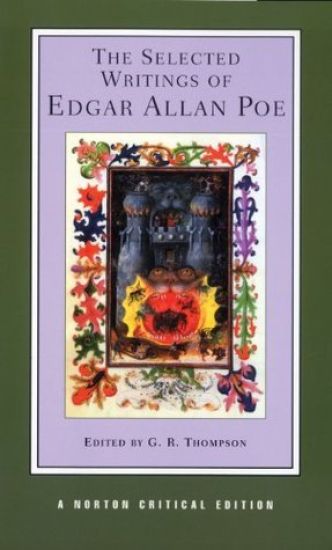
The Selected Writings of Edgar Allan Poe

The Selected Writings of Edgar Allan Poe

Edgar Allan Poe

WW Norton Co
2004
nidottu
In this Norton Critical Edition, G. R. Thompson has fully introduced, annotated, and edited each text. “Backgrounds and Contexts” includes fifty-seven carefully chosen documents that illuminate Poe’s prolific but short career, among them reviews, prefaces, and correspondence by Poe as well as thematic pieces dealing with Transcendentalism and alternative romanticism, sciences of the mind, sensation fiction, and the South and slavery. Fourteen judiciously selected critical essays address Poe’s poetry, fiction, politics, and psychology. Contributors include Floyd Stovall, Robert C. McLean, Richard Wilbur, James W. Gargano, Joseph J. Moldenhauer, Paul John Eakin, Grace Farrell, Liahna Klenman Babener, Barton Levi St. Armand, Joseph N. Riddel, J. Gerald Kennedy, John Carlos Rowe, Terence Whalen, and John T. Irwin. A Selected Bibliography is also included.
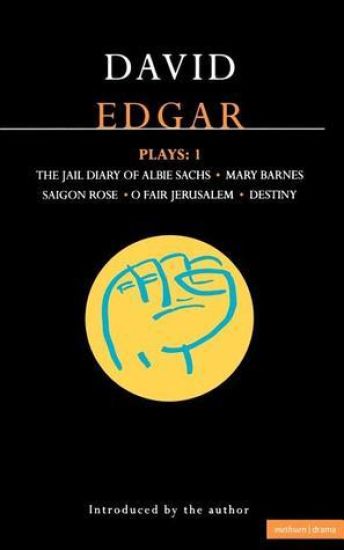
Edgar Plays: 1

Edgar Plays: 1

David Edgar

Methuen Drama
1997
nidottu
This volume contains the best of David Edgar's work from the seventies The Jail Diary of Albie Sachs is an adaptation of the famous South African writer's diaries and deals with solitary confinement and loneliness - "a remarkable, persuasive picture." (Observer); Mary Barnes is based in a commune in the sixties and focuses on schizophrenia "promulgating the theory that schizophrenia can be effectively treated through behaviourist methods alone"; Saigon Rose tackles venereal disease and is "intriguing and entertaining...Edgar handles his themes - loss of innocence and a sense of betrayal - in a bitty, playful style laced with black comedy" (Independent); Oh Fair Jerusalem deals with the black death and Destiny deals with the loss of Empire and the rise of fascism in contemporary Britain "A play which astonished me with its intelligence, density, sympathy and finely controlled anger." Dennis Potter (Sunday Times).
Edgar Plays: 2

Edgar Plays: 2

David Edgar

Methuen Drama
1990
nidottu
"David Edgar, like Balzac, seems to be the secretary for our times" (Guardian) Nicholas Nickleby: "With uncommon audacity Nicholas Nickleby not only takes on Dickens' sprawling novel, it fractures all the petty limitations we have imposed upon the stage as well...A landmark" (New Statesman); In Entertaining Strangers, a community constructs a nativity play: "English left-wing social drama at its sturdiest and finest: human, argumentative, utterly unafraid of human realities, and seething with indignation and compassion" (Sunday Times) and Ecclesiastes, a radio play that looks at the rise and fall of a "fundamentalist" Christian clergyman in the US.
Edgar Plays: 3

Edgar Plays: 3

David Edgar

Methuen Drama
1991
nidottu
"David Edgar, like Balzac, seems to be the secretary for our times" (Guardian) Our Own People: "A courageous and intelligent discussion of race and industrial relations" (City Limits); Teendreams (written with Susan Todd of Monstrous Regiment theatre company) is about the failed revolutionary dreams of a set of teenagers. Maydays compares the phenomenon of post-war social rebellion from Western and Eastern perspectives; That Summer is an "elegantly tangential treatment of the 1984 miners' strike" (Plays and Players) "Edgar never lets his drama simplify into ideological diagram...This elegant, humane play keeps its emphasis on the...results that can ensue when diverse lives briefly brush against each other." (Independent)
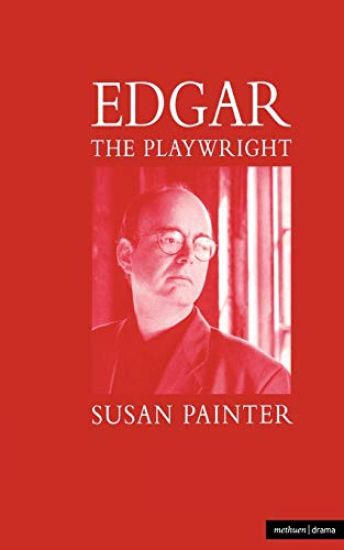
Edgar The Playwright

Edgar The Playwright

Susan Painter

Methuen Drama
1996
nidottu
"The best review I've ever had was when Michael Billington said, 'like Balzac, David Edgar seems to be a secretary for our times'...I'd like to be a secretary for the times through which I'm living." (David Edgar) David Edgar is one of Britain's major political playwrights. He belongs to a generation of dramatists - which includes Howard Brenton, Trevor Griffiths and David Hare - who learned their craft in the Fringe theatres of the late sixties. His best known plays have been written for the Royal National Theatre (including Albert Speer in 2000 and The Shape of the Table) and the Royal Shakespeare Company (Destiny; The Jail Diary of Albie Sachs, Nicholas Nickleby, Maydays and Pentecost). In this full-length study of Edgar's work, Susan Painter examines the social, political and theatrical context of Edgar's career in the theatre and provides a detailed analysis of the plays.
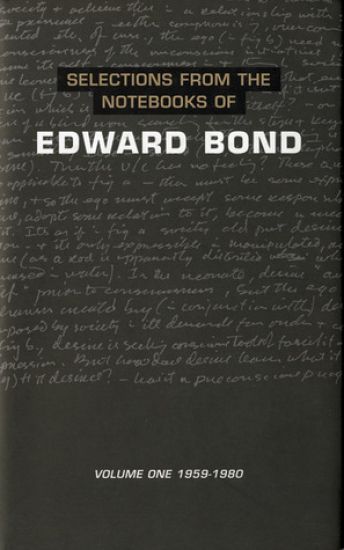
Selections from the Notebooks Of Edward Bond
From his emergence as a young writer at London's Royal Court Theatre to being hailed as "the greatest living English playwright" (The Independent), this first volume of the notebooks of Edward Bond reveals the mind behind some of the most provoc Exploring the meeting point between politics and the art of the writer, Bond's notes offer a rare insight into one of the theatre's foremost thinkers whilst charting the creative progress of his work between 1959 and 1980. As well as providing a detailed commentary on his plays, the notebooks also contain early play drafts, poems and stories, his thoughts on life, art, Brecht, dramatic method and censorship."1 August 1965: I would do almost anything to prevent my play [Saved] being banned except alter one comma at the request of the Lord Chamberlain."Edward Bond is "a great playwright - many, particularly in continental Europe, would say the greatest living English playwright" (Independent)
Selections from the Notebooks Of Edward Bond
This second volume of Edward Bond's notebooks covers the period from Restoration, his historic drama with songs, to Eleven Vests, his play for young people written for Big Brum Theatre-in-Education "There is a cliche - which is also false - that all creative writing is autobiographical. If I were to be asked when you write do you write about your life I would answer when I write I am living my life."Including first drafts of plays, ideas and thoughts on characters, themes, actions and dramatic technique, this selection of notes provides a glimpse into the working mind of one of the world's most provocative playwrights. Alongside the commentaries on the plays, Bond's notes also contain stories and poems. His philosophy on theatre and art and his views on the role of the writer in society are included. Emphasis is given to Bond's critical response to political and moral issues such as Thatcherism, the monarchy, nuclear war, Britain's social classes and our definitions of good and evil.
Edgar Allen Poe
This set comprises 40 volumes covering nineteenth and twentieth century European and American authors. These volumes will be available as a complete set, mini boxed sets (by theme) or as individual volumes. This second set compliments the first 68 volume set of Critical Heritage published by Routledge in October 1995.
Edward the Elder
Edward the Elder, son and successor of King Alfred, was one of the greatest architects of the English state and yet is one of the most neglected kings of English history. During his 24-year reign, Edward led a series of successful campaigns against the Vikings and by the time of his death controlled most of southern and midland England, with his influence also felt in Wales and the north. Edward the Elder is a timely reassessment of his reign and helps to restore this ruler to his rightful place in English history.The period of Edward's reign is notably lacking in primary materials for historians. But by drawing upon sources as diverse as literature, archaeology, coins and textiles, this book brings together a rich variety of scholarship to offer new insight into the world of Edward the Elder. With this wealth of perspectives, Edward the Elder offers a broad picture of Edward's reign and his relation to the politics and culture of the Anglo-Saxon period.
Edward the Elder
Edward the Elder, son and successor of King Alfred, was one of the greatest architects of the English state and yet is one of the most neglected kings of English history. During his 24-year reign, Edward led a series of successful campaigns against the Vikings and by the time of his death controlled most of southern and midland England, with his influence also felt in Wales and the north. Edward the Elder is a timely reassessment of his reign and helps to restore this ruler to his rightful place in English history.The period of Edward's reign is notably lacking in primary materials for historians. But by drawing upon sources as diverse as literature, archaeology, coins and textiles, this book brings together a rich variety of scholarship to offer new insight into the world of Edward the Elder. With this wealth of perspectives, Edward the Elder offers a broad picture of Edward's reign and his relation to the politics and culture of the Anglo-Saxon period.
Edward Sapir
Edward Sapir (1884–1939) was one of the foremost linguists and anthropologists of his time. He is most widely known for his contributions to the study of North American Indian languages. A founder of ethnology, which considers the relationship of culture to language, he was also principal developer of the American (descriptive) school of structural linguistics. Bringing together the best work on Sapir, this long-awaited three-volume collection from Routledge includes a new introduction by the editor, a chronological table of the gathered materials, a bibliography, and a full index. It is destined to be welcomed by all scholars and students of Sapir as an invaluable reference resource.