Kirjojen hintavertailu. Mukana 11 699 587 kirjaa ja 12 kauppaa.

Kirjahaku

Etsi kirjoja tekijän nimen, kirjan nimen tai ISBN:n perusteella.

1000 tulosta hakusanalla Edmundo LLAMAS ALBA

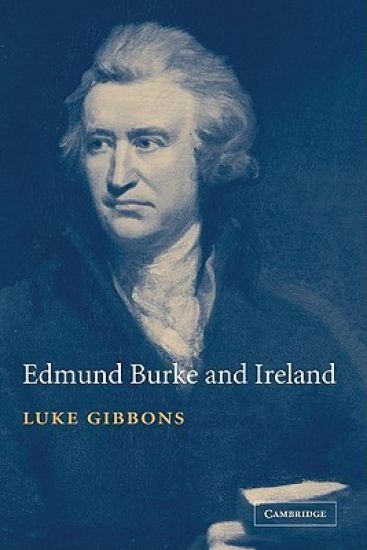
Edmund Burke and Ireland

Edmund Burke and Ireland

Luke Gibbons

Cambridge University Press
2009
pokkari
This pioneering study of Burke's engagement with Irish politics and culture argues that Burke's influential early writings on aesthetics are intimately connected to his lifelong political concerns. The concept of the sublime, which lay at the heart of his aesthetics, addressed itself primarily to the experience of terror, and it is this spectre that haunts Burke's political imagination throughout his career. Luke Gibbons argues that this found expression in his preoccupation with political terror, whether in colonial Ireland and India, or revolutionary America and France. Burke's preoccupation with violence, sympathy and pain allowed him to explore the dark side of the Enlightenment, but from a position no less committed to the plight of the oppressed, and to political emancipation. This major reassessment of a key political and cultural figure will appeal to Irish studies and Post-Colonial specialists, political theorists and Romanticists.
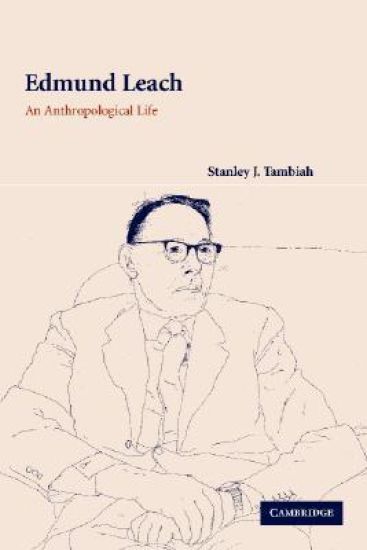
Edmund Leach

Edmund Leach

Stanley J. Tambiah

Cambridge University Press
2002
pokkari
Stanley J. Tambiah discusses the life of Edmund Leach (1910–1989), one of Britain's foremost social and cultural anthropologists, and a man of extraordinary versatility, originality and intellectual breadth. His substantial contributions to anthropology deal with topics including kinship and social organization, hill tribes and valley peoples, tenure and peasant economy, aesthetics, British structural-functional methodology, the structuralism of Levi-Strauss, biblical narratives and the myths of Classical Greece. Leach was not wedded to any settled orthodoxy: what makes his work exciting is his experimentation with new ideas, and his expansions of the horizons of the discipline. His distinctive view of the comparative method allows him to transcend the stale dichotomy between 'them primitives' and 'us moderns', finding instead a dialectic between 'us' and 'them' which opens up the possibility for illuminating common human propensities and capacities.
Edmund Burke and Ireland

Edmund Burke and Ireland

Luke Gibbons

Cambridge University Press
2003
sidottu
This pioneering study of Burke's engagement with Irish politics and culture argues that Burke's influential early writings on aesthetics are intimately connected to his lifelong political concerns. The concept of the sublime, which lay at the heart of his aesthetics, addressed itself primarily to the experience of terror, and it is this spectre that haunts Burke's political imagination throughout his career. Luke Gibbons argues that this found expression in his preoccupation with political terror, whether in colonial Ireland and India, or revolutionary America and France. Burke's preoccupation with violence, sympathy and pain allowed him to explore the dark side of the Enlightenment, but from a position no less committed to the plight of the oppressed, and to political emancipation. This major reassessment of a key political and cultural figure will appeal to Irish studies and Post-Colonial specialists, political theorists and Romanticists.