Kirjojen hintavertailu. Mukana 12 427 994 kirjaa ja 12 kauppaa.

Kirjahaku

Etsi kirjoja tekijän nimen, kirjan nimen tai ISBN:n perusteella.

1000 tulosta hakusanalla Elden Pollock

Elder Abuse and Mistreatment

Elder Abuse and Mistreatment

Joanna Mellor; Patricia Brownell

Routledge Member of the Taylor and Francis Group
2006
sidottu
Provide the most effective service possible to help victims of this growing social problemElder Abuse and Mistreatment is a comprehensive overview of current policy issues, new practice models, and up-to-date research on elder abuse and neglect. Experts in the field provide insight into elder abuse with newly examined populations to create an understanding of how to design service plans for victims of abuse and family mistreatment. The book addresses all forms of abuse and neglect, examining the value issues and ethical dilemmas that social workers face in providing service to elderly abuse victims and their families.Elder abuse and neglect is a social problem of increasing concern to policymakers, practitioners, and researchers in the United States and around the world. Elder Abuse and Mistreatment incorporates health, mental health, and social service perspectives that assist social work and health care professionals with interdisciplinary teamwork. The book examines the Elder Justice Act, the Madrid 2002 International Plan of Action on Ageing, new and emerging practice modalities and international models such as shelter programs and support groups, and the latest research on practice methods, elder abuse with special populations, and interventions with victim-abuse dyads. Topics examined in Elder Abuse and Mistreatment include: abuse reporting statutes the roles of agencies involved in abuse investigations service commonly needed by victims funding sources common impediments to service delivery adult protective services (APS) local, state, and federal policies social and economic inclusion self-determination long-term care and nursing homes consumer fraud and financial abuse dependency and compliance and much moreElder Abuse and Mistreatment: Policy, Practice, and Research is an essential resource for educators and students of social work, nursing, and public health, and for social work practitioners.
Elder Abuse and Mistreatment

Elder Abuse and Mistreatment

Joanna Mellor; Patricia Brownell

Routledge Member of the Taylor and Francis Group
2006
nidottu
Provide the most effective service possible to help victims of this growing social problemElder Abuse and Mistreatment is a comprehensive overview of current policy issues, new practice models, and up-to-date research on elder abuse and neglect. Experts in the field provide insight into elder abuse with newly examined populations to create an understanding of how to design service plans for victims of abuse and family mistreatment. The book addresses all forms of abuse and neglect, examining the value issues and ethical dilemmas that social workers face in providing service to elderly abuse victims and their families.Elder abuse and neglect is a social problem of increasing concern to policymakers, practitioners, and researchers in the United States and around the world. Elder Abuse and Mistreatment incorporates health, mental health, and social service perspectives that assist social work and health care professionals with interdisciplinary teamwork. The book examines the Elder Justice Act, the Madrid 2002 International Plan of Action on Ageing, new and emerging practice modalities and international models such as shelter programs and support groups, and the latest research on practice methods, elder abuse with special populations, and interventions with victim-abuse dyads. Topics examined in Elder Abuse and Mistreatment include: abuse reporting statutes the roles of agencies involved in abuse investigations service commonly needed by victims funding sources common impediments to service delivery adult protective services (APS) local, state, and federal policies social and economic inclusion self-determination long-term care and nursing homes consumer fraud and financial abuse dependency and compliance and much moreElder Abuse and Mistreatment: Policy, Practice, and Research is an essential resource for educators and students of social work, nursing, and public health, and for social work practitioners.
Eden

Eden

Olympia Vernon

Grove Press / Atlantic Monthly Press
2004
nidottu
Scandalizing her rural Mississippi town when she draws a naked woman in the Bible during Sunday School, precocious fourteen-year-old Maddy is made to spend the weekends caring for her terminally ill aunt, a relationship that results in her confrontations with disturbing secrets that overshadow their community. A first novel. Reader's Guide available. Reprint. 25,000 first printing.
Elder Northfield's Home

Elder Northfield's Home

A. Jennie Bartlett

University of Nebraska Press
2015
pokkari
The practice of plural marriage, commonly known as polygamy, stirred intense controversy in postbellum America until 1890, when the Church of Jesus Christ of Latter-day Saints first officially abolished the practice. Elder Northfield's Home, published by A. Jennie Bartlett in 1882, is both a staunchly antipolygamy novel and a call for the sentimental repatriation of polygamy's victims. Her book traces the fate of a virtuous and educated English immigrant woman, Marion Wescott, who marries a Mormon elder, Henry Northfield. Shocked when her husband violates his promise not to take a second wife, Marion attempts to flee during the night, toddler son in her arms and pulling her worldly possessions in his toy wagon. She returns to her husband, however, and the balance of the novel traces the effects of polygamy on Marion, Henry, and their children; their eventual rejection of plural marriage; and their return to a normal and healthy family structure. Nicole Tonkovich's critical introduction includes both historical contextualization and comments on selected primary documents, providing a broader look at the general public's reception of the practice of polygamy in the nineteenth century.
Ellen Browning Scripps

Ellen Browning Scripps

Molly McClain

University of Nebraska Press
2017
sidottu
Molly McClain tells the remarkable story of Ellen Browning Scripps (1836–1932), an American newspaperwoman, feminist, suffragist, abolitionist, and social reformer. She used her fortune to support women’s education, the labor movement, and public access to science, the arts, and education. Born in London, Scripps grew up in rural poverty on the Illinois prairie. She went from rags to riches, living out that cherished American story in which people pull themselves up by their bootstraps with audacity, hard work, and luck. She and her brother, E. W. Scripps, built America’s largest chain of newspapers, linking midwestern industrial cities with booming towns in the West. Less well known today than the papers started by Joseph Pulitzer and William Randolph Hearst, Scripps newspapers transformed their owners into millionaires almost overnight. By the 1920s Scripps was worth an estimated $30 million, most of which she gave away. She established the Scripps Institution of Oceanography in La Jolla, California, and appeared on the cover of Time magazine after founding Scripps College in Claremont, California. She also provided major financial support to organizations worldwide that promised to advance democratic principles and public education. In Ellen Browning Scripps, McClain brings to life an extraordinary woman who played a vital role in the history of women, California, and the American West.
Other Cultures, Elder Years

Other Cultures, Elder Years

Ellen Rhoads Holmes; Lowell D. Holmes

SAGE Publications Inc
1995
nidottu
Holmes and Holmes have revised their 1983 book, and it remains a good supplement for an undergraduate gerontology course or anthropology course. It is written at a readable level, each chapter has a clear summary. . . . It provides an excellent summary of secondary sources, avoiding extensive review of primary research, complicated theory, and methodological issues. --Clinical Gerontologist Hailed as "extremely well organized, balanced, and impartial" in its first edition by The Gerontologist, Other Cultures, Elder Years is once again available in a fully revamped second edition. This new edition provides a comprehensive, comparative viewpoint on our knowledge about worldwide patterns of aging. It addresses everything from demographic patterns to family relations, from perceptions of the life cycle to the impact of modernization on the aged. Replete with summaries of crucial studies from various parts of the world, Other Cultures, Elder Years also offers three extended case descriptions of Inuit, Samoan, and white American aged as well as an examination of aging patterns among major American ethnic groups. Among the other subjects the text addresses are cultural perspectives in health care, the future of aging in America, and creativity and the life cycle. Other Cultures, Elder Years is the key text available for use by anyone teaching courses on aging and culture. "I found the current [book] a significant improvement over the first edition. . . . It remains to be the only usable text in the anthropology of aging available. I see the audiences for the book as instructors for the following courses: Anthropology of Aging, Sociology of Aging, and general social gerontology courses. I have used this book in past Anthropology of Aging courses and would do so again." --Jay Sokolovsky, University of Maryland, Baltimore County "This book does a truly artful job of organizing and presenting the complex diversity of human experience related to aging and cultural influence. . . . This book offers an implicit biocultural laboratory to the reader: the biologic universal of human aging is shaped by the prism of cultural influence. The reader is guided through the evolutionary history of aging among anthropoid primates, to hominids, to Homo sapiens sapiens, who are then examined from cultural perspectives found around the globe. The effect is one of inquiry, search, synthesis, and, ultimately, a confrontation with our inner selves as we negotiate the inexorable march toward our ultimate destiny." --J. Neil Henderson, Suncoast Gerontology Center, University of South Florida
Elder Law in New Jersey

Elder Law in New Jersey

Alice K. Dueker

Rutgers University Press
1999
nidottu
In New Jersey, one in five residents is over the age of 65. The Garden State’s legal and healthcare systems are becoming increasingly complex, making it more difficult than ever for seniors to understand their rights and take advantage of available assistance and services.Elder Law in New Jersey provides important, practical information to New Jersey residents, especially older adults who have become entangled in an incomprehensible web of healthcare and social security bureaucracies, younger adults who are caregivers to elderly parents, and middle-class citizens who fear the debilitating physical and financial effects of chronic illness. The legal problems most often encountered by seniors can involve frustrating losses of control over nearly all aspects of their lives. Attorney Alice Dueker, who specializes in elder law, explains complex legal issues in easily understood language. She looks at: · various ways to obtain and pay for healthcare, including nursing home care· how to create a will· how to address and avoid internal family disputes, including child custody, marriage, divorce, grandparent visitation rights, and elder abuse· employment issues such as age and disability discrimination, as well as pensions· problems of consumer fraud · housing issues for both tenants and homeownersShe provides contact information for agencies and programs that provide free or low cost services for seniors, and resources for locating attorneys.Elder law is state specific, so New Jersey residents will find this book especially helpful and applicable to their own lives.
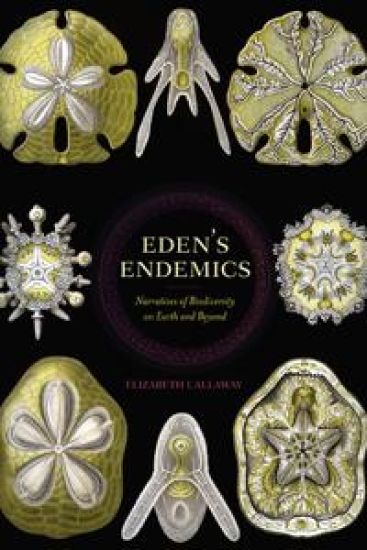
Eden's Endemics

Eden's Endemics

Elizabeth Callaway

University of Virginia Press
2020
sidottu
In the past thirty years biodiversity has become one of the central organizing principles through which we understand the nonhuman environment. Its deceptively simple definition as the variation among living organisms masks its status as a hotly contested term both within the sciences and more broadly. In Eden’s Endemics, Elizabeth Callaway looks to cultural objects—novels, memoirs, databases, visualizations, and poetry— that depict many species at once to consider the question of how we narrate organisms in their multiplicity.Touching on topics ranging from seed banks to science fiction to bird-watching, Callaway argues that there is no set, generally accepted way to measure biodiversity. Westerners tend to conceptualize it according to one or more of an array of tropes rooted in colonial history such as the Lost Eden, Noah’s Ark, and Tree-of-Life imagery. These conceptualizations affect what kinds of biodiversities are prioritized for protection. While using biodiversity as a way to talk about the world aims to highlight what is most valued in nature, it can produce narratives that reinforce certain power differentials—with real-life consequences for conservation projects. Thus the choices made when portraying biodiversity impact what is visible, what is visceral, and what is unquestioned common sense about the patterns of life on Earth.
Eden's Endemics

Eden's Endemics

Elizabeth Callaway

University of Virginia Press
2020
pokkari
In the past thirty years biodiversity has become one of the central organizing principles through which we understand the nonhuman environment. Its deceptively simple definition as the variation among living organisms masks its status as a hotly contested term both within the sciences and more broadly. In Eden’s Endemics, Elizabeth Callaway looks to cultural objects—novels, memoirs, databases, visualizations, and poetry— that depict many species at once to consider the question of how we narrate organisms in their multiplicity.Touching on topics ranging from seed banks to science fiction to bird-watching, Callaway argues that there is no set, generally accepted way to measure biodiversity. Westerners tend to conceptualize it according to one or more of an array of tropes rooted in colonial history such as the Lost Eden, Noah’s Ark, and Tree-of-Life imagery. These conceptualizations affect what kinds of biodiversities are prioritized for protection. While using biodiversity as a way to talk about the world aims to highlight what is most valued in nature, it can produce narratives that reinforce certain power differentials—with real-life consequences for conservation projects. Thus the choices made when portraying biodiversity impact what is visible, what is visceral, and what is unquestioned common sense about the patterns of life on Earth.
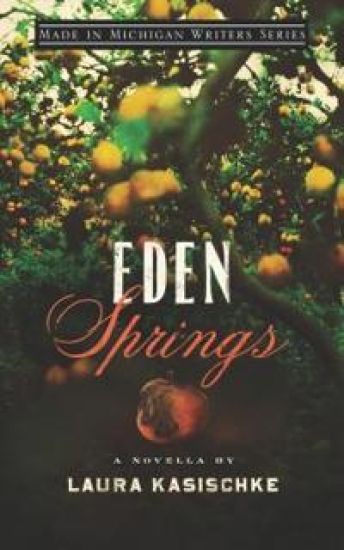
Eden Springs

Eden Springs

Laura Kasischke

Wayne State University Press
2010
nidottu
In 1903, a preacher named Benjamin Purnell and five followers founded a colony called the House of David in Benton Harbor, Michigan, where they prepared for eternal life by creating a heaven on earth. Housed in rambling mansions and surrounded by lush orchards and vineyards, the colony added a thousand followers to its fold within a few years, along with a zoo, extensive gardens, and an amusement park. The sprawling complex, called Eden Springs, was a major tourist attraction of the Midwest. The colonists, who were drawn from far and wide by the magnetic "King Ben," were told to keep their bodies pure by not cutting their hair, eating meat, or engaging in sexual relations. Yet accounts of life within the colony do not reflect such an austere atmosphere, as the handsome, charming founder is described as loving music, dancing, a good joke, and in particular, the company of his attractive female followers.In Eden Springs, award-winning Michigan author Laura Kasischke imagines life inside the House of David, in chapters framed by real newspaper clippings, legal documents, and accounts of former colonists. Told from the perspective of the young women who were closest to Benjamin Purnell, the novella follows a growing scandal within the colony's walls. A gravedigger has seen something suspicious in a recently buried casket, a loyal assistant to Benjamin is plotting a cover-up, talk is swirling about unmarried girls having babies, and a rebellious girl named Lena is ready to tell the truth. In flashbacks and first-person narrative mixed with historical artifacts, Kasischke leads readers through the unraveling mystery in a lyrical patchwork as enticing and satisfying as the story itself.Eden Springs lets readers inside the enchanting and eerie House of David, with an intimate look at its hedonistic highs and eventual collapse. This novella will appeal to all readers of fiction, as well as those with an interest in Michigan history.
Ellen Glasgow - American Writers 33

Ellen Glasgow - American Writers 33

UNIVERSITY OF MINNESOTA PRESS
1964
nidottu
Ellen Glasgow - American Writers 33 was first published in 1964. Minnesota Archive Editions uses digital technology to make long-unavailable books once again accessible, and are published unaltered from the original University of Minnesota Press editions.
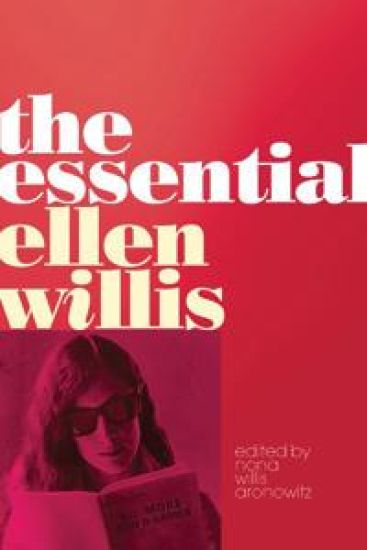
The Essential Ellen Willis

The Essential Ellen Willis

Ellen Willis

University of Minnesota Press
2014
nidottu
Out of the Vinyl Deeps, published in 2011, introduced a new generation to the incisive, witty, and merciless voice of Ellen Willis through her pioneering rock music criticism. In the years that followed, Willis’s daring insights went beyond popular music, taking on such issues as pornography, religion, feminism, war, and drugs. The Essential Ellen Willis gathers writings that span forty years and are both deeply engaged with the times in which they were first published and yet remain fresh and relevant amid today’s seemingly intractable political and cultural battles. Whether addressing the women’s movement, sex and abortion, race and class, or war and terrorism, Willis brought to each a distinctive attitude-passionate yet ironic, clear-sighted yet hopeful. Offering a compelling and cohesive narrative of Willis’s liberationist “transcendence politics,” the essays-among them previously unpublished and uncollected pieces-are organized by decade from the 1960s to the 2000s, with each section introduced by young writers who share Willis’s intellectual bravery, curiosity, and lucidity: Irin Carmon, Spencer Ackerman, Cord Jefferson, Ann Friedman, and Sara Marcus. The Essential Ellen Willis concludes with excerpts from Willis’s unfinished book about politics and the cultural unconscious, introduced by her longtime partner, Stanley Aronowitz. An invaluable reckoning of American society since the 1960s, this volume is a testament to an iconoclastic and fiercely original voice.
Ellen Shipman and the American Garden

Ellen Shipman and the American Garden

Judith B. Tankard

University of Georgia Press
2018
sidottu
Between 1914 and 1950, Ellen Shipman (1869–1950) designed more than 600 gardens in the United States, from Long Island's Gold Coast to the state of Washington. Her secluded, lush formal gardens attracted a clientele that included Fords, Edisons, Astors, and du Ponts. Shipman’s imaginative approach merged elements of the Colonial Revival and Arts and Crafts movements with a unique planting style enlivened by Impressionistic washes of color.In Ellen Shipman and the American Garden author Judith B. Tankard describes Shipman’s remarkable life and discusses her major works, including the Cummer Museum of Art and Gardens in Jacksonville, Florida; Stan Hywet Hall and Gardens in Akron, Ohio; Longue Vue House and Gardens in New Orleans, and Sarah P. Duke Gardens at Duke University. Richly illustrated with plans and photographs, the book explores Shipman’s ability to create intimate spaces through dense plantings, evocative water features, and classical ornament. Tankard also examines Shipman's unusual life, which was enriched by her years in the artists' colony of Cornish, New Hampshire, and her association with the architect Charles A. Platt. Shipman was notable for establishing a thriving New York City practice and mentoring women in the profession. Many of the assistants she trained in her all-female office went on to become successful designers in other parts of the country.
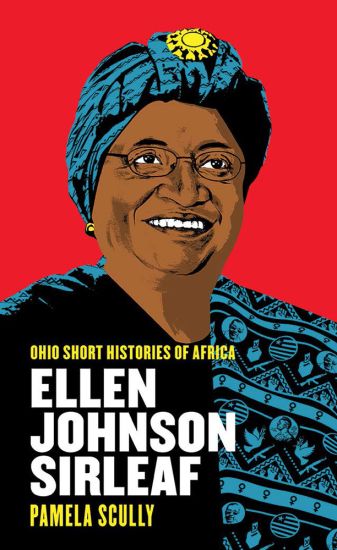
Ellen Johnson Sirleaf

Ellen Johnson Sirleaf

Pamela Scully

Ohio University Press
2016
pokkari
In this timely addition to the Ohio Short Histories of Africa series, Pamela Scully takes us from the 1938 birth of Nobel Peace Prize winner and two-time Liberian president Ellen Johnson through the Ebola epidemic of 2014–15. Charting her childhood and adolescence, the book covers Sirleaf's relationship with her indigenous grandmother and urban parents, her early marriage, her years studying in the United States, and her career in international development and finance, where she developed her skill as a technocrat. The later chapters cover her years in and out of formal Liberian politics, her support for women's rights, and the Ebola outbreak. Sirleaf's story speaks to many of the key themes of the twenty-first century. Among these are the growing power of women in the arenas of international politics and human rights; the ravaging civil wars in which sexual violence is used as a weapon; and the challenges of transitional justice in building postconflict societies. Ellen Johnson Sirleaf is an astute examination of the life of a pioneering feminist politician.
Elder Abuse and Nursing

Elder Abuse and Nursing

Carol A. Miller

Springer Publishing Co Inc
2016
nidottu
The only text about elder abuse specifically for nurses in clinical settings. Nurses are required by law to report elder abuse even when it is suspected but not verified. This is the only research-based and clinically oriented text that applies what is known about different forms of elder abuse in domestic and long-term care settings to the everyday experiences of practicing nurses. Content addresses not only legal and ethical concerns, but also serves as an essential guide to caring for older adults, delineating the role of nurses in detecting, suspecting, reporting, assessing, providing interventions for, and preventing elder abuse in all clinical settings. Detailed and unfolding case studies throughout the text illustrate nurses in action as they address elder abuse in commonly encountered nurse client or nurse patient situations. Chapters show nurses in various health care settings how to address elder abuse issues relating to older adults, caregivers, and perpetrators. Each section provides nurses with crucial information about how to access essential resources for addressing specific aspects of elder abuse, including self-neglect, domestic abuse, abuse in long-term care settings, financial abuse, and sexual abuse. In-depth guides help nurses apply their usual nursing assessment and intervention skills to unusual situations when caring for older adults who are in actual or potentially abusive situations. In an easy-to-use and clinically applicable format, concise tools and guides throughout the book highlight core facets of elder abuse and the role of nurses. Each chapter concludes with Key Points: What Nurses Need to Know and Can Do highlighting the content that is most applicable to nursing care of older adults. KEY FEATURES: Presents essential facts about different forms of elder abuse and applies the information to nursing care of older adults in various clinical settings Describes key criteria for nurses to use for recognizing, assessing, providing interventions for, and reporting elder abuse Addresses legal, ethical, cultural, and interprofessional care considerations Provides numerous guides to nursing assessment and interventions that address elder abuse Case examples illustrate nurses in action addressing many types of elder abuse situations Includes the words of older adults describing their experiences and perceptions of elder abuse Includes the words and thoughts of nurses describing their reflections on and perceptions of elder abuse situations Each chapter concludes with Key Points: What Nurses Need to Know and Can Do
Elder Justice, Ageism, and Elder Abuse

Elder Justice, Ageism, and Elder Abuse

Lisa Nerenberg

Springer Publishing Co Inc
2019
nidottu
“The beauty of this important book lies in its conclusion… This book provides the roadmap that has led us to our current dilemmas and offers the path forward to a truly just society for all.” —Terry Fulmer, PhD, RN, FAAN, President of The John A. Hartford Foundation "This deeply insightful book is essential reading not only for anyone who works with or on behalf of older adults, but also for everyone who committed to any aspect of social justice and human rights." —Chris Herman, MSW, LICSW "Lisa Nerenberg provides the first comprehensive look at elder abuse prevention trends and strategies..." —Georgia Anetzberger, Consultant, Adjunct Faculty, Schools of Medicine and Applied Social Sciences, Case Western Reserve University Delivering the first comprehensive analysis of elder justice and its implications for policy and practice, this book offers a promising approach that ensures the rights, safety, and security of all older Americans. It explains the antecedents of elder justice in the fields of elder abuse, aging, and public health, and describes the opportunities for achieving more comprehensive, cohesive, and integrated public policy. The text examines the cumulative impact of ageism, racism, sexism, heterosexism, class, and other forms of disadvantage and isolation on the lives of older adults and how these contribute to poverty, disease, disability, abuse, and neglect. It draws from the fields of public health and health equity, and plans devised by international organizations that frame elder abuse as a human rights issue. Practical and achievable goals in the prevention of elder abuse aid policy makers, program developers, grant-makers, and service providers in the fields of gerontology, social work, public health, and nursing in their efforts towards elder abuse prevention. Key Features: Identifies institutionalized ageism in public policy and practice Proposes core principles of elder justice to guide policy and service development Introduces knowledge and techniques from the fields of elder abuse and public health Provides greater understanding of social determinants and how they are addressed in the public health arena Offers techniques for improving access to the legal system for people with physical, cognitive, and communication disabilities Offers practical and achievable goals; objectives and recommendations; and models for state, national, and international policy and programs.
Elder Abuse and the Public's Health

Elder Abuse and the Public's Health

Springer Publishing Co Inc
2018
nidottu
Presents an insightful, interdisciplinary approach for preventing elder abuse Encompassing the contributions of leading scholars in public health and gerontology, this is a rich repository of key ideas, concepts and issues regarding elder abuse and the role of public health initiatives in its prevention. The text frames elder abuse as a public health problem, stressing that efforts toward prevention is well within the scope of work performed by public health professionals. It describes major public policy/public health initiatives as they relate to elder abuse, analyzes elder abuse as a global and human rights issue, and supports the development of core competencies for public health work to prevent elder abuse. The text describes in detail major theoretical and applied issues within elder abuse and grounds these issues within the core functions and essential services of public health. It then addresses skill development using the core competencies for public health professionals. The book is the first to tie the core functions and essential public health services to core public health competency domains and creates a topic-specific framework for effective public health practice. An annotated section includes the most up-to-date resources for both public health and elder abuse, including toolkits, stakeholder lists, and references. A discussion of future directions for the field sets the agenda for a committed interdisciplinary approach to ameliorating and preventing elder abuse. Key Features: Grounds elder abuse prevention within the core functions and essential services of public health Provides a storehouse of scientific and practical information on elder abuse Stresses skill development using core competencies for public health professionals Encompasses the contributions of outstanding leaders in public health and gerontology Includes news stories, illustrative case examples, resources, blogs, and webinars