

Kirjahaku
Etsi kirjoja tekijän nimen, kirjan nimen tai ISBN:n perusteella.
1000 tulosta hakusanalla Emily Butler
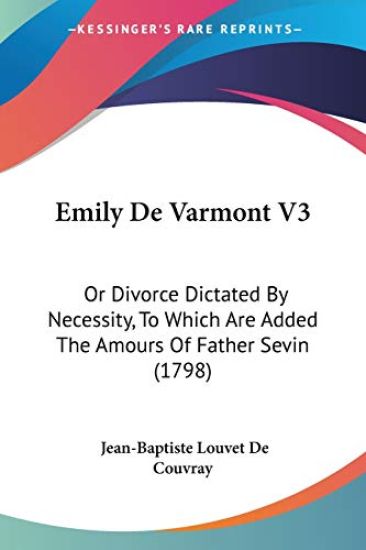
Emily De Varmont V3
Jean-Baptiste Louvet De Couvray
KESSINGER PUBLISHING CO
2009
Tuntematon sidosasu


Emily's Stitches: the Confessions of Thomas Calloway and Other Stories
Leverett Butts
Lulu.com
2012
sidottu
Emily's Stitches: The Confessions of Thomas Calloway is a collection of interrelated short stories about a teenaged boy growing up in rural Georgia and faced with the challenges of approaching adulthood. When he stumbles across a young homeless girl, he must decide how best to protect her from the world despite the fact that he barely understands the world himself. Also included in this collection are five other short stories and three poems including "Requiem," an authorized sequel of sorts to Scott Thompson's novel Young Men Shall See. Other notable selections include "Negative Space," which tells the story of a recently divorced photographer who finds himself sharing Thanksgiving dinner with his ex-wife's family; "Gods for Sale, Cheap," a humorous examination of the commercialization of American religion; and "Misdirection," the story of two down-on-their-luck hitmen and their quest for identity.
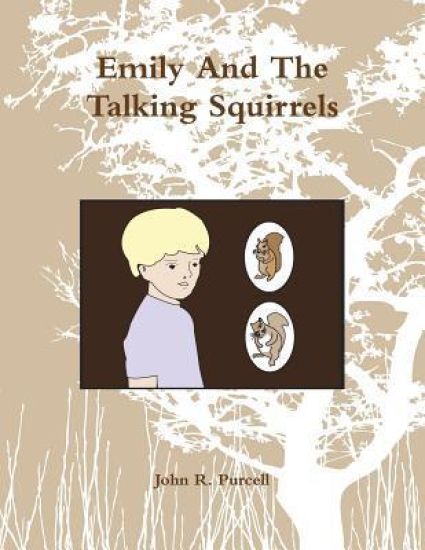
Author John R. Purcell has written a charming story for children. Five-year-old Emily misses Willie, her dog, terribly. Now that he's gone away to Pet Heaven, she's lost her best pal. Clarissa and Clarence, two magical squirrels, do their best to help her get over her sadness. The little squirrels are helpers to Angela, the Pet Angel. Angela thinks she knows what will help Emily most. She sets her plan in motion. But things don't turn out exactly the way she first thought they would. See how Angela, the talking squirrels, and Emily find their way to the best happy ending of all. Written in the voice of the traditional Storyteller, the book is perfect for reading aloud to the whole family. It's a tale that can help parents offer comfort to any child who has lost a pet.
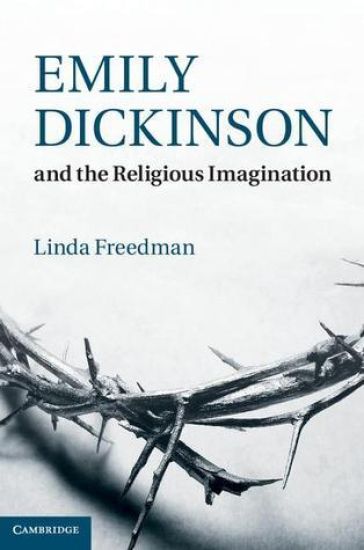
Emily Dickinson and the Religious Imagination
Linda Freedman
Cambridge University Press
2011
sidottu
Dickinson knew the Bible well. She was profoundly aware of Christian theology and she was writing at a time when comparative religion was extremely popular. This book is the first to consider Dickinson's religious imagery outside the dynamic of her personal faith and doubt. It argues that religious myths and symbols, from the sun-god to the open tomb, are essential to understanding the similetic movement of Dickinson's poetry - the reach for a comparable, though not identical, experience in the struggles and wrongs of Abraham, Jacob and Moses, and the life, death and resurrection of Christ. Linda Freedman situates the poet within the context of American typology, interprets her alongside contemporary and modern theology and makes important connections to Shakespeare and the British Romantics. Dickinson emerges as a deeply troubled thinker who needs to be understood within both religious and Romantic traditions.
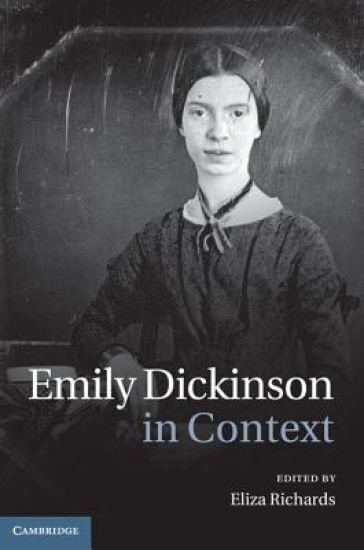
Emily Dickinson in Context
Cambridge University Press
2013
sidottu
Long untouched by contemporary events, ideas and environments, Emily Dickinson's writings have been the subject of intense historical research in recent years. This volume of thirty-three essays by leading scholars offers a comprehensive introduction to the contexts most important for the study of Dickinson's writings. While providing an overview of their topic, the essays also present groundbreaking research and original arguments, treating the poet's local environments, literary influences, social, cultural, political and intellectual contexts, and reception. A resource for scholars and students of American literature and poetry in English, the collection is an indispensable contribution to the study not only of Dickinson's writings but also of the contexts for poetic production and circulation more generally in the nineteenth-century United States.
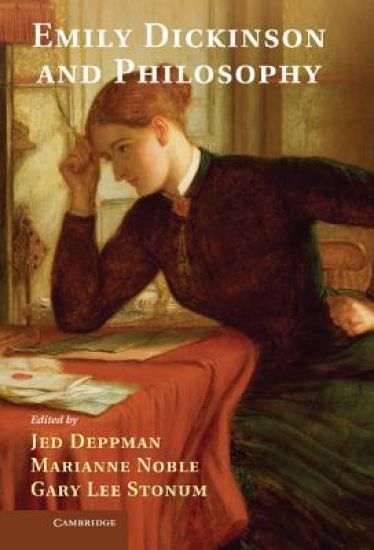
Emily Dickinson and Philosophy
Cambridge University Press
2013
sidottu
Emily Dickinson's poetry is deeply philosophical. Recognizing that conventional language limited her thought and writing, Dickinson created new poetic forms to pursue the moral and intellectual issues that mattered most to her. This collection situates Dickinson within the rapidly evolving intellectual culture of her time and explores the degree to which her groundbreaking poetry anticipated trends in twentieth-century thought. Essays aim to clarify the ideas at stake in Dickinson's poems by reading them in the context of one or more relevant philosophers, including near-contemporaries such as Nietzsche, Kierkegaard and Hegel, and later philosophers whose methods are implied in her poetry, including Levinas, Sartre and Heidegger. The Dickinson who emerges is a curious, open-minded interpreter of how human beings make sense of the world - one for whom poetry is a component of a lifelong philosophical project.
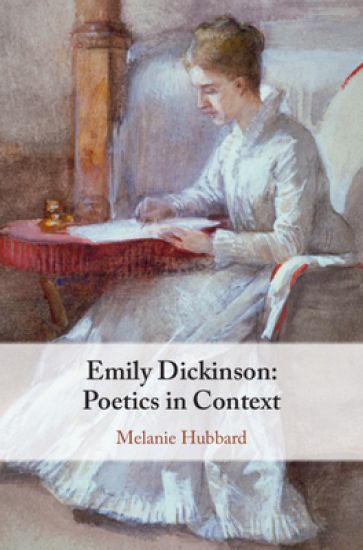
This book re-assesses Dickinson's manuscripts, style, and statements to arrive at a historically appropriate conception of poetics. It compares her composition practices, such as variant generation and writing on already-marked scraps, with those of her peers in nineteenth-century American popular manuscript culture, tracing them to the pervasive influence of Scottish Common Sense philosophy, Hume's scepticism, and associationism in philosophy of mind and early neuroscience. The argument consults the archives and considers Dickinson's reading, in and out of school, in philosophy, rhetoric, and semiotic theory, as well as her training in inductive science and her familiarity with ideas about electricity, evolution, emotion, sympathy, and the brain. Combining close readings of poems with contextualizing information about contemporary conflicts in intellectual history, the book contends that Dickinson takes the making of poems to be her philosophical praxis. It depicts a Dickinson committed to thinking about the physical constitution of human consciousness and the historicity and materiality of one of its chief modes, language.
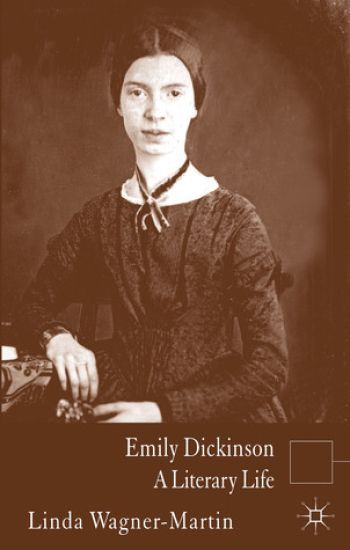
With special attention to Emily Dickinson's growth into a poet, this literary biographical study charts Dickinson's hard-won brilliance as she worked, largely alone, to become the unique American woman writer of the nineteenth century.
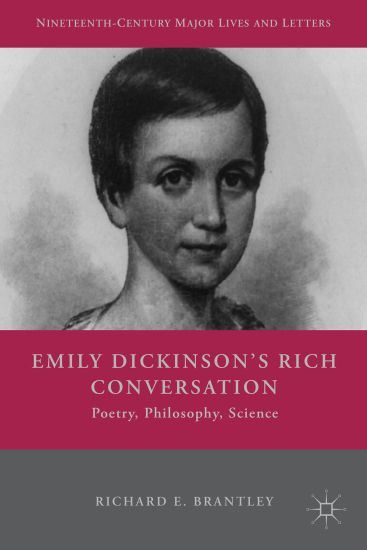
Emily Dickinson's Rich Conversation is a comprehensive account of Emily Dickinson's aesthetic and intellectual life. Contrary to the image of the isolated poet, this ambitious study reveals Dickinson's agile mind developing through conversation with a community of contemporaries.
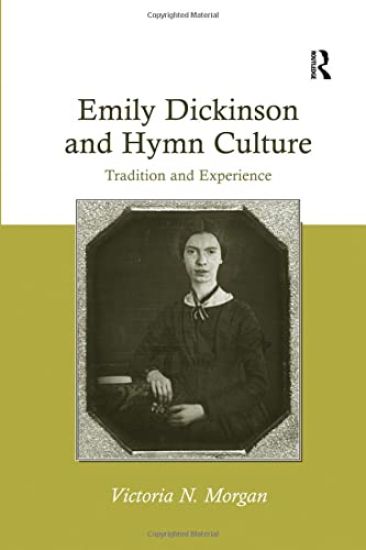
Extending the critical discussion which has focused on the hymns of Isaac Watts as an influence on Emily Dickinson's poetry, this study brings to bear the hymnody of Dickinson's female forbears and contemporaries and considers Isaac Watts's position as a Dissenter for a fuller understanding of Dickinson's engagement with hymn culture. Victoria N. Morgan argues that the emphasis on autonomy in Watts, a quality connected to his position as a Dissenter, and the work of women hymnists, who sought to redefine God in ways more compatible with their own experience, posing a challenge to the hierarchical 'I-Thou' form of address found in traditional hymns, inspired Dickinson's adoption of hymnic forms. As she traces the powerful intersection of tradition and experience in Dickinson's poetry, Morgan shows Dickinson using the modes and motifs of hymn culture to manipulate the space between concept and experience-a space in which Dickinson challenges old ways of thinking and expresses her own innovative ideas on spirituality. Focusing on Dickinson's use of bee imagery and on her notions of religious design, Morgan situates the radical re-visioning of the divine found in Dickinson's 'alternative hymns' in the context of the poet's engagement with a community of hymn writers. In her use of the fluid imagery of flight and community as metaphors for the divine, Dickinson anticipates the ideas of feminist theologians who privilege community over hierarchy.
Emily Dickinson
Routledge
2016
sidottu
The focus of this title, first published in 1989, begins with Dickinson’s poems themselves and the ways in which we read them. There are three readings for each of the six poems under consideration that are both complementary and provocative. The selected poems show Dickinson speaking of herself in increasingly wider relationships – to love, the outside world, death and eternity – and are grouped together to reveal her overlapping attitudes and feelings. Other topics discussed range from general epistemological and critical considerations to the poet’s self-identification and the process of reading her poetry as a feminist critic. This title will be of interest to students of literature.
Emily Dickinson
Routledge
2017
nidottu
The focus of this title, first published in 1989, begins with Dickinson’s poems themselves and the ways in which we read them. There are three readings for each of the six poems under consideration that are both complementary and provocative. The selected poems show Dickinson speaking of herself in increasingly wider relationships – to love, the outside world, death and eternity – and are grouped together to reveal her overlapping attitudes and feelings. Other topics discussed range from general epistemological and critical considerations to the poet’s self-identification and the process of reading her poetry as a feminist critic. This title will be of interest to students of literature.
From the claustrophobic environment of Haworth Parsonage emerged an astonishing range and diversity of character and talent. Between them the two youngest Brontë sisters wrote three novels, each sharply individual in style, purpose and subject-matter.The title, first published in 1968, discusses and illustrates the similarities and differences in the writings of Emily and Anne Brontë, paying particular attention to their place in the development of the Victorian novel. He stresses the complexities of structure and characterisation in Wuthering Heights, introducing the reader first to the background of the novel. This book will be of interest to students of English Literature.
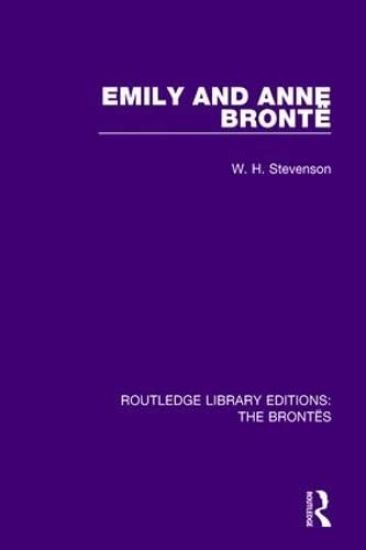
From the claustrophobic environment of Haworth Parsonage emerged an astonishing range and diversity of character and talent. Between them the two youngest Brontë sisters wrote three novels, each sharply individual in style, purpose and subject-matter.The title, first published in 1968, discusses and illustrates the similarities and differences in the writings of Emily and Anne Brontë, paying particular attention to their place in the development of the Victorian novel. He stresses the complexities of structure and characterisation in Wuthering Heights, introducing the reader first to the background of the novel. This book will be of interest to students of English Literature.