Kirjojen hintavertailu. Mukana 12 083 983 kirjaa ja 12 kauppaa.

Kirjahaku

Etsi kirjoja tekijän nimen, kirjan nimen tai ISBN:n perusteella.

1000 tulosta hakusanalla Ernest Hello

Ernest Newman

Ernest Newman

Paul Watt

The Boydell Press
2017
sidottu
Examines the genesis of Ernest Newman's major publications in the context of prevailing intellectual trends in history, criticism and biography. Ernest Newman (1868-1959) left an indelible mark on British musical criticism in a career spanning more than seventy years. His magisterial Life of Richard Wagner, published in four volumes between 1933 and 1946, is regarded as his crowning achievement, but Newman wrote many other influential books and essays on a variety of subjects ranging from early music to Schoenberg. In this book, the geneses of Newman's major publications are examined in thecontext of prevailing intellectual trends in history, criticism and biography. Newman's career as a writer is traced across a wide range of subjects including English and French literature, evolutionary theory and biographical method, and French, German and Russian music. Underpinning many of these works is Newman's preoccupation with rationalism and historical method. By examining particular sets of writings such as composer-biographies and essays from leading newspapers such as the Manchester Guardian and the Sunday Times, this book illustrates the ways in which Newman's work was grounded in late nineteenth-century intellectual paradigms that made him a unique and at times controversial figure. PAUL WATT is Senior Lecturer in Musicology in the Sir Zelman Cowen School of Music at Monash University.
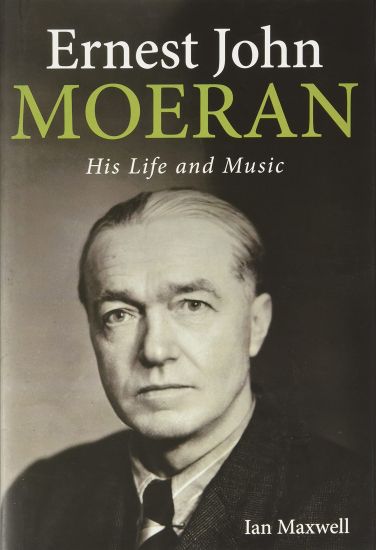
Ernest John Moeran

Ernest John Moeran

Ian Maxwell

The Boydell Press
2021
sidottu
This long-awaited study of the life and music of Anglo-Irish composer Ernest John Moeran (1894-1950) finally provides a full biography of the last senior figure in early twentieth-century British Music to have been without one. This long-awaited study of the life and music of Anglo-Irish composer Ernest John Moeran (1894-1950) finally provides a full biography of the last senior figure in early twentieth-century British Music to have been without one. Although Moeran's work was widely performed during his lifetime, he suffered neglect in the years following his death. It was not until a re-awakening of appreciation for the music of the folksong-inspired English pastoralism in the latter part of the twentieth century that Moeran's tuneful, well-crafted and approachable music began to attract a new audience. However, widely accepted misconceptions about his life and character have obscured a clearunderstanding of both man and composer. Written with the benefit of access to previously unknown or unresearched archives, Ernest John Moeran: His Life and Music strips away a hitherto unchallenged mythological framework, and replaces it by a thorough-going examination and analysis of the life and work of a musician that may reasonably be asserted as having been unique in British music history.
Ernest Hemingway

Ernest Hemingway

Burgess Anthony

Barbara Ward Associates
2015
nidottu
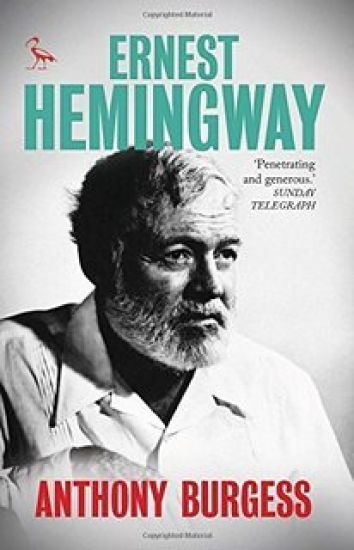
Ernest Hemingway was arguably the most influential writer of the 20th century, the Nobel Prize-winning author of such classics as For Whom the Bell Tolls, The Sun Also Rises and A Farewell to Arms, and a man who lived his life with as much passion and intensity as many of the characters in his novels. With exceptional insight, Anthony Burgess traces Hemingway's singular life: from complacent childhood to the horrors of the First and Second World Wars to the glamour of Paris in the '20s; from Civil War Spain to the excitements of African safari and, finally, the sombre last years in Cuba. Burgess's vivid portrait is unflinching yet full of empathy: essential reading for all Hemingway fans.
Ernest Bevin

Ernest Bevin

Andrew Adonis

Biteback Publishing
2020
sidottu
Statesman, pre-eminent leader and founder of the free world's then largest and most formidable trade union, Ernest Bevin was one of the greatest and most inspirational figures of the twentieth century. Minister of Labour in the wartime coalition during the Second World War, he was at Churchill's right hand, masterminding the home front while the war supremo commanded the battle front. Following the war, he was Foreign Secretary at one of the most pivotal moments of international history, responsible for keeping Stalin and communism out of Western Europe, and for creating West Germany, NATO and the transatlantic alliance, all of which underpin European democracy and security to this day. Born into abject poverty, an orphan farm boy from Bristol with virtually no formal education, Bevin's remarkable rise to fame and power is unmatched by any leader to this day. In this insightful and wide-ranging new biography, Andrew Adonis examines how 'the working-class John Bull' grew to a position of such authority, and offers a critical reassessment of Bevin's life and influence. Skilfully bringing to life this extraordinary figure, Adonis explores Bevin's powerful legacy and lessons for our own age, restoring this charismatic statesman to his rightful place among the pantheon of Britain's greatest political leaders.
Ernest Bevin

Ernest Bevin

Andrew Adonis

Biteback Publishing
2021
nidottu
Statesman, pre-eminent leader and founder of the free world’s then largest and most formidable trade union, Ernest Bevin was one of the most rousing figures of the twentieth century. Minister of Labour in the wartime coalition during the Second World War, he was Churchill’s right-hand man, masterminding the home front while the war supremo commanded the battle front. Afterwards, he was Foreign Secretary at one of the most critical moments in international history, responsible for keeping Stalin and communism out of Western Europe, and for creating West Germany, NATO and the transatlantic alliance, all of which underpin European democracy and security to this day. An orphan farm boy from Bristol, Bevin’s astonishing rise to fame and power is unmatched by any leader to this day. In this discerning and wide-ranging biography, Andrew Adonis examines how ‘the working-class John Bull’ grew to a position of such authority, and offers a critical reassessment of his life and influence. Finally exploring Bevin’s powerful legacy and lessons for our own age, Adonis restores this charismatic statesman to his rightful place among the pantheon of Britain’s greatest political leaders.
Ernest Hemingway

Ernest Hemingway

Ernest Hemingway

BENEDICTION CLASSICS
2023
pokkari
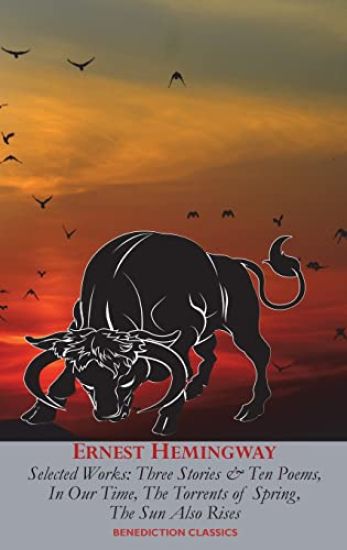
"He is strikingly original, and in the dry compressed little vignettes of In Our Time hasalmost invented a form of his own." - Edmund Wilson."The Sun Also Rises is Hemingway's first and best novel." - Robert McCrum, The Guardian."The delightful entertainment of The Torrents of Spring... is full-blooded comedy, with a sting of satire." - The New York Times."Hemingway remodelled American short fiction." - Michael Reynolds (Hemingway biographer) Ernest Hemingway: Selected Works is a brilliantly varied collection. Three Stories and Ten Poems was Hemingway's first book; critic Edmund Wilson describes the writing as of "the first distinction;" biographer James Mellow considers it one of Hemingway's early masterpieces. Hemingway remodelled American short fiction; In Our Time is one of the most important twentieth-century collections of short stories. The Sun Also Rises, perhaps Hemingway's best novel, perfectly captures the period between World War I and the Great Depression. It made Hemingway a celebrity. Young women began to emulate Brett, the heroine, while male students at Ivy League universities wanted to become "Hemingway heroes." The Torrents of Spring, a comedy, sets out to amuse, and this it does. Ernest Miller Hemingway (July 21, 1899 - July 2, 1961) was an American journalist, novelist, short-story writer, and hunter. He was awarded the 1954 Nobel Prize in Literature for "his mastery of the art of narrative ... and for the influence that he has exerted on contemporary style." His economical and understated style-using what he termed "the iceberg theory" or "the theory of omission"-has had a strong influence on twentieth-century fiction. Many of his novels are considered classics of American literature. Writer Richard Ford calls Fitzgerald, Hemingway, and Faulkner "the Three Kings who set the measure for every writer since."
Ernest Hemingway Selected Works

Ernest Hemingway Selected Works

Ernest Hemingway

BENEDICTION CLASSICS
2023
sidottu
"He is strikingly original, and in the dry compressed little vignettes of In Our Time hasalmost invented a form of his own." - Edmund Wilson."The Sun Also Rises is Hemingway's first and best novel." - Robert McCrum, The Guardian."The delightful entertainment of The Torrents of Spring... is full-blooded comedy, with a sting of satire." - The New York Times."Hemingway remodelled American short fiction." - Michael Reynolds (Hemingway biographer) Ernest Hemingway: Selected Works is a brilliantly varied collection. Three Stories and Ten Poems was Hemingway's first book; critic Edmund Wilson describes the writing as of "the first distinction;" biographer James Mellow considers it one of Hemingway's early masterpieces. Hemingway remodelled American short fiction; In Our Time is one of the most important twentieth-century collections of short stories. The Sun Also Rises, perhaps Hemingway's best novel, perfectly captures the period between World War I and the Great Depression. It made Hemingway a celebrity. Young women began to emulate Brett, the heroine, while male students at Ivy League universities wanted to become "Hemingway heroes." The Torrents of Spring, a comedy, sets out to amuse, and this it does. Ernest Miller Hemingway (July 21, 1899 - July 2, 1961) was an American journalist, novelist, short-story writer, and hunter. He was awarded the 1954 Nobel Prize in Literature for "his mastery of the art of narrative ... and for the influence that he has exerted on contemporary style." His economical and understated style-using what he termed "the iceberg theory" or "the theory of omission"-has had a strong influence on twentieth-century fiction. Many of his novels are considered classics of American literature. Writer Richard Ford calls Fitzgerald, Hemingway, and Faulkner "the Three Kings who set the measure for every writer since."
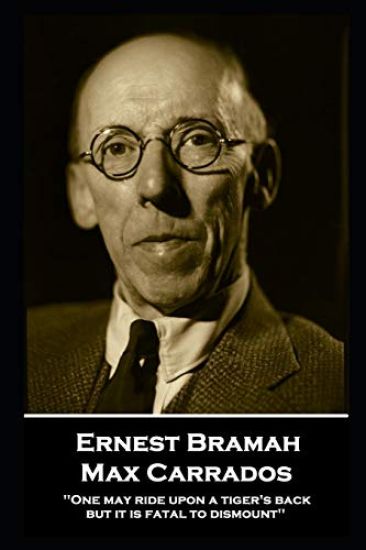
Ernest Bramah - Max Carrados: "One may ride upon a tiger's back but it is fatal to dismount''
Ernest Bramah was born on 20th March 1868. He was an intensely private man and very little about his life was ever released. Bramah dropped out of Manchester Grammar school at sixteen, in almost all his subjects he was close to the bottom of his class, and took a job at a farm. His father then invested substantial sums in setting him up with his own farm but Bramah's long term interests were elsewhere. In his spare time he would write vignettes on local subjects and send them to The Birmingham News for publication. In a now rather dramatic change of career he obtained the position of secretary to Jerome K Jerome and then to editing one of Jerome's magazines. Thereafter Bramah edited journals for a publishing firm that only ceased with its bankruptcy. He obtained success in his own right with the creation of the storyteller Kai Lung with humourous tales set in China, usually laced with fantasy elements. There seems to have been a certain vogue for stories with an oriental element at this time which Bramah was happy to take advantage of. His career blossomed across many genres; in humour, science-fiction, and supernatural he was ranked with the very best of the day. Even Orwell cited his work as an influence and as a predictor for the rise of Fascism and his own novel, 1984. At a time when the English Channel had yet to be crossed by an aeroplane, Bramah foresaw aerial express trains traveling at 10,000 feet, a nationwide wireless-telegraphy network, fax machines and cypher writing typewriters similar to the German Enigma machine. In 1914, Bramah created the blind detective Max Carrados. Despite the obvious obstacle to his deductive powers he was a literary and commercial success. Ernest Bramah died in Weston-Super-Mare on 27th June 1942 at the age of 74.
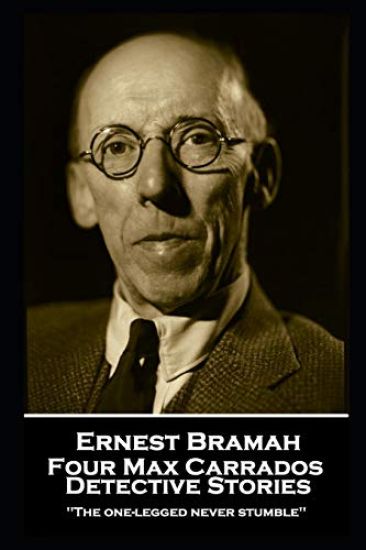
Ernest Bramah - Four Max Carrados Detective Stories: "The one-legged never stumble''
Ernest Bramah was born on 20th March 1868. He was an intensely private man and very little about his life was ever released. Bramah dropped out of Manchester Grammar school at sixteen, in almost all his subjects he was close to the bottom of his class, and took a job at a farm. His father then invested substantial sums in setting him up with his own farm but Bramah's long term interests were elsewhere. In his spare time he would write vignettes on local subjects and send them to The Birmingham News for publication. In a now rather dramatic change of career he obtained the position of secretary to Jerome K Jerome and then to editing one of Jerome's magazines. Thereafter Bramah edited journals for a publishing firm that only ceased with its bankruptcy. He obtained success in his own right with the creation of the storyteller Kai Lung with humourous tales set in China, usually laced with fantasy elements. There seems to have been a certain vogue for stories with an oriental element at this time which Bramah was happy to take advantage of. His career blossomed across many genres; in humour, science-fiction, and supernatural he was ranked with the very best of the day. Even Orwell cited his work as an influence and as a predictor for the rise of Fascism and his own novel, 1984. At a time when the English Channel had yet to be crossed by an aeroplane, Bramah foresaw aerial express trains traveling at 10,000 feet, a nationwide wireless-telegraphy network, fax machines and cypher writing typewriters similar to the German Enigma machine. In 1914, Bramah created the blind detective Max Carrados. Despite the obvious obstacle to his deductive powers he was a literary and commercial success. Ernest Bramah died in Weston-Super-Mare on 27th June 1942 at the age of 74.
Ernest Bramah - The Secret of the League: "The wise duck keeps his mouth shut when he smells frogs''
Ernest Bramah was born on 20th March 1868. He was an intensely private man and very little about his life was ever released. Bramah dropped out of Manchester Grammar school at sixteen, in almost all his subjects he was close to the bottom of his class, and took a job at a farm. His father then invested substantial sums in setting him up with his own farm but Bramah's long term interests were elsewhere. In his spare time he would write vignettes on local subjects and send them to The Birmingham News for publication. In a now rather dramatic change of career he obtained the position of secretary to Jerome K Jerome and then to editing one of Jerome's magazines. Thereafter Bramah edited journals for a publishing firm that only ceased with its bankruptcy. He obtained success in his own right with the creation of the storyteller Kai Lung with humourous tales set in China, usually laced with fantasy elements. There seems to have been a certain vogue for stories with an oriental element at this time which Bramah was happy to take advantage of. His career blossomed across many genres; in humour, science-fiction, and supernatural he was ranked with the very best of the day. Even Orwell cited his work as an influence and as a predictor for the rise of Fascism and his own novel, 1984. At a time when the English Channel had yet to be crossed by an aeroplane, Bramah foresaw aerial express trains traveling at 10,000 feet, a nationwide wireless-telegraphy network, fax machines and cypher writing typewriters similar to the German Enigma machine. In 1914, Bramah created the blind detective Max Carrados. Despite the obvious obstacle to his deductive powers he was a literary and commercial success. Ernest Bramah died in Weston-Super-Mare on 27th June 1942 at the age of 74.
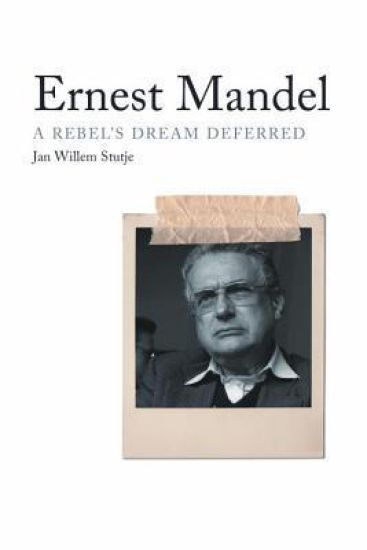
Ernest Mandel

Ernest Mandel

Jan Willem Stutje; Tariq Ali

Verso Books
2009
sidottu
Ernest Mandel (1923-1995), was one of the most prominent anti-Stalinist Marxist intellectuals of his time. A political theorist and economist, his worldview was shaped by experiences in the Second World War as an underground political activist in Occupied Belgium and during his subsequent internment in a Nazi prison camp. Mandel's faith in human nature and in the working classes survived Nazi oppression and the murder of much of his family in the concentration camps. He retained his connection to his Jewish roots throughout his life, but believed that security and liberation for the Jewish people was best achieved through world revolution and universal emancipation rather than nationalism.A brilliant orator in several languages, Mandel was an indefatigable revolutionary militant and a key leader in the Fourth International, and he had an enormous impact on the thought and practice of the 1968 generation. His writings range from innovative economic and political theory to a study of the Second World War and have been published in over forty languages. His last major work, Late Capitalism, had an influence that reached from the social sciences into the humanities. Biographer Jan Willem Stutje, the first writer with access to Mandel's archives, has interviewed many of the leading figures in the story and unearthed a wealth of new material, detailing Mandel's arrest by the Nazis and his role in Latin American guerrilla warfare. He recounts Mandel's interactions with both scholars-Sartre, Ernst Bloch, Perry Anderson-and comrades-in-arms such as Che Guevara, Rudi Dutschke and Tariq Ali. The book also yields fascinating details of the man's sometimes tragic private life.
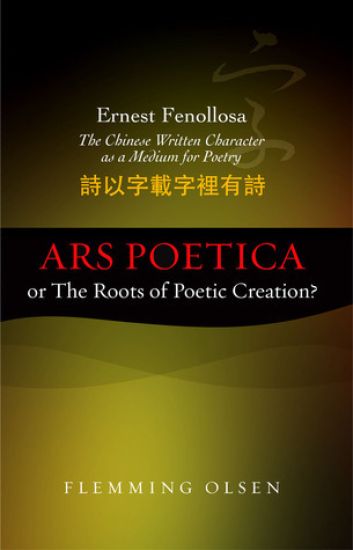
Ernest Fenollosa -- The Chinese Written Character As A Medium For Poetry
The first decade of the 20th century witnessed a calling into question of some of the central positions held by the late 19th century Positivists. There was a shift of paradigm in science as well as art, as elicited by Einstein, William James, Freud, Picasso, Bergson and Pound. The insufficiency of the Positivist world picture became increasingly evident. Importantly, the concept of what was conventionally called reality, and legitimate ways of describing it, were being transformed. Fenollosa's long essay, "The Chinese Written Character as a Medium for Poetry", was a ground-breaking, if idiosyncratic, poetic criticism, as well as a significant illustration of prevalent intellectual concerns. The role of the individual word in creating images was central to Fenollosa's interest, as it was to the majority of contemporary poets and critics, but he found an intriguing prototype in the Chinese pictogram, which conveys an item of information via a concrete, more or less stylised, illustration. Flemming Olsen follows Fenollosa's theorising, showing the extent to which it is indebted to, and shaped by, post-Positivist tenets. The current cult of dynamism is reflected in Fenollosa's idea of metaphor, which he sees as a linguistic manifestation of the Bergsonian elan, which is the driving force behind everything. This explains his predilection for sentences with a transitive verb, which signals action, and his aversion to the stasis of grammar, logic and the copula. Equally, truth is not seen by Fenollosa as the accordance between observed facts and some pre-established metaphysical entity, as held by positivist science, but as a labile concept; it is "something that happens", determined by a context -- an idea pursued, for example, by the "absurd" dramatists. The picture of "reality" given by the poetical image could be just as truthful as the picture given by science. Reality thus moves from being "our" reality, to become "my" reality. Fenollosa was not a literary critic; he was an orientalist by profession. Yet his linguistic ideas, although presented in a rudimentary form and without any elaborate terminology, foreshadow linguists' concentration on, and analysis of, the medium just as much as the message. Pound's contention that Fenollosa's essay is a modern ars poetica is shown to be exaggerated; its interest rather lies in Fenollosa's endeavour to go to the roots of poetic creation.
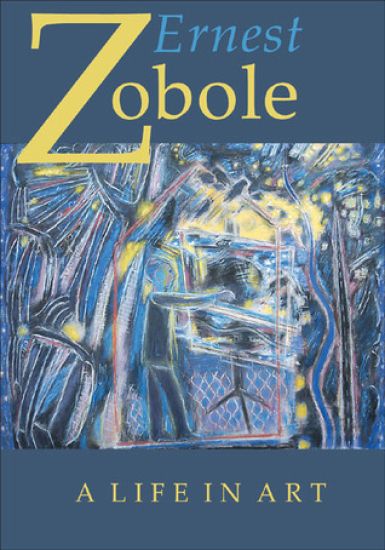
Ernest Zobole

Ernest Zobole

Ceri Thomas; Ernest Zobole

Seren
2007
nidottu
Through extensive critical analysis, this study chronicles the artistic development of iconic Welsh painter Ernest Zobole and explores what it meant, both socially and culturally, to be a practicing artist in late 20th-century Wales. Focusing on his life as well as his art, this examination reveals the influence of the changing landscapes and communities on Zobole's art and his eventual desire for new forms of expression.
Ernest Dowson

Ernest Dowson

University of Birmingham Press
2003
nidottu
Ernest Christopher Dowson (1867-1900) is best known as a the author of a number of exquisite lyrics which epitomise the mood and style of the English 1890s - verses like 'cynara' and 'They are not long'. Yet Arthur Symons was only repeating what Dowson often himself asserted when he said that 'Dowson was the only poet I ever knew who cared more for his prose than his verse'.Monica Borg's Introduction suggests for the first time what lay behind Dowson's opinion of the importance of his prose, seeing withing it a programme of aesthetic and cultural radicalism. She places him firmly in relation to the late-nineteenth-century crisis of values, self and representation which Dowson both expressed and sought to precipitate, and she indicates that it is in his stories rather than his verse that Dowson shows how deeply implicated he was in the politics of resistance and cultural change that characterized the decadent literary and artistic movement. This edition provides texts of all of Dowson's short stories, thoroughly corrected from the original editions and with detailed notes on their genesis and development.
Ernest Dowson Collected Poems

Ernest Dowson Collected Poems

R. K. R. Thornton

University of Birmingham Press
2003
nidottu
This edition includes all of Dowson's known poems. It describes in detail the contents of his manuscript notebook and re-transcribes the poems from it; it includes his two published volumes, Verses (1896) and Decorations (1899), his verse play The Pierrot of the Minute, the discrete independent parts of his verse translation of Voltaire, and a few uncollected pieces. All have been checked where possible against the original manuscripts and annotated to provide explanation and context.
Ernest Rutherford and the Birth of Modern Physics

Ernest Rutherford and the Birth of Modern Physics

Matthew Wright

Scribe Publications
2025
sidottu
How key concepts in modern physics came from the work of a New Zealander whom Einstein labelled ‘a second Newton’. By the mid-nineteenth century, physicists believed they had discovered the last secrets of the universe. Then a new world opened up: one of waves, particles, and new, fundamental forces. This mysterious world swiftly captured the public imagination, not least because of the technical revolution that emerged from it, giving the world everything from radio to TV, X-ray machines, smoke detectors, and more. One of the key movers of this new world was Ernest Rutherford, a no-nonsense New Zealander who became popularly known as the ‘father of the atom’ in recognition of his pioneering role in particle physics. But he was far more than that. Through his roles at Manchester University and then the Cavendish Laboratory in England, he steered a new generation of highly influential physicists such as Niels Bohr, helping to shape much of the way we understand physics today — from quantum mechanics to the ‘standard model’ of particles. This book explores the discovery of that science, using Rutherford’s life as a vehicle to steer the journey. It explains just why this science seized the public imagination of the day, and why Rutherford’s contribution was integral not just to the technical revolution of the twentieth century, but to the way we now understand the nature of the universe. And it explains how that science works, in terms clear to the widest readership.