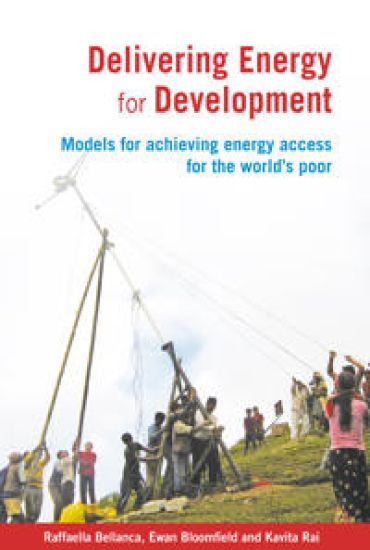
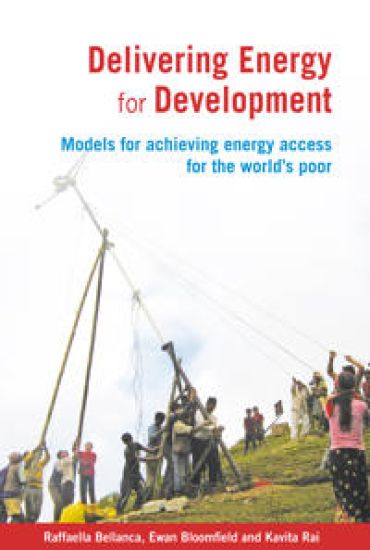
At the outset of 2012 - the United Nations' International Year of Sustainable Energy for All - access to modern energy services remains low or non-existent for approximately ** billion of the world's population. Energy practitioners worldwide are facing the challenge of delivering access to modern energy services where poverty and lack of infrastructure makes it most difficult. Rising awareness about climatic change and the notion of energy security for future generations are also being channelled into the debate. This book aims to provide an overview of existing energy delivery systems, as well as a guide to practitioners on the key issues integral to the success or failure of energy programmes in middle- and low-income countries. The authors consider how markets develop, which services are pivotal in supporting the process, and what overarching factors enable change to take place. The aim of the book is to provide practical guidance on how to replicate and scale up the successful delivery of energy to the very poor and is expected to be of use for energy development policy makers and practitioners.

In 1921, Giorgio Parodi founded Moto Guzzi with the mechanic Carlo Guzzi. The purpose of the company was to design innovative motorcycles in the Mandello del Lario headquarters on Lake Como, where the factory still stands today. Moto Guzzi bikes immediately stood out for their high performance and technical sophistication. Their greatness was proven by competition wins, and these sporting triumphs were accompanied by commercial success that made Moto Guzzi the most important motorcycle manufacturer in Italy. These victories did not happen by chance, but were the result of continuous innovation. The company soon decided to withdraw from competitions because of its manifest superiority and instead focused on production. It has since continued to churn out iconic innovations and models, like the California, which was chosen by the LAPD for their patrols. Moto Guzzi is no longer just a motorcycle but, like Harley-Davidson, it has become a style, a philosophy and a sign of belonging to the Guzzi tribe that unites movie stars like Ewan McGregor with acclaimed designers like Tom Dixon, musicians like Billy Joel, and astronauts such as Paolo Nespoli.
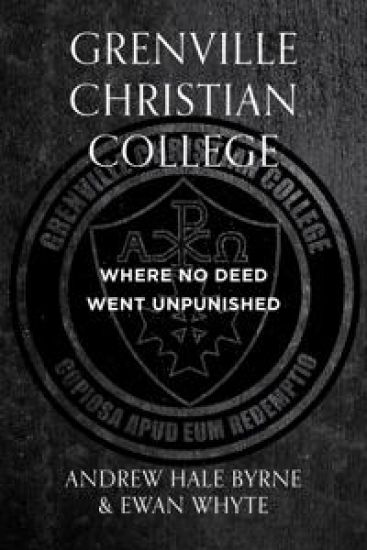
Andrew Hale-Byrne, along with Ewan Whyte, students at the Grenville Christian College, tell the bizarre story of how an elitist cult on Cape Cod, founded by two self-proclaimed holy women, managed to infiltrate and take over a preppy Anglican boarding school in Ontario. With patronage from the highest levels of Canada's government and business elites, Grenville College and its partners actively covered up abuse decades of abuse and malpractice. What followed were many years of institutional violence -- psychological, physical and sexual abuse -- against the children of the school, all under the guise of good clean Anglicanism. Andrew and Ewan, raised in the Community of Jesus School, chronicle the history of the abused victims and how Andrew exposed the school management, the cult and the Ontario establishment. The upper-crust cult on Cape Cod was a “who’s who” list of the cream of society, including a Rockefeller heiress, a Chairman of the U.S. Chamber of Commerce and a Chairman of Arthur Young. Andrew and Ewan provide a look inside the peculiar world of a religious cult at the apex of American and Canadian societies, from the dizzying heights of wealth that backed the school to the harrowing suffering of students and their families. Due to Andrew's expose, retaliation campaigns launched by the school, its defendants and a corrupt Anglican hierarchy have targeted many victims of abuse. However, death threats have not intimidated Andrew from his mission and his fight for justice continues in the courts, now working alongside Ewan to further expose the den of evil lying beneath Grenville. In 2023, a three-panel tribunal ruled in favour of the victims of the abuse from Grenville Christian College, awarding them 12 million dollars in total damages. While such a victory has been won, this sum is a mere pittance compared to the pain and suffering many have endured and continue to live with everyday. Countless former students have committed suicided, including recently in the United States, where a former cult member self immolated. As the saga continues to twist and turn beyond the courtroom and into the lives of Grenville’s victims, Andrew and Ewan present a work documenting the extent of the school’s actions, hoping to finally provide some comfort and closure for those who escaped their twisted alma mater.
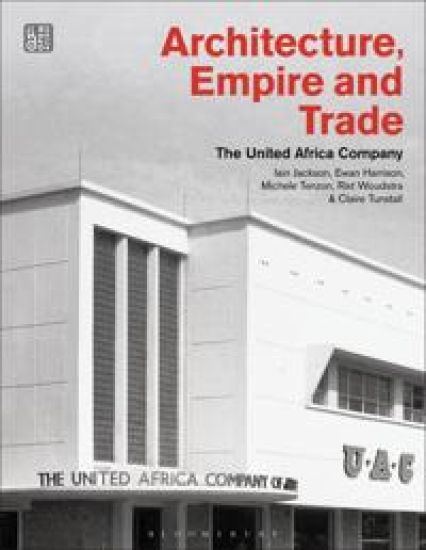
This open access book tells a new and untold history of the architecture of West Africa in the colonial era, as revealed for the first time through the archives of the United Africa Company (UAC). From the imperial Royal Niger Company’s charter in the 1890s through to its suave African department stores of the 1960s, the UAC – a British company firmly embedded in the economies of colonialism, extraction, and exploitation – became the largest commercial firm in West Africa, involved in almost every commercial enterprise and sector, and responsible for procuring architecture, infrastructure, and city real-estate across a vast region. Based on unprecedented access to the UAC archives, this book pieces together a new architectural history of West Africa from the high colonial period through to independence. It reproduces an extraordinary array of newly-uncovered material – from photographs of streetscapes, buildings, and West African everyday life to civic reports and city plans – and presents these alongside critical and theoretical discussions to reveal an alternative account of the architecture of the region which stands in contrast to more conventional state-focused histories. The book explores technological, aesthetic, and political shifts through an architectural lens, and brings to the fore an awareness of the violence and appropriation which underlie each architectural episode, showing how the UAC, as a case-study, presents a unique opportunity to investigate how architecture manifests power, culture, and identity in colonial and post-colonial contexts. The ebook editions of this book are available open access under a CC BY-NC-ND 4.0 licence on bloomsburycollections.com. Open access was funded by the University of Liverpool.
Drawing on extensive scholarly work, datasets, and experience with International Baccalaureate (IB) schools in Asia, this book illuminates contemporary debates, discussions, and discoveries surrounding IB schools in the region. Schools adopting IB programmes are growing exponentially worldwide, where Asia has seen the fastest growth since 2000. By critically exploring the roles, practices, and impacts of IB schools, this book enhances our understanding of whether and how IB programmes can drive improvements in school practices and systems in Asia. The book is organised into four parts and 12 chapters, aiming to discern “the light and shadow” of schools implementing IB programmes. Part 1 provides insights into International Baccalaureate Diploma Programme (IBDP) students' learning experiences and outcomes. Part 2 focuses on school leadership, examining the role of leadership in programme implementation and its relationship with IBDP student achievement. Part 3 offers a comparative perspective on the IB, exploring topics such as the pedagogical characteristics of the Middle Years Programme (MYP), the introduction of IB programmes into local and national education systems, and comparing the promised and actual benefits between the IBDP and other international programmes. Finally, Part 4 addresses two critical issues related to the expansion of IB programmes in Asia: the introduction and operation of IB programmes within national contexts and the emergence of educational stratifications and inequalities by the expansion of IB schools. Built on substantial data and empirical studies, this book fills a crucial gap in understanding the evolving nature of IB programmes in Asia. It provides readers with a critical and comprehensive understanding of the changing landscape of IB schooling practices and systems in the region. This book is an invaluable resource for academics, educators, scholars, and graduate students in the fields of educational leadership and administration, comparative and international education, higher education, and education policy and governance.
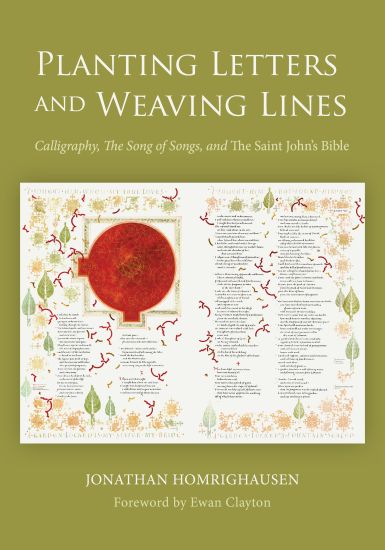
The illuminations of The Saint John’s Bible have delighted many with their imaginative takes on Scripture. But many struggle to appreciate the calligraphy more deeply than merely noting its beauty. Does calligraphy mean something? How is it beautiful? This book, written by a biblical scholar who has spent years working with this Bible, shows how calligraphic art powerfully interplays visual form, textual content, and creative process. Homrighausen proposes five lenses for this art form: gardens, weaving, pilgrimage, touching, and enfleshing words. Each of these lenses springs from the poetry of the Song of Songs, its illuminations in The Saint John’s Bible, and medieval ways of understanding the scribe’s craft. While these metaphors for calligraphic art draw from this particular illuminated Bible, this book is aimed at all lovers of calligraphy, art, and sacred text.
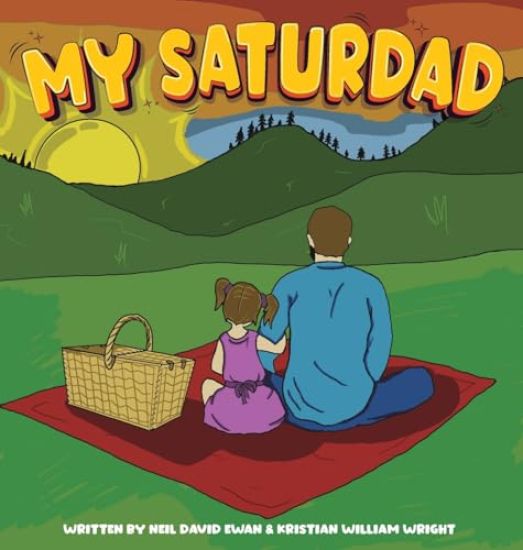
Follow the story of a little girl as she gets excited to see her dad on the weekend. Experience all the fun and some of the more complex feelings both her and her Saturdad feel as they begin to express and understand their relationship and just how important they are to eachother.
Goode on Commercial Law is the first port of call for the modern day practitioner with its theoretical and practical coverage of commercial law in both a national and an international context.
Follow the story of a little boy as he gets excited to see his dad on the weekend. Experience all the fun and some of the more complex feelings both him and his Saturdad feel as they begin to express and understand their relationship and just how important they are to each other. This book has been designed to be read by fathers to their sons with the goal of assisting the child to understand the structure of his family and to strengthen the connection they share.
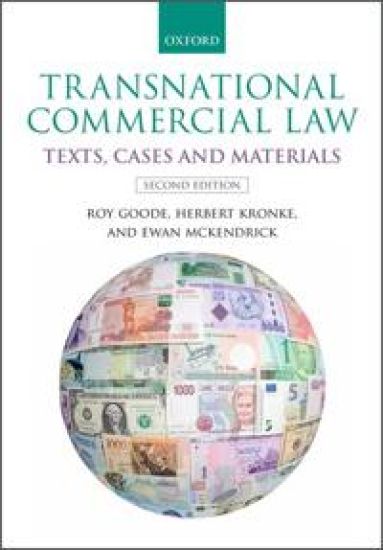
When the first edition of this student work was published some eight years ago transnational commercial law, introduced as a postgraduate course at the University of Oxford in 1995, was taught at a relatively small number of law schools. Since then the subject has blossomed and is now taught at law schools around the world. Focused on the products and processes of the harmonization of law relating to international commercial transactions, the book is an invaluable resource for students in this field. In this new edition the work has been completely revised and updated, covering a number of new or substantially revised international instruments. In addition four new chapters have been added by specialist contributors dealing with regional harmonization, carriage of goods by sea, transactions in securities and the relationship between international conventions and national law. The authority of the text is enhanced by the fact that all the authors have played leading roles in the drafting and development of many of the instruments examined in the work.
This companion to Transnational Commercial Law: Text, Cases and Materials contains up-to-date primary materials for students without linking commentary. This compilation of instruments covers areas such as treaty law, contracts, electronic commerce, international sales, agency and distribution, international credit transfers and bank payment undertakings, international secured transactions, cross-border insolvency, securities settlement and securities collateral, conflict of laws, civil procedure, and commercial arbitration
Transnational commercial law represents the outcome of work undertaken to harmonize national laws affecting domestic and cross-border transactions and is upheld by a diverse spectrum of instruments. Now in its second edition, this authoritative work brings together the major instruments in this field, dividing them into thirteen groups: Treaty Law, Contracts, Electronic Commerce, International Sales, Agency and Distribution, International Credit Transfers and Bank Payment Undertakings, International Secured Transactions, Cross-Border Insolvency, Securities Custody, Clearing and Settlement and Securities Collateral, Conflict of Laws, Civil Procedure, Commercial Arbitration, and a new section on Carriage of Goods. Each group of instruments is preceded by linking text which provides important context by identifying the key instruments in each group, discussing their purposes and relationships, and explaining the major provisions of each instrument, thus setting them in their commercial context. This volume is unique in providing the full text of international conventions, including the preamble - which is important for interpretation - and the final clauses and any annexes. In addition, each instrument is accompanied by a complete list of dates of signature and ratification by all contracting states, all easily navigated through the detailed tables of contents which precedes it. This fully-indexed work provides an indispensable guide for the practitioner or academic to the primary transnational commercial law instruments.
A Window Breaks is the nerve-shredding thriller from C. M. Ewan, the author of The Interview and Safe House.‘Fantastic’ – Lee Child‘Totally addictive’ – Ann Cleeves‘A thrill-a-minute page-turner’ – Simon KernickIt's 2 a.m. in a remote Scottish lodge.You are asleep when a noise wakes you.You stir, unsure why, and turn to your partner.Then you hear it.Glass. Crunching underfoot.Your worst fears are about to be realized.Someone is downstairs, intent on causing your family harm.You will do whatever it takes to protect them.But with only each other to rely on, can you escape?What authors are saying . . .‘If you only read one thriller this year read this’ – C. L. Taylor‘Smashed my way through this . . . Nerve-shredding’ – Tim Weaver‘Brilliantly crafted, excruciatingly tense’ – Sharon Bolton‘Starts at full throttle and never lets up’ – T. M. Logan‘Heart-stopping . . . a sure-fire bestseller’ – Jo Spain‘Breakneck ride of a thriller’ – Fiona Cummins‘Almost unbearably tense and exciting’ – Mark Edwards‘Fierce read, with heart, muscle and an out-of-sight twist’ – Mick Herron‘Tense, fast-paced thriller’ – Jenny Quintana‘Brilliant and almost impossible to put down’ – Andrew TaylorWhat readers are saying . . .‘This was so intense as the twists and turns came one after another at breakneck speed.’‘Brilliantly written thriller which keeps you gripped from the first few pages.’‘Full of action and excitement’‘Absolutely amazing; I was totally gripped from start to finish’