Kirjojen hintavertailu. Mukana 12 016 655 kirjaa ja 12 kauppaa.

Kirjahaku

Etsi kirjoja tekijän nimen, kirjan nimen tai ISBN:n perusteella.

1000 tulosta hakusanalla Foster

Fostering State-Tribal Collaboration

Fostering State-Tribal Collaboration

Andrea Wilkins

Rowman Littlefield
2015
nidottu
Fostering State-Tribal Collaboration: An Indian Law Primer surveys federal Indian law in order to facilitate collaborative policy development between the states and Native American tribes. Wilkins addresses civil and criminal jurisdiction, taxation, the Indian Child Welfare Act and other human services issues, environmental regulation, Indian gaming and revenue sharing, intergovernmental agreements and limited waivers of sovereign immunity, encouraging a move away from conflict and litigation and towards communication and collaboration. She provides a historical context for the existing law and foundational knowledge to foster programs and policies that meet the needs of all citizens and engage in successful cross-jurisdictional policy development. Unlike most other authors of texts on Indian law, who write for academics or lawyers, Wilkins explains current issues using practical, jargon-free language, making her book of immediate practical value to policymakers and students.
Fostering Empathy Through Museums
Fostering Empathy through Museums features fifteen case studies with clear take-away ideas, and lessons learned by vividly illustrating a spectrum of approaches in the way museums are currently employing empathy, a critical skill that is relevant to personal, institutional, economical, and societal progress. The need is rapidly growing for empathy to serve as a lens through which we find our purpose and connection in a complex world. This demand brings with it an appetite to cultivate it through safe and trusted platforms. Museums are uniquely equipped to undertake this important mission. This book will help museum staff and leadership at all levels working at a variety of museums (from animal sanctuaries to art museums, from historic house museums to children's and science museums) to better understand the multitude of ways how empathy can be cultivated, and employed in museum setting. Fostering Empathy through Museums will provide inspiration, examples, and lessons learned from a balanced spectrum of museums currently employing empathy in museum setting: as an educational tool to better connect their content with the audience, as an integral element of a museum's institutional values and behavior, and as a phenomenon that is worthy of exploration on its own and as an intentional outcome. This publication provides museum professionals as well as formal and informal learning educators to receive an overview of the variety of approaches to empathy in museums, and to create a shared language and methodologies that could enable them to utilize and nurture empathy as a "shared vision" that would serve not only their organizational mission, but also the greater good. Empathy can be a tool, or an intentional outcome depending on the institution’s objectives. Regardless of the choice, the ideas presented in this book are intended to inform and inspire institutions to unlock exciting possibilities in the areas of improved visitor experience, creative community partnerships, and contribution to social progress by bringing empathy to public discourse through institutional strategies, exhibitions, experiences, and programs. The book also provides ideas for future strategies where empathy is considered as a "shared vision" by museums, and a product of a museum experience that might lead to positive social impact.
Fostering Empathy Through Museums
Fostering Empathy through Museums features fifteen case studies with clear take-away ideas, and lessons learned by vividly illustrating a spectrum of approaches in the way museums are currently employing empathy, a critical skill that is relevant to personal, institutional, economical, and societal progress. The need is rapidly growing for empathy to serve as a lens through which we find our purpose and connection in a complex world. This demand brings with it an appetite to cultivate it through safe and trusted platforms. Museums are uniquely equipped to undertake this important mission. This book will help museum staff and leadership at all levels working at a variety of museums (from animal sanctuaries to art museums, from historic house museums to children's and science museums) to better understand the multitude of ways how empathy can be cultivated, and employed in museum setting. Fostering Empathy through Museums will provide inspiration, examples, and lessons learned from a balanced spectrum of museums currently employing empathy in museum setting: as an educational tool to better connect their content with the audience, as an integral element of a museum's institutional values and behavior, and as a phenomenon that is worthy of exploration on its own and as an intentional outcome. This publication provides museum professionals as well as formal and informal learning educators to receive an overview of the variety of approaches to empathy in museums, and to create a shared language and methodologies that could enable them to utilize and nurture empathy as a "shared vision" that would serve not only their organizational mission, but also the greater good. Empathy can be a tool, or an intentional outcome depending on the institution’s objectives. Regardless of the choice, the ideas presented in this book are intended to inform and inspire institutions to unlock exciting possibilities in the areas of improved visitor experience, creative community partnerships, and contribution to social progress by bringing empathy to public discourse through institutional strategies, exhibitions, experiences, and programs. The book also provides ideas for future strategies where empathy is considered as a "shared vision" by museums, and a product of a museum experience that might lead to positive social impact.

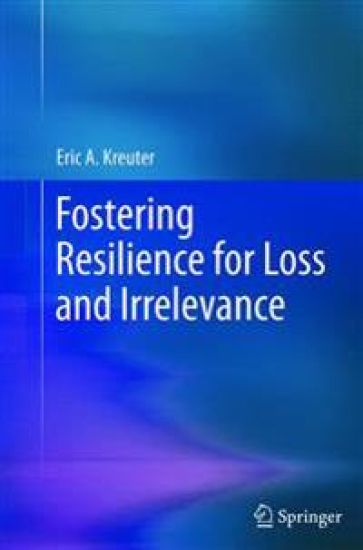
Fostering Resilience for Loss and Irrelevance

Fostering Resilience for Loss and Irrelevance

Eric A. Kreuter

Springer-Verlag New York Inc.
2012
sidottu
????? The compensating construct of resiliency, itself, has not been compared to the problem of loss of relevancy. Therefore, there is an open corridor for the enlightened therapist, career coach, or mentor to appropriately guide a troubled person with targeted challenges to transform themselves into a newly thriving being. This book explores the topic in detail with references to the literature where prior theory can be applied to advance this topic further. Anecdotal evidence supporting the authors’ perspective is presented, including several brief case studies of individuals who have thrived following cessation of their prior careers. ?
Fostering Entrepreneurship in Georgia
Job creation and productivity growth are at the forefront of the global development agenda. The central challenge today for the government of Georgia is to find sources of long-term economic growth, particularly through private sector development. This study seeks to identify determinants of high-growth entrepreneurial activity. The study uses data from the new 2012 World Bank Entrepreneurship Survey conducted to gauge new firm growth in the formal sector in Georgia and data from World Bank Enterprise Surveys to analyse innovative activity in existing firms. It includes detailed case study analyses to complement these findings.The study finds that while a number of reforms have been undertaken to alleviate the business environment, there remain a number of constraints that inhibit the growth of entrepreneurial and innovative activity. These constraints include a major skills mismatch, insufficient research and development and ineffective industry-research linkages. While outlining broad policy directions in areas namely improving business environment, access to finance, developing skills, increasing access to markets, incentivizing greater firm level research and development, and raising awareness it lays out some priority areas that the government could embark on.The government could remove bottlenecks that impede entrepreneurialism in the general business environment and design new financial policy instruments to foster entrepreneurship and innovation. We hope that the issues discussed and the dialogue initiated during the course of this study would lend itself to policy design to foster high-growth entrepreneurship with a view to higher growth and job creation in this highly globalized world.
Fostering Entrepreneurship in Armenia
Job creation and productivity growth are at the forefront of the global development agenda. The central challenge today for the government of Armenia is to find new sources of long-term economic growth to become an upper middle-income country, with a view to experiencing a substantial transformation of its economic structure to one that is resilient to external shocks in the medium term. A dynamic and vibrant private sector is thus crucial to Armenia's economic growth, with firms making new investments, creating jobs, improving productivity, and promoting growth. Entrepreneurial activity is pivotal to the continued dynamism of the private sector, with the generation of new businesses fostering competition and economic growth. This study seeks to identify determinants of high-growth entrepreneurial activity. The study uses data from the new 2012 World Bank Entrepreneurship Survey conducted to gauge new firm growth in the formal sector in Armenia and data from World Bank Enterprise Surveys to analyse innovative activity in existing firms. It includes detailed case study analyses to complement these findings.The study finds that while there is a higher level of entrepreneurial activity in Armenia when compared to its neighbour Georgia, however there remain a number of constraints that inhibit the growth of entrepreneurial and innovative activity. These constraints include a major skills mismatch, ineffective industry-research linkages and a lack of access to risk capital. While outlining broad policy directions in areas namely improving business environment, access to finance, developing skills, incentivizing greater industry- research collaboration, and raising awareness it lays out some priority areas that the government could embark on.The government could remove bottlenecks from the general business environment that impede able entrepreneurs with good ideas from starting a new venture and creating jobs. This would include strengthening the business environment to allow failure and company exit as a necessary part of entrepreneurial learning, company incentives that favour entrepreneurs with good ideas, instruments that enable entrepreneurs to access capital for startups, and instruments to tap into the vast diaspora pool both in terms of knowledge and capital. We hope that the issues discussed and the dialogue initiated during the course of this study would lend itself to policy design to foster high-growth entrepreneurship with a view to higher growth and job creation in this highly globalized world.
Fostering Entrepreneurship in Azerbaijan
Job creation and productivity growth are at the forefront of the global development agenda. This is particularly relevant for Azerbaijan, whose government faces a central challenge to create conditions that will facilitate growth in nonoil tradable sectors. This study seeks to identify determinants of high-growth entrepreneurial activity. The study uses data from the new 2012 World Bank Entrepreneurship Survey conducted to gauge new firm growth in the formal sector in Azerbaijan and data from World Bank Enterprise Surveys to analyse innovative activity in existing firms. It includes detailed case study analyses to complement these findings.The study finds that high-growth entrepreneurialism is low in Azerbaijan and that innovative activity among firms is very low. Several factors hinder business growth and entrepreneurship. These include a lack of competition, financial systems that are not conducive to business development and a lack of industry-relevant skills. While outlining broad policy directions in areas namely improving competition and access to information, improving the business environment, increasing access to finance, developing skills, increasing access to markets, incentivising greater in-firm research and development and raising awareness it lays out some priority areas that the government could embark on.The government could remove bottlenecks that impede entrepreneurialism in the general business environment and design new financial policy instruments to foster entrepreneurship and innovation. We hope that the issues discussed and the dialogue initiated during the course of this study would lend itself to policy design to foster high-growth entrepreneurship with a view to higher growth and job creation in this highly globalized world.
Fostering Skills in Cameroon

Fostering Skills in Cameroon

Shobhana Sosale

World Bank Publications
2016
nidottu
This report reaches conclusions and offers policy recommendations to answer these questions: What has been the trajectory of Cameroon’s economic growth? Which sectors have contributed to growth? What jobs are being created? What types of skills are being used in the sectors where the highest percentages of the population are employed? What are the demand and supply barriers to skills? Which policies and institutions are in play? Are they sufficient? What needs to or could be reformed? Cameroon has good prospects for moving to middle-income status. It can create a more dynamic, responsive workforce. But a new strategy is required. It can be done. This report proposes new directions and provides recommendations.
Fostering Skills in Cameroon

Fostering Skills in Cameroon

Shobhana Sosale

World Bank Publications
2016
nidottu
This report reaches conclusions and offers policy recommendations to answer these questions: What has been the trajectory of Cameroon’s economic growth? Which sectors have contributed to growth? What jobs are being created? What types of skills are being used in the sectors where the highest percentages of the population are employed? What are the demand and supply barriers to skills? Which policies and institutions are in play? Are they sufficient? What needs to or could be reformed? Cameroon has good prospects for moving to middle-income status. It can create a more dynamic, responsive workforce. But a new strategy is required. It can be done. This report proposes new directions and provides recommendations.
Fostering Human Capital in the Gulf Cooperation Council Countries

Fostering Human Capital in the Gulf Cooperation Council Countries

Sameh El-Saharty; Igor Kheyfets; Christopher Herbst; Mohamed Ihsan Ajwad

World Bank Publications
2020
nidottu
The formation of human capital--the knowledge, skills, and health that people accumulate over their lifetimes--is critical for the six Gulf Cooperation Council (GCC) countries. Human capital contributes not only to human development and employment but also to the long-term sustainability of a diversified economic growth model that is knowledge based and private sector driven. This approach is critical, given that income from oil and gas will eventually decline and that the nature of work is evolving in response to rapid technological changes, in turn demanding new skill sets. The GCC governments have demonstrated their strong political will for this shift: four of them are among the first countries to join the World Bank's Human Capital Project—a global effort to improve investments in people as measured by the Human Capital Index. The GCC countries face four main challenges:• Low levels of basic proficiency among schoolchildren• A mismatch between education and the labor market• A relatively high rate of adult mortality and morbidity• A unique labor market , in which wages in the public sector are more generous than in the private sector and government employment of nationals is virtually guaranteed. To address these challenges, this report outlines four strategies in a "whole-of-government" approach:• Investing in high-quality early childhood development• Preparing healthier, better educated, and skilled youth for the future• Enabling greater adult labor force participation• Creating an enabling environment for human capital formation. These strategies are based on best practices in other countries and feature some of the GCC countries' plans, including their national "Visions," to take their economies and societies further into the twenty-first century. With the COVID-19 pandemic, the GCC countries face additional challenges that may worsen some pre-existing vulnerabilities and erode human capital. In response, the GCC governments have taken multiple measures to protect their populations' health and their economies. Any country's decision to reopen its economy needs to closely consider public health consequences to avoid a resurgence of infections and any further erosion of its human capital. The COVID-19 crisis underscores that the need to accelerate and improve investment in human capital has never been greater. Once the GCC countries return to a "new normal," they will be in a position to achieve diversified and sustainable growth by adopting, and then tailoring, the strategies presented in this report.
Fostering 21st Century Digital Literacy and Technical Competency
The 21st century has seen an expansion in digital technology and the ways in which it affects everyday life. These technologies have become essential in the growth of social communication and mass media. Fostering 21st Century Digital Literacy and Technical Competency offers the latest in research on the technological advances on computer proficiency in the educational system and society. This collection of research brings together theories and experiences in order to create a common framework and is essential for educators and professionals in the technology fields.
Fostering Mental Health Literacy through Adolescent Literature
Fostering Mental Health Literacy through Adolescent Literature provides educators a starting point for engaging students in the study of adolescent literature that features mental health themes with the intended goal of developing students’ mental health literacy while simultaneously attending to English Language Arts content and literacy standards. Each chapter, co-authored by a literacy expert and mental health specialist, features a specific adolescent novel and provides middle and high school teachers background information on the novel’s featured mental health theme(s), along with pedagogical approaches for guiding readers into, through, and out of the novel. In doing so, this text seeks to raise awareness of mental health issues thereby reducing associated stigma and normalizing individual and peer mental health experiences for all adolescents.
Fostering Mental Health Literacy through Adolescent Literature
Fostering Mental Health Literacy through Adolescent Literature provides educators a starting point for engaging students in the study of adolescent literature that features mental health themes with the intended goal of developing students’ mental health literacy while simultaneously attending to English Language Arts content and literacy standards. Each chapter, co-authored by a literacy expert and mental health specialist, features a specific adolescent novel and provides middle and high school teachers background information on the novel’s featured mental health theme(s), along with pedagogical approaches for guiding readers into, through, and out of the novel. In doing so, this text seeks to raise awareness of mental health issues thereby reducing associated stigma and normalizing individual and peer mental health experiences for all adolescents.
Fostering Resilience for Loss and Irrelevance

Fostering Resilience for Loss and Irrelevance

Eric A. Kreuter

Springer-Verlag New York Inc.
2015
nidottu
????? The compensating construct of resiliency, itself, has not been compared to the problem of loss of relevancy. Therefore, there is an open corridor for the enlightened therapist, career coach, or mentor to appropriately guide a troubled person with targeted challenges to transform themselves into a newly thriving being. This book explores the topic in detail with references to the literature where prior theory can be applied to advance this topic further. Anecdotal evidence supporting the authors’ perspective is presented, including several brief case studies of individuals who have thrived following cessation of their prior careers. ?