Kirjojen hintavertailu. Mukana 11 717 486 kirjaa ja 12 kauppaa.

Kirjahaku

Etsi kirjoja tekijän nimen, kirjan nimen tai ISBN:n perusteella.

1000 tulosta hakusanalla Gerald Mortimer

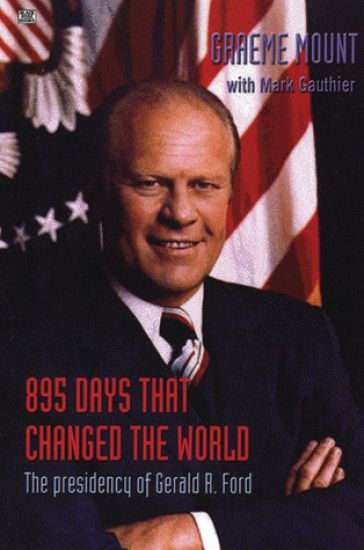
895 Days That Changed The World – The presidency of Gerald R. Ford

895 Days That Changed The World – The presidency of Gerald R. Ford

Mount Graeme; Graeme Mount; Mark Gauthier

Black Rose Books
2023
sidottu
On August 9, 1974, President Nixon resigns because of criminal activity in connection with Watergate and flies to California. At noon that day, Gerald R. Ford becomes the 38th president of the United States.It was left to Gerald Ford to heal a war-torn and scandal-ridden nation and to restore credibility to the presidency in the wake of Watergate and Vietnam. Few presidents have ever been asked to achieve so much in so little time against such great adversity.In the 895 days that made up his term in office, he would deal with South Vietnam, North Korea, the Helsinki Accord, Cuba, the operational transfer of the Panama Canal, the death of Franco, the invasion of East Timor by Indonesia, public outrage at CIA misdeeds, the US Bicentennial, and Operation Paul Bunyan, a reassurance to South Koreans and a warning to North Koreans.It is Graeme Mount's belief that developments that changed the world took place when President Ford led the United States. In some of these, he was an instigator; in some, he reacted to events precipitated by others.Making extensive use of the Gerald Ford Presidential Library, both the archives and the museum, Mount examines the very documents produced by President Ford, members of his cabinet, and the White House staff and through that examination offers a window on the world between August 1974 and January 1976 that provides new insights into a troubling period of US history and Ford's role in guiding the nation through it.Historian Graeme Mount is the author of some 13 books, including "Chile and the Nazis" (Black Rose, 2002) and "The Diplomacy of War: The Case of Korea "(Black Rose, 2004). He has, as well, written extensively on US/Canadian relations in "An Introduction to Canadian-American Relations" and "Invisible and Inaudible in Washington."
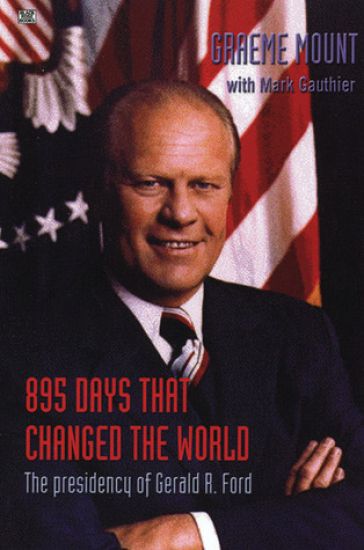
895 Days That Changed The World – The presidency of Gerald R. Ford

895 Days That Changed The World – The presidency of Gerald R. Ford

Mount Graeme; Graeme Mount; Mark Gauthier

Black Rose Books
2023
nidottu
On August 9, 1974, President Nixon resigns because of criminal activity in connection with Watergate and flies to California. At noon that day, Gerald R. Ford becomes the 38th president of the United States.It was left to Gerald Ford to heal a war-torn and scandal-ridden nation and to restore credibility to the presidency in the wake of Watergate and Vietnam. Few presidents have ever been asked to achieve so much in so little time against such great adversity.In the 895 days that made up his term in office, he would deal with South Vietnam, North Korea, the Helsinki Accord, Cuba, the operational transfer of the Panama Canal, the death of Franco, the invasion of East Timor by Indonesia, public outrage at CIA misdeeds, the US Bicentennial, and Operation Paul Bunyan, a reassurance to South Koreans and a warning to North Koreans.It is Graeme Mount's belief that developments that changed the world took place when President Ford led the United States. In some of these, he was an instigator; in some, he reacted to events precipitated by others.Making extensive use of the Gerald Ford Presidential Library, both the archives and the museum, Mount examines the very documents produced by President Ford, members of his cabinet, and the White House staff and through that examination offers a window on the world between August 1974 and January 1976 that provides new insights into a troubling period of US history and Ford's role in guiding the nation through it.Historian Graeme Mount is the author of some 13 books, including "Chile and the Nazis" (Black Rose, 2002) and "The Diplomacy of War: The Case of Korea "(Black Rose, 2004). He has, as well, written extensively on US/Canadian relations in "An Introduction to Canadian-American Relations" and "Invisible and Inaudible in Washington."
Mrs. Gerald's Niece

Mrs. Gerald's Niece

Lady Georgiana Fullerton

Hansebooks
2017
pokkari
Mrs. Gerald's Niece - A Novel is an unchanged, high-quality reprint of the original edition of 1886. Hansebooks is editor of the literature on different topic areas such as research and science, travel and expeditions, cooking and nutrition, medicine, and other genres. As a publisher we focus on the preservation of historical literature. Many works of historical writers and scientists are available today as antiques only. Hansebooks newly publishes these books and contributes to the preservation of literature which has become rare and historical knowledge for the future.
From Nuclei To Stars: Festschrift In Honor Of Gerald E Brown
In one way or another, Gerry Brown has been concerned with questions about the universe, about its vast expanse as well as about its most miniscule fundamental constituents of matter throughout his entire life. In his endeavours to understand the universe in many manifestations from nuclei all the way to the stars, he has been influenced by some of the most prominent physicists of the 20th century, and he himself, in turn, has influenced a great many scholars. This volume, a collection of articles dedicated to Gerry on his 85th birthday, contains discussions of many of the issues which have attracted his interest over the years. The contributions are written by his former students, co-authors, colleagues and admirers and they are strongly influenced by Gerry's own scientific tastes. With this compilation we want to express our respect, admiration and gratitude; we want to celebrate Gerry's scientific and scholarly achievements, the inspirational quality of his teaching and the enthusiasm which he himself displayed in his research and which stimulated so many of his students and colleagues over the decades.
Essays in Criminal Law in Honour of Sir Gerald Gordon
In modern times few, if any, individuals can have been as important to a single country's criminal law as Sir Gerald has been to the criminal law of Scotland. His monumental work The Criminal Law of Scotland (1967) is the foundation of modern Scottish criminal law and is recognised internationally as a major contribution to academic work on the subject. Elsewhere, he has made significant contributions as an academic, judge and as a member of the Scottish Criminal Cases Review Commission. Reflecting the academic rigour and practical application of Sir Gerald's work, this volume includes essays on criminal law theory, substantive law and evidence and procedure by practitioners and academics within and outwith Scotland, including contributions from England, Ireland and the USA.
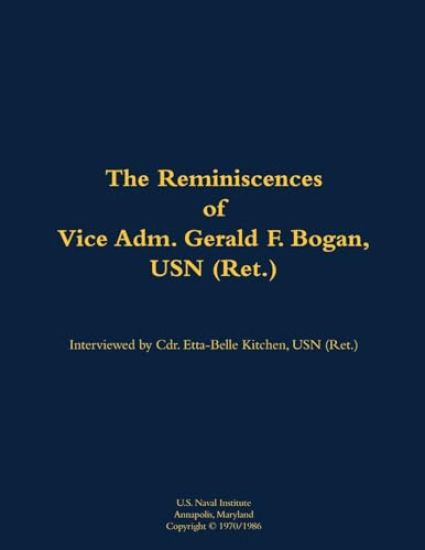
The Reminiscences of Vice Adm. Gerald F. Bogan, USN (Ret.)
In 1917 Bogan watch and gunnery officer in the USS Birmingham (CS-2), which was doing escort duty during World War I. In 1919 served in the USS Stribling (DD-96), then the USS Hopewell (DD-181) and USS Broome (DD-210). In 1922 was CO of U.S. Naval Radio Station, Russian Island, Vladivostok and returned that station to Soviet forces after its decommissioning. Became naval aviator and joined squadron with the USS Langley (CV-1), then Commander Fighting Squadron One of the USS Saratoga (CV-3). During World War II he was commanding officer of Naval Air Station Miami and the Saratoga. Later, as a flag officer, he commanded Naval Air, Tenth Fleet, under Admiral Ernest J. King and a fast carrier task group in the Pacific. Returned to the States and was in command of Fleet Air, Alameda and then until his retirement in 1950, Commander First Task Fleet.
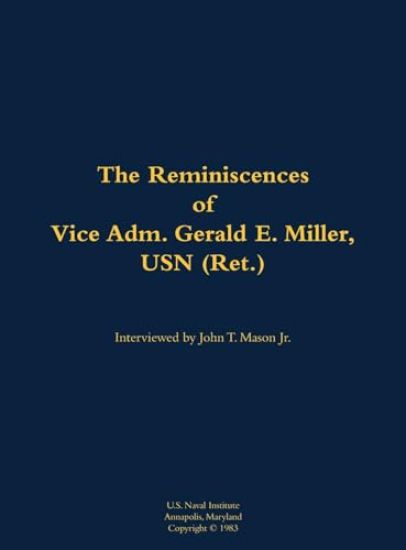
The Reminiscences of Vice Adm. Gerald E. Miller, USN (Ret.)
In order to get into naval aviation, Admiral Miller took a long route. He enlisted in the Navy in 1936 and served in the fleet for two years before getting an appointment to the Naval Academy, from which he was graduated in late 1941. He then spent two years of wartime duty in the light cruiser USS Richmond (CL-9) before he could go to flight training. He didn't get an opportunity for wartime air combat. After the war, he went to postgraduate school at Stanford University and continued his flying career. Throughout his aviation experiences, he placed particular emphasis on night-time flight operations. During the Korean War, he served on the staff of Rear Admiral E. C. Ewen, Commander Task Force 77, and then commanded a fighter squadron. During a mid-1950s tour in the Bureau of Naval Personnel, Miller was instrumental in the installation of computers and reorganizing the distribution of enlisted personnel. After commanding a carrier air group, he was sent to Omaha, Nebraska, to work with the Air Force in joint strategic target planning. In the early 1960s, he commanded the ammunition ship USS Wrangell (AE-12) and the attack aircraft carrier Franklin D. Roosevelt (CVA-42). In discussing the latter, he stresses Mediterranean operations and the role of the commanding officer as leader. The concluding volume picks up his story when he was serving as aide to the Vice Chief of Naval Operations, Admiral Horacio Rivero, during which time he indoctrinated the admiral in naval aviation. In his next duty, as Director, Aviation Plans Division in OpNav, Miller played a role in the knockdown of the controversial F-111B program. He also pushed for the purchase of RA-5 reconnaissance aircraft, a decision he subsequently came to regret. He concedes he was given little role in the Vietnam War but did participate in a satisfying electronic silence naval exercise off Korea. Following duty as Assistant DCNO (Air), he became Commander Second Fleet and observed what he felt were the negative effects of Z-grams. Miller considers his Second Fleet duty to have been perfect preparation for his subsequent tour as Commander Sixth Fleet. Facets covered from this service were dealings with the Soviet ships in the Mediterranean, racial tensions, and the deterioration of discipline and appearance among the fleet's sailors. Miller sought to reverse the trend resulting from Z-grams and says he considered the possibility Admiral Zumwalt would fire him for his efforts. In his final tour, Admiral Miller was Deputy Director of the Joint Strategic Target Planning Staff in Omaha, and he made it a project to familiarize U.S. civilian and military leaders with operational plans for nuclear war. Throughout his narrative, Miller's strong leadership style is evident, and he offers opinions on the application and failure of leadership skills.
The Reminiscences of Vice Adm. Gerald F. Bogan, USN (Ret.)
In 1917 Bogan watch and gunnery officer in the USS Birmingham (CS-2), which was doing escort duty during World War I. In 1919 served in the USS Stribling (DD-96), then the USS Hopewell (DD-181) and USS Broome (DD-210). In 1922 was CO of U.S. Naval Radio Station, Russian Island, Vladivostok and returned that station to Soviet forces after its decommissioning. Became naval aviator and joined squadron with the USS Langley (CV-1), then Commander Fighting Squadron One of the USS Saratoga (CV-3). During World War II he was commanding officer of Naval Air Station Miami and the Saratoga. Later, as a flag officer, he commanded Naval Air, Tenth Fleet, under Admiral Ernest J. King and a fast carrier task group in the Pacific. Returned to the States and was in command of Fleet Air, Alameda and then until his retirement in 1950, Commander First Task Fleet.