Seven Short Plays by Lady Gregory is a collection of seven plays written by the Irish playwright and folklorist, Lady Gregory. The plays are set in rural Ireland and explore themes of love, family, and community. The collection includes The Rising of the Moon, which tells the story of a group of Irish rebels who are helped by a sympathetic police officer; Hyacinth Halvey, in which a young woman tries to improve her social status by running for office; and The Workhouse Ward, which focuses on the lives of the poor and elderly in an Irish workhouse. Other plays in the collection include The Travelling Man, The Jackdaw, The Gaol Gate, and McDonough's Wife. Lady Gregory's plays are known for their use of Irish dialect and their portrayal of Irish life and culture. Seven Short Plays by Lady Gregory is a valuable resource for anyone interested in Irish drama and literature.This Is A New Release Of The Original 1909 Edition.This scarce antiquarian book is a facsimile reprint of the old original and may contain some imperfections such as library marks and notations. Because we believe this work is culturally important, we have made it available as part of our commitment for protecting, preserving, and promoting the world's literature in affordable, high quality, modern editions, that are true to their original work.
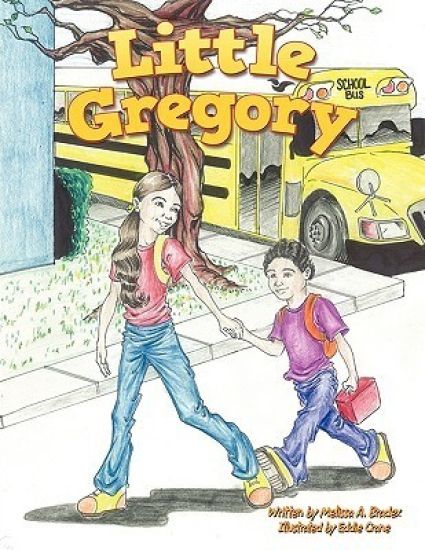
This is the year 1912. The Titanic had sunk. William Booth, the Salvation Army founder, had passed on, and the automobile was becoming very popular. The first public novena in honor of St Th r se was held in Chicago. Two young boys named Jake and Gregory in Southampton England, Jake a newsboy and Gregory a helper at his grandfather's bakery, became obsessed with an article in a newspaper about Sister Th r se. This obsession took them over to a convent to Southern Italy where they travelled to investigate the matter.
Learning that the man of your dreams loves you, too, is wonderful...unless he's a Hollywood legend who died years ago....Heather Blackstone is on top of the world-happily married, adorable young son, co-owner of a rising Hollywood film-production company. Then her husband announces he's in love with a young starlet, and she loses her house. Now he is trying to wrest control of their company away from her, too. Is it any wonder she's going a little crazy?Heather falls asleep in front of her TV and is awakened by Bette Davis telling her that her furnished apartment is a dump, and that Heather needs to fight for what is rightfully hers. Heather soon finds herself drawn into the feud between Bette Davis and Joan Crawford, and she makes Vivien Leigh angry when Clark Gable carries Heather up the stairs. Yet those incidents pale when she discovers that her lifelong fantasy has come true: she meets up with Gregory Peck and discovers that he loves her every bit as much as she has always loved him.Heather is convinced she's in love. Her ex-husband is convinced she's certifiable. With the possibility of losing her son, her home, her profession, and her reputation, how can she possibly find happiness? But with the love of Gregory Peck, how can she not?
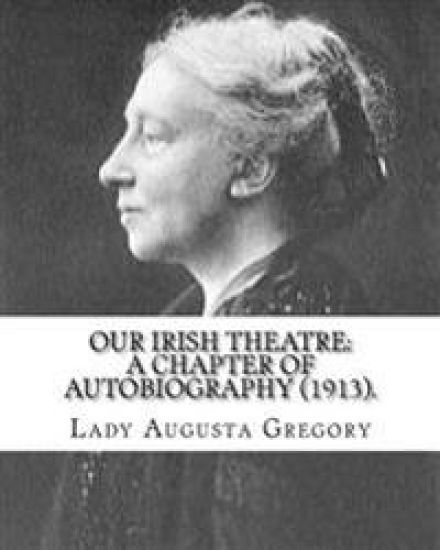
Isabella Augusta, Lady Gregory ( 15 March 1852 - 22 May 1932) was an Irish dramatist, folklorist and theatre manager. With William Butler Yeats and Edward Martyn, she co-founded the Irish Literary Theatre and the Abbey Theatre, and wrote numerous short works for both companies. Lady Gregory produced a number of books of retellings of stories taken from Irish mythology. Born into a class that identified closely with British rule, her conversion to cultural nationalism, as evidenced by her writings, was emblematic of many of the political struggles to occur in Ireland during her lifetime. Lady Gregory is mainly remembered for her work behind the Irish Literary Revival. Her home at Coole Park, County Galway, served as an important meeting place for leading Revival figures, and her early work as a member of the board of the Abbey was at least as important for the theatre's development as her creative writings. Lady Gregory's motto was taken from Aristotle: "To think like a wise man, but to express oneself like the common people." Early life and marriage: Gregory was born at Roxborough, County Galway, the youngest daughter of the Anglo-Irish gentry family Persse. Her mother, Frances Barry, was related to Viscount Guillamore, and her family home, Roxborough, was a 6,000-acre (24 km ) estate located between Gort and Loughrea, the main house of which was later burnt down during the Irish Civil War. She was educated at home, and her future career was strongly influenced by the family nurse (i.e. nanny), Mary Sheridan, a Catholic and a native Irish speaker, who introduced the young Augusta to the history and legends of the local area. She married Sir William Henry Gregory, a widower with an estate at Coole Park, near Gort, on 4 March 1880 in St Matthias' Church, Dublin. Sir William, who was 35 years her elder, had just retired from his position as Governor of Ceylon (now Sri Lanka), having previously served several terms as Member of Parliament for County Galway. He was a well-educated man with many literary and artistic interests, and the house at Coole Park housed a large library and extensive art collection, both of which Lady Gregory was eager to explore. He also had a house in London, where the couple spent a considerable amount of time, holding weekly salons frequented by many leading literary and artistic figures of the day, including Robert Browning, Lord Tennyson, John Everett Millais and Henry James. Their only child, Robert Gregory, was born in 1881. He was killed during the First World War, while serving as a pilot, an event which inspired Yeats's poems "An Irish Airman Foresees His Death," "In Memory of Major Robert Gregory," and "Shepherd and Goatherd."
Isabella Augusta, Lady Gregory ( 15 March 1852 - 22 May 1932) was an Irish dramatist, folklorist and theatre manager. With William Butler Yeats and Edward Martyn, she co-founded the Irish Literary Theatre and the Abbey Theatre, and wrote numerous short works for both companies. Lady Gregory produced a number of books of retellings of stories taken from Irish mythology. Born into a class that identified closely with British rule, her conversion to cultural nationalism, as evidenced by her writings, was emblematic of many of the political struggles to occur in Ireland during her lifetime. Lady Gregory is mainly remembered for her work behind the Irish Literary Revival. Her home at Coole Park, County Galway, served as an important meeting place for leading Revival figures, and her early work as a member of the board of the Abbey was at least as important for the theatre's development as her creative writings. Lady Gregory's motto was taken from Aristotle: "To think like a wise man, but to express oneself like the common people." Early life and marriage: Gregory was born at Roxborough, County Galway, the youngest daughter of the Anglo-Irish gentry family Persse. Her mother, Frances Barry, was related to Viscount Guillamore, and her family home, Roxborough, was a 6,000-acre (24 km ) estate located between Gort and Loughrea, the main house of which was later burnt down during the Irish Civil War. She was educated at home, and her future career was strongly influenced by the family nurse (i.e. nanny), Mary Sheridan, a Catholic and a native Irish speaker, who introduced the young Augusta to the history and legends of the local area. She married Sir William Henry Gregory, a widower with an estate at Coole Park, near Gort, on 4 March 1880 in St Matthias' Church, Dublin. Sir William, who was 35 years her elder, had just retired from his position as Governor of Ceylon (now Sri Lanka), having previously served several terms as Member of Parliament for County Galway. He was a well-educated man with many literary and artistic interests, and the house at Coole Park housed a large library and extensive art collection, both of which Lady Gregory was eager to explore. He also had a house in London, where the couple spent a considerable amount of time, holding weekly salons frequented by many leading literary and artistic figures of the day, including Robert Browning, Lord Tennyson, John Everett Millais and Henry James. Their only child, Robert Gregory, was born in 1881. He was killed during the First World War, while serving as a pilot, an event which inspired Yeats's poems "An Irish Airman Foresees His Death," "In Memory of Major Robert Gregory," and "Shepherd and Goatherd." William Robert Gregory MC (20 May 1881 in County Galway, Ireland - 23 January 1918 near Grossa, Padua, Italy was an Irish cricketer and artist. The only child of William Henry Gregory and Lady Gregory, an associate of W. B. Yeats, Robert was born in County Galway in Ireland in May 1881. He studied at Harrow, New College, Oxford and the Slade School of Art he excelled at bowls, boxing, horse riding and cricket. He was good enough at cricket to play once for the Ireland cricket team, taking 8/80 with his leg spin bowling in a first-class match against Scotland in 1912. ...
Isabella Augusta, Lady Gregory ( 15 March 1852 - 22 May 1932) was an Irish dramatist, folklorist and theatre manager. With William Butler Yeats and Edward Martyn, she co-founded the Irish Literary Theatre and the Abbey Theatre, and wrote numerous short works for both companies. Lady Gregory produced a number of books of retellings of stories taken from Irish mythology. Born into a class that identified closely with British rule, her conversion to cultural nationalism, as evidenced by her writings, was emblematic of many of the political struggles to occur in Ireland during her lifetime. Lady Gregory is mainly remembered for her work behind the Irish Literary Revival. Her home at Coole Park, County Galway, served as an important meeting place for leading Revival figures, and her early work as a member of the board of the Abbey was at least as important for the theatre's development as her creative writings. Lady Gregory's motto was taken from Aristotle: "To think like a wise man, but to express oneself like the common people." Early life and marriage: Gregory was born at Roxborough, County Galway, the youngest daughter of the Anglo-Irish gentry family Persse. Her mother, Frances Barry, was related to Viscount Guillamore, and her family home, Roxborough, was a 6,000-acre (24 km ) estate located between Gort and Loughrea, the main house of which was later burnt down during the Irish Civil War. She was educated at home, and her future career was strongly influenced by the family nurse (i.e. nanny), Mary Sheridan, a Catholic and a native Irish speaker, who introduced the young Augusta to the history and legends of the local area. She married Sir William Henry Gregory, a widower with an estate at Coole Park, near Gort, on 4 March 1880 in St Matthias' Church, Dublin. Sir William, who was 35 years her elder, had just retired from his position as Governor of Ceylon (now Sri Lanka), having previously served several terms as Member of Parliament for County Galway. He was a well-educated man with many literary and artistic interests, and the house at Coole Park housed a large library and extensive art collection, both of which Lady Gregory was eager to explore. He also had a house in London, where the couple spent a considerable amount of time, holding weekly salons frequented by many leading literary and artistic figures of the day, including Robert Browning, Lord Tennyson, John Everett Millais and Henry James. Their only child, Robert Gregory, was born in 1881. He was killed during the First World War, while serving as a pilot, an event which inspired Yeats's poems "An Irish Airman Foresees His Death," "In Memory of Major Robert Gregory," and "Shepherd and Goatherd."
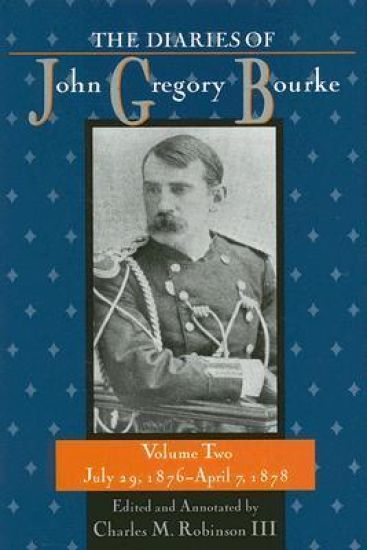
John Gregory Bourke kept a monumental set of diaries as aide-de-camp to Brigadier General George Crook. This second volume (of a projected set of six) opens as Crook prepares for the expedition that would lead to his infamous and devastating Horse Meat March. Although Bourke retains his loyalty to Crook throughout the detailed account, his patience is sorely tried at times. Bourke's description of the march is balanced by an appendix containing letters and reports by others such as Lt. Walter Schuyler and Surgeon Bennett Clements. The diary continues with the story of the Powder River Expedition, culminating in Bourke's eyewitness description of Col. Ranald Mackenzie's destruction of the main Cheyenne camp in what became known as the Dull knife Fight. Bourke finishes this volume with a retrospective of his service in Tucson, Arizona. Each volume in the series is extensively annotated and contains a biographical appendix on Indians, civilians, and military personnel named in the volume.
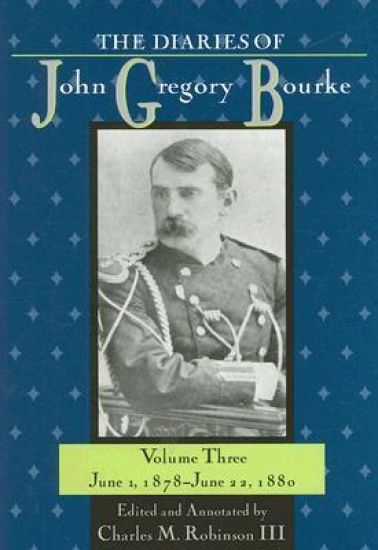
John Gregory Bourke kept a monumental set of diaries as aide-de-camp to Brigadier General George Crook. This third volume (of a projected set of eight) begins in 1878 with a discussion of the Bannock Uprising and a retrospective on Crazy Horse, whose death Bourke called ""an event of such importance, and with its attendant circumstances pregnant with so much of good or evil for the settlement between the Union Pacific Rail Road and the Yellowstone River."" Three other key events during this period were the Cheyenne Outbreak of 1878-79, the Ponca Affair, and the White River Ute Uprising, the latter two in 1879. He comments on issues in the military during his day, such as the quirks and foibles of the Irish soldiers who made up a large part of the frontier army, and also on the problems of Johnson Whittaker, who became West Point's only black cadet following the graduation of Henry Flipper in 1878. Each volume in the series is extensively annotated and contains a biographical appendix on Indians, civilians, and military personnel named in the volume.
The first monograph of Rogan Gregory, the artist/designer on the forefront of contemporary organic form-making Rogan Gregory’s work pushes boundaries across media and scale – from miniature bronze animal forms to towering sculptures and furniture in innovative aggregated materials. Gregory’s iterative process and life-long interests in abstract forms, geology, and evolutionary biology allow him to develop an organic aesthetic unlike that of any designer working today. This debut monograph explores Gregory’s work through the elemental inspirations that condition his work. Contributions by landscape architect Edwina von Gal, interior designer Pamela Shamshiri, and conservation biologist Tremaine Gregory reflect the synthesis of disciplines Gregory brings to his practice. Co-published with R & Company, this book is an object in its own right, incorporating Gregory’s design and materials sensibilities.