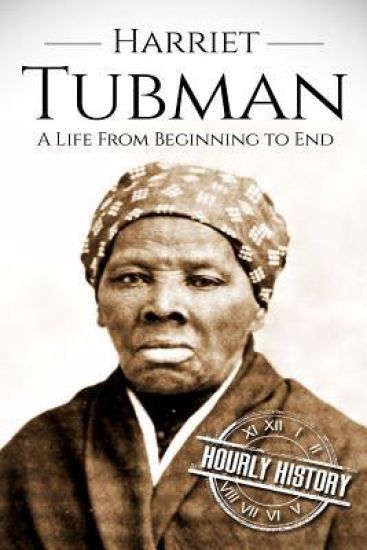
Harriet TubmanSlavery in the United States has left deep, unhealed wounds in American society. It was a dark period in American history that saw the emergence of a number of heroes. One of these was a small woman, about five feet tall, who was a former slave. Her name was Harriet Tubman and she changed the world. After escaping from a life of slavery that left her with permanent scars including a lifelong disability, she dedicated herself to freeing other slaves and working tirelessly for equality for oppressed people. Inside you will read about...✓ Slavery in a new world: The foundation of a new economy ✓ Araminta
More than 30 years ago I found the Diaries of Harriet E. Wagner inside a false bottom of an old trunk lying forgotten in an enclosed garage in her house at Sea View Street in the Condado area, San Juan, Puerto Rico, just like many others diaries that have been found in dusty attics and between walls. Along with the diaries were also most treasured possessions, letters, photographs, personal notes and other remembrances of her life. If someone asks me, "It's there a plot in this work?" I will have to respond that this is a recount of a very romantic and ahead of her times woman, about her life and the events that took place in the tropics, in the island of Puerto Rico during the 1920's to 1940's. And that in order to explain and understand it, there is no other way except thru the stories within the story found in her diaries ceaselessly intertwined with the narrative. The characters are real, not dreamed or imagined, and the interconnectedness and intentions, incidents, episodes, and actions taken by the characters revolve in dense and seemingly chaotic texts, as dreams. Texts that represent themselves projecting as inhabited by energies, which ultimately evokes images of desires, which corresponds to the arousals, expectations, suspense, reversals, revaluations, disappointments, embarrassments, fulfillments, and even the incoherence's animated by the reader itself. Repetition is clearly a major operative principle of the story, shaping energy, giving a perspective form, a binding agent for the creation of cohesion - allowing the reader by logic set in motion the plot, and find out whose acts can or not be premeditated, based on a conception of the self which structures and gives meaning to the story itself. On August 27, 1926 she writes, "Elected to Porto Rico today grammar grade (upper English) at only $1,125." Seriously thinking on embarking she took the opportunity to ask various newspapers to serve as a freelance correspondent among them the Herald Tribune. As the date for her departure came close she writes, "Happiness and yet I cannot say I'm really sad. Life adds so little and so much Turned down Porto Rico for the family's sake, Glen, and because of the grade work and past salary. Want to laugh and cry. Should be happy after this vacation. Instead I smile cynically and strive with Orpheus's hands to take hold Eurydice (last year's hopeful philosophy). What the winters bring? Shall put aside diary writing for real writing of newspaper and magazine stories? One can't be utterly conquered at twenty four " Finally on September 24 or 25 1926 as she jot its down says, "Porto Rico. How can I put it into words these first days? Never in my life have I been such a victim of anything. When people spoke of the sensuousness of the tropics I had no idea what they meant. Now I know. I am so glad, glad, and glad now for my German stability. For I need a bracing something to keep me from the things I always said I'd never do..." She was selected with a group of people to come to Puerto Rico to teach on grade school. During those times throughout the island the school system was going thru various changes as the appointees by the president of the United States to the Department of Education were making their efforts to maintain the English language as the primary language of teaching. In the capital San Juan the Central High School was the school for the daughters and sons of the prominent families of the island. She writes, "I am in turmoil over Porto Rico. Hate to leave my dear Mommy, but crave adventure. Sometimes I hate Youth. It leads one to such foolish things and yet so marvelous. One can think anything, be anything, can do anything. I have come to this island to teach school but I have become the most interested pupil". Carlos A. Laster Jr, believes he was chosen by Harriet Wagner herself to discover her works, and commissioned to publish her literary work, present to you the Diaries of Harriet E. Wagner.
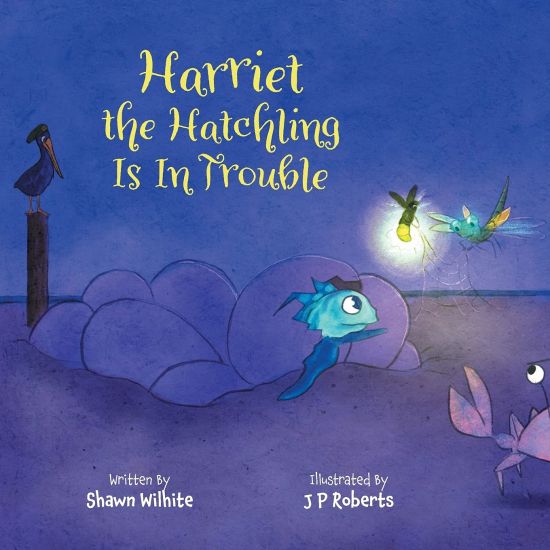
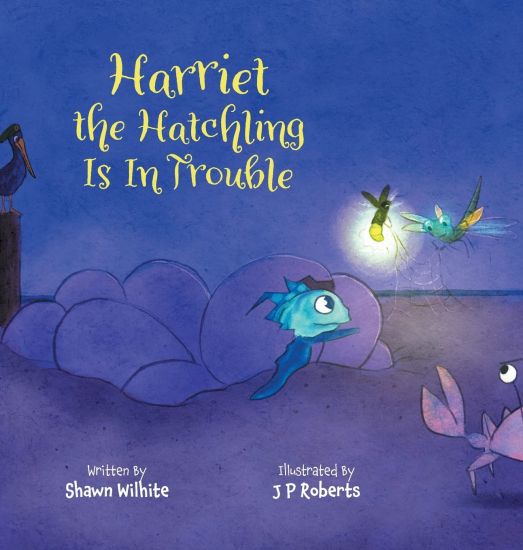
Fall in love with the natural wonders of Mother Earth on Anna Maria Island as Harriet, the Scout Hatchling, must quickly lead all her 100 brothers and sisters to the ocean escaping predators. Tonight without the moonlight, she has become lost.Join in the action packed adventure as colorful shore friends Peggy the Purple Pelican, Winky, Flip, and The Spirit NellyWind rally together as a valiant team stopping the ghostcrabs, saving Harriet and shining a light to guide her family home.
Harriet Tubman (1822-1913) was an American political activist and abolitionist. Born a slave, she managed to escape and later embarked on 13 missions to liberate roughly 70 slaves using the Underground Railroad, a network of secret routes and safe houses created in the United States during the early to the mid-19th century for use by African American slaves in order to escape into free states or Canada. She notably acted as an armed scout and spy for the Union Army during the war and eventually took up the cause of women's suffrage. A remarkable story of one person's heroic deeds that will appeal to those with a keen interest in African-American history. Contents include: "Preface", "Some Scenes in the Life of Harriet Tubman by Sarah H. Bradford", "'Moses' Arrives with Six Passengers by William Still", and "Harriet Tubman by Benjamin Brawley". Brilliant Women are proudly publishing this brand new biography for the enjoyment of a new generation of readers.
The world's happiest and most dog-friendly superhero is here! A brand new, charming adventure for young readers.Meet Harriet Hound. She's eight years old and loves dogs!But Harriet has something else that makes her super ... the power to summon the dogs from her family's rescue shelter every time there’s trouble afoot.Whether it's a carnival catastrophe, a sudden storm, or vanishing vegetables, Harriet and her best dog friends use their super special talents and problem-solving skills to save the day!
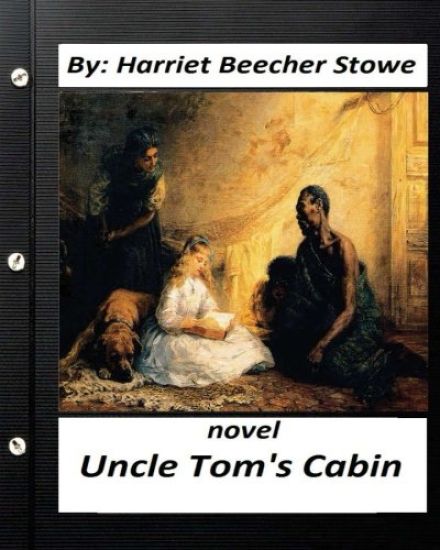
Uncle Tom's Cabin; or, Life Among the Lowly, is an anti-slavery novel by American author Harriet Beecher Stowe. Published in 1852, the novel "helped lay the groundwork for the Civil War", according to Will Kaufman. Stowe, a Connecticut-born teacher at the Hartford Female Seminary and an active abolitionist, featured the character of Uncle Tom, a long-suffering black slave around whom the stories of other characters revolve. The sentimental novel depicts the reality of slavery while also asserting that Christian love can overcome something as destructive as enslavement of fellow human beings. Uncle Tom's Cabin was the best-selling novel of the 19th century and the second best-selling book of that century, following the Bible.It is credited with helping fuel the abolitionist cause in the 1850s. In the first year after it was published, 300,000 copies of the book were sold in the United States; one million copies in Great Britain. In 1855, three years after it was published, it was called "the most popular novel of our day." The impact attributed to the book is great, reinforced by a story that when Abraham Lincoln met Stowe at the start of the Civil War, Lincoln declared, "So this is the little lady who started this great war." The quote is apocryphal; it did not appear in print until 1896, and it has been argued that "The long-term durability of Lincoln's greeting as an anecdote in literary studies and Stowe scholarship can perhaps be explained in part by the desire among many contemporary intellectuals ... to affirm the role of literature as an agent of social change."