After graduating, Schultz worked as a salesman for Xerox Corporation and was quickly promoted to a full sales representative. In 1979 he became a general manager for Swedish drip coffee maker manufacturer, Hammarplast, where he became responsible for their U.S. operations with a staff of twenty. In 1981, Schultz visited a client of Hammarplast, a fledgling coffee-bean shop called Starbucks Coffee Company in Seattle, curious as to why it ordered so many plastic cone filters. He was impressed with the company's knowledge of coffee and kept in contact over the next year, expressing interest in working with them. A year later, he joined Starbucks as the Director of Marketing. On a buying trip to Milan, Italy, for Starbucks, Schultz noted that coffee bars existed on practically every street. He learned that they not only served excellent espresso, they also served as meeting places or public squares; the 200,000 caf s in the country were an important element of Italian culture and society. On his return, he tried to persuade the owners (including Jerry Baldwin) to offer traditional espresso beverages in addition to the whole bean coffee, leaf teas and spices they had long offered. After a successful pilot of the cafe concept, the owners refused to roll it out company-wide, saying they did not want to get into the restaurant business. Frustrated, Schultz decided to leave Starbucks in 1985. He needed $400,000 to open the first store and start the business. He simply did not have the money and his wife was pregnant with their first baby. Jerry Baldwin and Gordon Bowker offered to help. Schultz also received $100,000 from a doctor who was impressed by Schultz's energy to "take a gamble". By 1986, he raised all the money he needed to open the first store, "Il Giornale", named after the Milanese newspaper of the same name. The store offered ice cream in addition to coffee, had little seating, and played opera music in the background to portray an Italian experience. Two years later, the original Starbucks management decided to focus on Peet's Coffee & Tea and sold its Starbucks retail unit to Schultz and Il Giornale for US$3.8 million. Schultz renamed Il Giornale with the Starbucks name, and aggressively expanded its reach across the United States. Schultz's keen insight in real estate and his hard-line focus on growth drove him to expand the company rapidly. Schultz did not believe in franchising, and made a point of having Starbucks retain ownership of every domestic outlet.
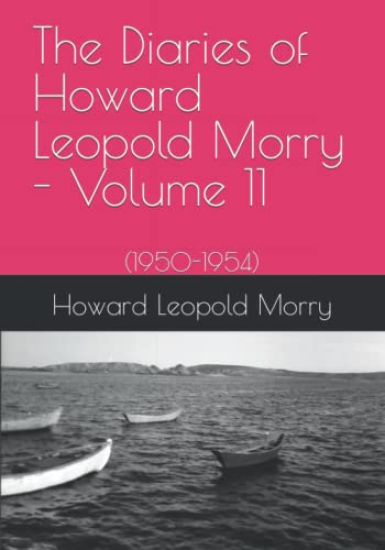
This book represents the eleventh volume of what will ultimately be twenty-five volumes in a series of verbatim transcripts of the diaries of Howard Leopold Morry, written by him starting in 1939 and concluding with the last known volume in 1965. Howard was a raconteur and oral historian cast in the same mould as dozens of other men and women in Newfoundland in those days who carried forward the history of the small outport villages in which they lived. In many cases, their knowledge, gained by word of mouth from generation to generation, is our only record of the events that took place in these tiny villages for many decades and even centuries. The first four volumes in this series together constituted a serialised version of Howard's life story in four parts. The current volume is more similar to volumes 5. The diary that volume transcribed was more of a traditional daily diary, with day by day observations on current events, the weather, the fishery, births, marriages and deaths, and normal and unusual occurrences. But it also included some reminiscences of Howard's earlier life and stories he had told to him by his elders concerning significant historical events and life in Ferryland in the years before his birth. Now in this eleventh volume we see Howard following the same methodology in his diary writing, but his subject matter is quite different. The diary covers a relatively length period, as was the case for Volume 5, between January 30 1950 and June 21 1954, a period during which Howard was now more of a village elder and no longer in charge of the Morry fish business in Ferryland, though he kept his hand in by provisioning his own cod trap crew each year and personally managing his own salmon nets. He also continued his roles, though to a lesser extent than previously, as a small scale farmer and livestock owner. He turned 65 the month after he started writing this diary and was over 69 when it was completed, so there is only so much physical work a man of those years can be expected to do. Howard's eldest son, Bill, has taken on the lion's share of responsibility for the Morry fish business, having taken over and improved the fish plant which was begun by his brother Reg just after the war. In addition, he is now taking on the kinds of quasi-governmental perks and duties that Howard himself had previously enjoyed. For reasons sometimes explained by Howard, and sometimes not, there are several short term and long term (in some cases for almost a year) lapses in the writing of this diary. In addition, some entries are made in empty spaces in the diary and not in strict chronological sequence. These can lead to some confusion at times. The two largest gaps are from August 17, 1951 to June 1, 1952 and September 8, 1953 to March 5, 1954. These periods were more than likely covered in other diaries that have since been lost. By far the most important element of this diary comes toward the end, when Howard becomes contemplative and tells stories and anecdotes of his and Ferryland's past. As in previous volumes, in order to provide readers not familiar with the "cast of characters" or the local and international historical events mentioned in the pages of the diary a clue to their identity, an extensive set of endnotes has been provided as an assistance in reading and fully understanding the context of the diary.
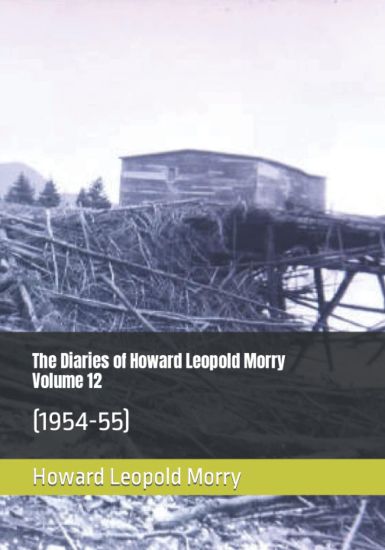
This book represents the twelfth volume of what will ultimately be twenty-five volumes in a series of verbatim transcripts of the diaries of Howard Leopold Morry, written by him starting in 1939 and concluding with the last known volume in 1965. Howard was a raconteur and oral historian cast in the same mould as dozens of other men and women in Newfoundland in those days who carried forward the history of the small outport villages in which they lived. In many cases, their knowledge, gained by word of mouth from generation to generation, is our only record of the events that took place in these tiny villages for many decades and even centuries. Howard was 54 years old when he took up pen or pencil to write the first of his many diaries in December 1939. What motivated him at that time was the belief (wrong, as it fortunately turned out) that he would not live much longer, as a result of a bad heart condition resulting from diseases he endured during his time in the trenches in Gallipoli, on the Somme and in Ypres during WWI. He was worried, and in this he was justified, that many of the stories of the old days that he faithfully retained would be lost forever if he did not record them in writing. The younger generation even then had lost interest in such things and the race of community oral historians of which he was one was coming to an end. The first four volumes in this series together constituted a serialised version of Howard's life story in four parts. The current volume is more of a traditional daily diary, with day by day observations on current events, the weather, the fishery, births, marriages and deaths, and normal and unusual occurrences. But it also includes some reminiscences of Howard's earlier life and stories he had told to him by his elders concerning significant historical events and life in Ferryland in the years before his birth. Now in this twelfth volume we see Howard approaching his 70th birthday, a milestone he never believed he would reach. The diary covers a relatively brief period between June 22, 1954 and March 11 1955, a period during which Howard was now more of a village elder and no longer in charge of the Morry fish business in Ferryland. Indeed, during the 1954 fishing season he has not outfitted his own cod trap crew for possibly the first year since he returned from his service in WWI. To a reduced extent, he has continued functioning as a small scale farmer and livestock owner and also continues his work harvesting wood from the surrounding woods and groves for a variety of purposes. At the age of 69 there is only so much physical work a man of those years can be expected to do. By far the most important element of this diary comes toward the end, when Howard becomes contemplative and tells stories and anecdotes of his and Ferryland's past. But there is also information on a devastating storm combined with higher than normal tides in mid-January 1955 that destroyed most of the fishermen's waterside premises in Ferryland and that barely attracted any attention in the rest of Newfoundland at the time, let alone in the history books. As in previous volumes, in order to provide readers not familiar with the "cast of characters" or the local and international historical events mentioned in the pages of the diary a clue to their identity, an extensive set of endnotes has been provided as an assistance in reading and fully understanding the context of the diary.
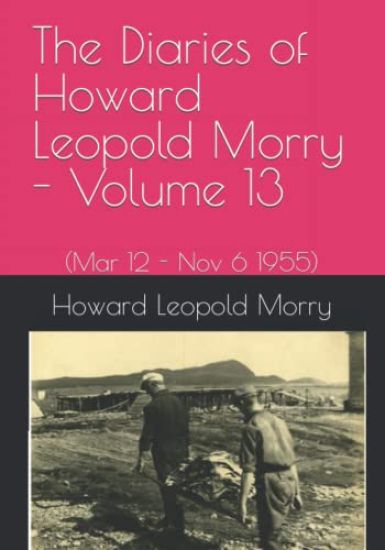
This book represents the thirteenth volume of what will ultimately be twenty-five volumes in a series of verbatim transcripts of the diaries of Howard Leopold Morry, written by him starting in 1939 and concluding with the last known volume in 1965. Howard was a raconteur and oral historian cast in the same mould as dozens of other men and women in Newfoundland in those days who carried forward the history of the small outport villages in which they lived. In many cases, their knowledge, gained by word of mouth from generation to generation, is our only record of the events that took place in these tiny villages for many decades and even centuries. Howard was 54 years old when he took up pen or pencil to write the first of his many diaries in December 1939. What motivated him at that time was the belief (wrong, as it fortunately turned out) that he would not live much longer, as a result of a bad heart condition resulting from diseases he endured during his time in the trenches in Gallipoli, on the Somme and in Ypres during WWI. He was worried, and in this he was justified, that many of the stories of the old days that he faithfully retained would be lost forever if he did not record them in writing. The younger generation even then had lost interest in such things and the race of community oral historians of which he was one was coming to an end. The twenty five volumes in this series differ in composition between two diary formats: the first format is that of an unbroken narrative of events in the life of the author, Howard Leopold Morry, or of the history of the community in which he was born and raised, Ferryland, Newfoundland; the second format is that of a conventional daily diary reporting on events of the day, including the weather and sea conditions, the ups and downs in the fishery, births, marriages and deaths of family, friends and neighbours, and newsworthy events at the local, national and international level. None of the 25 volumes are actually all of one format or the other. They all contain a larger or smaller component of each form of diary. The current volume is more of a traditional daily diary. But it also includes some reminiscences of Howard's earlier life and stories he had told to him by his elders concerning significant historical events and life in Ferryland in the years before his birth. In this twelfth volume we see Howard as he turns 70, a milestone he never believed he would reach. The diary covers a relatively brief period between March 12 and November 6 1955. At this time in his life Howard finds himself as a sort of village elder, though not with the degree of respect that such elders commanded in the past. He is no longer in charge of the Morry fish business in Ferryland. By far the most interesting element of this diary comes toward the end, when Howard becomes contemplative and tells stories and anecdotes of his and Ferryland's past. As in previous volumes, in order to provide readers not familiar with the "cast of characters" or the local and international historical events mentioned in the pages of the diary a clue to their identity, an extensive set of endnotes has been provided as an assistance in reading and fully understanding the context of the diary.
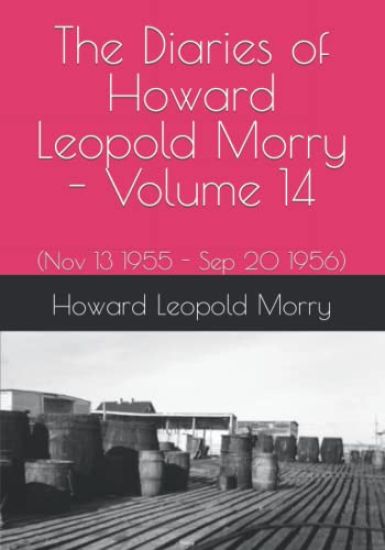
This book represents the fourteenth volume of what will ultimately be twenty-five volumes in a series of verbatim transcripts of the diaries of Howard Leopold Morry, written by him starting in 1939 and concluding with the last known volume in 1965. Howard was a raconteur and oral historian cast in the same mould as dozens of other men and women in Newfoundland in those days who carried forward the history of the small outport villages in which they lived. In many cases, their knowledge, gained by word of mouth from generation to generation, is our only record of the events that took place in these tiny villages for many decades and even centuries. In his diaries, he spoke of his own personal experiences, at home in his youth and in his later years, his adventures in western Canada as a young man, and overseas with the Royal Newfoundland Regiment in WWI. But he also recorded observations on the significant and insignificant (to most historians) events of daily life in a small outport village on the Southern Shore of Newfoundland in the early to mid-1900s. And he also recounted events from the history of his village as passed down to him by earlier generations of oral historians. The twenty five volumes in this series differ in composition between two diary formats: the first format is that of an unbroken narrative of events in the life of the author, Howard Leopold Morry, or of the history of the community in which he was born and raised, Ferryland, Newfoundland; the second format is that of a conventional daily diary reporting on events of the day, including the weather and sea conditions, the ups and downs in the fishery, births, marriages and deaths of family, friends and neighbours, and newsworthy events at the local, national and international level. None of the 25 volumes are actually all of one format or the other. They all contain a larger or smaller component of each form of diary. The current volume is more of a traditional daily diary. But it also includes some reminiscences of Howard's earlier life. More than in earlier diaries, he also gives lengthy commentary on the changing lifestyles of the people of Newfoundland. In this Fourteenth volume, the diary transcribed covers a relatively brief period between November 13 1955 and September 20 1956. At this time in his life, Howard finds himself feeling his age for perhaps the first time, and experiencing more and more the aches and pains of old age. He is no longer in charge of the Morry fish business in Ferryland. In 1954, he ceased to outfit his own cod trap crew for possibly the first year since he returned from his service in WWI. But he keeps his hand in by managing his own salmon nets. Howard's eldest son, Bill, has taken on the lion's share of responsibility for the Morry fish business. He has also begun to outfit a trap crew as Howard once did. And, he is branching out into a new seasonal trade as a coal merchant to keep employed after the fishing season is over. Finally, for the first time in over 100 years, Bill has begun to export Morry salt fish to Spain and Italy. By far the most interesting element of this diary comes toward the end, when Howard becomes contemplative and tells stories and anecdotes of his and Ferryland's past and provides social commentary on the changes that have taken place in his lifetime - the good and the bad. As in previous volumes, in order to provide readers not familiar with the "cast of characters" or the local and international historical events mentioned in the pages of the diary a clue to their identity, an extensive set of endnotes has been provided as an assistance in reading and fully understanding the context of the diary.
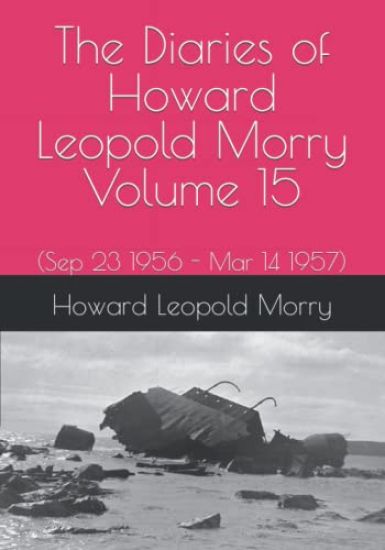
This book represents the fifteenth volume of what will ultimately be twenty-five volumes in a series of verbatim transcripts of the diaries of Howard Leopold Morry, written by him starting in 1939 and concluding with the last known volume in 1965. Howard was a raconteur and oral historian cast in the same mould as dozens of other men and women in Newfoundland in those days who carried forward the history of the small outport villages in which they lived. In many cases, their knowledge, gained by word of mouth from generation to generation, is our only record of the events that took place in these tiny villages for many decades and even centuries. The twenty five volumes in this series differ in composition between two diary formats: the first format is that of an unbroken narrative of events in the life of the author, Howard Leopold Morry, or of the history of the community in which he was born and raised, Ferryland, Newfoundland; the second format is that of a conventional daily diary reporting on events of the day, including the weather and sea conditions, the ups and downs in the fishery, births, marriages and deaths of family, friends and neighbours, and newsworthy events at the local, national and international level. None of the 25 volumes are actually all of one format or the other. They all contain a larger or smaller component of each form of diary. The current volume is almost equally divided between these two forms of diary. And as an added bonus, there are several loose pages on the early history of the Morrys of Ferryland. Caution must be observed in this regard as some of the information rates more as family lore than a true history. In this Fifteenth volume, the diary transcribed covers a relatively brief period between September 23 1956 and March 14 1957. At this time in his life, Howard finds himself feeling his age for perhaps the first time, and experiencing more and more the aches and pains of old age. He is no longer in charge of the Morry fish business in Ferryland. In 1954, he ceased to outfit his own cod trap crew for possibly the first year since he returned from his service in WWI. But he keeps his hand in by managing his own salmon nets. Howard's eldest son, Bill, has taken on the lion's share of responsibility for the Morry fish business, having taken over and improved the fish plant which was begun by his brother Reg just after the war. He has also begun to outfit a trap crew as Howard once did. In addition, he is now taking on the kinds of quasi-governmental perks and duties that Howard himself had previously enjoyed. He had earlier experimented with new seasonal trades, such as acting as a coal merchant but seems to have abandoned this. He is now concentration on the primary role of the fish plant which is, for the first time in over 100 years, shipping salt fish to Spain, Italy, the Caribbean and the USA. Howard is heavily invested in the successes and failures of these ventures but plays no part in them himself. Howard has continued functioning as a small scale farmer and livestock owner and also continues his work harvesting wood from the surrounding woods and groves for a variety of purposes. But his age and increasingly limited mobility has reduced his efforts in these area. By far the most interesting element of this diary, as in several of the earlier diaries since Howard has reached his 70s, is the rich store of stories and anecdotes of his and Ferryland's past. As in previous volumes, in order to provide readers not familiar with the "cast of characters" or the local and international historical events mentioned in the pages of the diary a clue to their identity, an extensive set of endnotes has been provided as an assistance in reading and fully understanding the context of the diary.
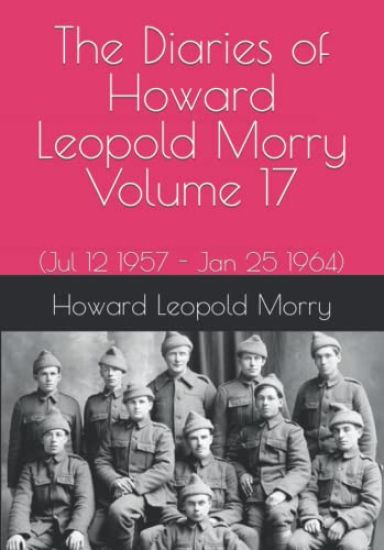
This book represents the seventeenth volume of what will ultimately be twenty-five volumes in a series of verbatim transcripts of the diaries of Howard Leopold Morry, written by him starting in 1939 and concluding with the last known volume in 1965. Howard was a raconteur and oral historian cast in the same mould as dozens of other men and women in Newfoundland in those days who carried forward the history of the small outport villages in which they lived. In many cases, their knowledge, gained by word of mouth from generation to generation, is our only record of the events that took place in these tiny villages for many decades and even centuries. Howard was 54 years old when he took up pen or pencil to write the first of his many diaries in December 1939. What motivated him at that time was the belief (wrong, as it fortunately turned out) that he would not live much longer, as a result of a bad heart condition resulting from diseases he endured during his time in the trenches in Gallipoli, on the Somme and in Ypres during WWI. He was worried, and in this he was justified, that many of the stories of the old days that he faithfully retained would be lost forever if he did not record them in writing. The younger generation even then had lost interest in such things and the race of community oral historians of which he was one was coming to an end. In his diaries, he spoke of his own personal experiences, at home in his youth and in his later years, his adventures in western Canada as a young man, and overseas with the Royal Newfoundland Regiment in WWI. But he also recorded observations on the significant and insignificant (to most historians) events of daily life in a small outport village on the Southern Shore of Newfoundland in the early to mid-1900s. And he also recounted events from the history of his village as passed down to him by earlier generations of oral historians. The current volume is in large measure comprised of reminiscences. In the first nine pages, Howard is either retelling events of his own youth or anecdotes which were told to him and which is passing on to readers without judging the credibility of the stories. He also takes time to frequent his reader with terms common in Ferryland in the past but seldom heard in this day. Although this section was dated July 12, 1957, the information imparted was not specific to that time period. Then, in a section dated August 3, 1957, but which Howard could have written at any time in his life, in the largest part of this diary, some 92 pages, Howard returns to familiar territory - his experiences overseas in WWI. Finally, this diary concludes with twenty five pages recorded seven years after the rest of the diary which are much like the first 9 pages of the diary, recording old reminiscences and stories and transcribing an early historical document pertaining to Ferryland, but also giving us some insight into Howard's travels in Scotland and in Canada in his later years. Like all the Volumes in this series, this transcript is rendered as exact as possible except for punctuation. Errors in spelling, where the meaning may not be obvious to the reader, are explained in the endnotes As in previous volumes, in order to provide readers not familiar with the "cast of characters" or the local and international historical events mentioned in the pages of the diary a clue to their identity, an extensive set of endnotes has been provided as an assistance in reading and fully understanding the context of the diary.
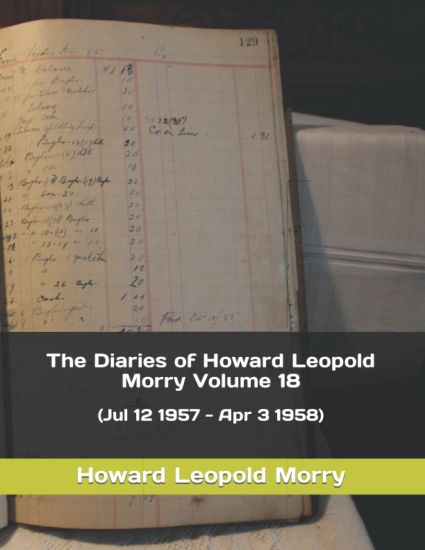
This book represents the eighteenth volume of what will ultimately be twenty-five volumes in a series of verbatim transcripts of the diaries of Howard Leopold Morry, written by him starting in 1939 and concluding with the last known volume in 1965. Howard was a raconteur and oral historian cast in the same mould as dozens of other men and women in Newfoundland in those days who carried forward the history of the small outport villages in which they lived. In many cases, their knowledge, gained by word of mouth from generation to generation, is our only record of the events that took place in these tiny villages for many decades and even centuries. Howard was 54 years old when he took up pen or pencil to write the first of his many diaries in December 1939. What motivated him at that time was the belief (wrong, as it fortunately turned out) that he would not live much longer, as a result of a bad heart condition resulting from diseases he endured during his time in the trenches in Gallipoli, on the Somme and in Ypres during WWI. He was worried, and in this he was justified, that many of the stories of the old days that he faithfully retained would be lost forever if he did not record them in writing. The younger generation even then had lost interest in such things and the race of community oral historians of which he was one was coming to an end. In his diaries, he spoke of his own personal experiences, at home in his youth and in his later years, his adventures in western Canada as a young man, and overseas with the Royal Newfoundland Regiment in WWI. But he also recorded observations on the significant and insignificant (to most historians) events of daily life in a small outport village on the Southern Shore of Newfoundland in the early to mid-1900s. And he also recounted events from the history of his village as passed down to him by earlier generations of oral historians. This diary is unlike all the others because it only exists in the form of a photocopy of a transcript. The original diary has been lost. It is believed that the transcript was prepared at Howard's request by a staff member at the Provincial Library who saw value in having his memoirs made available more broadly, but this is not certain, as there is no identification given on the transcript as to the identity of the person who prepared it. The period covered in this transcript is shorter than most of the diaries - less than nine months. At the beginning of the transcript, there are two pages of reminiscences which have been seen previously in earlier diaries and which were perhaps transcribed by the typist from one of those diaries. The only section of the diary that is completely new is the traditional type of daily diary beginning on July 14, 1957 and finishing on April 3, 1958. It seems clear that the transcriber did not complete her or his task and finished at April 3, 1958 rather than at June 16, 1958, when the next diary in chronological sequence begins. So we are, unfortunately, never to know what events were recorded in the intervening two months unless the original diary should eventually be found. As in previous volumes, in order to provide readers not familiar with the "cast of characters" or the local, national and international historical events mentioned in the pages of the diary a clue to their identity, a set of endnotes has been provided as an assistance in reading and fully understanding the context of the diary.
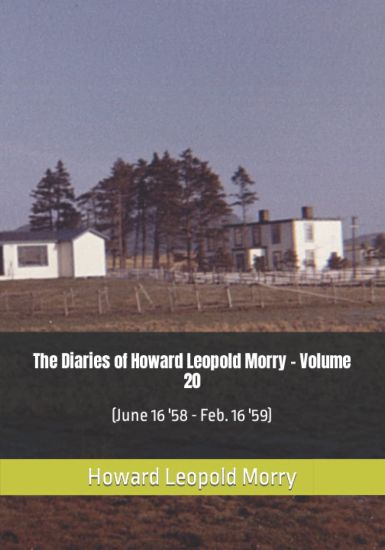
This book represents the twentieth volume of what will ultimately be twenty-five volumes in a series of verbatim transcripts of the diaries of Howard Leopold Morry, written by him starting in 1939 and concluding with the last known volume in 1965. It is important to note that there are gaps in the chronology and possible missing volumes at the end of the series which are unaccounted for but which are believed to represent diaries that are now lost. The gaps in the chronology in the earlier years cannot otherwise be explained. Also, Howard Morry died in 1972 and was clear of mind and continued to write letters to his family members in Canada, the United States of America and Scotland until shortly before his death, so it seems likely that there were other diaries written after 1965 which are now lost.Howard was a raconteur and oral historian cast in the same mould as dozens of other men and women in Newfoundland in those days who carried forward the history of the small outport villages in which they lived. In many cases, their knowledge, gained by word of mouth from generation to generation, is our only record of the events that took place in these tiny villages for many decades and even centuries.Howard was 54 years old when he took up pen or pencil to write the first of his many diaries in December 1939. What motivated him at that time was the belief (wrong, as it fortunately turned out) that he would not live much longer, as a result of a bad heart condition resulting from diseases he endured during his time in the trenches in Gallipoli, on the Somme and in Ypres during WWI. He was worried, and in this he was justified, that many of the stories of the old days that he faithfully retained would be lost forever if he did not record them in writing. The younger generation even then had lost interest in such things and the race of community oral historians of which he was one was coming to an end.In his diaries, he spoke of his own personal experiences, at home in his youth and in his later years, his adventures in western Canada as a young man, and overseas with the Royal Newfoundland Regiment in WWI. But he also recorded observations on the significant and insignificant (to most historians) events of daily life in a small outport village on the Southern Shore of Newfoundland in the early to mid-1900s. And he also recounted events from the history of his village as passed down to him by earlier generations of oral historians.The twenty five volumes in this series differ in composition between two diary formats: the first format is that of an unbroken narrative of events in the life of the author, Howard Leopold Morry, or of the history of the community in which he was born and raised, Ferryland, Newfoundland; the second format is that of a conventional daily diary reporting on events of the day, including the weather and sea conditions, the ups and downs in the fishery, births, marriages and deaths of family, friends and neighbours, and newsworthy events at the local, national and international level. None of the 25 volumes are actually all of one format or the other.The current volume is, for the most part, an example of the daily diary type. There are only a few short anecdotes in this diary. But there are frequent comparisons made to life in the old days versus the current times.In this Twentieth volume, the diary transcribed covers the period between June 16, 1958 and February 16, 1959. At this time in his life, Howard finds himself feeling his age, which is not surprising considering he will soon to 74. But he has thirteen years of life ahead of him, though of course he has no way of knowing this.Howard has continued functioning as a small scale farmer and livestock owner and also continues his work harvesting wood from the surrounding woods and groves for a variety of purposes. But his age and increasingly limited mobility has reduced his efforts in these areas.
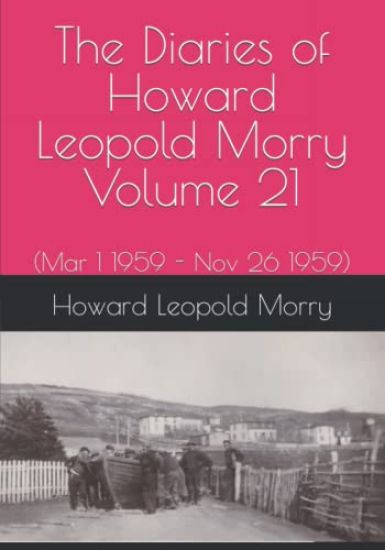
This book represents the twenty-first volume of what will ultimately be twenty-five volumes in a series of verbatim transcripts of the diaries of Howard Leopold Morry, written by him starting in 1939 and concluding with the last known volume in 1965. Howard was a raconteur and oral historian cast in the same mould as dozens of other men and women in Newfoundland in those days who carried forward the history of the small outport villages in which they lived. In many cases, their knowledge, gained by word of mouth from generation to generation, is our only record of the events that took place in these tiny villages for many decades and even centuries. Howard was 54 years old when he took up pen or pencil to write the first of his many diaries in December 1939. What motivated him at that time was the belief (wrong, as it fortunately turned out) that he would not live much longer, as a result of a bad heart condition resulting from diseases he endured during his time in the trenches in Gallipoli, on the Somme and in Ypres during WWI. He was worried, and in this he was justified, that many of the stories of the old days that he faithfully retained would be lost forever if he did not record them in writing. The younger generation even then had lost interest in such things and the race of community oral historians of which he was one was coming to an end. In his diaries, he spoke of his own personal experiences, at home in his youth and in his later years, his adventures in western Canada as a young man, and overseas with the Royal Newfoundland Regiment in WWI. But he also recorded observations on the significant and insignificant (to most historians) events of daily life in a small outport village on the Southern Shore of Newfoundland in the early to mid-1900s. And he also recounted events from the history of his village as passed down to him by earlier generations of oral historians. The current volume is, for the most part, an example of the daily diary type. There are only a few short anecdotes in this diary. But there are frequent comparisons made to life and conditions in the old days versus the current times.In this twenty-first volume, the diary transcribed covers a very brief period between March 1, 1959 and November 26, 1959. The diary was written in the same type of school "scribbler" used for many of the previous diaries, but only about half of the pages were filled. This is because Howard broke short his diary writing at the end of November 1959 to embark on another lengthy series of visits with his children and their families on the mainland and in the USA. During such trips, Howard did not keep a daily diary unfortunately, so the events that took place in each location remain a mystery. At this time in his life, Howard found himself feeling his age, which is not surprising considering he turned 74 during the writing of this diary. He was no longer in charge of the Morry fish business in Ferryland. That phase of his life had all but ended in 1954 when he ceased outfitting his own trap crew. Interestingly, though he had given up setting his salmon net two years previous to the writing of this diary, when the twine in the old net became too worn out to repair, in 1959 he made another attempt at salmon fishing, though evidently with little success. Howard continued functioning as a small scale farmer and livestock owner and also continued his work harvesting wood from the surrounding barrens and groves for a variety of purposes. But his age and increasingly limited mobility had reduced his efforts in these areas. As in previous volumes, in order to provide readers not familiar with the "cast of characters" or the local and international historical events mentioned in the pages of the diary a clue to their identity, an extensive set of endnotes has been provided as an assistance in reading and fully understanding the context of the diary.
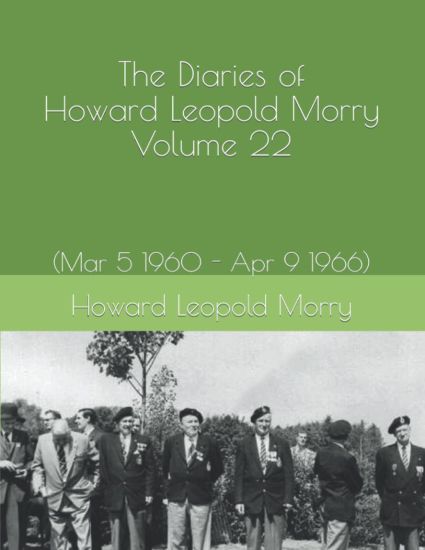
This book represents the twenty-second volume of what will ultimately be twenty-five volumes in a series of verbatim transcripts of the diaries of Howard Leopold Morry, written by him starting in 1939 and concluding with the last known volume in 1965. The current volume is, slightly different than other volumes in that it includes an almost equal proportion of daily diary entries and Howard's reminiscences and anecdotes but it also includes several pages of transcriptions of old documents pertaining to the history of Ferryland and some folk-songs and poems. In this twenty-second volume, the diary transcribed nominally covers the years from 1960 to 1966. But in point of fact this is not really the case. The first daily diary entries cover the period from March 1960 to August 1961. But there are no daily diary entries for the years from then until the resumption of daily diary entries in February 1966 and even then there are only a smattering of widely separated entries in that year culminating with the last entry on April 9, 1966. Some of the intervening years are covered at least partially in the diaries which form the basis of the remaining 3 Volumes in this series. But the gaps that do exist between 1961 and 1966, as well as the complete absence of any diaries after 1966 until the time of Howard's death in 1972 are believed to be explained by the loss or destruction of the diaries covering these periods. It is incomprehensible, in particular, that a man who kept meticulous diaries from 1939 to 1961 should not write any diaries in the last six years of his life when he was in reasonable health and had much more free time in which to do so. Of the portions of the diary that constitute reflections on the past, many are a repetition of thoughts recorded in earlier diaries. For example, there is one lengthy section dedicated to Howard's memories of his time serving in the Newfoundland Regiment, which was covered in detail in two previous diaries and in part in several others. This was Howard's way of ensuring that these memories, which he felt were important in that they represented the views of an ordinary foot soldier and not those of an officer or military historian, must be preserved. But it also seems likely that this repetition constituted a form of therapy for Howard, banishing the demons of these terrible times and events. One unique part of this diary is Howard's brief mention of several visits to his beloved Scotland, the home of his late wife, Fredris. He also makes mention, all to briefly unfortunately, of his taking part in the 45th anniversary visit to Beaumont Hamel by veterans of that awful battle. They were there for the opening of the new pavilion at the Beaumont Hamel Memorial Park.This was the first time that a visit to this site had been organized for veterans since the end of the war. Howard had given up active involvement in the fishery with the exception of an attempt, without much success, to fish for salmon. But he continued functioning at a much reduced level as a small scale farmer and livestock owner and also continued his work harvesting wood from the surrounding barrens and groves for a variety of purposes. But his age and increasingly limited mobility had reduced his efforts in these areas. As in previous volumes, in order to provide readers not familiar with the "cast of characters" or the local and international historical events mentioned in the pages of the diary a clue to their identity, an extensive set of endnotes has been provided as an assistance in reading and fully understanding the context of the diary.
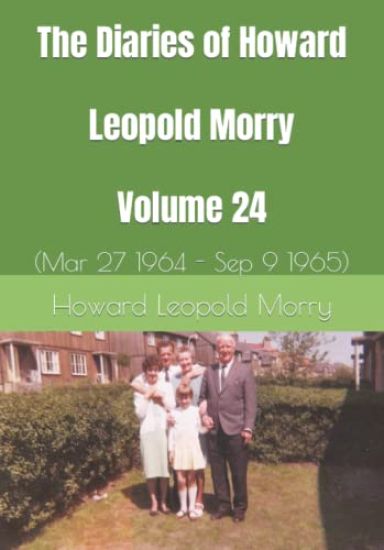
This book represents the twenty-fourth volume of what will ultimately be twenty-five volumes in a series of verbatim transcripts of the diaries of Howard Leopold Morry, written by him starting in 1939 and concluding with the last known volume in 1966. Howard was a raconteur and oral historian cast in the same mould as dozens of other men and women in Newfoundland in those days who carried forward the history of the small outport villages in which they lived. In many cases, their knowledge, gained by word of mouth from generation to generation, is our only record of the events that took place in these tiny villages for many decades and even centuries. Howard was 54 years old when he took up pen or pencil to write the first of his many diaries in December 1939. What motivated him at that time was the belief (wrong, as it fortunately turned out) that he would not live much longer, as a result of a bad heart condition resulting from diseases he endured during his time in the trenches in Gallipoli, on the Somme and in Ypres during WWI. He was worried, and in this he was justified, that many of the stories of the old days that he faithfully retained would be lost forever if he did not record them in writing. The younger generation even then had lost interest in such things and the race of community oral historians of which he was one was coming to an end. In his diaries, he spoke of his own personal experiences, at home in his youth and in his later years, his adventures in western Canada as a young man, and overseas with the Royal Newfoundland Regiment in WWI. But he also recorded observations on the significant and insignificant (to most historians) events of daily life in a small outport village on the Southern Shore of Newfoundland in the early to mid-1900s. And he also recounted events from the history of his village as passed down to him by earlier generations of oral historians. The current volume is, slightly different than other volumes in that it includes an almost equal proportion Howard's reminiscences and anecdotes and daily diary entries which are mostly comprised of accounts of his several visits to Scotland during this time period. In this twenty-fourth volume, the diary transcribed nominally covers the years from March 27,1964 to September 9,1965. But in point of fact this is not really the case. The days on which current events are recorded are spread widely over this time period with many gaps in coverage Of the portions of the diary that constitute reflections on the past, many are a repetition of thoughts recorded in earlier diaries. This is useful as it serves to pick up accidental errors in dates and names that have entered into some of these accounts. At this time in his life, Howard is very definitely feeling his age and the weight of those years weighs heavily upon him, not just physically, but also in terms of his mood and his disdain for improvements in the human condition brought about over his eighty years. As in previous volumes, in order to provide readers not familiar with the "cast of characters" or the local and international historical events mentioned in the pages of the diary a clue to their identity, an extensive set of endnotes has been provided as an assistance in reading and fully understanding the context of the diary.
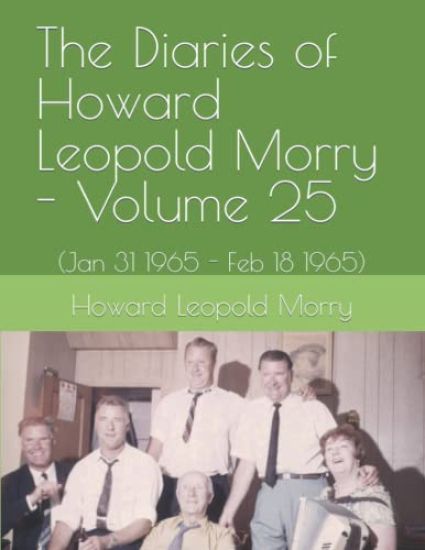
This book represents the twenty-fifth and final volume of twenty-five volumes in a series of verbatim transcripts of the diaries of Howard Leopold Morry, written by him starting in 1939 and concluding with the last known volume in 1966. Howard was a raconteur and oral historian cast in the same mould as dozens of other men and women in Newfoundland in those days who carried forward the history of the small outport villages in which they lived. In many cases, their knowledge, gained by word of mouth from generation to generation, is our only record of the events that took place in these tiny villages for many decades and even centuries. In his diaries, he spoke of his own personal experiences, at home in his youth and in his later years, his adventures in western Canada as a young man, and overseas with the Royal Newfoundland Regiment in WWI. But he also recorded observations on the significant and insignificant (to most historians) events of daily life in a small outport village on the Southern Shore of Newfoundland in the early to mid-1900s. And he also recounted events from the history of his village as passed down to him by earlier generations of oral historians. The current volume is almost exclusively of the type in which reminiscences of the past take the forefront. In this twenty-fifth volume, the diary transcribed nominally covers the very brief period from January 31,1965 to February 18,1965. But in reality, these dates simply represent the start and the finish of the writing and there are almost no details given of what was happening in the present time between those two dates. The lion's share of the diary that constitute reflections on the past, is largely repetitive of thoughts recorded in earlier diaries. This is useful as it serves to pick up accidental errors in dates and names that have entered into some of these accounts and also on occasion provides additional detail on the subject matter. This diary is also unique in one unfortunate respect. It exists only in the form of a photocopy of the handwritten original and an anonymous typed transcript of that original, both of which appear to have been made soon after the diary was written. The handwritten diary itself is missing or, if it still exists, its location is unknown. Upon first reading this diary, it seemed strangely familiar, as if I had seen it somewhere previously. Then it dawned on me. This was the memoir that someone gave to Stewart McLean as background material when he wrote a chapter on Ferryland in his 10th anniversary edition of the book "Welcome Home". Several of the tracts published in that chapter are taken word for word from this memoir. Finally, it is important to note that this diary was written following about five years of research by Howard and his daughter Jean on the Morry family history. The truths revealed by Jean in her research, primarily conducted by using the encyclopaedic resources available from the Church of the Latter Day Saints - Mormon, in many cases did not conform with Howard's long-held and cherished views of the family history, which came down to him via oral history from previous generations of the family. Howard clearly was conflicted in this regard and tended to hold on tenaciously in is writings to those old beliefs, in many cases, even though the documentary evidence had either proven that they were wrong or could not be used to give them support. As in previous volumes, in order to provide readers not familiar with the "cast of characters" or the local and international historical events mentioned in the pages of the diary a clue to their identity, an extensive set of endnotes has been provided as an assistance in reading and fully understanding the context of the diary
Strategie maritime a vapeur du general sir Howard Douglas, ouvrage traduit de l'anglais... par Francois-Xavier Franquet, ...Date de l'edition originale: 1862Ce livre est la reproduction fidele d'une oeuvre publiee avant 1920 et fait partie d'une collection de livres reimprimes a la demande editee par Hachette Livre, dans le cadre d'un partenariat avec la Bibliotheque nationale de France, offrant l'opportunite d'acceder a des ouvrages anciens et souvent rares issus des fonds patrimoniaux de la BnF.Les oeuvres faisant partie de cette collection ont ete numerisees par la BnF et sont presentes sur Gallica, sa bibliotheque numerique.En entreprenant de redonner vie a ces ouvrages au travers d'une collection de livres reimprimes a la demande, nous leur donnons la possibilite de rencontrer un public elargi et participons a la transmission de connaissances et de savoirs parfois difficilement accessibles.Nous avons cherche a concilier la reproduction fidele d'un livre ancien a partir de sa version numerisee avec le souci d'un confort de lecture optimal. Nous esperons que les ouvrages de cette nouvelle collection vous apporteront entiere satisfaction.Pour plus d'informations, rendez-vous sur www.hachettebnf.fr