
Kirjahaku
Etsi kirjoja tekijän nimen, kirjan nimen tai ISBN:n perusteella.
1000 tulosta hakusanalla James C. Rodkey
"Ethics Without Philosophy is the first full-scale attempt to relate Wittgenstein's ethical and religious concerns to his philosophical work. The attempt is splendidly carried out. I have found it more useful in helping me to understand Wittgenstein than any other book about him which I have read." --Richard Rorty, Princeton University
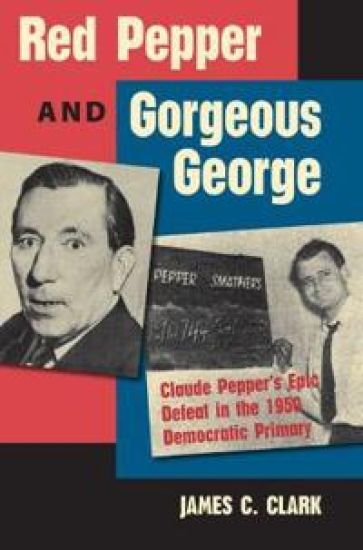
For nearly a century in Florida and throughout the South, election to the United States Senate virtually guaranteed a lifetime position, especially if you were a Democrat. Certainly no Republican candidate stood a chance in the general election, and it was nearly unthinkable to imagine a serious challenger emerging in the primary. Claude "Red" Pepper first ran for the U.S. Senate in 1934. Though unsuccessful, despite allegations of voter fraud, he won a special election two years later after both senators from Florida died in office. Reelected to full terms in 1938 and 1944 as a vigorous supporter of the New Deal, he had every reason to suspect the seat was his indefinitely--or at least until he decided it was time to seek higher office. Pepper saw himself as the national heir to Roosevelt's foreign policy; he encouraged cooperation with the Soviet Union, our World War II ally, and actively worked to defeat Truman's presidential nomination in 1948. After nearly fourteen years in office, Pepper had earned the enmity of the president, alienated most of his colleagues in the senate, and aligned himself with the ultra-left-wing politics of Henry Wallace. Still, in the entire history of the state, no sitting Florida Senator had ever been voted out of office. However, the political world was changing, and it was the right-leaning "Gorgeous" George Smathers, not Pepper, who recognized and took advantage of this fact. Smathers fought a vicious, bare-knuckled campaign, employing ferocious and divisive attacks against Pepper. He helped make "liberal" anathema to aspiring southern politics, and was the first of a new breed of conservative politicians--though not yet Republican--to rise to power. Eventually the era would be named for a junior senator from Wisconsin, but it was Smathers who first successfully employed the strategies of McCarthyism to unseat an incumbent. He was so successful, in fact, that before the general election Smathers had to reassure President Truman and other potential supporters that his loyalties did, in fact, lie with the Democractic Party. His resounding victory inspired others--including Richard Nixon and Barry Goldwater--to adopt similar tactics in their senatorial campaigns. It also helped set the stage for the complete reversal of the political power structure that had ruled the South since the end of Reconstruction. Red Pepper and Gorgeous George is a fascinating look at the campaign that changed everything in Florida--and the South. It is also a shocking, sobering reminder that, despite introducing the phrase "hanging chad" to the national lexicon, the 2000 presidential election was merely the second most important national election to take place in the state.
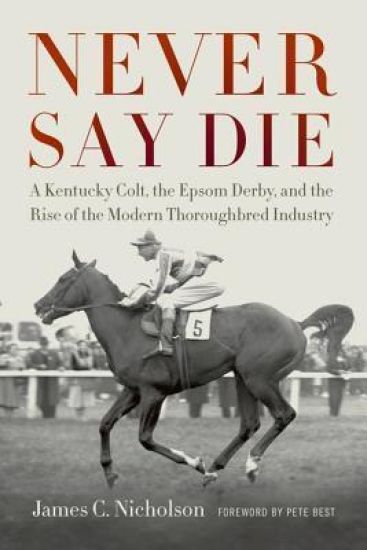
A quarter of a million people braved miserable conditions at Epsom Downs on June 2, 1954, to see the 175th running of the prestigious Derby Stakes. Queen Elizabeth II and Sir Winston Churchill were in attendance, along with thousands of Britons who were all convinced of the unfailing superiority of English bloodstock and eager to see a British colt take the victory. They were shocked when a Kentucky-born chestnut named Never Say Die galloped to a two-length triumph at odds of 33--1, winning Britain's greatest race and beginning an important shift in the world of Thoroughbred racing. Never Say Die traces the history of this extraordinary colt, beginning with his foaling in Lexington, Kentucky, when a shot of bourbon whiskey revived him and earned him his name. Author James C. Nicholson also tells the stories of the influential individuals brought together by the horse and his victory -- from the heir to the Singer sewing machine fortune to the Aga Khan. Most fascinating is the tale of Mona Best of Liverpool, England, whose well-placed bet on the long-shot Derby contender allowed her to open the Casbah Coffee Club. There, her son met musicians John Lennon, Paul McCartney, and George Harrison and later joined their band.Featuring a foreword by the original drummer for the Beatles, Pete Best, this remarkable book reveals how an underdog's surprise victory played a part in the formation of the most successful and influential rock band in history and made the Bluegrass region of Kentucky the center of the international Thoroughbred industry.

Each year on the first Saturday in May, the world turns its attention to the twin spires of Churchill Downs for the high-stakes excitement of the "greatest two minutes in sports," the Kentucky Derby. No American sporting event can claim the history, tradition, or pageantry that the Kentucky Derby holds. For more than 130 years, spectators have been fascinated by the magnificent horses that run the Louisville track. Thoroughbreds such as Secretariat and Barbaro have earned instant international fame, along with jockeys such as Isaac Murphy, Ron Turcotte, and Calvin Borel. The Kentucky Derby: How the Run for the Roses Became America's Premier Sporting Event calls this great tradition to post and illuminates its history and culture.Rising from its humble beginnings as an American variation of England's Epsom Derby, the Kentucky Derby became a centerpiece of American sports and the racing industry, confirming Kentucky's status as the Horse Capital of the World. James C. Nicholson argues that the Derby, at its essence, is a celebration of a place, existing as a connection between Kentucky's mythic past and modern society. The Derby is more than just a horse race -- it is an experience enhanced by familiar traditions, icons, and images that help Derby fans to understand Kentucky and define themselves as Americans. Today the Kentucky Derby continues to attract international attention from royalty, celebrities, racing fans, and those who simply enjoy an icy mint julep, a fabulous hat, and a wager on who will make it to the winner's circle.Nicholson provides an intriguing and thorough history of the Kentucky Derby, examining the tradition, spectacle, culture, and evolution of the Kentucky Derby -- the brightest jewel of the Triple Crown.

On October 20, 1923, at Belmont Park in New York, Kentucky Derby champion Zev toed the starting line alongside Epsom Derby winner Papyrus, the top colt from England, to compete for a $100,000 purse. Years of Progressive reform efforts had nearly eliminated horseracing in the United States only a decade earlier. But for weeks leading up to the match race that would be officially dubbed the "International," American journalists provided unprecedented exposure for the sport. The widespread buzz surrounding the race helped lay groundwork for the sport's national proliferation in the years that followed and reaffirmed New York's status as the epicenter of American racing a decade after the sport's return from a two-year shutdown there. Framing the match race between two prominent countries also raised the stakes and put Americans in the position of embracing a new nation, one that would become a global superpower following World War I.In Racing for America, author James C. Nicholson argues that the Zev-Papyrus match served as an important starting point for a progression of international events, including the Empire City Gold Cup, the Washington DC International Stakes, and the Arlington Million, that eventually culminated in the creation of the Breeders Cup World Championships - the annual apex of American racing. Nicholson discusses how syndicated sports columnists shared news, analysis, gossip, and profiles of the equine contestants and the people associated with them, including Zev's owner, oil tycoon Harry F. Sinclair, curmudgeonly trainer Sam Hildreth, and budding celebrity jockey Earl Sande. The American press also played up the rags-to-riches angle in stories about Papyrus's team, creating interest in, and sympathy for, the English team. Those tales of upward social mobility also homed in on American mythological space, muddying the waters as to which horse better reflected what Americans collectively wanted to see in themselves. An American Triumph narrates the rise of an international racing circuit and community, the imperiled status of American racing, the rise of big-time celebrity culture surrounding sports, the glamor and corruption of American politics and resurgent big business, and the popularization of eugenics.Though the International Race was one of the biggest sporting events of the era, no one associated with Zev or the "Race of the Century" would earn a lasting place in American popular memory among other athletic heroes in the golden age of sports, including Babe Ruth, Jack Dempsey, Bill Tilden, and Walter Hagen. Racing for America remembers the blockbuster event, arguing not only that the match brought American horseracing to a place of cultural prominence that it had not achieved in decades, but that the "International," illustrates Americans' hunger for tangible evidence of their nation's strength in the aftermath of the First World War, as well as the central role of politics, money, and ballyhoo in the growth of commercialized sports in Jazz Age America.
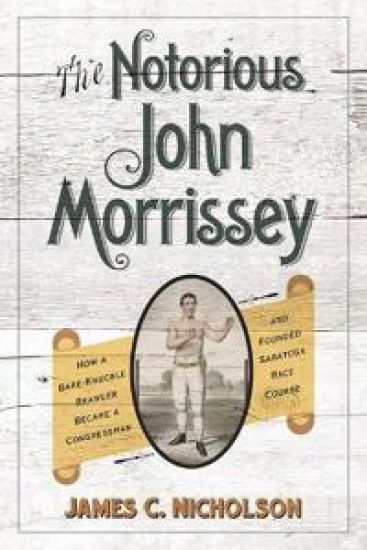
An Irish immigrant, a collection agent for crime bosses, a professional boxer, and a prolific gambler, John Morrissey was -- if nothing else -- an unlikely candidate to become one of the most important figures in the history of Thoroughbred racing. As a young man, he worked as a political heavy in New York before going to San Francisco in search of fortune at the height of the Gold Rush. After returning to the east coast, he was hired by Tammany Hall and was soon locked in a deadly rivalry with William Poole, better known as "Bill the Butcher." As time went on, Morrissey parlayed his youthful exploits into a remarkably successful career as a businessman and politician. After establishing a gambling house in Saratoga Springs, the hardnosed entrepreneur organized the first Thoroughbred race meet at what would become Saratoga Race Course in 1863. Morrissey went on to be elected to two terms in the U.S. House of Representatives and two terms in the New York State Senate. In this book, James C. Nicholson explores the improbable life of the man who brought Thoroughbred racing back to prominence in the United States. Though few of his contemporaries did more to develop the commercialization of sports in America, Morrissey's colorful background has prevented him from getting the attention he deserves. This entertaining and long-overdue biography finally does justice to his astounding rags-to-riches story while exploring an intriguing chapter in the history of horse racing.

A quarter of a million people braved miserable conditions at Epsom Downs on June 2, 1954, to see the 175th running of the prestigious Derby Stakes. Queen Elizabeth II and Sir Winston Churchill were in attendance, along with thousands of Britons who were all convinced of the unfailing superiority of English bloodstock and eager to see a British colt take the victory. They were shocked when a Kentucky-born chestnut named Never Say Die galloped to a two-length triumph at odds of 33-1, winning Britain's greatest race and beginning an important shift in the world of Thoroughbred racing. Never Say Die traces the history of this extraordinary colt, beginning with his foaling in Lexington, Kentucky, when a shot of bourbon whiskey revived him and earned him his name. Author James C. Nicholson also tells the stories of the influential individuals brought together by the horse and his victory - from the heir to the Singer sewing machine fortune to the Aga Khan. Most fascinating is the tale of Mona Best of Liverpool, England, whose well-placed bet on the long-shot Derby contender allowed her to open the Casbah Coffee Club. There, her son met musicians John Lennon, Paul McCartney, and George Harrison and later joined their band. Featuring a foreword by the original drummer for the Beatles, Pete Best, this remarkable book reveals how an underdog's surprise victory played a part in the formation of the most successful and influential rock band in history and made the Bluegrass region of Kentucky the center of the international Thoroughbred industry.
A Concise History of Kentucky
James C. Klotter; Freda C. Klotter
The University Press of Kentucky
2008
nidottu
To most people, the word "Kentucky" is likely to inspire thoughts of Derby Day, burley tobacco fields, feuding Appalachian families, coal mines, and Colonel Sanders' famous fried chicken. There is much more, however, to the Bluegrass State's rich but often unexplored history than mint juleps and the Hatfields and McCoys. In A Concise History of Kentucky, authors James C. Klotter and Freda C. Klotter introduce readers to a captivating story that spans 12,000 years of Kentucky lives, from Native Americans to astronauts. All facets of Kentucky history are explored -- geography, government, social structure, culture, education, and the economy -- recounting unique historic events such as the deadly frontier wars, the assassination of a governor, and the birth of Bluegrass music. The book features profiles of famous Kentuckians such as Daniel Boone, Abraham Lincoln, Loretta Lynn, and Muhammad Ali, as well as ordinary citizens. A joint collaboration of the state historian of Kentucky and an experienced educator, A Concise History of Kentucky is an authoritative, readable story that will educate and entertain newcomers to Kentucky history and those who simply want to learn more about the Commonwealth.

D. H. Lawrence: Self and Sexuality is a psychoanalytic study of D. H. Lawrence's life and writings. James Cowan relies most notably the methods of Heinz Kohut, psychoanalytic "self psychology," and employs as well the object relation theories of D. W. Winnicott and others. This work also examines sexual issues in Lawrence's work from a literary and critical perspective, employing authoritative medical and psychoanalytic sources in human sexuality. Lawrence's work, which was early read in traditional Freudian terms, has only recently been considered from other psychoanalytic perspectives. In this self psychological study, Cowan provides a new and path-breaking analysis of Lawrence. Turning to several problematic issues of sexuality in Lawrence, the author first discusses a number of Lawrence's sexual fallacies, and personal and cultural issues. Cowan also considers contrasting idealized and negative presentations of Mellors and Sir Clifford Chatterley in Lady Chatterley's Lover, and the theme of the "loss of desire" sequence of poems in Pansies.

Essential Papers on Depression gathers the classic articles on the subject of depression. It includes pieces by such core figures as Karl Abraham, Sigmund Freud, Frieda Fromm-Reichmann, Martin E. P. Seligman, Aaron T. Beck, and George Winokur. The volume is broken into four parts: Psychodynamic Approaches; Behavioral and Cognitive Approaches; Interpersonal and Social Approaches; and Biomedical Approaches. Contributors: Karl Abraham, Lyn Y. Abramson, Ross J. Baldessarini, Aaron T. Beck, Ernest S. Becker, Andrew G. Billings, George W. Brown, Mabel Blake Cohen, David L. Dunner, Sigmund Freud, Frieda Fromm-Reichmann, Marie Kovacs, Peter M. Lewinsohn, William R. Miller, Rudolf H. Moos, David Rapaport, Lynn P. Rehm, Lenore Sawyer, Martin E. P. Seligman, and George Winokur.

Archaeological Explorations in Caves of the Point of Pines Region, Arizona
James C. Gifford
University of Arizona Press
2015
nidottu
The Anthropological Papers of the University of Arizona is a peer-reviewed monograph series sponsored by the School of Anthropology. Established in 1959, the series publishes archaeological and ethnographic papers that use contemporary method and theory to investigate problems of anthropological importance in the southwestern United States, Mexico, and related areas.
American Labor History and Comparative Labor Movements
James C. McBrearty
University of Arizona Press
1974
pokkari

Fix the U. S. Budget! is a firsthand account of the crucial and extraordinary events surrounding the federal budget during the 1980s. Miller's memoir is an original contribution to our understanding of the evolution and significance of events, and he provides firm and persuasive recommendations for fixing the U.S. budget.

Emerging Conflicts in the Doctrine of Federalism
James C. Smith
University Press of America
1984
nidottu
Describes and analyzes intergovernmental problems that hinder the smooth operation of government institutions. Shows how different levels of government mediate conflict which takes place in the intergovernmental arena, and provides a perspective from which to view the nature, operation, and inconsistencies of the political system. A useful text for students of political science, particularly intergovernmental relations and state administration, as well as urban studies.
From the creation of the first “New South” in the wake of Appomattox to the current struggles over the Confederate flag, Redefining Southern Culture surveys the remarkable story of southern identity and its persistence in the face of sweeping changes in the South’s economy, society, and political structure. Rejecting the conventional continuity-versus-change framework, James C. Cobb instead illustrates how the evolution of southern culture synthesized these two forces in recent years. Throughout this lively and engaging volume, Cobb examines southern identity in its constantly changing forms, from history and literature to blues and country music to popular and consumer cultures. Cobb also presents the first detailed account of the efforts of African Americans in the South to reclaim their identity as southerners and to construct their own symbolic and substantive representations of what that identity means.The essays in Redefining Southern Culture reflect James C. Cobb’s career-long interest in exploring southern cultural identity and the interaction of this identity with the economic, social, and political forces that have transformed the region. Written in a refreshingly straightforward and engaging style, this book promises thoughtful reading for anyone interested in the modern South and will be a valuable resource for courses in southern history and culture.
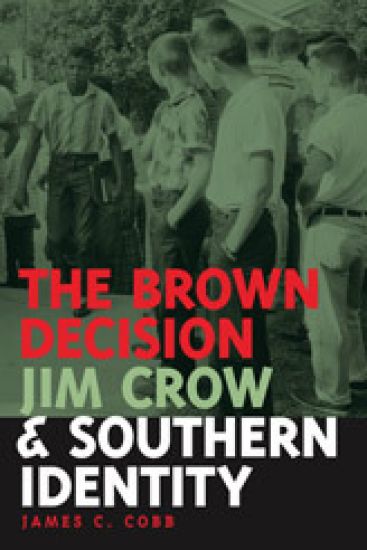
The Brown Decision, Jim Crow, and Southern Identity
James C. Cobb
University of Georgia Press
2005
sidottu
The 1954 Brown v. Board of Education ruling was a watershed event in the fight against racial segregation in the United States. The recent fiftieth anniversary of Brown prompted a surge of tributes: books, television and radio specials, conferences, and speeches. At the same time, says James C. Cobb, it revealed a growing trend of dismissiveness and negativity toward Brown and other accomplishments of the civil rights movement. Writing as both a lauded historian and a white southerner from the last generation to grow up under southern apartheid, Cobb responds to what he sees as distortions of Brown’s legacy and their implied disservice to those whom it inspired and empowered.Cobb begins by looking at how our historical understanding of segregation has evolved since the Brown decision. In particular, he targets the tenacious misconception that racial discrimination was at odds with economic modernization—and so would have faded out, on its own, under market pressures. He then looks at the argument that Brown energized white resistance more than it fomented civil rights progress. This position overstates the pace and extent of racial change in the South prior to Brown, Cobb says, while it understates Brown’s role in catalyzing and legitimizing subsequent black protest.Finally, Cobb suggests that the Brown decree and the civil rights movement accomplished not only more than certain critics have acknowledged but also more than the hard statistics of black progress can reveal. The destruction of Jim Crow, with its “denial of belonging,” allowed African Americans to embrace their identity as southerners in ways that freed them to explore links between their southernness and their blackness. This is an important and timely reminder of “what the Brown court and the activists who took the spirit of its ruling into the streets were up against, both historically and contemporaneously.”
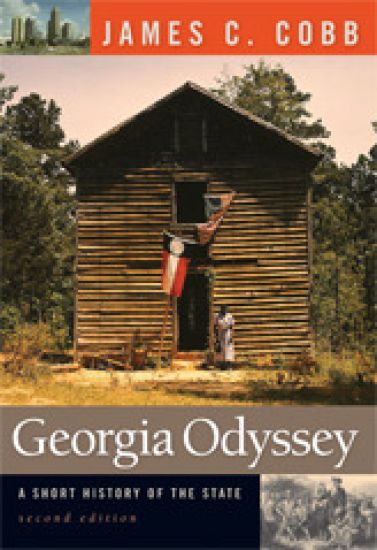
Georgia Odyssey is a lively survey of the state’s history, from its beginnings as a European colony to its current standing as an international business mecca, from the self-imposed isolation of its Jim Crow era to its role as host of the centennial Olympic Games and beyond, from its long reign as the linchpin state of the Democratic Solid South to its current dominance by the Republican Party. This new edition incorporates current trends that have placed Georgia among the country’s most dynamic and attractive states, fueled the growth of its Hispanic and Asian American populations, and otherwise dramatically altered its demographic, economic, social, and cultural appearance and persona.“The constantly shifting cultural landscape of contemporary Georgia,” writes James C. Cobb, “presents a jumbled panorama of anachronism, contradiction, contrast, and peculiarity.” A Georgia native, Cobb delights in debunking familiar myths about his state as he brings its past to life and makes it relevant to today. Not all of that past is pleasant to recall, Cobb notes. Moreover, not all of today’s Georgians are as unequivocal as the tobacco farmer who informed a visiting journalist in 1938 that “we Georgians are Georgian as hell.” That said, a great many Georgians, both natives and new arrivals, care deeply about the state’s identity and consider it integral to their own. Georgia Odyssey is the ideal introduction to our past and a unique and often provocative look at the interaction of that past with our present and future.
A History of Georgia Agriculture, 1732–1860
James C. Bonner
University of Georgia Press
2009
pokkari
Published in 1964, A History of Georgia Agriculture describes the early land and labor systems in the state. Agriculture came to Georgia with the first settlers and was largely directed toward the economic self-sufficiency of the British Empire. James C. Bonner's portrayal of the colonial cattle industry is prescient of the later open-range West. He also clearly shows how shortages of horses and implements, poor plowing techniques, and a lack of skill in tool mechanics spawned the cotton-slaves-mules trilogy of antebellum agriculture, which in turn led to land exhaustion and eventual emigration.By the 1850s the general southern desire for economic independence promoted diversification and such scientific farming techniques as crop rotation, contour plowing, and fertilization. Planting of pasture forage to improve livestock and hold soil was advocated and the teaching of agriculture in public schools was promoted. Contemporary descriptions of individual farms and plantations are interspersed to give a picture of day to day farming. Bonner presents a picture of the average Southern farmer of 1850 which is neither that of a landless hireling nor of the traditional planter, but of a practical man trying to make a living.

Published in 1971, Georgia’s Last Frontier presents the history of one of the state’s least developed regions. During the 1830s, Carroll County was a large part of Georgia’s most rugged frontier. James C. Bonner examines how life in this isolated region was complicated by the presence of Native Americans, cattle rustlers, and horse thieves. He details how the discovery of gold in the Villa Rica area resulted in drunkenness and violence, but also laid the foundations of mining technology that were later used in Colorado and California. The region remained isolated until after the Civil War, when a rail line was constructed to stimulate cotton cultivation. With the development of the railway, Carroll County’s frontier traditions waned in the early twentieth century.