This title allows users to effectively diagnose and treat any acute disease of the stomach, intestines, peritoneum, liver, and abdominal wall. Its authorship includes over 20 internationally recognized experts that provide critical information needed by practitioners for management of abdominal diseases. This informative resource provides a thorough discussion of normal and abnormal anatomy and physiology. Surgical techniques are broken down into an easy-to-read step-by-step format. This highly visual presentation, with over 410 illustrations, is a necessary edition to an equine practitioner’s library. Published by Teton New Media in the USA and distributed by Manson Publishing outside of North America.
In this timely new contribution, Koehn and Rosenau develop their transnational-competence framework and demonstrate the promise of its application across six critical professions: teacher education, engineering, business management, social work, sustainable-development (encompassing agricultural sciences, public administration, and natural-resources management), and medicine/health. Transnational Competence offers higher-education leaders around the world useful ideas for enhancing and transforming professional programs so that graduating practitioners will be prepared with the skills needed to manage horizon-rising challenges that connect populations, ecosystems, and fields of study. Aimed principally at higher-education leaders and graduating professionals throughout the world, Transnational Competence focuses on the skills that tomorrow's practitioners will need to deal with what the authors term horizon-rising transboundary challenges.
In this timely new contribution, Koehn and Rosenau develop their transnational-competence framework and demonstrate the promise of its application across six critical professions: teacher education, engineering, business management, social work, sustainable-development (encompassing agricultural sciences, public administration, and natural-resources management), and medicine/health. Transnational Competence offers higher-education leaders around the world useful ideas for enhancing and transforming professional programs so that graduating practitioners will be prepared with the skills needed to manage horizon-rising challenges that connect populations, ecosystems, and fields of study. Aimed principally at higher-education leaders and graduating professionals throughout the world, Transnational Competence focuses on the skills that tomorrow's practitioners will need to deal with what the authors term horizon-rising transboundary challenges.
Ellipsometry is an experimental technique for determining the thickness and optical properties of thin films. It is ideally suited for films ranging in thickness from sub-nanometer to several microns. Spectroscopic measurements have greatly expanded the capabilities of this technique and introduced its use into all areas where thin films are found: semiconductor devices, flat panel and mobile displays, optical coating stacks, biological and medical coatings, protective layers, and more. While several scholarly books exist on the topic, this book provides a good introduction to the basic theory of the technique and its common applications. The target audience is not the ellipsometry scholar, but process engineers and students of materials science who are experts in their own fields and wish to use ellipsometry to measure thin film properties without becoming an expert in ellipsometry itself.
As the Commander of U.S. Central Command, General Frank McKenzie oversaw some of the most important — and controversial operations in modern U.S. military history. He had direct operational responsibility for the strikes on Qassem Soleimani and two successive leaders of ISIS, the many months of deterrence operations against Iran and its proxies, and the methodical drawdown in Iraq. He directed the noncombatant evacuation operation in Afghanistan, and our final withdrawal from that tortured country. The Melting Point has three themes. The first one is the importance of the primacy of civilian control of the military. It has become a widely perceived truth that this control has been eroded over the past few years. General McKenzie doesn’t believe that to be the case, and he speaks with some authority on the matter arguing that the civ-mil relationship isn’t perfect or frictionless, but it doesn’t have to be, and probably shouldn’t be. It is, however, more durable than many believe, and is supported and embraced by the military to a degree that some critics do not choose to recognize. The second theme is the uniqueness of being a combatant commander. Combatant commanders participate in the development of policy, although as junior partners. They are also responsible for the execution of policy once civilian leaders have formulated their decision, a unique position, and very different than the role of a service chief, or even the Chairman of the Joint Chiefs of Staff. None of these officers are in the chain of command, and they have no ultimate, mortal responsibility or authority for execution. Only the combatant commander stands astride the boundary of decision-making and execution. Finally, the third theme that McKenzie argues is that leaders matter, and the decisions they make have a profound effect on what happens on the battlefield. McKenzie provides an honest assessment of his time in command—describing decisions that were sound, as well as some outcomes he wishes were different. He offers a vivid portrait of leadership in action in one of the most volatile regions of the world.
Texas birdlife is strongly influenced by the incredible diversity of habitats found within its borders. The Rio Grande corridor is a great example of this diversity. From El Paso to Brownsville, this once-majestic river forms the 1,569-mile southern and western borders of Texas. At El Paso, the average rainfall is only nine inches per year compared to the 26-inch annual rainfall ofthe subtropical Lower Rio Grande Valley. In between can be found the magnificent Chihuahuan Desert with its mountain islands, the Stockton and Edwards Plateaus, and the brush-covered plains of South Texas.
Advances in analytical chemistry methodology now allow us to detect the most minute trace amounts of pesticides. As this capacity grows, so does public concern about toxic contamination, resulting in stricter government regulations and a growing demand for even more sensitive, precise, and reliable analysis. Addressing the interplay between regulations and the development of analytical technology, this volume presents the first unified treatment of the regulatory and analytical aspects of pesticide residues. Current regulations, existing and emerging methodologies, state-of-the-art instrumentation, and the basic science of analyzing for pesticides in food and other environmental media are all covered. The book provides step-by-step guidelines to analytical techniques, along with real-world examples from the latest research-showing the reader how to analyze minute traces of pesticides quickly and accurately, using both highly sophisticated and basic, less sensitive techniques. Many safety issues are explored in depth, as are the regulatory aspects of pesticide registration, residue analysis, exposure monitoring, risk assessment, and tolerance enforcement. Timely, authoritative, and practical throughout, Pesticide Residues in Foods is an invaluable reference for analytical chemists and laboratory managers everywhere-in industry, agriculture, environmental sciences, research, and instrument manufacturing-and for anyone with an interest in the broader environmental, agricultural, and consumer-related implications of pesticide use. An invaluable resource for analytical chemists and laboratory managers, Pesticide Residues in Foods provides a complete overview of the theory, practice, and regulatory aspects of pesticide residue analysis today, including: * All regulatory issues, from risk assessment and tolerance to data-quality requirements to laboratory accreditation standards * State-of-the-art methodologies and instrumentation, including high- performance liquid chromatography and mass spectrometry * The application of analytical technology to "green chemistry," such as the reduction of solvents and toxic reagents in the laboratory * Novel solutions to the old problem of keeping the food supply safe from harmful levels of pesticides * Ample examples to help analytical chemists select the most appropriate method for a given residue analysis * Easy-to-use tables and figures throughout the text
In the wake of the 2008 financial crisis, conflicting arguments have been made about fair value accounting (FVA) versus historical cost accounting (HCA) and the role that each played in the crisis. This report examines the relationship between both types of accounting practices and systemic risk in the financial sector, providing recommendations on how FVA and HCA can both be improved.
Most complex biological systems, such as enzyme pathways, are effec tively controlled near the beginning of the process. There is increasing evidence that the same is true for the immune system, with the initial interactions between antigen, antigen-presenting cells, and T cells hav ing a paramount influence on the ensuing events. Thus, analysis of the early stages of the immune responses has been a preoccupation of many immunologists. This has been considerably aided by the capac ity to expand these early events, and 'immortalize' them as clones of T cells, for detailed analysis. The discovery by Morgan, Ruscetti, and Gallo (Science 193, 1007, 1976) of T-cell growth factor (now termed interleukin-2 or IL-2) has had a major impact in immunology that is far from over. The greater ease of handling murine tissues experimentally, with the availability of more precisely defined reagents such as inbred strains, has meant that, to date, most of the work on long-term T-cell cultures has been per formed in the mouse, as summarized by Fathman and Fitch (eds. , Iso lation, Characterization and Utilization of T Lymphocyte Clones, Aca demic Press, NY, 1982). However, the limitations of working with human tissues are counterbalanced by the great long-term importance of understanding disorders of human immune regulation, especially since it is becoming evident that these are far from rare. Immune deficiencies such as agammaglobulinemia and T-cell deficiencies are not common, but immune hyperresponsiveness occurring in allergy and allergiC diseases (e. g.
This work has been selected by scholars as being culturally important and is part of the knowledge base of civilization as we know it.This work is in the public domain in the United States of America, and possibly other nations. Within the United States, you may freely copy and distribute this work, as no entity (individual or corporate) has a copyright on the body of the work.Scholars believe, and we concur, that this work is important enough to be preserved, reproduced, and made generally available to the public. To ensure a quality reading experience, this work has been proofread and republished using a format that seamlessly blends the original graphical elements with text in an easy-to-read typeface.We appreciate your support of the preservation process, and thank you for being an important part of keeping this knowledge alive and relevant.
Most complex biological systems, such as enzyme pathways, are effec tively controlled near the beginning of the process. There is increasing evidence that the same is true for the immune system, with the initial interactions between antigen, antigen-presenting cells, and T cells hav ing a paramount influence on the ensuing events. Thus, analysis of the early stages of the immune responses has been a preoccupation of many immunologists. This has been considerably aided by the capac ity to expand these early events, and 'immortalize' them as clones of T cells, for detailed analysis. The discovery by Morgan, Ruscetti, and Gallo (Science 193, 1007, 1976) of T-cell growth factor (now termed interleukin-2 or IL-2) has had a major impact in immunology that is far from over. The greater ease of handling murine tissues experimentally, with the availability of more precisely defined reagents such as inbred strains, has meant that, to date, most of the work on long-term T-cell cultures has been per formed in the mouse, as summarized by Fathman and Fitch (eds. , Iso lation, Characterization and Utilization of T Lymphocyte Clones, Aca demic Press, NY, 1982). However, the limitations of working with human tissues are counterbalanced by the great long-term importance of understanding disorders of human immune regulation, especially since it is becoming evident that these are far from rare. Immune deficiencies such as agammaglobulinemia and T-cell deficiencies are not common, but immune hyperresponsiveness occurring in allergy and allergiC diseases (e. g.
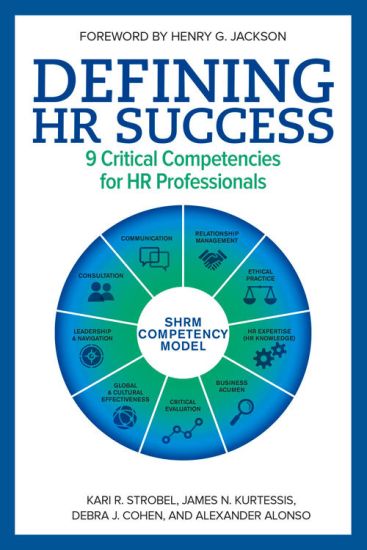
High-quality HR practitioners have advanced skill sets in the critical competencies needed to work our most pressing talent issues of today and to deliver HR strategy to enable businesses to evolve in the future. Now HR professionals are expected to be valued team members and contribute as business partners for the growth of the organization.Defining HR Success provides an in-depth review and application of the nine critical HR competencies practitioners need to be successful within the field of HR and leaders of their organizations:HR Expertise (HR Knowledge)Business acumenCommunicationConsultationCritical evaluationEthical practiceGlobal and cultural effectivenessLeadership and navigationRelationship management
The Knowledge Seeker is a useful system to develop various intelligent applications such as ontology-based search engine, ontology-based text classification system, ontological agent system, and semantic web system etc. The Knowledge Seeker contains four different ontological components. First, it defines the knowledge representation model ¡V Ontology Graph. Second, an ontology learning process that based on chi-square statistics is proposed for automatic learning an Ontology Graph from texts for different domains. Third, it defines an ontology generation method that transforms the learning outcome to the Ontology Graph format for machine processing and also can be visualized for human validation. Fourth, it defines different ontological operations (such as similarity measurement and text classification) that can be carried out with the use of generated Ontology Graphs. The final goal of the KnowledgeSeeker system framework is that it can improve the traditional information system with higher efficiency. In particular, it can increase the accuracy of a text classification system, and also enhance the search intelligence in a search engine. This can be done by enhancing the system with machine processable ontology.
The Knowledge Seeker is a useful system to develop various intelligent applications such as ontology-based search engine, ontology-based text classification system, ontological agent system, and semantic web system etc. The Knowledge Seeker contains four different ontological components. First, it defines the knowledge representation model ¡V Ontology Graph. Second, an ontology learning process that based on chi-square statistics is proposed for automatic learning an Ontology Graph from texts for different domains. Third, it defines an ontology generation method that transforms the learning outcome to the Ontology Graph format for machine processing and also can be visualized for human validation. Fourth, it defines different ontological operations (such as similarity measurement and text classification) that can be carried out with the use of generated Ontology Graphs. The final goal of the KnowledgeSeeker system framework is that it can improve the traditional information system with higher efficiency. In particular, it can increase the accuracy of a text classification system, and also enhance the search intelligence in a search engine. This can be done by enhancing the system with machine processable ontology.