Kirjojen hintavertailu. Mukana 12 390 323 kirjaa ja 12 kauppaa.

Kirjahaku

Etsi kirjoja tekijän nimen, kirjan nimen tai ISBN:n perusteella.

1000 tulosta hakusanalla Jean Rotrou

Jean Anderson's Preserving Guide

Jean Anderson's Preserving Guide

The University of North Carolina Press
2012
sidottu
In this classic work, born of the back-to-the-land movement, Jean Anderson teaches you how to enjoy the bounty of your own garden, farmer's markets, and roadside stands--all year round. With Anderson at your side, you'll learn which fruits and vegetables are best for canning, freezing, and pickling and, along the way, learn how to insure food safety. Best of all, you'll find you're having fun, saving money, and eating well. Jean Anderson's Preserving Guide not only provides easy-to-follow directions for preserving whatever you grow but also dishes up more than 100 original recipes--for such tried-and-true classics as piccalilli and corn relish and more adventurous fare like caponata, frozen pasta sauce, and carrot marmalade. This step-by-step guidebook brings the expertise of a hands-on master to a whole new do-it-yourself generation of gardeners, cooks, and food lovers. |In this classic work, born of the back-to-the-land movement, Jean Anderson teaches you how to enjoy the bounty of your own garden, farmer's markets, and roadside stands--all year round. With Anderson at your side, you'll learn which fruits and vegetables are best for canning, freezing, and pickling and, along the way, learn how to insure food safety. Jean Anderson's Preserving Guide provides easy-to-follow directions for preserving whatever you grow and dishes up more than 100 original recipes.
Jean Toomer, Artist

Jean Toomer, Artist

McKay Nellie Y.

The University of North Carolina Press
1987
nidottu
Brazil, the world’s fourth largest democracy, has been plagued in recent years by corruption scandals. Corruption and Democracy in Brazil: The Struggle for Accountability considers the performance of the Brazilian federal accountability system with a view to diagnosing the system’s strengths, weaknesses, and areas of potential improvement; taking stock of recent micro- and macro-level reforms; and pointing out the implications of the various dimensions of the accountability process for Brazil’s democratic regime.The book's essays take a multidimensional approach to the accountability matrix in Brazil. The first section of the book investigates the complex interrelationships among representative institutions, electoral dynamics, and public opinion. In the second section, authors address nonelectoral dimensions of accountability, such as the role of the media, accounting institutions, police, prosecutors, and courts. In the final chapter, the editors reflect upon the policy implications of the essays, considering recommendations that may contribute to an effective fight against political corruption and support ongoing accountability, as well as articulating analytical lessons to social scientists interested in the functioning of accountability networks.
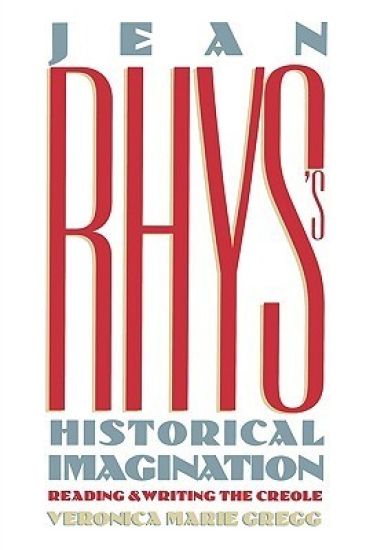
Jean Rhys's Historical Imagination

Jean Rhys's Historical Imagination

Gregg Veronica Marie

The University of North Carolina Press
1995
nidottu
As the foremost white West Indian writer of this century and author of the widely acclaimed novel Wide Sargasso Sea , Jean Rhys (1890-1979) has attracted much critical attention, most often from the perspective of gender analysis. Veronica Gregg extends our critical appreciation of Rhys by analyzing the complex relationship between Rhys's identity and the structures of her fiction, and she reveals the ways in which this relationship is connected to the history of British colonization of the West Indies. Gregg focuses on Rhys as a writer--a Creole woman analyzing the question of identity through literary investigations of race, gender, and colonialism. Arguing that history itself can be a site where different narratives collide and compete, she explores Rhys's rewriting of the historical discourses of the West Indies and of European canonical texts, such as Rhys's treatment of Jane Eyre in Wide Sargasso Sea . Gregg's analysis also reveals the precision with which Rhys crafted her work and her preoccupation with writing as performance.
Jean Rhys and the Novel As Women's Text

Jean Rhys and the Novel As Women's Text

The University of North Carolina Press
2009
nidottu
Is a woman's writing different from a man's? Many scholars -- and readers -- think so, even thought here has been little examination of the way women's novels enact the theories that women theorists have posited. In Jean Rhys and the Novel as Women's Text, Nancy Harrison makes an important contribution to the exchange of ideas on the writing practice of women and to the scholarship on Jean Rhys.Harrison determines what the form of a well-made women's novel discloses about the conditions of women's communication and the literary production that emerges from them. Devoting the first part of her book to theory and general commentary on Rhys's approach to writing, she then offers perceptive readings of Voyage in the Dark, an early Rhys novel, and Wide Sargasso Sea, Rhys's masterpiece written twenty-seven years later. She shows how Rhys uses the terms of a man's discourse, then introduces a woman's (or several women's) discourse as a compelling counterpoint that, in time, becomes prominent and gives each novel its thematic impact. In presenting a continuing dialogue with the dominant language and at the same time making explicit the place of a woman's own language, Rhys gives us a paradigm for a new and basically moral text.A UNC Press Enduring Edition -- UNC Press Enduring Editions use the latest in digital technology to make available again books from our distinguished backlist that were previously out of print. These editions are published unaltered from the original, and are presented in affordable paperback formats, bringing readers both historical and cultural value.
Jean De La Mote Le Parfait Du Paon

Jean De La Mote Le Parfait Du Paon

The University of North Carolina Press
1972
nidottu
This story concerns the capture by Alexander's forces of the city of Milide. As an example of courtly literature,Le Parfait combines, curiously, aristocratic refinement with descriptions of violent and bloody battles. The critical apparatus includes an introduction, linguistic study, variants, notes, glossary, and index of proper names.
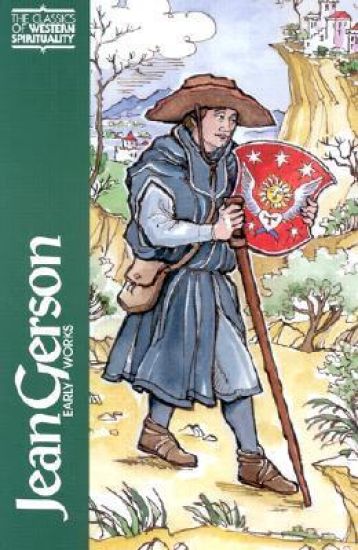
Jean Gerson

Jean Gerson

Paulist Press International,U.S.
1998
nidottu
"The Classics series, which has inspired many less successful imitations over the years, has fulfilled its promise and given us an invaluable resource of the soul." The Catholic Historical Review Jean Gerson: Early Works translated and introduced by Brian Patrick McGuire preface by Bernard McGinn "However much advanced scholarship and great learning in God's law may be quite suitable for the person who wishes to come to the height of contemplation, nevertheless sometimes such knowledge blocks this pursuit. Learning is not in itself a problem. Rather, it is the arrogance and the self-inflation that the learned person derives from his knowledge. For it is clearly impossible to reach true contemplation except through humility, as the Apostle teaches (1 Cor 3:18). For if anyone, he says, seems wise in this world, he must become a fool in order to be wise. In other words, he should take on humble understanding and consider himself a fool with regard to God's wisdom. From The Mountain of Contemplation [2] Jean Gerson (1363-1429), chancellor of the University of Paris from 1395 until his death, was one of the outstanding theologians and preachers of his time. Today he is all but forgotten, except in terms of his role in resolving the schism of the Western Church. Gerson deserves to be seen as a man of great passion and learning. He sought to map the path to the contemplative life in a way that made it accessible to groups outside the universities. Partly because of continuing closeness to members of his family, especially his sisters, Gerson insisted on writing many of his works in French. His Mountain of Contemplation is a major event in the history of language and in terms of gender relations in the religious life. Gerson knew how innovative his approach was, for he opened his treatise with the words: "Some persons will wonder and ask why, in a matter so lofty as that of the contemplative life, I choose to write in French rather than in Latin, and more to women than to men." Thanks to Gerson's personal letters, translated here for the first time, it is possible to get close to the doubts and pain of a man who sought the vision of god and yearned for affective bonds. Gerson's life and writings can be seen as a search for unity in the midst of a rich and chaotic age whose spirituality we are only now beginning to appreciate. In giving advice to confessors, attacking the Romance of the Rose, preaching on the feast of Saint Bernard of Clairvaux, discerning between true and false revelations, and in outlining his Practical Mystical Theology, Gerson emerges as one of the most articulate voices of a Christian spirituality that transcends the Middle Ages and speaks to our time. †
Jean Baudrillard

Jean Baudrillard

Brian Gogan

Southern Illinois University Press
2017
nidottu
Jean Baudrillard, a French social theorist and critic often associated with postmodernism, has been studied as sociologist, philosopher, cultural theorist, political commentator, and photographer. In Jean Baudrillard: The Rhetoric of Symbolic Exchange, Brian Gogan establishes him as a rhetorician, demonstrating how the histories, traditions, and practices of rhetoric prove central to his use of language. In addition to Baudrillard’s standard works, Gogan examines many of the scholar’s lesser-known writings that have never been analyzed by rhetoricians, and this more comprehensive approach presents fresh perspectives on Baudrillard’s work as a whole.Gogan examines both the theorist himself and his rhetoric, combining these two lines of inquiry in ways that allow for provocative insights. The first part of the book explains Baudrillard’s theory as compatible with the histories and traditions of rhetoric, outlining his novel understanding of rhetorical invention as involving thought, discourse, and perception. The four chapters that constitute part one each conclude with an “Illustration” section that applies Baudrillard’s theory to Rebecca Skloot’s 2010 best-selling book The Immortal Life of Henrietta Lacks. Part two includes an additional four chapters, each of which evaluates Baudrillard’s work in terms of a perception of him – as an aphorist, an illusionist, an ignoramus, and an ironist. These chapters cover the performative nature of his rhetorical theory; illusion in Plato, Aristotle, and Baudrillard’s own work; a disagreement with Susan Sontag and its basis in differing approaches to signification; and the importance of irony to rhetorical theory. A biographical sketch and a critical review of the literature on Baudrillard and rhetoric round out the study.,br>Jean Baudrillard: The Rhetoric of Symbolic Exchange makes the French theorist’s complex concepts understandable and relates them to the work of important thinkers, including Plato, Aristotle, Ferdinand de Saussure, Hannah Arendt, and Kenneth Burke, providing a thorough and accessible introduction to Baudrillard’s ideas.
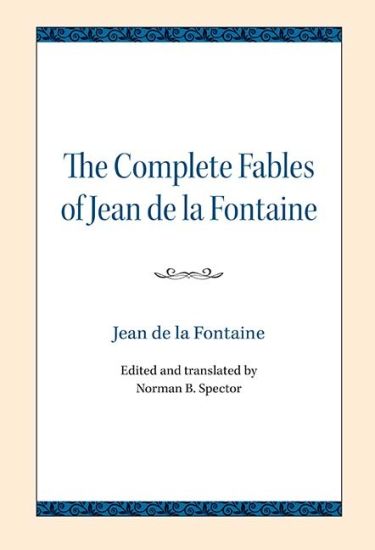
The Complete Fables of Jean de la Fontaine

The Complete Fables of Jean de la Fontaine

Jean de la Fontaine

Northwestern University Press
2018
nidottu
This edition of Jean de La Fontaine’s fables includes an English translation published alongside the French text. Norman Spector adapted the French text from the 1883-85 edition by Henri Régnier, adding four tales from the 1962 edition by Georges Couton. Spector’s translation is in rhymed verse, and remains faithful to the original not only in metrical patterns and rhyme schemes but also in tone: wit and le mot juste are skillfully and wonderfully combined. This translation gives the reader of English a chance to enjoy the grace, wit, and versatility of La Fontaine.
Jean Toomer and the Terrors of American History

Jean Toomer and the Terrors of American History

Charles Scruggs; Lee VanDemarr

University of Pennsylvania Press
1998
sidottu
Jean Toomer's Cane was the first major text of the Harlem Renaissance and the first important modernist text by an African-American writer. It powerfully depicts the terror in the history of American race relations, a public world of lynchings, race riots, and Jim Crow, and a private world of internalized conflict over identity and race which mirrored struggles in the culture at large. Toomer's own life reflected that internal conflict, and he has been an ambiguous figure in literary history, an author who wrote a text that had a tremendous impact on African American authors but who eventually tried to distance himself from Cane and from his identification as a black writer. In Jean Toomer and the Terrors of American History, Charles Scruggs and Lee VanDemarr examine original sources-Toomer's rediscovered early writings on politics and race, his extensive correspondence with Waldo Frank, and unpublished portions of his autobiographies-to show how the cultural wars of the 1920s influenced the shaping of Toomer's book and his subsequent efforts to escape the racial definitions of American society. That those definitions remain crucial for American society even today is one reason Toomer's work continues to fascinate and to influence contemporary writers and readers.
Jean De Saintré

Jean De Saintré

Antoine de La Sale

University of Pennsylvania Press
2014
sidottu
Written in 1456 and purporting to be the biography of the actual fourteenth-century knight of its title, Jean de SaintrÉ has been called the first modern novel in French and one of the first historical novels in any language. Taken in hand at the age of thirteen by an older and much more experienced lady, Madame des Belles Cousines, the youth grows into an accomplished knight, winning numerous tournaments and even leading a crusade against the infidels for the love of Madame. When he reaches maturity, Jean starts to rebel against Madame's domination by seeking out chivalric adventures on his own. She storms off to her country estates and takes up with the burly abbot of a nearby monastery. The text moves into darker and uncourtly territory when Jean discovers their liaison and lashes out to avenge his lost love and honor, ruining Madame's reputation in the process. Composed in the waning years of chivalry and at the threshold of the print revolution, Jean de SaintrÉ incorporates disquisitions on sin and virtue, advice on hygiene and fashion, as well as lengthy set pieces of chivalric combat. Antoine de La Sale, who was, by turns, a page, a royal tutor, a soldier, and a judge at tournaments, embellished his text with wide-ranging insights into chivalric ideology, combat techniques, heraldry and warfare, and the moral training of a young knight. This superb translation-the first in nearly a hundred years-contextualizes the story with a rich introduction and a glossary and is suitable for scholars, students, and general readers alike. An encyclopedic compilation of medieval culture and a window into the lost world of chivalry, Jean de SaintrÉ is a touchstone for both the late Middle Ages and the emergence of the modern novel.
The Philosophy of Jean-Paul Sartre, Volume 16

The Philosophy of Jean-Paul Sartre, Volume 16

Jean-Paul Sartre; Paul Arthur Schilpp

Open Court Publishing Co ,U.S.
1999
pokkari
The format of this Library of Living Philosophers volume differs from that of its fifteen predecessors. Because of Sartre's failing eyesight, it was not possible for him either to read the critical essays or to respond in the usual way to his critics. Nor did he feel able to prepare an autobiography. Thus, in order to collect the material needed for the volume, it was necessary to conduct personal taped interviews with Sartre and then to have those interviews translated, edited, and arranged in an order that would approximate as closely as possible the customary format of the volumes in the Library of Living Philosophers series. Skillfully and conscientiously conducted, the interviews themselves resulted in a unique and valuable document. At the time they occurred, Sartre was in good health except for his near-blindness, and he answered questions in a lively and easy manner. Although he seemed most comfortable when talking autobiographically, he nevertheless responded to many of the philosophical questions raised by the contributors to this volume.
Jean Renart and the Art of Romance

Jean Renart and the Art of Romance

University Press of Florida
1997
sidottu
This volume of critical essays examines Renart's contribution to the genre of courtly romance. By using a variety of perspectives to conduct readings of Renart's text, identifying specific narrative and musical examples, the contributors illuminate a significant 13th century literary figure.
Jean Gabin

Jean Gabin

Joseph Harriss

THE UNIVERSITY PRESS OF KENTUCKY
2023
sidottu
When one thinks of the quintessential Frenchman, one likely pictures Jean Gabin (1904-1976). The son of music hall performers, the Paris-born actor grew up in the entertainment business. His onscreen debut in the 1930's marked the beginning of many memorable roles in films such as La Grande Illusion (1937) and Émile Zola's La Bête Humaine (1938). His performances would earn him international recognition and establish his reputation as one of the greatest stars of film noir. Pausing his performances on screen, Gabin joined the Allied struggle of WWII. Serving under General Charles De Gaulle in the Free French Forces as a tank commander, Gabin was awarded several medals for his service. Upon his return to acting after the war, he became the embodiment of the uniquely French spirit – a persona that would define his future roles. In Jean Gabin: The Actor Who Was France, Joseph Harriss tells the story of this French icon. This well-researched biography documents Gabin's life from his start as a reluctant singer and dancer in Parisian music halls to his rise to film superstardom. Harriss recounts the actor's multi-faceted persona, including his famously fiery temper, his tumultuous love affairs – including a six-year relation with the German star Marlene Dietrich – and his military valor. With this enthralling work, film enthusiasts can gain an appreciation of France's quintessential movie star and his lasting impact on world cinema during its Golden Age.
Jean Gabin

Jean Gabin

Joseph Harriss

THE UNIVERSITY PRESS OF KENTUCKY
2023
nidottu
When one thinks of the quintessential Frenchman, one likely pictures Jean Gabin (1904-1976). The son of music hall performers, the Paris-born actor grew up in the entertainment business. His onscreen debut in the 1930's marked the beginning of many memorable roles in films such as La Grande Illusion (1937) and Émile Zola's La Bête Humaine (1938). His performances would earn him international recognition and establish his reputation as one of the greatest stars of film noir. Pausing his performances on screen, Gabin joined the Allied struggle of WWII. Serving under General Charles De Gaulle in the Free French Forces as a tank commander, Gabin was awarded several medals for his service. Upon his return to acting after the war, he became the embodiment of the uniquely French spirit - a persona that would define his future roles. In Jean Gabin: The Actor Who Was France, Joseph Harriss tells the story of this French icon. This well-researched biography documents Gabin's life from his start as a reluctant singer and dancer in Parisian music halls to his rise to film superstardom. Harriss recounts the actor's multi-faceted persona, including his famously fiery temper, his tumultuous love affairs - including a six-year relationship with the German star Marlene Dietrich - and his military valor. With this enthralling work, film enthusiasts can gain an appreciation of France's quintessential movie star and his lasting impact on world cinema during its Golden Age.
Jean Toomer & Harlem Renaissance

Jean Toomer & Harlem Renaissance

Rutgers University Press
2000
nidottu
Jean Toomer's novel Cane has been hailed as the harbinger of the Harlem Renaissance and as a model for modernist writing, yet it eludes categorization and its author remains an enigmatic and controversial figure in American literature. The present collection of essays by European and American scholars gives a fresh perspective by using sources made available only in recent years, highlighting Toomer's bold experimentations, as well as his often ambiguous responses to the questions of his time. Some of the essays achieve this through close readings of the text, leading to new and challenging interpretations of Toomer's transcendence of genres and styles. Others show how the publication of Cane and his later writings placed Toomer at the heart of contemporary ideological and artistic debates: race and identity, the negro writer and the white literary world, primitivism and modernism.