Kirjojen hintavertailu. Mukana 12 390 323 kirjaa ja 12 kauppaa.

Kirjahaku

Etsi kirjoja tekijän nimen, kirjan nimen tai ISBN:n perusteella.

1000 tulosta hakusanalla Jonathan F.S. Post

Immunosuppression and Human Malignancy

Immunosuppression and Human Malignancy

David Naor; Benjamin Y. Klein; Nora Tarcic; Jonathan S. Duke-Cohan

Humana Press Inc.
2011
nidottu
The immune system can deal effectively with the majority of viruses and bacteria, less effectively with parasites, and very poorly with cancer. Why is this so? Why are McFarlane Burnet's and Lewis Thomas' predictions that the immune system is in­ volved in ridding the body of cancer cells, encapsulated in the catchy phrase "immunologic surveillance," so difficult to experi­ mentally establish? Cancer differs from infectious agents in being derived from the host. Hence, it has been postulated that cancer cells lack anti­ gens that the immune system can recognize. They are not "im­ munogenic. " However, this argument is seriously weakened by the existence of numerous human autoimmune diseases, in which the immune system effectively recognizes and attacks a va­ riety of self tissues. Thus, the potential clearly exists for recogni­ tion of the surfaces of tumor cells. Professor Naor and his colleagues have written a book that explores another possible reason: cancer cells are recognized by the immune system-but is it possible that the consequence of recognition is inhibition of the immune system-by suppressor T cells or macrophages? The evolution of the malignant state may only occur in individuals who develop this suppression. This book reviews the evidence that suppressor cells, poorly characterized and difficult to study, may be of fundamental im­ portance in cancer. In fact, our incapacity to understand the na­ ture of suppressor cells and their mode of action is one of the ma­ jor problems in immunology research today.
Jonathan Edwards's Writings

Jonathan Edwards's Writings

Indiana University Press
1996
sidottu
"This book will take its place in libraries next to the finest works abou;this creative thinker." —Religious Studies Review ". . . gives a fine sense of the present state and the future direction of Edwards studies . . . Recommended for upper-division undergraduate and graduate students." —Choice " . . . this volume opens up new windows, not only on previously neglected texts of Jonathan Edwards, but on the larger cultural functions and effects of those texts." —Journal of the History of the Behavioral Sciences Here is a compact survey of current Edwards scholarship. These essays present groundbreaking contemporary scholarship focusing on the writings of the 18th-century American philosopher and theologian Jonathan Edwards. They range widely across the Edwardsian canon, including his most prominent and important published texts—Religious Affections and The Nature of True Virtue—as well as unfamiliar treatises and sermons.
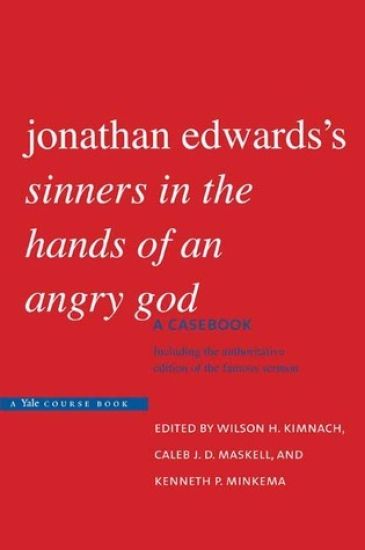
Jonathan Edwards's "Sinners in the Hands of an Angry God"
Including the authoritative edition of the famous sermon Designed specifically for the classroom, this volume presents the accurate and definitive version of Sinners, accompanied by the tools necessary to study and teach this famous American sermon. With an introduction aimed at students and teachers and commentary that draws on fifty years of team editorial experience of Yale’s Works of Jonathan Edwards, it provides both context and interpretation, and addresses the concerns and questions of a twenty-first century audience.The book contains questions for in-class discussion, a chronology of Edwards’s life, and a glossary. In addition, curricular materials and video mini-presentations are available on a dedicated Web site. This casebook represents a innovative contribution to the art of teaching Edwards to a new generation of readers.
Jonathan Swift's Gulliver's Travels
An extremely complex, yet widely studied text, Jonathan Swift’s Gulliver’s Travels ranks as one of the most scathing satires of British and European society ever published. Students will therefore welcome the publication of Roger Lund’s sourcebook, which provides a clear way through the wealth of contextual and critical material that surounds the text. This indispensable guide presents: extensive introductory comment on the contexts and many interpretations of the text, from publication to present annotated extracts from key contextual documents, reviews, critical works and the text itself cross-references between documents and sections of the guide, in order to suggest links between texts, contexts and criticism suggestions for further reading.Part of the Routledge Gudies to Literature series, this volume is essential reading for all those beginning detailed study of Swift’s controversial novel.
Jonathan Swift's Gulliver's Travels
An extremely complex, yet widely studied text, Jonathan Swift’s Gulliver’s Travels ranks as one of the most scathing satires of British and European society ever published. Students will therefore welcome the publication of Roger Lund’s sourcebook, which provides a clear way through the wealth of contextual and critical material that surounds the text. This indispensable guide presents: extensive introductory comment on the contexts and many interpretations of the text, from publication to present annotated extracts from key contextual documents, reviews, critical works and the text itself cross-references between documents and sections of the guide, in order to suggest links between texts, contexts and criticism suggestions for further reading.Part of the Routledge Gudies to Literature series, this volume is essential reading for all those beginning detailed study of Swift’s controversial novel.
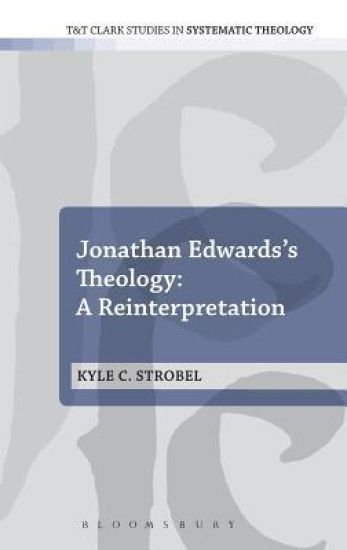
Jonathan Edwards's Theology: A Reinterpretation
This volume provides an interpretative key to Jonathan Edwards's theology developed from within his own doctrinal constructs. Strobel offers a dogmatic exposition of Edwards's theology by unveiling the trinitarian architecture of his thought. Building upon this analysis, Strobel applies his construct to reinterpret three key areas of redemption debated widely in the secondary literature: spiritual knowledge, regeneration, and religious affection. In order to achieve this purpose, Strobel's approach is theological rather than philosophical, employing Edwards's self-confession as a Reformed theologian to guide his analysis. In advancing a theological reading of Edwards, Strobel focuses on the systematic nature of Edward's theology, ordering it according to his doctrinal affirmations. This necessitates, as many Edwards scholars now affirm, a primary focus on Edwards's trinitarian theology, where the Trinity serves as the key ontological principle which orders the whole of his doctrinal construction. By grounding the interpretive key in Edwards's understanding of the Trinity, Strobel's idiosyncratic exposition of his doctrine of the Trinity serves to recast Edwards's theology in a new light.
Jonathan Edwards's Philosophy of Nature
Jonathan Edwards's Philosophy of Nature: The Re-Enchantment of the World in the Age of Scientific Reasoning analyses the works of Jonathan Edwards (1703-1758) on natural philosophy in a series of contexts within which they may best be explored and understood. Its aim is to place Edwards's writings on natural philosophy in the broad historical, theological and scientific context of a wide variety of religious responses to the rise of modern science in the early modern period - John Donne's reaction to the new astronomical philosophy of Copernicus, Kepler and Galileo, as well as to Francis Bacon's new natural philosophy; Blaise Pascal's response to Descartes' mechanical philosophy; the reactions to Newtonian science and finally Jonathan Edwards's response to the scientific culture and imagination of his time.
Jonathan Edwards's Theology: A Reinterpretation
This volume provides an interpretative key to Jonathan Edwards's theology developed from within his own doctrinal constructs. Strobel offers a dogmatic exposition of Edwards's theology by unveiling the trinitarian architecture of his thought. Building upon this analysis, Strobel applies his construct to reinterpret three key areas of redemption debated widely in the secondary literature: spiritual knowledge, regeneration, and religious affection.In order to achieve this purpose, Strobel's approach is theological rather than philosophical, employing Edwards's self-confession as a Reformed theologian to guide his analysis. In advancing a theological reading of Edwards, Strobel focuses on the systematic nature of Edward's theology, ordering it according to his doctrinal affirmations. This necessitates, as many Edwards scholars now affirm, a primary focus on Edwards's trinitarian theology, where the Trinity serves as the key ontological principle which orders the whole of his doctrinal construction. By grounding the interpretive key in Edwards's understanding of the Trinity, Strobel's idiosyncratic exposition of his doctrine of the Trinity serves to recast Edwards's theology in a new light.
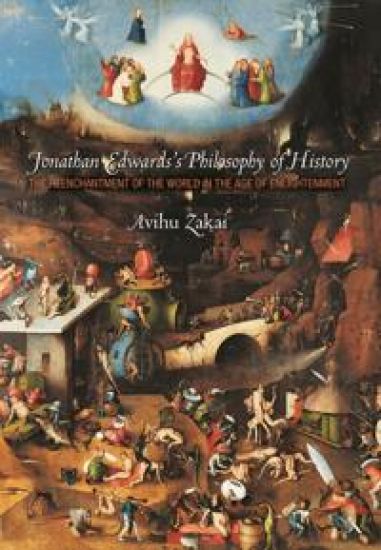
Jonathan Edwards's Philosophy of History

Jonathan Edwards's Philosophy of History

Avihu Zakai

Princeton University Press
2009
pokkari
Avihu Zakai analyzes Jonathan Edwards's redemptive mode of historical thought in the context of the Enlightenment. As theologian and philosopher, Edwards has long been a towering figure in American intellectual history. Nevertheless, and despite Edwards's intense engagement with the nature of time and the meaning of history, there has been no serious attempt to explore his philosophy of history. Offering the first such exploration, Zakai considers Edwards's historical thought as a reaction, in part, to the varieties of Enlightenment historical narratives and their growing disregard for theistic considerations. Zakai analyzes the ideological origins of Edwards's insistence that the process of history depends solely on God's redemptive activity in time as manifested in a series of revivals throughout history, reading this doctrine as an answer to the threat posed to the Christian theological teleology of history by the early modern emergence of a secular conception of history and the modern legitimation of historical time. In response to the Enlightenment refashioning of secular, historical time and its growing emphasis on human agency, Edwards strove to re-establish God's preeminence within the order of time. Against the de-Christianization of history and removal of divine power from the historical process, he sought to re-enthrone God as the author and lord of history--and thus to re-enchant the historical world. Placing Edwards's historical thought in its broadest context, this book will be welcomed by those who study early modern history, American history, or religious culture and experience in America.
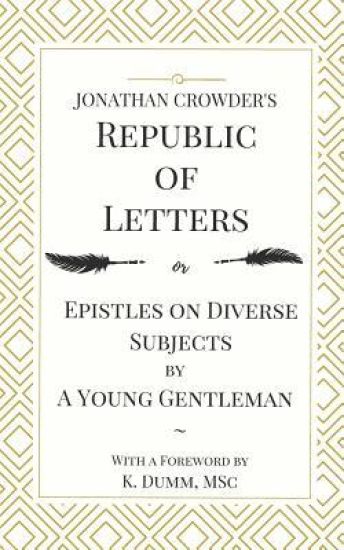
Jonathan Crowder's Republic of Letters: Epistles on Diverse Subjects by A Young Gentleman
Join Jonathan as he eloquently flounders in all aspects of life, from employment, to romance, to finding suitable housing. Written in flowery eighteenth-century prose, Jonathan Crowder's Republic of Letters is a charming, funny window into the life of a near-destitute gentleman living in the early part of the twenty-first century. Through a series of letters written by Jonathan we are illuminated to the inner turmoil of a man struggling to find a way in the world.
Jonathan Hickman's Fantastic Four: An Unofficial Guide

Jonathan Hickman's Fantastic Four: An Unofficial Guide

Daniel S. Christensen

Studio Remarkable
2013
nidottu
Jonathan Hickman's run on Marvel Comics' Fantastic Four franchise was hailed by critics and fans as the best of his generation. It featured one of the most complicated series of storylines in mainstream comic book history, continually rewarding longtime fans with an astute attention to detail. This unofficial guide to Hickman's run contains issue summaries and review notes. It is intended to serve as a companion for readers of both Hickman's "Fantastic Four" and "FF" titles, helping to sort out the minutia and connect the dots to the title's past.
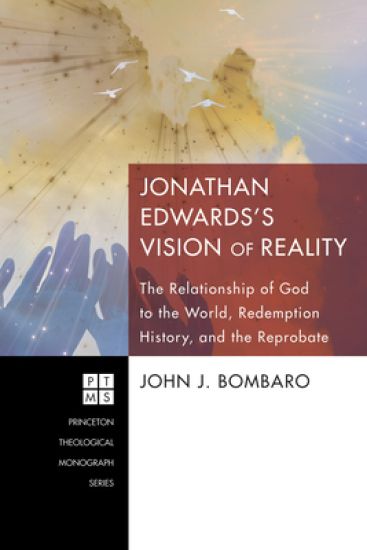
Jonathan Edwards's Vision of Reality

Jonathan Edwards's Vision of Reality

John J Bombaro

Pickwick Publications
2011
sidottu
Since the publication of Sang Hyun Lee's revolutionary commentary, The Philosophical Theology of Jonathan Edwards, scholars have considered the possibilities of understanding Jonathan Edwards's thought in terms of dispositional laws, forces, and habits. While some scholars reject the notion of a dispositional ontology in Edwards, others have taken the concept of disposition in his thought beyond the usage the Northampton minister ever indicated, especially with respect to soteriological considerations. The preacher of "Sinners in the Hands of an Angry God" is made to be an inclusivist, if not a crypto-universalist. Jonathan Edwards's Vision of Reality substantiates that Edwards, in an effort to combat deistic and materialistic Enlightenment paradigms, employs dispositions in his philosophy, but that his radical theocentrism and Calvinistic particularism established its boundaries within his apologetical reconsideration of spatiotemporal and metaphysical reality. Within his "spiritual vision" of reality, Edwards leaves no stone unturned: history and even the reprobate find inherent value and a positive functional role not only in God's program of self-glorification but as manifestations of divine being--the damned are "deformities" in God. The logic of Edwards's theocentric vision of reality pushes his ideas to the limits of acceptable Reformed orthodoxy, and sometimes beyond those limits.