Kirjahaku
Etsi kirjoja tekijän nimen, kirjan nimen tai ISBN:n perusteella.
1000 tulosta hakusanalla Joseph Atkinson
Poems By Joseph Fawcett: To Which Are Added Civilized War And The Art Of Poetry (1798)
Joseph Fawcett
KESSINGER PUBLISHING, LLC
2008
sidottu

The Works Of Joseph Addison V2: Embracing The Whole Of The Spectator, Etc. (1845)
Joseph Addison
KESSINGER PUBLISHING, LLC
2008
sidottu
Memoirs Of Lieutenant Joseph Rene Bellot V2: With His Journal Of A Voyage In The Polar Seas, In Search Of Sir John Franklin (1855)
Joseph Rene Bellot
KESSINGER PUBLISHING, LLC
2008
sidottu
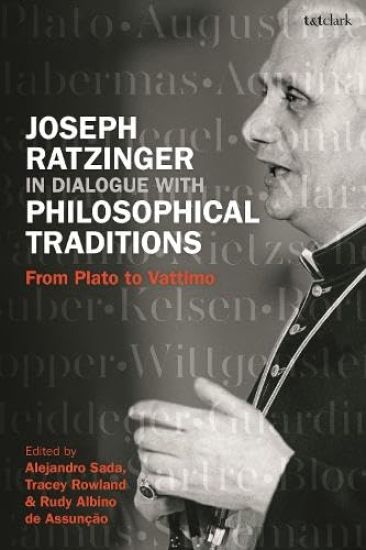
Joseph Ratzinger in Dialogue with Philosophical Traditions
BLOOMSBURY PUBLISHING PLC
2024
nidottu
This book extensively explores the various influences and connections between Joseph Ratzinger and a number of leading philosophers; engaging with his work by means of Spanish, Portuguese, German, and English schools of thought through the contributions of a global body of scholars. Each chapter in this volume examines precisely how Ratzinger has dealt with the ideas of a particular philosopher, and how he has appropriated their ideas and thoughts. Moving from philosophers he has modified or critiqued – such as Kant, Comte or Wittgenstein – to those who have contributed to his philosophical theology, such as Guardini and Pieper, this truly international endeavour is an extraordinary journey into Ratzinger’s engagement with his competing and congenial schools of thought.
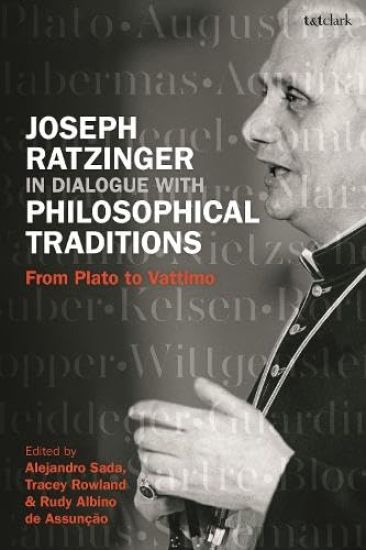
Joseph Ratzinger in Dialogue with Philosophical Traditions
BLOOMSBURY PUBLISHING PLC
2024
sidottu
This book extensively explores the various influences and connections between Joseph Ratzinger and a number of leading philosophers; engaging with his work by means of Spanish, Portuguese, German, and English schools of thought through the contributions of a global body of scholars. Each chapter in this volume examines precisely how Ratzinger has dealt with the ideas of a particular philosopher, and how he has appropriated their ideas and thoughts. Moving from philosophers he has modified or critiqued – such as Kant, Comte or Wittgenstein – to those who have contributed to his philosophical theology, such as Guardini and Pieper, this truly international endeavour is an extraordinary journey into Ratzinger’s engagement with his competing and congenial schools of thought.

Joseph K has a comfortable job in financial services and barely notices the growing chaos all around on the walk to work: the homelessness, the food banks, the anger, the protests, the relentless rise of the cost of living. Until one day, K is arrested. No one will explain what the charges are, but they must be answered.Emily White's adaptation of The Trial weaves the nightmare of arrest and injustice into a funny and physical take on Franz Kafka's classic.The play premiered at the Swansea Grand Theatre, in a production by National Theatre Wales, in March 2023.
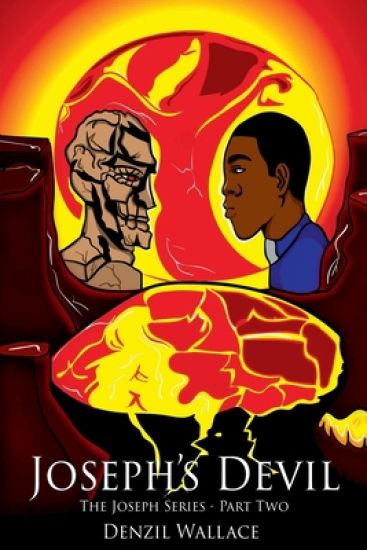
This sequel to Denzil Wallace's debut Novel, Joseph's Angel, will have you an a roller coaster ride. Joseph Johnson is a seasoned Christian, fighting off the spiritual attacks of an evil and vindictive demon by the name of Krimion. Sent by Satan, Krimion's sole purpose is to bring the soul of Joseph to hell. His strategy is to make life for Joseph a living hell, by creating tragedy after tragedy in hopes that Joseph renounces his faith in God. Joseph is on the brink of a mental breakdown. Will he overcome these obstacles, or will his devil prevail?
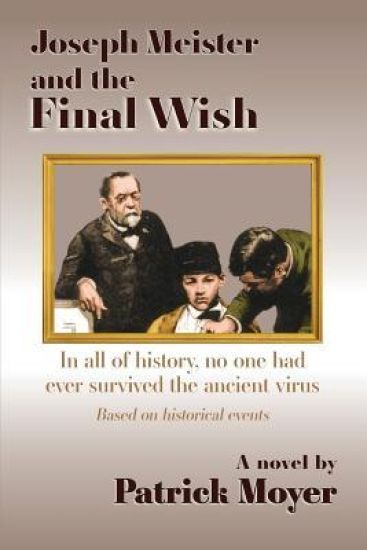
Based on real history with people who actually existed in 1885. Louis Pasteur, possibly the first and most famous scientist to involve the interaction of science and medicine with the threats the of an invisible world, could only deduce the processes sub-microscopic life used to create and manipulate their unseen world. Joseph Meister, was possibly the first victim in history to recognize the invisible existence of the most feared disease in recorded times. Rabies At thirteen years old, he did not create his fate but he recognized -- with help -- how to fight it. Danielle was the friend who understood and yearned for Joseph, only to receive silence and the unknown when he was taken from her. And finally, Charles, a former thief, whose existence, was now linked with Joseph's, through the fight for Joseph's life. Along with adventure and discovery, they shared a bond that included danger, challenges, the hope for life and the possibility of death.
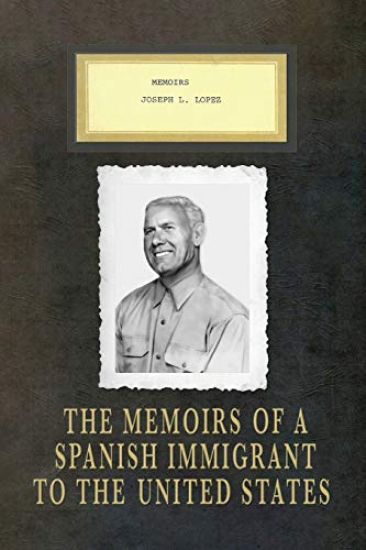
Joseph Lopez Lopez wrote his memoirs by hand on lined notebook paper in 1978. These pages were "bound" into a gray folder. Copies were given to each of his children and grandchildren. These memoirs encompass Joseph L. Lopez' recollections of his life from the early 1900's through the time of his putting pen to paper in 1978.Joseph L. Lopez's parents moved their family to Hawaii from the Andaluc a region of Spain in 1907.Six ships, from 1907 to 1913, brought over 8000 men, women and children from Spain to the sugar cane fields of Hawaii. Most of these Spaniards subsequently immigrated to California.Joseph L. Lopez's memoirs allow his descendants, and the descendants of other Hawaiian Spaniards to have the history of his immigration story. Joseph L. Lopez's memoirs provide others a glimpse into the life of a Spanish immigrant family, from 1900 through 1978. These Spaniards courageously left their impoverished ancestral home in the Andaluc a region of Spain, traveled by ship to Hawaii, and eventually immigrated permanently to California.Joseph and his family worked the land in Hawaii and in California; just as they did in Spain. They did whatever was necessary to support one another, to survive, and to thrive through perseverance and resiliency. Eventually, Joseph became a business owner, a land owner, and an entrepreneur.Two people, looking through the same window, but from opposite sides, see two different perspectives. One sees an outdoor scene, another sees a kitchen. Both are correct...just a different perspective. It is only when we take the time to come around to the other side of the window that we can "see" another's perspective. Joseph L. Lopez's gives us his perspective; the nuances of what it means to immigrate, to assimilate to a new life. We don't have to become a 'melting pot' where we lose our identities...we can be the 'tossed salad' where we maintain our own distinct flavors and at the same time become an integral part of the whole America. This melting pot vs. tossed salad concept exemplifies a wider perspective of the varied immigrant heritage of the United States.Let us each be encouraged to delve into our own family's immigration story. It is perhaps not as clear as we thought it was. We are all from somewhere else; ...no matter how far back that may be.

Joseph II (1741--90) -- son and eventual successor of Maria Theresa -- has conventionally been seen in the context of the "Enlightened Despot'' reformers. Today's turmoil in his former territories invites a rather different perspective, however, as Joseph grapples with the familiar and intractable problems of creating a viable unitary state out of his multi-national empire in Central Europe. Professor Blanning's brilliant short study, based on extensive archival research, offers a history of the Habsburg monarchy in the eighteenth century, as well as a revaluation of the emperor's complex personality and his ill-fated reform programme.

Joseph Conrad is a key figure in modernist fiction, whose innovative work engages with many of the crucial philosophical, moral and political concerns of the twentieth century. This collection of major critical readings of his work is arranged according to the issues which each critic addresses, issues which are of crucial importance, and in many cases remain controversial, within contemporary literary theory and criticism. Following an opening section on the critical tradition, indicating how the study of Conrad's work has been politicised since the 1970s, there are sections on 'Narrative, Textuality and Interpretation', 'Imperialism', 'Gender and Sexuality', 'Class and Ideology', and 'Modernity'. Within each section two or three critical excerpts offer contrasting and complementary accounts of the fiction, while the headnotes to each piece and the introduction place these excerpts within the wider critical debate, clarifying for the reader both the theoretical issues and the interpretation of Conrad's fiction. A glossary of terms and a bibliography categorised by critical approach complete a volume which will provide an invaluable resource for students of Conrad and twentieth-century literature as well as other readers of Conrad's work.