"Few musical repertoires have attracted such a convenient and thorough compendium of knowledge." —Early Music News "A. Peter Brown has performed an excellent service for devotees of early keyboard music, and for all students of eighteenth-century music . . . " —Early Keyboard Journal "A. Peter Brown has created a unique compendium, discussing all of Haydn's works with keyboard, comparing them and placing them in a variety of contexts, historical, social and scholarly." —Journal of the American Musicological Society " . . . stimulating . . . a book for which pianists . . . must be thankful." —Journal of the American Liszt Society Haydn scholar A. Peter Brown offers the first detailed and comprehensive study of the composer's keyboard works, encompassing the solo sonatas, keyboard trios, accompanied divertimentos, concertos, concertinos, and Klavierstücke.
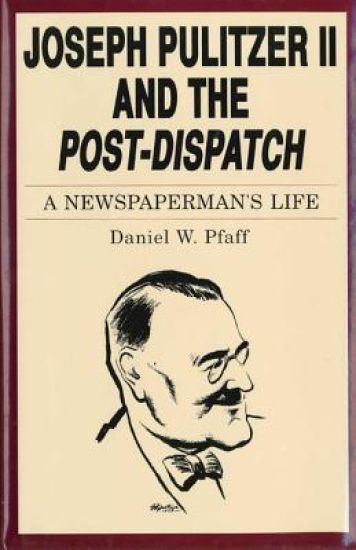
This biography brings the song of "the" Joseph Pulitzer out from behind his colorful father's shadow and shows him to have been one of American's most important newspapermen, ranking with Adolph Ochs, William Allen White, and Robert R. McCormick.Based on hitherto untapped archival sources, including a wealth of personal correspondence, this first biography of Joseph Pulitzer II tells the story of his drive and dedication to make the St. Louis Post-Dispatch one of the most effective liberal newspapers in the United States. Daniel Pfaff covers the seventy-year lifetime of the bearer of a famous name who succeeded in advancing the highest ideals of mainstream liberal journalism in his forty-three-year career as editor-publisher of the Post-Dispatch and head of the Pulitzer Publishing Company. Unlike his colorful father (1847–1911), who is now chiefly remembered for establishing the Pulitzer Prizes at Columbia University and for creating a so-called new journalism that combined attention-getting sensationalism with public-service investigatory crusading at the turn of the century, the second Joseph Pulitzer (1885–1955) was a man of more even temperament and measured administrative style. Throughout his career he was unswervingly dedicated to his father's highest ideals. But he and his staff had new waters to navigate: two world wars, the Great Depression, the beginning of the civil rights movement, and involvement in what became the Vietnam War as well as the challenges of combating malfeasance in state and local political and business circles. Operated by one of the ablest staffs in the country, the Post-Dispatch under Joseph Pulitzer II achieved national and international distinction by the late 1920s and maintained that stature throughout his career. In contrast, the New York World, which the first Joseph Pulitzer had intended to be his lasting monument had left in the care of his other two sons, foundered and, in 1931, failed. Had it not been for the journalistic acumen of Pulitzer's namesake son, in whom he had the least confidence, the Pulitzer presence in American journalism would have ended then. Instead, it is still thriving today. While Joseph Pulitzer II's professional life and his newspaper's involvement in events of this era form the major part of this biography, Pfaff also chronicles his personal life—his sometimes stormy relationship with is father, his two marriages, and his social and recreational life. Thus the book succeeds in giving a well-rounded picture of the man and his times.
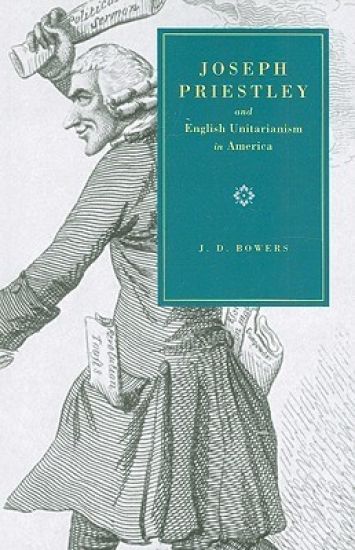
Many have argued that American Unitarianism originated solely from within Congregationalism and developed independent of outside influences. William Ellery Channing's “Unitarian Christianity” sermon in 1819 was a key moment in the history of the denomination, as Channing consciously sought to define the parameters of the faith and eliminate all vestiges of competing influences. Yet the American Unitarian tradition was far more complex than its nineteenth-century adherents were willing to admit. In Joseph Priestley and English Unitarianism in America, J. D. Bowers reexamines its origins, course, and development and subsequently reveals the extent to which Joseph Priestley's ideas concerning Congregational polity were recognized and established within the United States. In contrast to studies that simply trace the history of the denomination as it flows out of New England and is controlled by Bostonians, Bowers shows that Priestley's legacy grew in importance throughout the nineteenth century and held sway throughout many of the frontier regions of the nation. By discussing the complexity of interdenominational rivalry, lack of central control, and a continuous transatlantic exchange among religious liberals, he shows that English Unitarianism continued to serve as an essential and noteworthy foundation for subsequent developments within the American denomination as it endured the challenges of Protestant orthodoxy, unregulated liberalism, Transcendentalism, and the never-ending quest to define liberal religion in America. This is an insightful account of an often neglected set of tenets and developments in the denomination's history. It uniquely traces the course of continued English influence as it established a new point of reference for understanding the dynamic origins of denominational development, Unitarian thought, and liberal religion.
Many have argued that American Unitarianism originated solely from within Congregationalism and developed independent of outside influences. William Ellery Channing's “Unitarian Christianity” sermon in 1819 was a key moment in the history of the denomination, as Channing consciously sought to define the parameters of the faith and eliminate all vestiges of competing influences. Yet the American Unitarian tradition was far more complex than its nineteenth-century adherents were willing to admit. In Joseph Priestley and English Unitarianism in America, J. D. Bowers reexamines its origins, course, and development and subsequently reveals the extent to which Joseph Priestley's ideas concerning Congregational polity were recognized and established within the United States. In contrast to studies that simply trace the history of the denomination as it flows out of New England and is controlled by Bostonians, Bowers shows that Priestley's legacy grew in importance throughout the nineteenth century and held sway throughout many of the frontier regions of the nation. By discussing the complexity of interdenominational rivalry, lack of central control, and a continuous transatlantic exchange among religious liberals, he shows that English Unitarianism continued to serve as an essential and noteworthy foundation for subsequent developments within the American denomination as it endured the challenges of Protestant orthodoxy, unregulated liberalism, Transcendentalism, and the never-ending quest to define liberal religion in America. This is an insightful account of an often neglected set of tenets and developments in the denomination's history. It uniquely traces the course of continued English influence as it established a new point of reference for understanding the dynamic origins of denominational development, Unitarian thought, and liberal religion.
This biography is a complete reassessment of an important American envoy to the Soviet Union in years that were critical in determining postwar East-West relations. Using formerly untouched primary sources, Dr. MacLean sheds a different light on a controversial figure and on his relationship with world leaders, senior diplomats, and Soviet experts during the period under study. She offers intimate glimpses into the perceptions and motivations behind major U.S. and Soviet policies from 1936 to 1946. Her fascinating account of this practical idealist is good reading for all interested in diplomatic history and Soviet-American relations. This is a close study of the complex political, philosophical, and personal factors that guided Joseph Davies in his dealings with Roosevelt, Truman, Stalin and Lipvinov, Molotov, Kennan, and Bohlen, to name just a few. A more balanced interpretation can now be offered of Davies than the traditional two-dimensional stereotype.
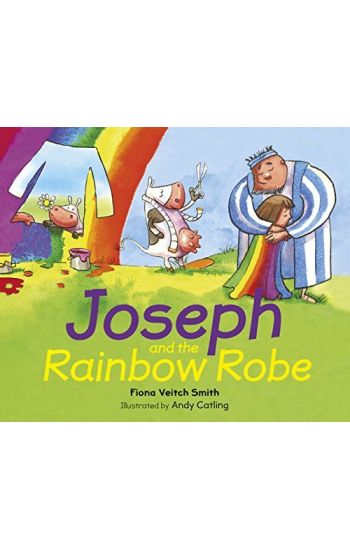
In the first book of the Young Joseph series, we find Joseph living in Canaan with his dad, stepmothers, eleven brothers - and lots of scene-stealing cows! Joseph is his father's favourite, which makes his brothers very cross, especially when he tells them about the dream he has had in which the sun, moon and eleven stars bow down to him. To cheer him up, Joseph's dad gives him a beautiful coat of many colours - a 'rainbow robe' to remind him that God loves everyone - even his brothers.
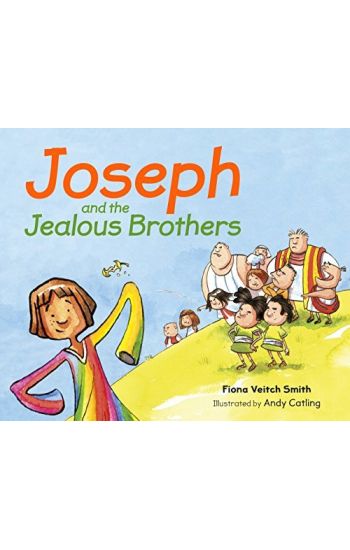
In the second book in the Young Joseph series, Joseph's brothers grow more and more jealous of their favoured brother. They come up with a cunning plan to take Joseph down a peg or two by throwing him in a well to give him a fright. Eventually they sell him to passing slave traders but that's not the end of his story
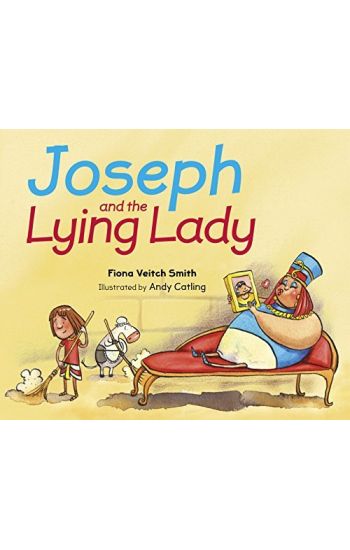
In the third book in the series, Joseph finds himself in Egypt and is sold to a very important man called Potiphar. Potiphar is very busy and his servants are very lazy - as a result his house is a mess! With the help of his ever-helpful cow companions, Joseph soon takes charge and has things spick-and-span in no time. There's only one problem - and that is Mrs Potiphar, who is jealous of Joseph. What scrapes will Joseph get into next?
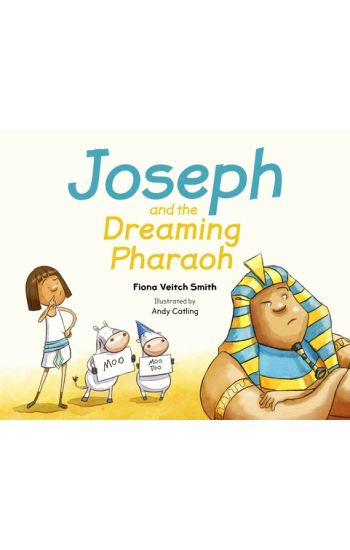
'Lively, fresh and innovative retellings, these fabulous tales of the young Joseph are an absolute delight.' Alexa Tewkesbury, children's author Joseph used to live on a farm in the land of Canaan with his dad, stepmothers, eleven brothers and lots and lots of cows! His jealous brothers sold him as a slave and now he lives in Egypt. After Mrs Potiphar lied about him, Joseph has been thrown into prison, with only his imaginary cows to keep him company. Soon he's joined by a butler and a baker, who used to work for Pharoah. The butler and the baker have strange dreams. Can Joseph work out what they mean?
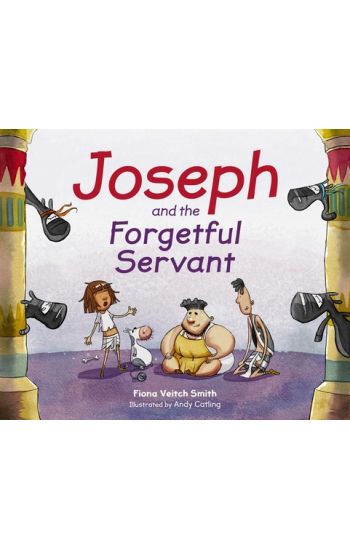
Joseph is still in prison in Egypt, with only his imaginary cows for company. Pharaoh’s butler, who promised to help him, has forgotten all about him. Meanwhile, Pharaoh is having some very strange dreams. Pharoah’s butler remembers that Joseph helped him to understand his dreams. Can Joseph do the same for Pharaoh and finally be free? ‘Fiona Veitch Smith and Andy Catling have done an excellent job . . . The text is fun and accessible and imaginative, yet still faithful to the biblical story. And, best of all, there are cows!’ Bob Hartman, storyteller and author
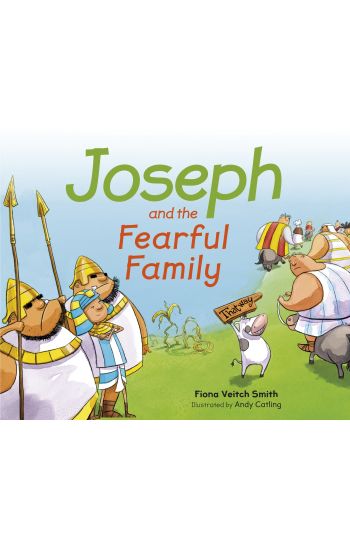
A delightful re-telling of the popular biblical story of Joseph. Having helped Pharoah make sense of his strange dreams, Joseph is now the second most important person in Egypt. Pharoah puts him charge of making sure everyone has enough food. When famine stirkes, Joseph's long-lost brothers come to ask Joseph for food - but they don't recognise the brother they thought was dead. Will Joseph choose to help them or take his revenge? Hilarious illustrations by Andy Catling featuring scene-stealing cows! Covers issues of concern to contemporary children such as sibling rivalry, helping others and making good choices.
Joseph waits for his brothers to return to Egypt with his younger brother, Benjamin. Will they finally recognise the brother they had left for dead? And will Joseph ever be reconciled with his long-lost family?
A delightful retelling of the story of Joseph, especially for under 5s. It features full-colour photographic spreads of the characters from the award-winning Big Bible Storybook. This board book is perfectly sized for small hands, with short text for a parent or carer to read to the child.
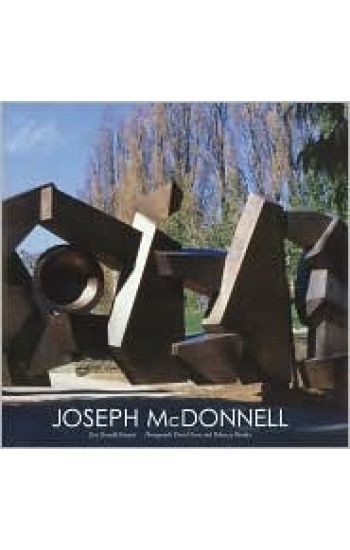
Joseph McDonnell started out as a figurative sculptor studying under renowned Yugoslav sculptor Ivan Mestrovic, but his major works vary from stark geometric forms to others more loosely connected. They range in size from small to monumental and include mobiles, wall reliefs, and, more recently, an exquisite series McDonnell calls "Ice Cubes." He has a flawless sense of mass and speace that produces an inner logic in the forms he creates. His work in bronze and granite contains overtones of ancient civilizations and their symbolism deals with the primordial objects of life: the sun, the column, the arch.With an in-depth text by the well-known art critic Donald Kuspit and photographs by world-famous photographer of sculpture David Finn and his granddaughter, Rebecca Binder, this book brings McDonnell's unique vision to life through exquisite detail shots that explore the sculptures from many angles.
For nearly four decades, Joseph Goldberg has produced paintings of great intelligence and sumptuous beauty. Raised near Spokane, Washington, he returned to live and work in the open, semi-arid spaces of eastern Washington after building a Seattle reputation as an abstract artist working with geometric shapes in the unusual technique of encaustic painting.In the late 1960s and early 1970s, Goldberg's paintings were deceptively simple arrangements of geometric motifs in watercolor on paper or oil on linen. By the mid-1970s, he began to make paintings of a more complex nature, sometimes in nonrectangular forms, but still expressing a reductive sensibility. By the early 1980s, Goldberg had fully embraced his signature medium of encaustic-a demanding and difficult method of fusing intense colors of dry pigments with layers of wax, fired by heat into a lustrous surface. The paintings of the 1980s pursued a variety of motifs abstracted from architecture and landscape, including a series of irregular, banner-like works of shapes within similar shapes. At the same time, Goldberg was producing paintings and drawings of the highly varied Washington landscape and of his travels through the Southwest and Europe. As his work progressed through the 1990s, this expansive vision of the natural world embraced an increasingly larger scope of imagery.Goldberg's development as an artist has been enriched by his travels through ancient Roman ruins and the Greek revival manors of rural Sussex, England, as well as by his studies of Hopi, Anasazi, Navajo, and Zuni civilizations. This history emerges in the form of representational architectural details, landscape impressions, and cultural references. His more recent work is focused on Eastern Washington and its landscape of dramatic gorges, prominent ridges, and desolate fields of sage and sand. The paintings since 2000 have often returned to the severity of his earliest work, now filtered through the artist's keen sense of the art that came before him and of the grandeur of nature surrounding him. Whether painting the space between stars in the dark skies of Eastern Washington or the expansive white ground between rural detritus abandoned at the edges of a snow-covered field, Goldberg has imbued his paintings with mystery and meaning.An essay by New York-based poet Nathan Kernan examines Goldberg's oeuvre and explores the role of poetry in the artist's life and work. In her interview with Goldberg, Seattle Post-Intelligencer critic Regina Hackett considers more personal aspects of the artist's life.A Thomas T. Wilson Book
Joseph Farington (1747-1821) was a professional topographical artist and lived most of his life in London. Through his extensive involvement in the affairs of the Royal Academy, his wide circle of friends, and his membership in several clubs and societies, he touched the life of his time at many points. This diary, which he kept from 1793 until his death, provides a meticulous record of his actions and observations and is an invaluable source for the history of English art and artists. It also constitutes an absorbing record of this period’s social, political, and literary developments.These first two volumes cover the time from July 31, 1793, when he visited Horace Walpole at Strawberry Hill, to August 31, 1796. Apart from recording his constant involvement in Academy business, he describes his visit to Valenciennes and his sketching tour for the History of the River Thames. Such matters as the sale of part of Sir Joshua Reynolds’s collection, the controversies over the Shakespeare forgeries are set down against the background of the French Revolution and the war, and of political turbulence at home. The diary is now for the first time published in full. The unannotated text will be published in successive volumes with a full index and a final volume, A Companion to The Farington Diary, to follow.
Joseph Farington (1747-1821) was a professional topographical artist and lived most of his life in London. Through his extensive involvement in the affairs of the Royal Academy, his wide circle of friends, and his membership in several clubs and societies, he touched the life of his time at many points. This diary, which he kept from 1793 until his death, provides a meticulous record of his actions and observations and is an invaluable source for the history of English art and artists. It also constitutes an absorbing record of this period’s social, political, and literary developments.This second pair of volumes covers the period in which Farington’s influence within the Royal Academy was at its height and he earned the title of ‘dictator of the Royal Academy.’ These years where characterized by artistic controversy over such matters as the eligibility of architects for membership, the expulsion of James Barry from his position as Professor of Painting and then from the Academy itself, and the alleged destructiveness of James Wyatt’s restoration of Durham Cathedral. Farington immersed himself in these and other artistic matters ranging from the campaign for the establishment of a national gallery to his budding friendships with the young Turner and the young Constable.
Joseph Farington (1747-1821) was a professional topographical artist who lived most of his life in London. Through his extensive involvement in the affairs of the Royal Academy, his wide circle of friends, and his membership in several clubs and societies, he touched the life of his times at many points. His diary, now for the first time being published in full, is an invaluable source for the history of English art and artists.In this third pair of volumes, the chief interest is provided by Farington’s account of his visit to Paris, in company with Fuseli, during the Peace of Amiens in 1802. West, Opie, Flaxman, Hoppner, and Turner were among the other English artists who visited Paris at the same time, as did Charles James Fox and his followers. Farington provides much material on French art and artists, notably on David and his pupils, and on the works of art looted from other parts of Europe, especially from Italy, which were on view in the Louvre. There are vivid descriptions of Napoleon and of the atmosphere of Paris during the Consulate. During these years Farington also undertook tours of the Lake District, Scotland, and the Wye valley. He portrays in detail the pre-Regency society of these years, ranging from the small change of gossip and social life to the serious matters of art and politics.