Stallard and Cocker examine why America's schools continue failing to meet the needs of children and society. It explains why the present system cannot be reformed and why a new vision of how children and youth prepare for adulthood must replace it. The process begins with making School Choice a national option. Doing so will create a market for educational services beyond what traditional schools can provide. Their thesis holds that conventional schools are organized around teaching, not learning and that current schools' design and resources were developed to facilitate teaching, not learning. The new paradigm is all about learning and how to support each learner through the process of becoming educated. The authors explain why Education is not a profession and why there is no Science of Education. They cite research in other fields that could improve learning and explain why that knowledge has yet to be applied. They show how government bureaucracies have impeded the adoption of more effective practices and new insights from psychology and neuroscience and why their role needs to change. The authors call for the end of schooling as we know it and offer a better alternative. Their Web of Learning can organize the vital elements needed for academic success and is more suited to the new kind of child coming to school today. They describe an approach to developing curriculum and learning resources to individualize each person's path through school in ways that match their abilities. Instead of cascading failures in school, the program provides for success by eliminating learning debts and compensating for experiential deficits. The final chapters offer a detailed technical specification for the system, including the steps necessary to create it.
Stallard and Cocker examine why America's schools continue failing to meet the needs of children and society. It explains why the present system cannot be reformed and why a new vision of how children and youth prepare for adulthood must replace it. The process begins with making School Choice a national option. Doing so will create a market for educational services beyond what traditional schools can provide. Their thesis holds that conventional schools are organized around teaching, not learning and that current schools' design and resources were developed to facilitate teaching, not learning. The new paradigm is all about learning and how to support each learner through the process of becoming educated. The authors explain why Education is not a profession and why there is no Science of Education. They cite research in other fields that could improve learning and explain why that knowledge has yet to be applied. They show how government bureaucracies have impeded the adoption of more effective practices and new insights from psychology and neuroscience and why their role needs to change. The authors call for the end of schooling as we know it and offer a better alternative. Their Web of Learning can organize the vital elements needed for academic success and is more suited to the new kind of child coming to school today. They describe an approach to developing curriculum and learning resources to individualize each person's path through school in ways that match their abilities. Instead of cascading failures in school, the program provides for success by eliminating learning debts and compensating for experiential deficits. The final chapters offer a detailed technical specification for the system, including the steps necessary to create it.
Fostering engagement and growth in literacy begins with intentional planning and reflection. This monthly guide equips educators, instructional coaches, librarians, and district leaders with strategies to nurture a culture and community of learners that celebrate literacy all year long. Featuring themes like belonging, curiosity, and renewal, it offers tools to support and inspire student literacy development throughout the academic year. K-8 teachers can use this book to: Create and sustain positive mental outlooks toward literacy and teaching over the years Focus on emotional and mental themes each month to reframe attitudes toward literacy Develop weekly plans to reinforce new approaches and attitudes toward reading Inspire students in their reading through engaging literacy activities and supportive reading lists Empower students through reflection on their progress and recognition of their strengths Find author-curated offering read-alouds and suggestions to connect to the monthly themes Contents: Preface The Year at a Glance August: Belonging September: Joy October: Inquiry November: Justice December: Remembrance January: Calling February: Liberation March: Renewal April: Affirmation May: Possibility June: Play and Rest July: Imagination Epilogue References and Resources Index
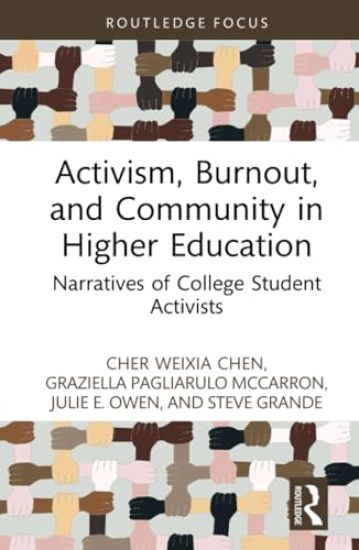
This illuminating volume explores the often-overlooked relationship between college student activism and well-being, drawing on a multi-phase study that explores college students’ perspectives on how their activism impacts their well-being.Based on a study of 119 US college students, the authors share their findings through a constructivist, qualitative lens, revealing three key themes: The link between student activism and students’ identities, the non-negotiable time costs of activism and associated burnout, and the ways that students and higher education can benefit from a different way of considering university and community care. With scholarship exploring the connections between college student activism and well-being still nascent, this book pioneers a fresh understanding of the intersection between student activism and well-being, amplifying authentic student voices throughout and offering practical recommendations for student support. Through a combination of personal narratives, data analysis, and expert commentary, it explores what inspires college student activists to work to create a more just and equitable society, as well as the prevalence of burnout and the tools students use to mitigate their struggles and improve their own well-being.This book will be suitable for both undergraduate and graduate students as well as scholars, practitioners, and professionals in the larger higher education and social justice community.
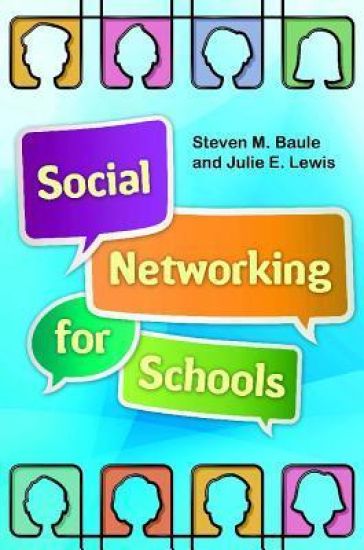
This book provides specific and practical ideas for using social media tools to enhance communications, instruction, and professional development within the K–12 school environment—invaluable information for school librarians, instructional coaches, technology specialists, and educational administrators.Social Networking for Schools is the only book to take a comprehensive look at the topic of social media use in schools. Starting with the numerous justifications for integrating social media into schools, it provides real-world examples of how to seamlessly integrate social media within your classroom or library, examines the methodologies for crafting the necessary policies and procedures to ensure that staff members are prepared to use these tools effectively, and discusses the policy and legal issues surrounding the use of social media in schools.The work uniquely identifies the three core ways that social media can be integrated within a school: as communications tools, as instructional tools, and for professional development. The collaborative effort of a former school librarian and current school administrator with a practicing school attorney, authors Steven M. Baule and Julie E. Lewis bring perspectives and critical insights to the topic not normally considered in similar literature.
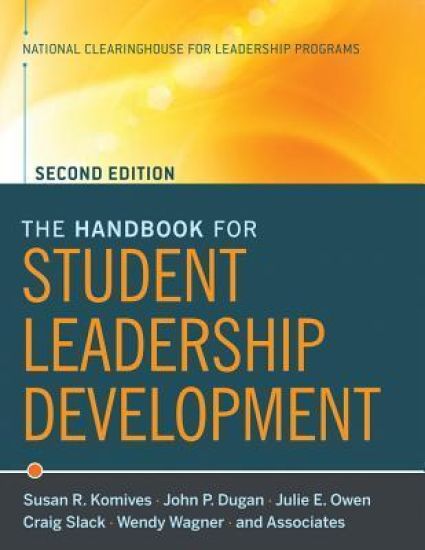
Praise for the Second Edition of The Handbook for Student Leadership Development "This is a must-have book for leadership educators and all student affairs professionals who want to develop impactful leadership programs and the leadership capacity of students. Buy it. Read it. Use it to develop the needed leadership for our collective future." ? CYNTHIA CHERREY, vice president for campus life, Princeton University, and president, the International Leadership Association "As we continue to encourage leadership behavior in young people, it is very easy to get lost in a forest of new theories, programs, and definitions. This handbook serves as the compass to guide us, and it grounds the field of student leadership development in principles and best practices. Our challenge is to put this work into action." ?PAUL PYRZ, president, LeaderShape " Comprehensive in design and scope, the second edition of The Handbook is a theory and practice resource manual for every leadership educator?inside and outside of the classroom." ?LAURA OSTEEN, director, the Center for Leadership and Civic Education, Florida State University " Every college administrator responsible for coordinating student leadership programming should have this book. The Handbook for Student Leadership Development takes the guesswork out of leadership program design, content, and delivery." ?AINSLEY CARRY, vice president for student affairs, Auburn University " I recommend without hesitation the Handbook for Student Leadership Development to student affairs professionals who desire to enhance the leadership experiences for all their students as well as teachers who are seeking ways to bolster their students' classroom experiences." ? Dr. WILLIAM SMEDICK, director, Leadership Programs and Assessment, Office of the Dean of Student Life, and lecturer, Center for Leadership Education, Johns Hopkins University
The Internet is a new battleground between governments that censor online content and those who advocate freedom for all to browse, post, and share information online. This report examines how Internet freedom may transform state-society relations in nondemocratic regimes, using case studies of China, Egypt, Russia, and Syria, and also draws parallels between Internet freedom and Radio Free Europe programs during the Cold War.
Blundell Geoffrey; Christopher Chippindale; Clottes Jean; Conkey Margaret W.; Edward B. Eastwood; Francis Julie E.; Helskog Knut; Imogene L. Lim; Loendorf Lawrence L.; Johannes Loubser; David Morris; Sven Ouzman; Neil Price; Saetersdal Tore; Benjamin Smith; Patricia Vinnicombe; Eva Walderhaug; Walker Nick; Whitley David S.
This collection focuses on David Lewis-Williams and the extent of his personal impact on the field of rock art research. It is largely through his work that San rock art has come to be understood so well, as a complex symbolic and metaphoric representation of San religious beliefs and practices. The purpose of this volume is to demonstrate the depth and wide geographical impact of Lewis-Williams' contribution, with particular emphasis on the use of theory and methodology drawn from ethnography that he has used with inspirational effect in understanding the meaning and context of rock art in various parts of the world. Seeing and Knowing explores how best archaeologists study rock art when there exist ethnographic or ethno - historic bases of insight, and how they study rock art when there do not appear to exist ethnographic or ethnohistoric bases of insight - in short, how to understand and learn from rock art with and without ethnography. Because many of the chapters are based on solid fieldwork and ethnographic research, they offer a new body of work that provides the evidence for differentiation between knowing and simply seeing.
John Kleinig; James P. Levine; Jeffrey B. Abramson; B. Michael Dann; Shari Seidman Diamond; Norman J. Finkel; Paula Hannaford-Agor; Valerie P. Hans; Julie E. Howe; Nancy J. King
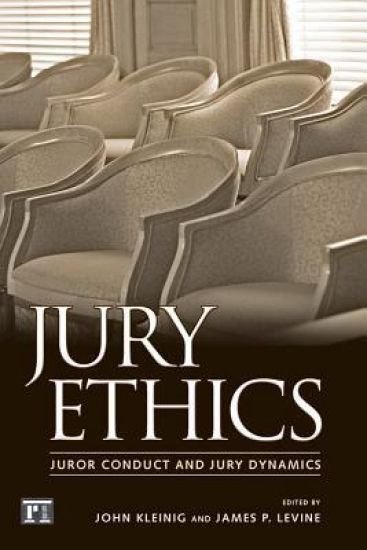
Trial by jury is one of the most important aspects of the U.S. legal system. A reflective look at how juries actually function brings out a number of ethical questions surrounding juror conduct and jury dynamics: Do citizens have a duty to serve as jurors? Might they seek exemptions? Is it acceptable for jurors to engage in after-hours research? Might a juror legitimately seek to "nullify" the outcome to express disapproval of the law? Under what conditions might jurors make a valid choice to hold out against or capitulate to their fellow jurors? Is it acceptable to form alliances? After trial, are there problems with entering into publishing contracts? Unfortunately, questions such as these have received scant attention from scholars. This book revives attention to these and other issues of jury ethics by collecting new and insightful essays along with responses from leading scholars in the field of jury studies. Is it acceptable for jurors to engage in after-hours research? Might a juror legitimately seek to "nullify" the outcome to express disapproval of the law? After trial, are there problems with entering into publishing contracts? Unfortunately, questions such as these have received scant attention from scholars. This book revives attention to these and other issues of jury ethics by collecting new and insightful essays along with responses from leading scholars in the field of jury studies. Contributors: Jeffrey Abramson, B. Michael Dann, Shari Seidman Diamond, Norman J. Finkel, Paula Hannaford-Agor, Valerie P. Hans, Julie E. Howe, Nancy J. King, John Kleinig, James P. Levine, Candace McCoy, G. Thomas Munsterman, Maureen O'Connor, Steven Penrod, Alan W. Scheflin, Neil Vidmar
John Kleinig; James P. Levine; Jeffrey B. Abramson; B. Michael Dann; Shari Seidman Diamond; Norman J. Finkel; Paula Hannaford-Agor; Valerie P. Hans; Julie E. Howe; Nancy J. King
Trial by jury is one of the most important aspects of the U.S. legal system. A reflective look at how juries actually function brings out a number of ethical questions surrounding juror conduct and jury dynamics: Do citizens have a duty to serve as jurors? Might they seek exemptions? Is it acceptable for jurors to engage in after-hours research? Might a juror legitimately seek to "nullify" the outcome to express disapproval of the law? Under what conditions might jurors make a valid choice to hold out against or capitulate to their fellow jurors? Is it acceptable to form alliances? After trial, are there problems with entering into publishing contracts? Unfortunately, questions such as these have received scant attention from scholars. This book revives attention to these and other issues of jury ethics by collecting new and insightful essays along with responses from leading scholars in the field of jury studies. Is it acceptable for jurors to engage in after-hours research? Might a juror legitimately seek to "nullify" the outcome to express disapproval of the law? After trial, are there problems with entering into publishing contracts? Unfortunately, questions such as these have received scant attention from scholars. This book revives attention to these and other issues of jury ethics by collecting new and insightful essays along with responses from leading scholars in the field of jury studies. Contributors: Jeffrey Abramson, B. Michael Dann, Shari Seidman Diamond, Norman J. Finkel, Paula Hannaford-Agor, Valerie P. Hans, Julie E. Howe, Nancy J. King, John Kleinig, James P. Levine, Candace McCoy, G. Thomas Munsterman, Maureen O'Connor, Steven Penrod, Alan W. Scheflin, Neil Vidmar