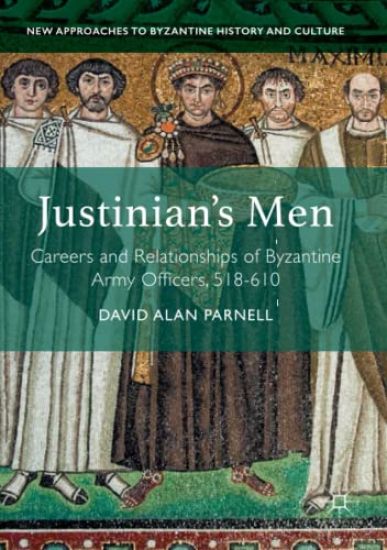
This book explores the professional and social lives of the soldiers who served in the army of the Byzantine Empire in the sixth century. More than just a fighting force, this army was the setting in which hundreds of thousands of men forged relationships and manoeuvred for promotion. The officers of this force, from famous generals like Belisarius and Narses to lesser-known men like Buzes and Artabanes, not only fought battles but also crafted social networks and cultivated their relationships with their emperor, fellow officers, families, and subordinate soldiers. Looming in the background were differences in identity, particularly between Romans and those they identified as barbarians. Drawing on numerical evidence and stories from sixth-century authors who understood the military, Justinian’s Men highlights a sixth-century Byzantine army that was vibrant, lively, and full of individuals working with and against each other.
The 18th century was a wealth of knowledge, exploration and rapidly growing technology and expanding record-keeping made possible by advances in the printing press. In its determination to preserve the century of revolution, Gale initiated a revolution of its own: digitization of epic proportions to preserve these invaluable works in the largest archive of its kind. Now for the first time these high-quality digital copies of original 18th century manuscripts are available in print, making them highly accessible to libraries, undergraduate students, and independent scholars.Rich in titles on English life and social history, this collection spans the world as it was known to eighteenth-century historians and explorers. Titles include a wealth of travel accounts and diaries, histories of nations from throughout the world, and maps and charts of a world that was still being discovered. Students of the War of American Independence will find fascinating accounts from the British side of conflict. ++++The below data was compiled from various identification fields in the bibliographic record of this title. This data is provided as an additional tool in helping to insure edition identification: ++++John Rylands University Library of ManchesterT187047An abridgment of Trogus Pompeius's 'Historia Philippica'.London: printed for L. Hawes, W. Clarke, and R. Collins, 1772. xvi,312p.; 8
An early work by the Marquis de Sade, "Justine, Or, The Misfortunes of Virtue" was originally written during a two week period in 1787 while the author was imprisoned in the Bastille. The story is concerned with the titular character, a twelve year old maiden who sets off, to make her way in France, and follows her through age twenty-six in her quest for virtue. In the search for work and shelter Justine continuously falls prey to a series of scoundrels who subject her to sexual torture and abuse. Having been numerously revised by the author and published in varying censored and unexpurgated editions there exists no definitive edition of this work. Presented here in this volume is the expurgated edition originally published by the Risus Press in 1931. This edition is printed on premium acid-free paper.
Justine McKeen is back, and she's on a deadline. With only days left before Earth Day, Justine enlists the help of her classmates to count flower buds, frogs, spiders and ants in their natural habitat as part of an environmental science project. But there's a species right in her own classroom that she'll have to tackle first--a class bully. Savannah Blue, aka the Queen of Mean, criticizes Justine's secondhand clothes and calls being green a waste of time. Their teacher, Mrs. Howie, gives the girls a new assignment for Earth Day--they must present together to the class on why it's important to care for the environment. In the sixth book in this bestselling series, Justine is up against her biggest challenge yet--can she convince the Queen of Mean to go green?
Since the time of Eduard Schwartz, scholars have tended to treat ecclesiastical policy under the influence of Justinian as inconsistent and even capricious. This book argues that such an image of Justinian, although seeming to provide a coherent narrative concerning the emperor’s character, falls apart when the details are scrutinized.
Justine es una de las obras m s influyentes e importantes del Marqu s de Sade. Fue una novela prohibida, que circul clandestinamente durante todo el siglo XIX y mitad del siglo XX, influyendo en diferentes novelistas y poetas, como Flaubert, Dostoyevsky, Swinburne, Rimbaud o Apollinaire. Justine es una adolescente que recurre a todos los estamentos sociales para preservar su virtud, y en todos los casos, en lugar de recibir ayuda, lo que encuentra es incitaciones al vicio. Justine simboliza la virtud que con una escasa inteligencia debe enfrentarse a las a agazas del vicio y, contrariamente a lo que cabr a esperar, en lugar de ser recompensada por mantener su virtud, lo que recibe es toda clase de agravios, mientras que los libertinos que abusan de ella se ven recompensados.
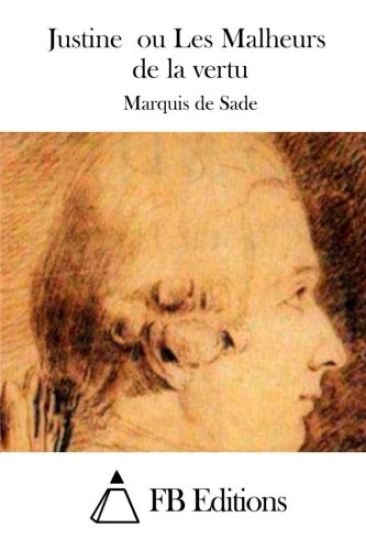
Justine ou les Malheurs de la vertu est le premier ouvrage du marquis de Sade publi de son vivant, en 1791, un an apr s avoir t rendu la libert par la R volution et l'abolition des lettres de cachet. C'est aussi la deuxi me version de cette oeuvre embl matique, sans cesse r crite, qui a accompagn Sade tout au long de sa vie. Le dessein de ce roman est nouveau sans doute; l'ascendant de la Vertu sur le Vice, la r compense du bien, la punition du mal, voil la marche ordinaire de tous les ouvrages de cette esp ce; ne devrait-on pas en tre rebattu Mais offrir partout le Vice triomphant et la Vertu victime de ses sacrifices, montrer une infortun e errante de malheurs en malheurs, jouet de la sc l ratesse; plastron de toutes les d bauches; en butte aux go ts les plus barbares et les plus monstrueux; (...) n'ayant pour opposer tant de revers, tant de fl aux, pour repousser tant de corruption, qu'une me sensible, un esprit naturel et beaucoup de courage; hasarder en un mot les peintures les plus hardies, les situations les plus extraordinaires, les maximes les plus effrayantes, les coups de pinceau les plus nergiques, dans la seule vue d'obtenir de tout cela l'une des plus sublimes le ons de morale que l'homme ait encore re ue; c' tait, on en conviendra, parvenir au but par une route peu fray e jusqu' pr sent.
Justine C'est une histoire vraie; c'est l'histoire de ma vie parsem e de douleurs et de souffrances diverses. En effet, lorsque j' tais petite, j'ai assist plusieurs disputes entre mon grand-p re et ma grand-m re, et aussi entre mon p re et ma m re. Quand ce fut mon tour de vivre en couple, j'ai pris toutes les dispositions pour chapper toutes les violences qu'avaient connues ma grand-m re et ma m re. Mais, c' tait peine perdue car j'allais connaitre le m me sort que ces derni res. Je me suis mise alors faire des reproches Dieu. Je lui ai dit: si c'est l le sort que tu as r serv aux femmes, je doute fort que tu sois le Dieu d'amour dont parle la Bible. C'est l qu'Il me r pondit du fond de mon coeur en disant que le plan dans lequel nous vivions n' tait pas le Sien. Je me suis donc engag e contre vents mar es conna tre ce plan que je vous invite d couvrir.
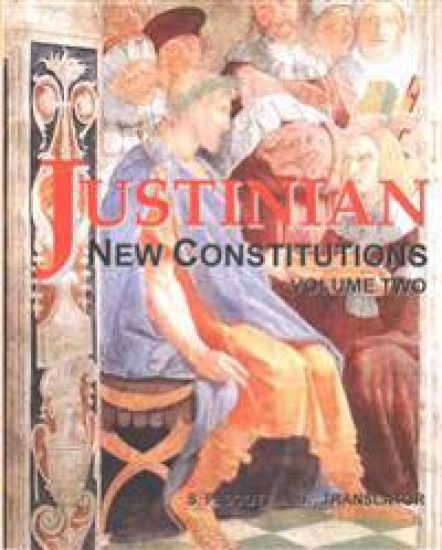
THIS IS NOT A HASTILY ASSEMBLED SCAN OR "FACSIMILE EDITION" OF THIS WORK. EVERY LETTER AND WORD OF THE ORIGINAL HAS BEEN RESET AND CAREFULLY PROOFED FOR ACCURACY.The landmark re-codification of ancient Roman law which Christianized Europe Synopsis: By Late Antiquity Roman Law was seriously deteriorated and in a state of confusion. Centuries of non-systematic legal enactments by various Emperors, poorly kept records and numerous conflicting opinions presented by legal experts, especially during the even more tumultuous third to fourth centuries A. D., created a tangled web of laws and profound legal and political abuse. Justinian, notorious for his moral failings and his marriage to the prostitute Theodora (considered by many to be one of the most debauched empresses in the history of the Roman Empire), commissioned teams of legal scholars to completely examine and re-codify all the ancient laws of the Empire (over a thousand years of enactments and thousands of pages). They managed to eliminate the contradiction and confusion inherent in the law and to rewrite a more systematic code of laws which accounted for, but replaced all that had gone before. The Commissions accomplished this task in what can best be described as record time, producing four profound works of law - The Code, The Digest, The Institutes and The New Constitutions - collectively known as the Corpus Juris Civilis. By establishing these new legal texts as the final authority, and essentially eradicating and replacing all that had gone before, Justinian managed to restabilize the ancient western world, saving the Roman Empire in the process. These sets of laws helped prepare the way for the Christianizing of the ancient world and the establishment of the Holy Roman Empire. Despite being law books, these volumes make excellent reading and shed light on how social issues of the day, many of which still exist, were addressed. Enactments cover issues as diverse as medical care of the poor and elderly, protections for the rights of women and children, the roles of church and state, welfare, the state's responsibility in times of war and natural disaster, the feeding of the poor, public schooling and many other issues. Samuel P. Scott's vigorous and highly readable translation of Justinian's New Constitutions, the final part of the most comprehensive re-codification of law in the history of the world, is now available for the first time in an affordable two volume paperback edition. These would make wonderful books for anyone interested in History, Law, Social Work, Public Service, Human Rights, the Roman Empire, Early Christianity, the Dark Ages, Philosophy, Theology, or the Early Church.... Volume One contains the first Six Collections of Justinian's enactments, as well as a lengthy excerpt from S. P. Scott's original prologue to his monumental 17 volume work of 1932, The Civil Law.
THIS IS NOT A HASTILY ASSEMBLED SCAN OR "FACSIMILE EDITION" OF THIS WORK. EVERY LETTER AND WORD OF THE ORIGINAL HAS BEEN RESET AND CAREFULLY PROOFED FOR ACCURACY.The landmark re-codification of ancient Roman law which Christianized Europe Synopsis: By Late Antiquity Roman Law was seriously deteriorated and in a state of confusion. Centuries of non-systematic legal enactments by various Emperors, poorly kept records and numerous conflicting opinions presented by legal experts, especially during the even more tumultuous third to fourth centuries A. D., created a tangled web of laws and profound legal and political abuse. Justinian, notorious for his moral failings and his marriage to the prostitute Theodora (considered by many to be one of the most debauched empresses in the history of the Roman Empire), commissioned teams of legal scholars to completely examine and re-codify all the ancient laws of the Empire (over a thousand years of enactments and thousands of pages). They managed to eliminate the contradiction and confusion inherent in the law and to rewrite a more systematic code of laws which accounted for, but replaced all that had gone before. The Commissions accomplished this task in what can best be described as record time, producing four profound works of law - The Code, The Digest, The Institutes and The New Constitutions - collectively known as the Corpus Juris Civilis. By establishing these new legal texts as the final authority, and essentially eradicating and replacing all that had gone before, Justinian managed to restabilize the ancient western world, saving the Roman Empire in the process. These sets of laws helped prepare the way for the Christianizing of the ancient world and the establishment of the Holy Roman Empire. Despite being law books, these volumes make excellent reading and shed light on how social issues of the day, many of which still exist, were addressed. Enactments cover issues as diverse as medical care of the poor and elderly, protections for the rights of women and children, the roles of church and state, welfare, the state's responsibility in times of war and natural disaster, the feeding of the poor, public schooling and many other issues. Samuel P. Scott's vigorous and highly readable translation of Justinian's New Constitutions, the final part of the most comprehensive re-codification of law in the history of the world, is now available for the first time in an affordable two volume paperback edition. These would make wonderful books for anyone interested in History, Law, Social Work, Public Service, Human Rights, the Roman Empire, Early Christianity, the Dark Ages, Philosophy, Theology, or the Early Church.... Volume Two contains the final Three Collections of Justinian's enactments, and includes two appendices and an abbreviated index derived from S. P. Scott's monumental 17 volume work of 1932, The Civil Law.
*Includes pictures *Explains Justinian's foreign policy, domestic policy, the building of the Hagia Sophia, and more *Includes a bibliography for further reading The zenith of the Byzantine Empire was reached in the middle of the 6th century during the reign of the Emperor Justinian (527-565). The internal stabilization of the Byzantine state was completed, and Justinian then embarked on a wide range of external re-conquests. Justinian's prime directive was to restore the Roman Empire to its former glory in the west. He sought to strengthen the immutable law that Byzantium, the successor of Rome, maintained not only in the east but also the west, and by doing so, he hoped to revive the unity of the Roman world. In addition to attempting to conquer Italy and restore all the old dominions of the Roman Empire, Justinian also had to quell inner unrest by fighting barbarian usurpers, securing the borders, re-establishing religious orthodoxy, reorganizing the law, and reviving prosperity. Accounts describe him as a stocky and ugly man, but he was deeply conscious of the prerogatives and duties of his position as a person exalted and close to God, and he was self-controlled in his personal life. From an administrative standpoint, he was an adroit diplomat and organizer who was gifted when it came to choosing collaborators and streamlining the administration of his empire. He was also married to Theodora, a woman of extraordinary beauty, courage, and intellect. Justinian was profoundly religious, which ensured that he spent considerable time attempting to reestablish orthodoxy and guide the church into the future. Justinian even ensured religious uniformity as this was the same as domestic law. There was no real separation between the legal order and canon law. At the same time, however, Justinian was a short-sighted emperor who was unable to come to grips with the fact that it was impossible to solve religious conflicts through wavering political compromises. He was also unable to stem the decline in the Byzantine economy and unwilling to form long-term plans for the future that would secure the northern and eastern borders of the empire against the Persians and Slavs. Naturally, since he remained so focused on the present, Justinian also engaged in grandiose propaganda schemes to promote his own glory, such as easy conquests, trading in luxury goods with far-away countries (including China, India, and Abyssinia), a well-planned publicity campaign carried out by his court historian Procopius and his court poet Paul the Silentiary, and a grandiose building campaign in the capital of Constantinople, which included the Hagia Sophia. Ironically, Justinian's foreign policy is what he is best remembered for, despite the fact it was ultimately unsuccessful. Though he inevitably fell short of at least some of his aims, Justinian did make the Byzantine Empire a more efficient empire in many ways. The Nika revolt in 532 that precipitated the building of Hagia Sophia and the undertaking of Justinian's building campaign was the last major populist insurrection against autocratic rule, and the Marcellinus Conspiracy in 556 was the last of the aristocratic uprisings in the Empire. Justinian succeeded in setting up a nearly bribe-proof civil service, his bureaucrats created a well-disciplined army, and he also succeeded in giving the empire a uniform code of law. That code of law, the corpus juris civilis, or "body of civil law," remains the foundation of the legal system in many modern European countries. Justinian the Great chronicles the life and legacy of the Byzantine Empire's most important leader. Along with pictures depicting important people, places, and events, you will learn about Justinian like never before, in no time at all.
Justine est le roman id al pour comprendre ce qu'est Sade. Sade proscrit, vitup r , condamn , emprisonn . Dans "Justine" il y a de la violence, du sang qui coule gros flots, des pratiques immondes de la part d' tres monstrueux qui d chainent une cruaut au-del de tout sur de malheureuses cr atures livr es leur d sirs les plus vils. Il y a de pauvres filles maltrait es dans des conditions qui d passent nos pires cauchemars par des nobles soudards, des chevaliers menteurs, des moines libidineux, des notaires sans scrupules, des brigands sanglants. Il y a des fouets, des crochets, des cha nes. Il y a tout cela et bien pire encore...