Kirjojen hintavertailu. Mukana 12 016 292 kirjaa ja 12 kauppaa.

Kirjahaku

Etsi kirjoja tekijän nimen, kirjan nimen tai ISBN:n perusteella.

1000 tulosta hakusanalla Lars Boesgaard

Corporate Decision-Making with Macroeconomic Uncertainty

Corporate Decision-Making with Macroeconomic Uncertainty

Lars Oxelheim; Clas Wihlborg

Oxford University Press Inc
2008
sidottu
Very few firms make any attempt in their annual reports to inform market participants about the impact of macroeconomic developments on performance. However, the market is not oblivious to this fact, so the firm, as well as financial analysts, need to pay attention. Corporate Decision-Making with Macroeconomic Uncertainty: Performance and Risk Management develops and presents in an easily comprehensible way the essential elements of a corporate strategy for managing uncertainty in the macroeconomic environment. This Macroeconomic Uncertainty Strategy, or MUST, enhances firm value by allowing management and external stakeholders to distinguish between changes in the intrinsic competitiveness of the firm and changes in performance caused by macroeconomic fluctuations. These fluctuations, manifested as changes in exchange rates, interest rates, and inflation rates, are beyond management's control, but they have a substantial impact on performance. The book includes methods to identify the impact of these fluctuations, to develop strategies for macroeconomic risk management, to develop reports to external stakeholders, to evaluate the relative performance of subsidiaries and business units in multinational companies, and to evaluate performance as part of the due diligence process in an M & A context. The authors' use of value-based management, various performance measurements, and the concept of real options makes the book rich and compelling.
The Republican Dilemma

The Republican Dilemma

Lars J. K. Moen

OXFORD UNIVERSITY PRESS INC
2024
sidottu
"Freedom" is a central concept in contemporary political philosophy and the history of political thought. Liberals tend to see freedom as the absence of any kind of interference, while republicans understand freedom as the absence of domination, by which they mean the absence of interference you, as a free person, have not yourself instructed. These two concepts inform a debate over the extent to which the republican freedom illuminates shortcomings in prominent liberal theories. Author Lars Moen claims that not only do we need more precise definitions of freedom, but that the republican critique of liberalism ironically promotes a liberal theory, giving us the same prescriptions for how institutions ought to promote freedom. While republicans can maintain that freedom as non-domination is an attractive ideal for a modern society, they cannot claim that it provides insight not found in liberalism and its focus on freedom from interference. Republicans can avoid this conclusion, however, by tying their freedom concept closer to civic virtue and political participation. But republican freedom then becomes an unsuitable ideal for a modern society. This is the republican dilemma. Moen shows, however, that while a distinctly republican view of freedom is too demanding to serve as a guiding ideal for a modern society, it can form the basis for a critique of liberalism. In particular, it can offer a critical perspective on a liberal acceptance of politically inactive citizens. The book thus points toward a distinctly republican position in contemporary political philosophy.
Curious Tales from Chemistry

Curious Tales from Chemistry

Lars Öhrström

Oxford University Press
2015
nidottu
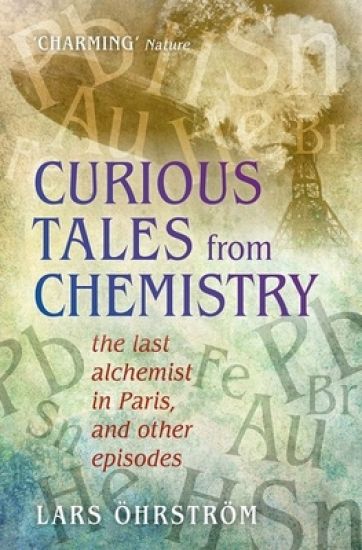
This is a book about discovery and disaster, exploitation and invention, warfare and science - and the relationship between human beings and the chemical elements that make up our planet. Lars Ohrstrom introduces us to a variety of elements from S to Pb through tales of ordinary and extraordinary people from around the globe. We meet African dictators controlling vital supplies of uranium; eighteenth-century explorers searching out sources of precious metals; industrial spies stealing the secrets of steel-making. We find out why the Hindenburg airship was tragically filled with hydrogen, not helium; why nail-varnish remover played a key part in World War I; and the real story behind the legend of tin buttons and the downfall of Napoleon. In each chapter, we find out about the distinctive properties of each element and the concepts and principles that have enabled scientists to put it to practical use. These are the fascinating (and sometimes terrifying) stories of chemistry in action.
Hans Kelsen's Pure Theory of Law

Hans Kelsen's Pure Theory of Law

Lars Vinx

Oxford University Press
2007
sidottu
Hans Kelsen is commonly considered to be among the founding fathers of modern legal philosophy. Despite Kelsen's prominence as a legal theorist, his political theory has so far been mostly overlooked. This book argues that Kelsen's legal theory, the Pure Theory of Law, needs to be read in the context of Kelsen's political theory. It offers the first comprehensive interpretation of the Pure Theory that makes systematic use of Kelsen's conception of the rule of law, of his theory of democracy, his defense of constitutional review, and his views on international law. Once it is read in the context of Kelsen's political works, Kelsen's analysis of legal normativity provides us with a notion of political legitimacy that is distinct from any comprehensive and contestable theory of justice. It shows how members of pluralist societies can reasonably acknowledge the binding nature of law, even where its content does not fully accord with their own substantive views of the requirements of justice, provided it is created in accordance with an ideal of fair arbitration amongst social groups. This result leads to a fundamental re-evaluation of the Pure Theory of Law. The theory is best understood as an attempt to find a middle ground between natural law and legal positivism. Later positivist legal theorists inspired by Kelsen's work failed to appreciate the political-theoretical context of the Pure Theory and turned to a narrow instrumentalism about the functions of law. The perspective on Kelsen offered in this book aims to reconnect positivist legal thought with normative political theory.
Tolerance

Tolerance

Lars Tonder

Oxford University Press Inc
2013
sidottu
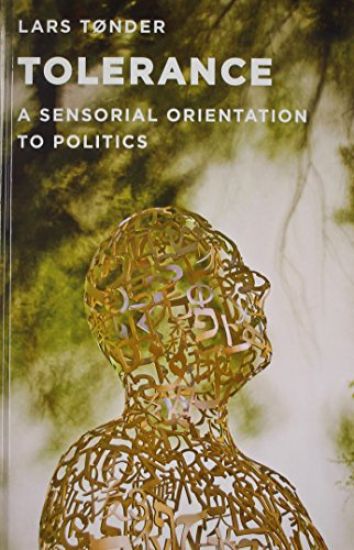
The main task of Tolerance is to reorient discussions in democratic theory so as better to theorize how tolerance can operate as an active force in the context of deep pluralism. The objective is to develop a theory of active tolerance attentive to the many different ways in which societies can become tolerant, and to discuss what might get lost, conceptually as well as politically, if we don't pay attention to how active tolerance subsists within other practices of tolerance. Tolerance exceeds existing accounts, I argue, not because it cannot be domesticated for the purposes of either restraint or benevolence, but because this domestication does not preclude the possibility of another, more active tolerance. Tolerance develops this argument by mobilizing what I call a "sensorial orientation to politics." While a sensorial orientation does not refute the role of reason in democratic politics, it differs from its intellectualist counterpart by arguing that practices of reason-giving include ways of sensing the world, insisting that reason is always-already sensorial. A sensorial orientation, in other words, focuses on the embodied conditions of reasoning, which it takes to be neither completely synergistic nor immediately present, but reliant on representations, images, and memories, which situate sensory input within historically defined regimes of discourse and sensation, and which assume that sentient beings experience the world through both thought and action, mind and body. Theorists discussed in the book include Seneca, Spinoza, Nietzsche, Marcuse, and Merleau-Ponty, together with Descartes, Locke, Kant, Mill, Rawls, Forst, Scanlon, Taylor, Brown, and Connolly. Tolerance draws on a critical consideration of these thinkers in order to shed new light on the role of tolerance in both contemporary democratic theory and contemporary public discourse. The aim is to show how tolerance once again can become a practice of empowerment and pluralization.
Tolerance

Tolerance

Lars Tonder

Oxford University Press Inc
2013
nidottu
The main task of Tolerance is to reorient discussions in democratic theory so as better to theorize how tolerance can operate as an active force in the context of deep pluralism. The objective is to develop a theory of active tolerance attentive to the many different ways in which societies can become tolerant, and to discuss what might get lost, conceptually as well as politically, if we don't pay attention to how active tolerance subsists within other practices of tolerance. Tolerance exceeds existing accounts, I argue, not because it cannot be domesticated for the purposes of either restraint or benevolence, but because this domestication does not preclude the possibility of another, more active tolerance. Tolerance develops this argument by mobilizing what I call a "sensorial orientation to politics." While a sensorial orientation does not refute the role of reason in democratic politics, it differs from its intellectualist counterpart by arguing that practices of reason-giving include ways of sensing the world, insisting that reason is always-already sensorial. A sensorial orientation, in other words, focuses on the embodied conditions of reasoning, which it takes to be neither completely synergistic nor immediately present, but reliant on representations, images, and memories, which situate sensory input within historically defined regimes of discourse and sensation, and which assume that sentient beings experience the world through both thought and action, mind and body. Theorists discussed in the book include Seneca, Spinoza, Nietzsche, Marcuse, and Merleau-Ponty, together with Descartes, Locke, Kant, Mill, Rawls, Forst, Scanlon, Taylor, Brown, and Connolly. Tolerance draws on a critical consideration of these thinkers in order to shed new light on the role of tolerance in both contemporary democratic theory and contemporary public discourse. The aim is to show how tolerance once again can become a practice of empowerment and pluralization.
Entangled Narratives

Entangled Narratives

Lars-Christer Hyden

Oxford University Press Inc
2017
sidottu
As people are living longer on average than ever before, the number of those with dementia will increase. Because many will live a considerable time at home with their diagnosis, we need to know more about the ways people can adapt to and learn to live with dementia in their everyday lives. Lars-Christer Hydén argues in this book that to do so will involve re-imagining what dementia really is and what it can mean to the afflicted and their loved ones. One of the most important everyday opportunities for sharing experiences is the simple act of storytelling. But when someone close to you gradually loses the ability to tell stories and cherish the shared history you have together, this is seen as a threat to the relationship, to the feeling of belonging together, and to the identity of the person diagnosed. Therefore, learning about how people with dementia can participate in storytelling along with their families and friends helps to sustain those relationships and identities. In Entangled Narratives, Hydén not only emphasizes the possibilities that are inherent in collaborative storytelling, but instructs professionals and otherwise healthy relatives to learn how to effectively listen and, ultimately, re-imagine their patients and loved ones as collaborative meaning-makers in their lives.
An Archaeological History of Indian Buddhism

An Archaeological History of Indian Buddhism

Lars Fogelin

Oxford University Press Inc
2015
sidottu
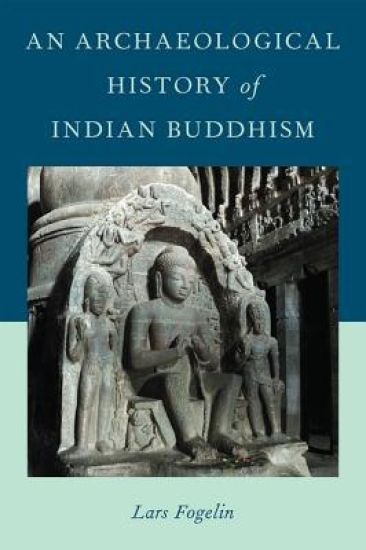
An Archaeological History of Indian Buddhism is a comprehensive survey of Indian Buddhism from its origins in the 6th century BCE, through its ascendance in the 1st millennium CE, and its eventual decline in mainland South Asia by the mid-2nd millennium CE. Weaving together studies of archaeological remains, architecture, iconography, inscriptions, and Buddhist historical sources, this book uncovers the quotidian concerns and practices of Buddhist monks and nuns (the sangha), and their lay adherents--concerns and practices often obscured in studies of Buddhism premised largely, if not exclusively, on Buddhist texts. At the heart of Indian Buddhism lies a persistent social contradiction between the desire for individual asceticism versus the need to maintain a coherent community of Buddhists. Before the early 1st millennium CE, the sangha relied heavily on the patronage of kings, guilds, and ordinary Buddhists to support themselves. During this period, the sangha emphasized the communal elements of Buddhism as they sought to establish themselves as the leaders of a coherent religious order. By the mid-1st millennium CE, Buddhist monasteries had become powerful political and economic institutions with extensive landholdings and wealth. This new economic self-sufficiency allowed the sangha to limit their day-to-day interaction with the laity and begin to more fully satisfy their ascetic desires for the first time. This withdrawal from regular interaction with the laity led to the collapse of Buddhism in India in the early-to-mid 2nd millennium CE. In contrast to the ever-changing religious practices of the Buddhist sangha, the Buddhist laity were more conservative--maintaining their religious practices for almost two millennia, even as they nominally shifted their allegiances to rival religious orders. This book also serves as an exemplar for the archaeological study of long-term religious change through the perspectives of practice theory, materiality, and semiotics.
An Archaeological History of Indian Buddhism

An Archaeological History of Indian Buddhism

Lars Fogelin

Oxford University Press Inc
2015
nidottu
An Archaeological History of Indian Buddhism is a comprehensive survey of Indian Buddhism from its origins in the 6th century BCE, through its ascendance in the 1st millennium CE, and its eventual decline in mainland South Asia by the mid-2nd millennium CE. Weaving together studies of archaeological remains, architecture, iconography, inscriptions, and Buddhist historical sources, this book uncovers the quotidian concerns and practices of Buddhist monks and nuns (the sangha), and their lay adherents--concerns and practices often obscured in studies of Buddhism premised largely, if not exclusively, on Buddhist texts. At the heart of Indian Buddhism lies a persistent social contradiction between the desire for individual asceticism versus the need to maintain a coherent community of Buddhists. Before the early 1st millennium CE, the sangha relied heavily on the patronage of kings, guilds, and ordinary Buddhists to support themselves. During this period, the sangha emphasized the communal elements of Buddhism as they sought to establish themselves as the leaders of a coherent religious order. By the mid-1st millennium CE, Buddhist monasteries had become powerful political and economic institutions with extensive landholdings and wealth. This new economic self-sufficiency allowed the sangha to limit their day-to-day interaction with the laity and begin to more fully satisfy their ascetic desires for the first time. This withdrawal from regular interaction with the laity led to the collapse of Buddhism in India in the early-to-mid 2nd millennium CE. In contrast to the ever-changing religious practices of the Buddhist sangha, the Buddhist laity were more conservative--maintaining their religious practices for almost two millennia, even as they nominally shifted their allegiances to rival religious orders. This book also serves as an exemplar for the archaeological study of long-term religious change through the perspectives of practice theory, materiality, and semiotics.
Shakespearean Pragmatism

Shakespearean Pragmatism

Lars Engle

University of Chicago Press
1993
sidottu
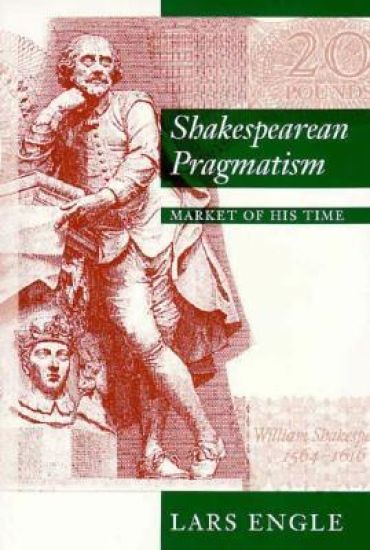
Just as Shakespeare's theatre was an economic gamble, subject to the workings of a market, so the plays themselves submit actions, persons, and motives to an audience's judgement. Such a theatrical economy, Lars Engle suggests, provides a model for the way in which truth is determined and assessed in the world at large - a model much like that offered by contemporary pragmatism. To Engle, the problems of worth, price, and value that appear so frequently in Shakespeare's works reveal a playwright dramatizing the negotiable nature of perception and belief - in short, the nature of his audience's purchase on reality. This innovative argument views Shakespeare in the context of contemporary pragmatism and to shows that Shakespeare in many ways anticipated pragmatism as it has been developed in the thought of Richard Rorty, Barbara Herrnstein Smith, and others. With detailed reference to the sonnets and plays, Engle explores Shakespeare's tendency to treat knowledge, truth, and certainty as relatively stable goods within a theatrical economy of social interaction. He shows the playwright recasting kingship, aristocracy, and poetic immortality in pragmatic terms. As attentive to history as it is to contemporary theory, this book mediates between current and traditional accounts of Shakespeare.
Understanding Digital Television

Understanding Digital Television

Lars-Ingemar Lundstrom

Focal Press
2006
nidottu
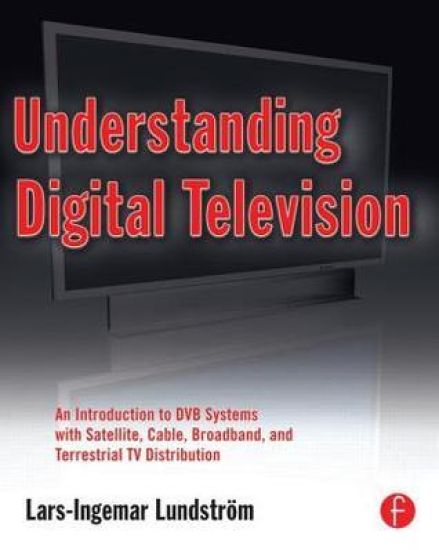
With the milestones of Digital TV and HDTV, there are lots of questions to be asked about television of today... Understanding Digital Television explains complex technical systems and solutions in an easy to comprehend manner along with visual 3D graphics. It helps non-technical individuals such as managers, executives, general media professionals, as well as TV and home cinema enthusiasts gain a practical understanding of the equipment, technical aspects of digital television, and various ways of distributing. Most examples are from a European perspective, but also include comparisons with North American systems. This book answers the confusing questions about new devices and digital formats, what to do when the analog TV transmitters are switched off, watching TV using your broadband connection, and much more.
Digital Signage Broadcasting

Digital Signage Broadcasting

Lars-Ingemar Lundstrom

Focal Press
2008
nidottu
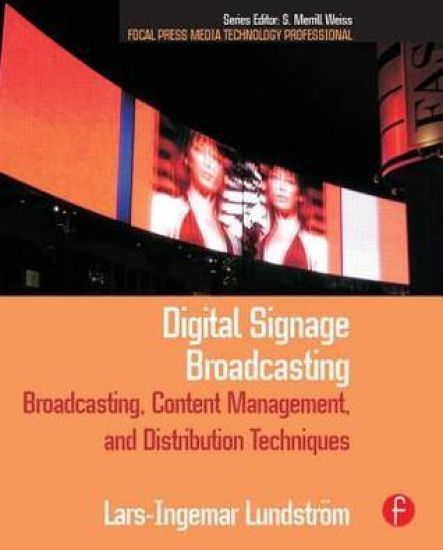
Digital Signage Broadcasting is a perfect introduction to this new world of opportunities for media professionals in all areas. Whether you are in engineering, IT, advertising, or management, you will gain knowledge on the operations of digital signage systems, content gathering, customer billing, and much more on this new exciting media. This book includes coverage of basic elements, examples of advanced digital signage applications, as well as traffic capacity calculations that may be guidance when choosing means of distribution as physical media, broadband or satellite. Digital Signage Broadcasting helps you discover the fascinating possibilities of this new convergence medium with hundreds of author-created color 3D illustrated graphics and real-life photographs showing the capability and future of digital signage.
Things That Keep Us Busy

Things That Keep Us Busy

Lars-Erik Janlert; Erik Stolterman

MIT Press
2017
sidottu
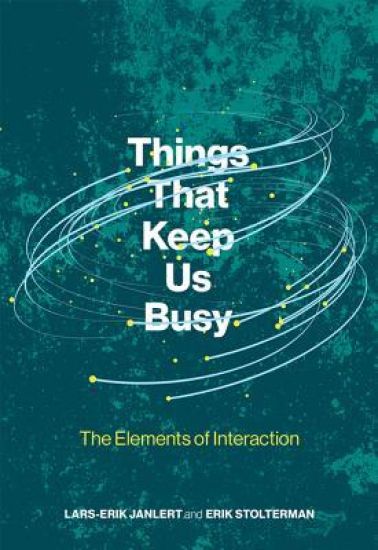
An investigation of interactivity, interfaces and their design, and the webs of complex interactions that result.We are surrounded by interactive devices, artifacts, and systems. The general assumption is that interactivity is good-that it is a positive feature associated with being modern, efficient, fast, flexible, and in control. Yet there is no very precise idea of what interaction is and what interactivity means. In this book, Lars-Erik Janlert and Erik Stolterman investigate the elements of interaction and how they can be defined and measured. They focus on interaction with digital artifacts and systems but draw inspiration from the broader, everyday sense of the word.Viewing the topic from a design perspective, Janlert and Stolterman take as their starting point the interface, which is designed to implement the interaction. They explore how the interface has changed over time, from a surface with knobs and dials to clickable symbols to gestures to the absence of anything visible. Janlert and Stolterman examine properties and qualities of designed artifacts and systems, primarily those that are open for manipulation by designers, considering such topics as complexity, clutter, control, and the emergence of an expressive-impressive style of interaction. They argue that only when we understand the basic concepts and terms of interactivity and interaction will we be able to discuss seriously its possible futures.
Recursive Macroeconomic Theory

Recursive Macroeconomic Theory

Lars Ljungqvist; Thomas J. Sargent

MIT Press
2018
sidottu
The substantially revised fourth edition of a widely used text, offering both an introduction to recursive methods and advanced material, mixing tools and sample applications.Recursive methods provide powerful ways to pose and solve problems in dynamic macroeconomics. Recursive Macroeconomic Theory offers both an introduction to recursive methods and more advanced material. Only practice in solving diverse problems fully conveys the advantages of the recursive approach, so the book provides many applications. This fourth edition features two new chapters and substantial revisions to other chapters that demonstrate the power of recursive methods.One new chapter applies the recursive approach to Ramsey taxation and sharply characterizes the time inconsistency of optimal policies. These insights are used in other chapters to simplify recursive formulations of Ramsey plans and credible government policies. The second new chapter explores the mechanics of matching models and identifies a common channel through which productivity shocks are magnified across a variety of matching models. Other chapters have been extended and refined. For example, there is new material on heterogeneous beliefs in both complete and incomplete markets models; and there is a deeper account of forces that shape aggregate labor supply elasticities in lifecycle models.The book is suitable for first- and second-year graduate courses in macroeconomics. Most chapters conclude with exercises; many exercises and examples use Matlab or Python computer programming languages.
Money Mavericks

Money Mavericks

Lars Kroijer

Pearson
2012
pokkari
A new edition of this revealing and incisive account of the incredible inside workings of hedge funds. Shedding light on the incredible inside workings of hedge funds, this book charts the interminable rise of Holte Capital from 2002 to 2008, explaining what it was like to run a hedge fund in a period where the industry went from relative obscurity to something everyone wanted to discuss.
Endangering Development

Endangering Development

Lars Engberg-Pedersen

Praeger Publishers Inc
2003
sidottu
The politics of international intervention into rural areas is the subject of this insightful study. Using concrete cases drawn from fieldwork in rural Burkina Faso, Engberg-Pedersen shows how nongovernmental organizations' activities with women's groups, natural resource management projects, decentralization policies, and rural democratization advocates must enter an arena of local struggle for resources and status. He maintains that activists often seriously contradict rural people's practices and understandings of particular issues and how they should be organized. Thus, while societal conflicts and institutional contradictions are inescapable features of rural development, development assistance agents and scholars of democratization and political change in Africa largely ignore them.
Forays into Swedish Poetry

Forays into Swedish Poetry

Lars Gustafsson

University of Texas Press
1978
nidottu
When poet/critic Lars Gustafsson was the editor of Bonniers Litterära Magasin, he was bombarded with the question, “What makes a good poem?” Forays into Swedish Poetry is his answer.The fifteen poems in this volume range across the history of Swedish poetry from the 1640s, at the beginning of the Period of Great Power, to the late twentieth century. Poets as diverse as Skogekär Bergbo, Erik Johan Stagnelius, August Strindberg, and Vilhelm Ekelund are discussed from historical, psychological, and sociopolitical viewpoints. However, Gustafsson includes only those poems he considers excellent.Each essay begins with a presentation of the poem both in Swedish and in English translation. Gustafsson’s analyses are built upon his subjective experiences with poems and poets and upon a more objective structural approach that investigates the actual machinery of the poems. Thus, Gustafsson enlightens us with his always imaginative, sometimes daring analyses, and we learn a great deal about the critic himself in the process. One of his main concerns is what he calls, in his discussion of Edith Södergran, the very mysteriousness of human existence. Time and again, Gustafsson emphasizes the enigmatic, arcane aspects of life in his analyses. In contrast, his vocabulary and approach also bespeak a constant interest in science and technology.In his introduction, Robert T. Rovinsky, the volume’s translator, presents examples of Gustafsson’s various thematic interests as voiced in his poems, several of which are translated here for the first time. While “The Machines” explores his theory of people as automatons and “Conversation between Philosophers” his linguistic pessimism, Gustafsson’s work as a whole shows his enchantment with its major theme: the intrinsic mystery of life.