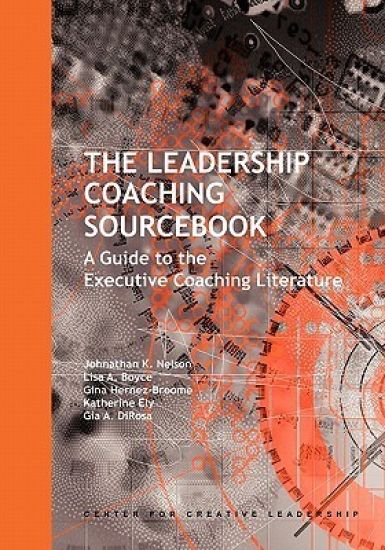
Executive coaching is an increasingly popular means for developing organizational leaders. This sourcebook provides a resource for both practioners and researchers interested in gaining or updating their understanding of the current state of the executive coaching field and to enable them to do so in a systematic manner. By focusing on key research and practice in the executive coaching literature, this sourcebook provides not only a mechanism for consolidating our thinking about leadership coaching issues but also a succinct reference for building future research efforts.
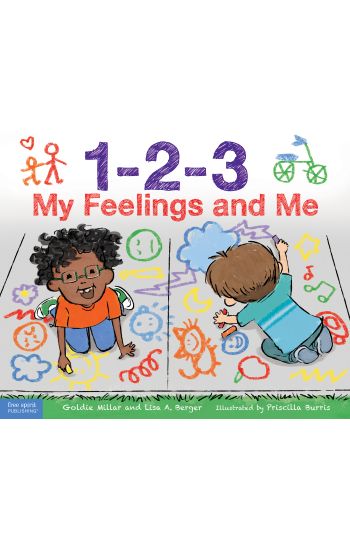
Award-winning counting book invites young children to learn about coping with emotions.Young children often need help grasping the complexities of their feelings, which can sometimes be overwhelming. When children learn from an early age to handle their emotions in healthy ways, they are more likely to grow into adults who feel capable of facing life’s challenges.This friendly, positive picture book helps children understand their feelings better, giving them coping strategies for communicating and managing emotions more effectively. Using an inviting counting format, 1-2-3 My Feelings and Me invites children and adults to count to ten as they share and explore feelings together. “We feel our feelings in two important ways, in our bodies and in our minds. Our bodies may feel hot, shaky, or calm. Our minds and our thoughts might be telling us we are scared, or excited, or unhappy.” Along with presenting tools and strategies, the book reinforces emotional language and the ideas that while some feelings are more comfortable than others, all emotions are natural and important.
International best-Selling Author Dianne McPherson has always been intrigued with the mysteries of the human makeup and what it takes to get to the deep core of who we really are as women that are seeking a life of fullness in every area of our lives. Being a woman who has walked totally by faith, blind to the unlimited possibilities of who she is and all that has inspired her to become, it was through prayer and self-reflection that she wanted to embark on an area of exposing who women are beyond the surface stuff The readers can expect transformation and to empower others in this anthology, of amazing stories from contributing authors. Unmasking the Possibilities is a walk through the lives of ordinary women with extraordinary testimonies of how they were able to move forward to their Godly purpose by allowing themselves to be unmasked, one layer at a time. These women have been put through what she calls, "Life's Shredder" moving from weakness to strength and vulnerability to boldness. Their stories speak volumes and gives examples of how if you find your place under the shadow of the Almighty, that you will be able to reach your Promised Position in Him.
Covering the sweep of Russian history from empire to Soviet Union to post-Soviet state, this new edition of Russia's Long Twentieth Century is an accessible textbook that encourages students to start a lively conversation with Russia’s storied past.Chronologically organized, the book moves beyond the traditional Cold War framework, situating Russian history within world history. It covers topics including state power, political ideology, economic change, and foreign policy, highlighting the perspectives of “ordinary” people and exploring the impacts of race, ethnicity, nationality, gender, and generation on historical experience. Taking an inquiry-based approach, the authors show how scholars diverge sharply in their understanding of key events, historical processes, and personalities. Each chapter contains a selection of primary sources and discussion questions, engaging with the voices and experiences of diverse Soviet citizens and familiarizing students with the techniques of source criticism. The second edition features expanded coverage of the non-Russian regions of the Russian empire and the Soviet Union, adding new sections on Ukraine in particular. To help students navigate the book, the new edition also includes a timeline of key events and people, and a glossary.With a variety of learning tools, maps, and images, this volume is an essential introduction to twentieth-century Russian history.
Covering the sweep of Russian history from empire to Soviet Union to post-Soviet state, this new edition of Russia's Long Twentieth Century is an accessible textbook that encourages students to start a lively conversation with Russia’s storied past.Chronologically organized, the book moves beyond the traditional Cold War framework, situating Russian history within world history. It covers topics including state power, political ideology, economic change, and foreign policy, highlighting the perspectives of “ordinary” people and exploring the impacts of race, ethnicity, nationality, gender, and generation on historical experience. Taking an inquiry-based approach, the authors show how scholars diverge sharply in their understanding of key events, historical processes, and personalities. Each chapter contains a selection of primary sources and discussion questions, engaging with the voices and experiences of diverse Soviet citizens and familiarizing students with the techniques of source criticism. The second edition features expanded coverage of the non-Russian regions of the Russian empire and the Soviet Union, adding new sections on Ukraine in particular. To help students navigate the book, the new edition also includes a timeline of key events and people, and a glossary.With a variety of learning tools, maps, and images, this volume is an essential introduction to twentieth-century Russian history.
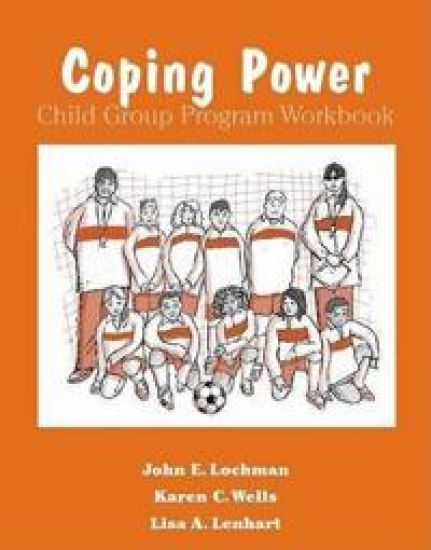
This program is an evidence-based intervention for behavioral in pre-adolescent children (grades 5 and 6). Continuing the work of the Fast Track Program, currently under contract, this intervetnion targets children who are beginning to show signs of severe aggression and social dysfunction at school. Children who begin to exhibit aggression as pre-adolescents are much more likely to have histories of substance abuse, interpersonal violence, and criminal behavior in their adolescence. By targeting these children before their behavior has become extremely dangerous or unmanageable, this program has been proven to reduce the occurence of these programs, and to improve functioning in school. Studies have shown that children who demonstrate aggressive behaviors have maladaptive coping skills and misperceptions of conflict or threat. This program teaches positive strategies for coping with perceived conflict or threat, as well as an understanding of the participant's feelings and motivations behind inappropriate behaviors. The Coping Power program involves an intervention with aggressive children and a simultaneous program for their parents, to increase positive motivations at home as well as at school. The facilitator's guide include step-by-step instructions for accurately implementing this evidence-based program. This is the corresponding workbook for chidlren which includes worksheets and monitoring forms to track progress and reinforce the skills learned in the group sessions.
Suicide risk after disabling neurological conditions is up to five times higher than for the general population; however, knowledge about the extent of the problem, associated risk factors, and effective evidence-informed suicide prevention approaches are limited and fragmented. Suicide Prevention after Neurodisability focuses on the challenges faced by eight different types of neurodisability, namely stroke, spinal cord injury, traumatic brain injury, amyotrophic lateral sclerosis, epilepsy, Huntington's disease, multiple sclerosis, and Parkinson's disease. It pulls together the current knowledge about this risk, detailing a complex interplay between neuropathological, psychiatric, psychological, and psychosocial factors that in part account for this increased presence of suicidal thoughts and behaviors. Despite the challenges, suicide is often preventable. The best available evidence-informed approaches to suicide prevention in neurodisability are outlined, including clinical approaches to screening, suicide risk assessment, psychotherapeutic interventions, and psychosocial management. The reader-friendly approach will help make suicide prevention after neurodisability everyone's business.
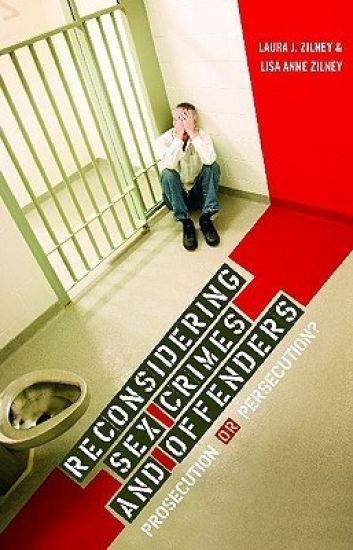
This examination of our nation's sex crime laws and the social attitudes behind them argues that many citizens are being pursued as sex offenders for nonviolent and oftentimes consensual sexual behaviors. Cutting through the hysteria and hype, Reconsidering Sex Crimes and Offenders: Prosecution or Persecution? argues that while convicted violent sex offenders certainly should be punished, many laws targeting minor sexual offenses are outdated, overly severe, and too concerned with satisfying public outrage driven by distortions, misconceptions, and sensationalistic media coverage. Reconsidering Sex Crimes and Offenders is sure to challenge readers' understanding of who a sex offender is, how they should be treated, and how best to protect the community from such offenders. The book looks at how the legal definitions of certain offenses have changed over time and then explores a series of real-life case studies. Readers will discover how some citizens have been targeted and punished for consensual acts—including homosexuality, polygamy, and pornography. Additional coverage considers a number of highly controversial laws—from residency restrictions to the death penalty—and the media's role in fueling public support for them.
The professionals quick-reference handbook for writing business and technical reports Professionals in business, government, and technical fields often need help in organizing and writing reports for associates, clients, and managers. This simple tutorial handbook offers expert tips and useful ideas for organizing ideas, structuring reports, and adding spice to technical papers. Writing Reports to Get Results offers in-depth guidance for writing: *short, informal reports, such as job progress reports and inspection reports *semiformal reports, such as laboratory and medium-length investigation and evaluation reports *formal reports, such as analytical and feasibility studies and major investigations *technical and business proposals of varying complexity The authors use a simple pyramid method to help writers organize their information into the most convenient and simplest structure for any type of documentfrom single-page proposals to full-length presentations. Rounding out this easy, instructional handbook are helpful tips on a number of other topics, such as: constructing reference lists and bibliographies; the use of numbers, abbreviations, and metric symbols; preparing illustrations for insertion into a report; and working collaboratively as a member of a writing team.
"At last - a book that is comprehensive, balanced and sensitive in its approach to the intellectual assessment of minority children. This book will quickly become a standard text in courses on assessment and diversity." --Jonathan Sandoval, University of California, Davis "Congratulations to Richard Valencia and Lisa Suzuki for producing a long overdue, comprehensive and balanced treatment of cognitive assessment for minority children. This volume should prove to be a great value for practitioners and researchers alike." --Terry Gutkin, University of Nebraska-Lincoln "I believe that Intelligence Testing and Minority Students is absolutely outstanding. Valencia and Suzuki demonstrate unusually rich research-based, theoretical, practical, and clinical foundations for treating the important and thorough set of topics covered by the book. Their underlying compassion is also evident throughout the book. I recommend this book to everyone in the field of assessment; it is "must" reading for anyone who tests minority students." --Alan S. Kaufman, Yale University School of Medicine "This book should be required reading for those who work in this field either in a research or clinical capacity, but is especially important for those who have reservations about the use of standardized tests for intellectual assessment. It is a highly valuable reference." --Robert Rueda, University of Southern California "This is a very rich resource on the history of "intelligence" testing and it's application to diverse ethnic groups. Theoretical and applied topics are well integrated in the discussions. Most important is the inclusion of the record of white supremacy ideology, the issues of cultural salience in measurement, and the issues of usage. I know of no other reference on this topic that is as comprehensive as is this one." --Asa G. Hilliard III, Georgia State University What roles do socioeconomic status, home intellectual environment, test bias, and heredity play in explaining measured intellectual performance between and within racial/ethnic groups? Intelligence Testing and Minority Students provides a fresh opportunity to reexamine the construct of intelligence, as well as its strengths and weaknesses. Viewed as a psychometric tour de force, this work provides a concrete argument for prioritizing the nation's testing needs as well as the multicultural perspectives of intelligence. Psychometricians and practitioners alike will find this book to be a useful reference in understanding assessment tests and their relationship with minority students. With the rising necessity for better and more comprehensive testing, it has become of the utmost of importance to respond fairly and validly to the diversity of this nation's citizens. The authors have acknowledged this need by including a thorough discussion of cognitive testing issues as well as an exploration of future movements. From the historical views of testing to the future direction of nondiscriminatory assessment, no professional should be without this must-have reference.About the Authors:Richard R. Valencia, Ph.D. is Professor in the Department of Educational Psychology, College of Education, at The University of Texas at Austin. Dr. Valencia's research and scholarly interests include the intellectual and academic development of racial/ethnic minority students' historical, social, and psychological status.Lisa A. Suzuki, Ph.D. is Assistant Professor in the Department of Applied Psychology, School of Education, at New York University. Dr. Suzuki previously worked as a school counselor and psychological examiner for the Department of Education in the state of Hawaii. Over the years, she has administered over 300 intelligence tests to diverse populations. Her observations sparked an interest in pursuing a greater understanding of the cognitive abilities and intelligence of diverse racial/ethnic populations.
Thinking with Theory in Qualitative Research: Second Edition demonstrates how to enact various philosophical concepts in practices of inquiry, effectively opening up the process of thought in qualitative studies.Thinking with Theory in Qualitative Research functions as a refusal of pregiven method, intensifying creativity, experimentation, and newness. Readers are invited into the threshold of theory to traverse philosophers and their concepts, reorienting conventional approaches to inquiry. Each chapter presents a thinking with process as a way of reading intensively through plugging in performative accounts of two first-generation academic women to philosophical concepts from Derrida, Spivak, Foucault, Butler, Barad, and Deleuze and Guattari. This book is a deliberate attempt to unsettle what is expected to be represented or recognized in terms of both meaning and method in traditional practices of qualitative research, which become unproductive and untenable in this different image of thought.New to this editionFully revised and rewritten Chapter 1 that introduces the technique of plugging in as contingent, strategic movements of thought. Also new to Chapter 1 is a shift in language away from traditional practices in qualitative research (data and analysis) to performative accounts and becoming-questionsFully revised "Thinking with intra-action" chapter, which focuses on Karen Barad’s ontoepistemological framework of agential realism, and the concepts of posthumanist performativity and entangled agenciesFully revised and rewritten Chapter 8 that presents plugging in and thinking with as ontologicalFurther development of and new material on the "plugging in" techniqueSchematic cues updated and extended for all of the InterludesIn the ten years since the first edition was published, Thinking with Theory in Qualitative Research has become a vanguard text in the field of postfoundational inquiry for its accessible but thorough introductions to philosophically informed inquiry. This book is for experienced and novice researchers, and students in introductory, general, and advanced qualitative inquiry courses, who may also be first-time readers of philosophy. This text will function as an entry into techniques of thinking with a new theoretical vocabulary.
Thinking with Theory in Qualitative Research: Second Edition demonstrates how to enact various philosophical concepts in practices of inquiry, effectively opening up the process of thought in qualitative studies.Thinking with Theory in Qualitative Research functions as a refusal of pregiven method, intensifying creativity, experimentation, and newness. Readers are invited into the threshold of theory to traverse philosophers and their concepts, reorienting conventional approaches to inquiry. Each chapter presents a thinking with process as a way of reading intensively through plugging in performative accounts of two first-generation academic women to philosophical concepts from Derrida, Spivak, Foucault, Butler, Barad, and Deleuze and Guattari. This book is a deliberate attempt to unsettle what is expected to be represented or recognized in terms of both meaning and method in traditional practices of qualitative research, which become unproductive and untenable in this different image of thought.New to this editionFully revised and rewritten Chapter 1 that introduces the technique of plugging in as contingent, strategic movements of thought. Also new to Chapter 1 is a shift in language away from traditional practices in qualitative research (data and analysis) to performative accounts and becoming-questionsFully revised "Thinking with intra-action" chapter, which focuses on Karen Barad’s ontoepistemological framework of agential realism, and the concepts of posthumanist performativity and entangled agenciesFully revised and rewritten Chapter 8 that presents plugging in and thinking with as ontologicalFurther development of and new material on the "plugging in" techniqueSchematic cues updated and extended for all of the InterludesIn the ten years since the first edition was published, Thinking with Theory in Qualitative Research has become a vanguard text in the field of postfoundational inquiry for its accessible but thorough introductions to philosophically informed inquiry. This book is for experienced and novice researchers, and students in introductory, general, and advanced qualitative inquiry courses, who may also be first-time readers of philosophy. This text will function as an entry into techniques of thinking with a new theoretical vocabulary.
The ability to access and economically develop vast amounts of America’s unconventional natural gas resources, especially large shale gas formations, has altered our national view on energy and has subsequently changed the discourse at the federal, state, and local levels. Since 2008, when the economic viability of shale gas resources first became widely recognized, policymakers and industry leaders have worked to better understand the nature of this resource; the risks and opportunities associated with its production, transport, and use; and the potential strategic implications of the United States’ new energy reality. The paradox of the U.S. unconventional gas story is that the technologies and industry practices that made it possible have been decades in the making; the public policy and commercial landscape is vastly different from just a few years ago; and the story of this remarkable resource development is still in its infancy. In an attempt to capture the current state of play with respect to resource development, operational practices, risk identification and mitigation, impacts assessment and identify strategies that allow this valuable resource to be prudently developed, the CSIS Energy and National Security Program undertook this Unconventional Gas Initiative. Over the course of the past year, the authors were able—in concert with industry and nongovernmental organization (NGO) supporters—to work with a wide array of regulators, policymakers, environmental, industry and financial groups, academics and community stakeholders to capture the latest understanding of the unconventional gas development picture and develop themes and findings in the hope of facilitating an informed discussion on a path forward.
Communication skills are a competitive advantage for today’s finance professionals. Savvy professionals know that employers want and need employees with excellent relationship building, writing, and presentation skills. The Essential Guide to Business Communication for Finance Professionals asks its readers to adopt the “communicate or die” philosophy in their approach to their careers. Two business professors with years of experience in finance and communication offer advice and tips for approaching some of the most common business communication situations faced by today’s finance professionals. Readers will walk away from this book with tools to manage their professional image and reputation.
Everyday Help for the Everyday Christian is a highly praised Bible study for the serious Christian which deals with issues a Christian will face during his/her walk with God. Designed to be studied and completed over a 13 week period for individual or classroom study and can be used during Sunday school class, a small or large group. Questions are supplied at the back of the book to enhance the learning process. Answers to the questions are also supplied at the back of the book.This study was one of several the the national prison ministry. 'The Prisoner's Friend Ministries' used to send into prisons enabling those incarcerated ones and opportunity to learn the Bible with a chance to earn a certificate of completion for the ministry group. Lessons included are: A Difficulty or a Problem?; Born of the Spirit, Adopted into the Body; What We Rally Are; Time-Master or Slave; The Only Complete Help and more.
When done right, small-group instruction is a powerful tool for facilitating student understanding in K-5 mathematics. Throughout the book, best practices for small-group math instruction are addressed in detail, from planning tasks that encourage deep understanding to asking effective questions to engaging learners in meaningful conversations. Readers will learn how teaching mathematics in small groups allows you to differentiate instruction for both remediation and enrichment. The included small-group instruction videos demonstrate the suggested strategies in a real-classroom setting, giving readers the opportunity to see best practice in action. Develop math-specific instruction strategies for teaching small groups in elementary school: Explore the benefits of small-group math activities and how these activities are unique compared to large-group instruction. Discover the teacher's and students' roles in small-group instruction and how teachers can help students develop the skills to fulfill their role. Learn how to apply the general tasks, questions, and evidence (TQE) process to small-group instruction in order to enhance student learning and improve your knowledge of teaching mathematics. View examples of small-group instruction, which provide both math intervention and math enrichment activities for different students. Contents: Acknowledgments Table of Contents About the Authors Introduction Chapter 1: Best Practices in Small-Group Instruction Chapter 2: The TQE Process in Small-Group Instruction Chapter 3: Discourse in Small-Group Instruction Epilogue: How to Tie It All Together References Index