
Kirjahaku
Etsi kirjoja tekijän nimen, kirjan nimen tai ISBN:n perusteella.
1000 tulosta hakusanalla Marie Corelli
The Sorrows of Satan; Or, the Strange Experience of One Geoffrey Tempest, Millionaire
Marie Corelli
Valancourt Books
2007
pokkari
The Sorrows of Satan is an 1895 faustian novel by Marie Corelli. It is widely regarded as one of the world's first bestsellers, partly due to an upheaval in the system British libraries used to purchase their books and partly due to its popular appeal. Roundly condemned by critics for Corelli's moralistic and prosaic style it nonetheless had strong supporters in Oscar Wilde and various members of royalty. Widely ignored in literary circles, it is increasingly regarded as an influential fin de si cle text. The book is occasionally subtitled "Or the Strange Experience of one Geoffrey Tempest, Millionaire"


Christianity almost always plays a thematic role in the novels of Marie Corelli, but in The Master Christian, this abidingly popular late Victorian novelist tackles the subject directly. Written in an appealingly simple style, Corelli considers what it really means to be a Christian in the modern world.
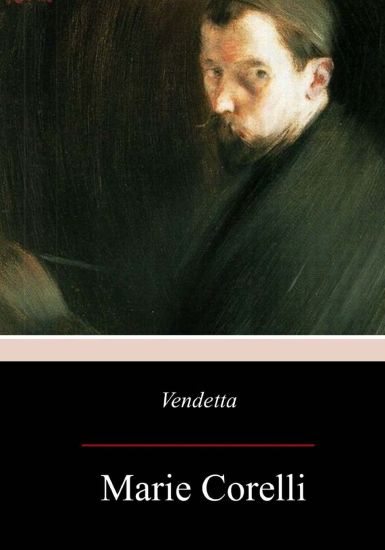
Vendetta: A Story of One Forgotten
Marie Corelli
Createspace Independent Publishing Platform
2017
nidottu
Vendetta: A Story of One Forgotten By Marie Corelli

In 1886, a theretofore unknown writer calling herself "Marie Corelli" burst forth onto the international literary scene with the publication of A Romance of Two Worlds, an innovative romance novel that sought to combine Christianity and science fiction. Almost instantly, the novel began breaking sales records, garnering Corelli fans ranging from suburban housewives to British royalty.
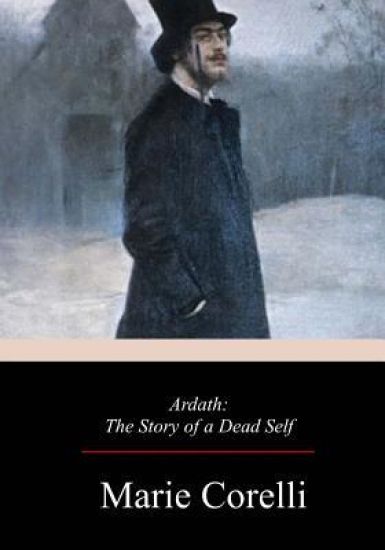
Ardath: The Story of a Dead Self
Marie Corelli
Createspace Independent Publishing Platform
2017
nidottu
Ardath: The Story of a Dead Self By Marie Corelli

The old by-road went rambling down into a dell of deep green shadow. It was a reprobate of a road, -a vagrant of the land, -having long ago wandered out of straight and even courses and taken to meandering aimlessly into many ruts and furrows under arching trees, which in wet weather poured their weight of dripping rain upon it and made it little more than a mud pool. Between straggling bushes of elder and hazel, blackberry and thorn, it made its solitary shambling way, so sunken into itself with long disuse that neither to the right nor to the left of it could anything be seen of the surrounding country. Hidden behind the intervening foliage on either hand were rich pastures and ploughed fields, but with these the old road had nothing in common. There were many things better suited to its nature, such as the melodious notes of the birds which made their homes year after year amid its bordering thickets, or the gathering together in springtime of thousands of primroses, whose pale, small, elfin faces peeped out from every mossy corner, -or the scent of secret violets in the grass, filling the air with the delicate sweetness of a breathing made warm by the April sun. Or when the thrill of summer drew the wild roses running quickly from the earth skyward, twining their stems together in fantastic arches and tufts of deep pink and flush-white blossom, and the briony wreaths with their small bright green stars swung pendent from over-shadowing boughs like garlands for a sylvan festival. Or the thousands of tiny unassuming herbs which grew up with the growing speargrass, bringing with them pungent odours from the soil as from some deep-laid storehouse of precious spices. These choice delights were the old by-road's peculiar possession, and through a wild maze of beauty and fragrance it strayed on with a careless awkwardness, getting more and more involved in tangles of green, -till at last, recoiling abruptly as it were upon its own steps, it stopped short at the entrance to a cleared space in front of a farmyard. With this the old by-road had evidently no sort of business whatever, and ended altogether, as it were, with a rough shock of surprise at finding itself in such open quarters. No arching trees or twining brambles were here, -it was a wide, clean brick-paved place chiefly possessed by a goodly company of promising fowls, and a huge cart-horse. The horse was tied to his manger in an open shed, and munched and munched with all the steadiness and goodwill of the sailor's wife who offended Macbeth's first witch. Beyond the farmyard was the farmhouse itself, -a long, low, timbered building with a broad tiled roof supported by huge oaken rafters and crowned with many gables, -a building proudly declaring itself as of the days of Elizabeth's yeomen, and bearing about it the honourable marks of age and long stress of weather. No such farmhouses are built nowadays, for life has become with us less than a temporary thing, -a coin to be spent rapidly as soon as gained, too valueless for any interest upon it to be sought or desired. In olden times it was apparently not considered such cheap currency. Men built their homes to last not only for their own lifetime, but for the lifetime of their children and their children's children; and the idea that their children's children might possibly fail to appreciate the strenuousness and worth of their labours never entered their simple

Excerpt from God's Good Man: A Simple Love-Story He was the sole owner of one of the smallest 'livings' in England, - an obscure, deeply-hidden, but perfectly unspoilt and beautiful relic of mediaeval days, situated in one of the loveliest of woodland counties, and known as the village of St. Rest, sometimes called 'st. Est.' Until quite lately there had been considerable doubt as to the origin of this name, and the correct manner of its pronouncement. Some said it should be, 'st. East, ' because, right across the purple moorland and beyond the line of blue hills where the sun rose, there stretched the sea, miles away and invisible, it is true, but nevertheless asserting its salty savour in every breath of wind that blew across the tufted pines. 'st. East, ' therefore, said certain rural sages, was the real name of the village, because it faced the sea towards the east. Others, however, declared that the name was derived from the memory of some early Norman church on the banks of the peaceful river that wound its slow clear length in pellucid silver ribbons of light round and about the clover fields and high banks fringed with wild rose and snowy thorn, and that it should, therefore, be 'st. Rest, ' or, better still, 'the Saint's Rest.' This latter theory had recently received strong confirmation by an unexpected witness to the past, - as will presently be duly seen and attested. About the Publisher Forgotten Books publishes hundreds of thousands of rare and classic books. Find more at www.forgottenbooks.com This book is a reproduction of an important historical work. Forgotten Books uses state-of-the-art technology to digitally reconstruct the work, preserving the original format whilst repairing imperfections present in the aged copy. In rare cases, an imperfection in the original, such as a blemish or missing page, may be replicated in our edition. We do, however, repair the vast majority of imperfections successfully; any imperfections that remain are intentionally left to preserve the state of such historical works.

Ziska: The Problem of a Wicked Soul
Marie Corelli
Createspace Independent Publishing Platform
2017
nidottu
Ziska: The Problem of a Wicked Soul by Marie Corelli. Marie Corelli; 1 May 1855

A Romance of Two Worlds: A Novel by Marie Corelli. A Romance of Two Worlds was Marie Corelli's first novel, published in 1886. It referenced the contemporary debate between creationism and evolution, as well as supernatural themes, overlaid with elements of science fiction. The book was an immediate success, well beyond expectations. We live in an age of universal inquiry, ergo of universal scepticism. The prophecies of the poet, the dreams of the philosopher and scientist, are being daily realized

Innocent: Her Fancy and His Fact
Marie Corelli
Createspace Independent Publishing Platform
2017
nidottu
Innocent: Her Fancy and His Fact by Marie Corelli. Raised on the prosperous farm of Hugo Jocelyn, descendant of a French knight, Innocent has always believed herself to be Jocelyn's illegitimate daughter by his fiancee before her death. She is an idealistic woman, inspired by the romanticism of the medieval French literature preserved by her ancestor; indeed, she feels she knows "Sieur Amadis" personally. As an infant, Innocent was dumped at the farm during a violent storm, by a stranger who explained he had to keep going but feared endangering the child. He promised to return, but never did, instead sending money every six months. Jocelyn reveals this in a deathbed confession. After his death, Innocent receives a visit from her birth mother, Lady Blythe. A shallow and pretentious noblewoman, she explains that Innocent was the result of a fling she had with artist Pierce Armitage. He was probably the one who left her at the farm.

Book Excerpt: ot all. No, it certainly was not all. It was simply that I had then what I have never had since."He broke off abruptly. Then stepping back to his chair he resumed his former reclining position, leaning his head against the cushions and fixing his eyes on the solitary bright star that shone above the mist and the trembling trees."May I talk out to you?" he inquired suddenly, with a touch of whimsicality. "Or are you resolved to preach copybook moralities at me, such as 'Be good and you will be happy'"Vesey, more ceremoniously known as Sir Francis Vesey, one of the most renowned of London's great leading solicitors, looked at him and laughed."Talk out, my dear fellow, by all means " he replied. "Especially if it will do you any good. But don't ask me to sympathise very deeply with the imaginary sorrows of so enormously wealthy a man as you are ""I don't expect any sympathy," said Helmsley. "Sympathy is the one thing I have never sought, because I know it is not to be obtRead More

In 1886, a theretofore unknown writer calling herself "Marie Corelli" burst forth onto the international literary scene with the publication of A Romance of Two Worlds, an innovative romance novel that sought to combine Christianity and science fiction. Almost instantly, the novel began breaking sales records, garnering Corelli fans ranging from suburban housewives to British royalty.

Popular Victorian-era writer Marie Corelli does it again in this epic romance imbued with supernatural and gothic themes. A companion piece of sorts to Corelli's first novel, A Romance of Two Worlds, Ardath follows the life of young poet Theos Alwyn, whose encounter with a mysterious monk propels him into a spiritual quest that transcends space and time.

The author who wrote under the name "Marie Corelli" had a lot to say about the concept of illegitimacy and out-of-wedlock births, as she herself is believed to have been born under these circumstances. She addresses these sensitive subjects head-on in Innocent, a parable-like novel about a young woman whose purity and inherent goodness shine through despite the social stigma surrounding her.

In many ways, British author Marie Corelli was a progressive thinker, particularly in her views of Christianity. However, when it came to the subject of royalty, Corelli was a traditionalist, as affirmed by the thought-provoking novel Temporal Power. A revolutionary plot gains traction in an imaginary country ruled by a less-than-popular monarch, but a surprising figure is ultimately revealed to be the force behind the movement.

Some of the themes only hinted at in Marie Corelli's 1886 breakthrough novel, A Romance of Two Worlds, are fully fleshed out in fascinating detail in her later work, The Life Everlasting. In the future world Corelli brings to life in this novel, scientific breakthroughs have made it possible to master radioactivity and other previously unharnessed energies. The female narrator opts to undergo a spiritual process that is designed to bring her to a higher plane of understanding, and along the way, she learns a great deal about her true nature and capabilities.