Kirjojen hintavertailu. Mukana 12 016 292 kirjaa ja 12 kauppaa.

Kirjahaku

Etsi kirjoja tekijän nimen, kirjan nimen tai ISBN:n perusteella.

1000 tulosta hakusanalla Max Linde

Max the Brave

Max the Brave

Ed Vere

Puffin
2015
nidottu
Meet Max - the mighty kitten and New York Times bestseller.Max is Brave, Max is Fearless, Max is a Mouse-catcher...But, in order to be a Mouse-catcher, Max needs to know what a mouse is, so off he goes to find out. This hilarious new picture book from the phenomenally-talented Ed Vere introduces a new and lovable character, with Ed's trademark bold illustrations and clever story.Other Ed Vere titles to look out for:Banana; Bedtime for Monsters; Mr. Big; The Getaway
Max at Night

Max at Night

Ed Vere

Puffin
2015
nidottu
Meet Max - the mighty kitten and New York Times bestseller.This is Max. Max is very sleepy. It's way past Max's bedtime. Max has drunk his milk. Max has brushed his teeth. Max has cleaned behind his ears. Now Max just needs to say goodnight. . .Max is tired and all ready for bed, but when he can't find the moon to say goodnight to, he sets out to find it. But that's not as easy as Max had hoped. . . Witty and heart-warming, this stylish and beautifully illustrated book is the perfect bedtime read.
Max Stirner's Dialectical Egoism

Max Stirner's Dialectical Egoism

John F. Welsh

Lexington Books
2010
sidottu
Max Stirner (1806-1856) is recognized in the history of political thought because of his egoist classic The Ego and Its Own. Stirner was a student of Hegel, and a critic of the Young Hegelians and the emerging forms of socialist and communist thought in the 1840s. Max Stirner's Dialectical Egoism: A New Interpretation examines Stirner's thought as a critique of modernity, by which he meant the domination of culture and politics by humanist ideology. In Stirner's view, "humanity" is the supreme being of modernity and "humanism" is the prevailing legitimation of social and political domination. Welsh traces Stirner's thought from his early essays to The Ego and Its Own and Stirner's responses to his critics. He also examines how Benjamin Tucker, James L. Walker, and Dora Marsden applied Stirner's dialectical egoism to the analysis of (a) the transformations of capitalism, (b) culture, ethics, and mass psychology, and (c) feminism, socialism, and communism. All three viewed Stirner as a champion of individuality against the collectivizing and homogenizing forces of the modern world. Welsh also takes great care to dissociate Stirner's thought from that of the other great egoist critic of modernity, Friedrich Nietzsche. He argues that the similarities in the dissidence of Stirner and Nietzsche are superficial. The book concludes with an interpretation of Stirner's thought as a form of dialectical egoism that includes (a) a multi-tiered analysis of culture, society, and individuality; (b) the basic principles of Stirner's view of the relationship between individuals and social organization; and (c) the forms of critique he employs. Stirner's critique of modernity is a significant contribution to the growing literature on libertarianism, dialectical analysis, and post-modernism.
Max Stirner's Dialectical Egoism

Max Stirner's Dialectical Egoism

John F. Welsh

Lexington Books
2010
nidottu
Max Stirner (1806-1856) is recognized in the history of political thought because of his egoist classic The Ego and Its Own. Stirner was a student of Hegel, and a critic of the Young Hegelians and the emerging forms of socialist and communist thought in the 1840s. Max Stirner's Dialectical Egoism: A New Interpretation examines Stirner's thought as a critique of modernity, by which he meant the domination of culture and politics by humanist ideology. In Stirner's view, 'humanity' is the supreme being of modernity and 'humanism' is the prevailing legitimation of social and political domination. Welsh traces Stirner's thought from his early essays to The Ego and Its Own and Stirner's responses to his critics. He also examines how Benjamin Tucker, James L. Walker, and Dora Marsden applied Stirner's dialectical egoism to the analysis of (a) the transformations of capitalism, (b) culture, ethics, and mass psychology, and (c) feminism, socialism, and communism. All three viewed Stirner as a champion of individuality against the collectivizing and homogenizing forces of the modern world. Welsh also takes great care to dissociate Stirner's thought from that of the other great egoist critic of modernity, Friedrich Nietzsche. He argues that the similarities in the dissidence of Stirner and Nietzsche are superficial. The book concludes with an interpretation of Stirner's thought as a form of dialectical egoism that includes (a) a multi-tiered analysis of culture, society, and individuality; (b) the basic principles of Stirner's view of the relationship between individuals and social organization; and (c) the forms of critique he employs. Stirner's critique of modernity is a significant contribution to the growing literature on libertarianism, dialectical analysis, and post-modernism.
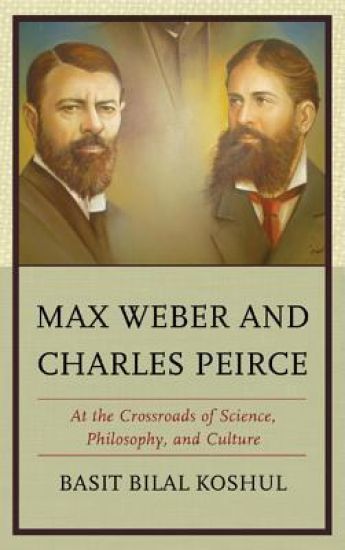
Max Weber and Charles Peirce

Max Weber and Charles Peirce

Basit Bilal Koshul

Lexington Books
2014
sidottu
Max Weber and Charles Peirce: At the Crossroads of Science, Philosophy, and Culture shows that a relational conception of science is implicit in Max Weber’s reflections on scientific inquiry as a bridge between the Geisteswissenschaften (soft sciences) and Naturwissenschaften (hard sciences). Because he is not a trained philosopher, Weber does not have the precise philosophical language in which to articulate his ideas clearly. Consequently, his relational vision of science remains obscure. Basit Bilal Koshul brings clarity and precision to Weber’s insights using the pragmaticist philosophy of Charles Peirce. He makes explicit the phenomenology, semiotics, and logic that are implicit in Weber’s methodological writings and translates them into Peircean terms. Since Peirce explicitly offers his philosophy of science as a critique of the modern divide between the humanistic and natural sciences and of the divide between religion and science, this translation has a double effect. It clarifies Weber’s insights on the methodology of scientific inquiry, and it extends the reparative force of these insights into the larger culture of which science is one part. The reconstruction of Weber’s relational conception of science along the lines of Peirce’s pragmaticism, in turn, reveals that Weber’s work points toward deep affinities between religion and science. Given the fact that the same phenomenology, semiotics, and logic that underpin Peirce’s philosophy of science are also at the root of his philosophy of religion, we can begin to appreciate the fact that Weber’s work makes an important contribution to bridging the divide between religion and science. In providing models that bridge divides and move towards complementary relationships, Weber and Peirce not only help us to better understand disenchantment as the fate of our times, but also offer uniquely valuable resources to reach for cultural horizons that lie beyond it.
Max Weber and the Theory of Modern Politics
Max Weber's writings on the politics of Wilhelmine in Germany and the Russian revolutions of 1905 and 1917 are much less well known than his contributions to historical and theoretical sociology, yet they are essential to any overall assessment of his thought. Drawing on these writings, still mostly untranslated, David Beetham offers the most comprehensive account available in English of Weber's political theory. The book explores Weber's central concern with the prospects for liberal Parliamentarism in authoritarian societies and in an age of mass politics and bureaucratic organization, and shows how this concern led him to a revision of democratic theory which is still influential. It argues that Weber's analyzis of the class basis of contemporary politics necessitate a modification in some of the accepted interpretations of his sociology of modern capitalism. A special feature of the book is its full treatment of the extensive German literature on Weber's political thought. This second edition contains a substantial new critical introduction and an expanded bibliography. Otherwise the text of the widely acclaimed first edition remains unaltered. This is a book which adds an essential dimension to the understanding of Max Weber for students of sociology and politics who have previously only approached his work through his sociological writings.
Max Weber's Comparative Historical Sociology
In this accessible and engaging work, Kalberg shows how Weber's work casts a direct light upon issues of pressing importance for comparative-historical research today addressing in a forceful way the whole range of problems and dilemmas confronted by the comparative-historical enterprise.
Max Weber's Methodologies

Max Weber's Methodologies

Sven Eliaeson

Polity Press
2002
nidottu
Max Weber is widely regarded as the most important and influential figure in the history of the social sciences. Among other things, he wrote extensively on the methodology of the social sciences, but his writings on methodology are complex and are the subject of many conflicting interpretations. In this authoritative new book, Sven Eliaeson provides a comprehensive introduction to Weber's methodology and to the various ways it has been interpreted by subsequent scholars in Europe and the United States. Eliaeson shows how the vested interests of scholars have resulted in biased interpretations of Weber's work. Weber was preoccupied with the intellectual problems of his time and not with our current disciplinary crises. By placing Weber's thought and methodology in its historical context, Eliaeson is able to provide a masterly reconstruction of his central concerns while at the same time exploring the enduring relevance of Weber's work for sociology today. This book will be recognized as a definitive work on Weber's methodology and will be an indispensable text for students and scholars in sociology and the social sciences.
Max Weber

Max Weber

Joachim Radkau

Polity Press
2009
sidottu
Max Weber (1864-1920) is recognized throughout the world as the most important classic thinker in the social sciences – there is simply no one in the history of the social sciences who has been more influential. The affinity between capitalism and protestantism, the religious origins of the Western world, the force of charisma in religion as well as in politics, the all-embracing process of rationalization and the bureaucratic price of progress, the role of legitimacy and of violence as offsprings of leadership, the ‘disenchantment’ of the modern world together with the never-ending power of religion, the antagonistic relation between intellectualism and eroticism: all these are key concepts which attest to the enduring fascination of Weber’s thinking. The tremendous influence exerted by Max Weber was due not only to the power of his ideas but also to the fact that behind his theories one perceived a man with a marked character and a tragic destiny. However, for nearly 80 years, our understanding of the life of Max Weber was dominated by the biography published in 1926 by his widow, Marianne Weber. The lack of a great Weber biography was one of the strangest and most glaring gaps in the literature of the social sciences. For various reasons the task was difficult; time and again, attempts to write a new biography of Max Weber ended in failure. When Joachim Radkau’s biography appeared in Germany in 2005 it caused a sensation. Based on an abundance of previously unknown sources and richly embedded in the German history of the time, this is the first fully comprehensive biography of Max Weber ever to appear. Radkau brings out, in a way that no one has ever done before, the intimate interrelations between Weber’s thought and his life experience. He presents detailed revelations about the great enigmas of Weber’s life: his suffering and erotic experiences, his fears and his desires, his creative power and his methods of work as well as his religious experience and his relation to nature and to death. By understanding the great drama of his life, we discover a new Max Weber, until now unknown in many respects, and, at the same time, we gain a new appreciation of his work. Joachim Radkau, born in 1943, is Professor of Modern History at the Bielefeld University, Germany. His interest in Max Weber dates back nearly forty years when he worked together with the German-American historian George W. F. Hallgarten (Washington), a refugee who left Germany in 1933 and who, as a student, listened to Weber’s last lecture in summer 1920. Radkau’s main works include Die deutsche Emigration in den USA (1971); Deutsche Industrie und Politik (together with G. W. F. Hallgarten, 1974), Aufstieg und Krise der deutschen Atomwirtschaft (1983), Technik in Deutschland (1989), Das Zeitalter der Nervosität (1998), Natur und Macht: Eine Weltgeschichte der Umwelt (2000).
Max Weber

Max Weber

Joachim Radkau

Polity Press
2011
nidottu
Max Weber (1864-1920) is recognized throughout the world as the most important classic thinker in the social sciences – there is simply no one in the history of the social sciences who has been more influential. The affinity between capitalism and protestantism, the religious origins of the Western world, the force of charisma in religion as well as in politics, the all-embracing process of rationalization and the bureaucratic price of progress, the role of legitimacy and of violence as offsprings of leadership, the ‘disenchantment’ of the modern world together with the never-ending power of religion, the antagonistic relation between intellectualism and eroticism: all these are key concepts which attest to the enduring fascination of Weber’s thinking. The tremendous influence exerted by Max Weber was due not only to the power of his ideas but also to the fact that behind his theories one perceived a man with a marked character and a tragic destiny. However, for nearly 80 years, our understanding of the life of Max Weber was dominated by the biography published in 1926 by his widow, Marianne Weber. The lack of a great Weber biography was one of the strangest and most glaring gaps in the literature of the social sciences. For various reasons the task was difficult; time and again, attempts to write a new biography of Max Weber ended in failure. When Joachim Radkau’s biography appeared in Germany in 2005 it caused a sensation. Based on an abundance of previously unknown sources and richly embedded in the German history of the time, this is the first fully comprehensive biography of Max Weber ever to appear. Radkau brings out, in a way that no one has ever done before, the intimate interrelations between Weber’s thought and his life experience. He presents detailed revelations about the great enigmas of Weber’s life: his suffering and erotic experiences, his fears and his desires, his creative power and his methods of work as well as his religious experience and his relation to nature and to death. By understanding the great drama of his life, we discover a new Max Weber, until now unknown in many respects, and, at the same time, we gain a new appreciation of his work. Joachim Radkau, born in 1943, is Professor of Modern History at the Bielefeld University, Germany. His interest in Max Weber dates back nearly forty years when he worked together with the German-American historian George W. F. Hallgarten (Washington), a refugee who left Germany in 1933 and who, as a student, listened to Weber’s last lecture in summer 1920. Radkau’s main works include Die deutsche Emigration in den USA (1971); Deutsche Industrie und Politik (together with G. W. F. Hallgarten, 1974), Aufstieg und Krise der deutschen Atomwirtschaft (1983), Technik in Deutschland (1989), Das Zeitalter der Nervosität (1998), Natur und Macht: Eine Weltgeschichte der Umwelt (2000).

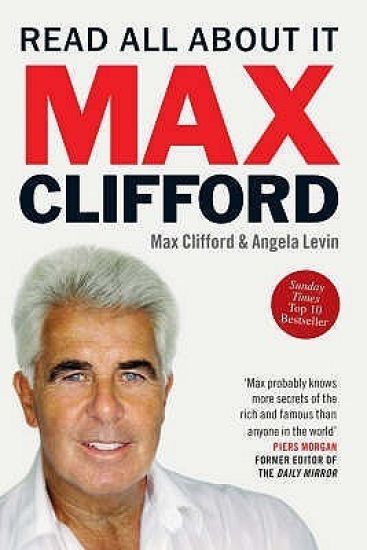
Max Clifford: Read All About It

Max Clifford: Read All About It

Angela Levin; Max Clifford

Ebury Publishing
2006
pokkari
'Max knows more secrets of the rich and famous than anyone in the world'Piers MorganMax Clifford is the media guru everyone calls when they want to know about a celebrity story or a celebrity's relationship with the media. Starting out as a junior member of the press department at EMI, he has become one of the most influential figures in today's society, and a household name. What is less known is the other side to Max: the stories he keeps out of the papers; his stand against corruption; his mischievous sense of humour; his dedication to helping people from all walks of life;his love for his wife of nearly forty years who tragically died of cancer; and his devotion to his daughter Louise who, at six,was diagnosed with juvenile rheumatoid arthritis and is permanently disabled. The essential memoir for those interested in both PR and celebrity.
Max Weber

Max Weber

Ashgate Publishing Limited
2006
sidottu
This volume contains key writings, mainly recent, that define the current debate concerning our understanding of the nature of Max Weber's social and political thought. Topics covered include the interpretation of his central concepts; problems of method; meaning and value; liberalism, nationalism and democracy; and the fate of politics in a disenchanted world. Supplemented by a detailed and thoughtful introduction, this collection will be essential for libraries in social sciences and all scholars and students of Weber.
Max Weber

Max Weber

Ashgate Publishing Limited
2013
sidottu
Max Weber is a magisterial figure in the social sciences. His fundamental contributions to the methodological and conceptual apparatus of sociology remain of continuing relevance to contemporary debates. His astonishing range and quality of work on topics ranging from the comparative sociology of religion to political sociology, and the sociology of law to the sociology of music, have established Weber as a permanent point of reference for modern scholarship. Scholarly debates on the nature, significance and purpose of Weber's work demonstrate a significance for sociology's self-image that extends beyond their immediate interpretive importance. This volume, edited by one of the world's leading Weber scholars, offers an unparalleled selection of key Weber scholarship organized thematically and spanning the range of his sociological influence.
Max Reger and Karl Straube

Max Reger and Karl Straube

Christopher Anderson

Ashgate Publishing Limited
2003
sidottu
Max Reger (1873-1916) is perhaps best-known for his organ music. This quickly assumed a prominent place in the repertory of German organists due in large measure to the efforts of Reger’s contemporary Karl Straube (1873-1950). The personal and collegial relationship between the composer and performer began in 1898 and developed until Reger’s death. By that time, Straube had established himself as an important artist and teacher in Leipzig and the central authority for the interpretation of Reger’s organ music. The Reger-Straube relationship functioned on a number of levels with decisive consequences both for the composition of the music and its interpretation over a period fraught with upheaval on sociopolitical, religious and aesthetic fronts. This book evaluates the significance of the relationship between the composer and organist using primary source materials such as autograph performing manuscripts, reviews, programmes, letters and archival sources from contemporary organ building. The result is a much enhanced understanding of Reger in terms of performance practice and reception history, and a re-examination of Straube and, more broadly, of Leipzig as a musical centre during this period.
Max Weber Matters

Max Weber Matters

Ashgate Publishing Limited
2008
sidottu
This volume clearly communicates that Weber’s influence is of great significance to the history of social science, and to appreciating the theoretical work of other social scientists in the modern age. Its insightful and timely publication comprises topical and innovative work discussing Weber in a range of historical and contemporary questions including: the controversy surrounding the Da Vinci code; the charismatic role of martyrs; the nuclear weapons strategy in a post-cold-war age and the affinity between Hindu belief systems and disenchanted computer science. Max Weber Matters illustrates the multidisciplinary and continued relevance of Weber’s work and will be of interest to scholars across a range of disciplines, including historians, sociologists, political scientists and social theorists.
Max Your Immunity

Max Your Immunity

Pamela Wartian Smith

Square One Publishers
2021
nidottu
The word immunity has unfortunately become an all-too-common term in our vocabulary, and for good reason. When the pandemic hit, many of the major drug companies created vaccines that offered us "immunity" against this specific virus. Yet, few of us understand that almost all these vaccines work based upon their activating our own built-in systems of defense. It is our very own immunity to these viruses that can make the difference between illness and health. To help clarify what each of us can do to protect ourselves and our loved ones, Pamela Wartian Smith, MD has written Max Your Immunity. Here is a complete guide to understanding and maximizing your natural defenses against various infectious diseases.Max Your Immunity is divided into three parts. Part One explains how our innate and adaptive immunity systems work. Our innate immunity system is based on our built-in barriers designed to fight or separate us from infectious agents. Our adaptive immunity, also called acquired immunity, is composed of lymphocyte cells that are triggered when a specific pathogen enters the body. These cells learn to identify the invading pathogens and hunt them down. In this section, each component in both systems are clearly identified and explained. Part Two provides ten important things that you can do to increase and strengthen all of these components. And Part Three provides specific nutritional plans to increase your body's immunity to help defend against the most common health disorders.By simply having a clear understanding of how our internal defenses work and what we can do to increase our immunity, we can play an important role in maintaining good health. Max Your Immunity can help show you what you need to know to protect yourself and your family.
Max Horkheimer's Critical Theory of Religion

Max Horkheimer's Critical Theory of Religion

Michael R. Ott

University Press of America
2001
nidottu
Over the past thirty years much has been written about the critical theory of society that was produced by a small group of left-wing Hegelians in the Institute of Social Research in Frankfurt am Main, Germany and in the United States. This book seeks to make a contribution to the continued development of the critical theory of society and religion as it offers a corrective to the one-sided, positivistic development of the modern social sciences as well as to the increasing social irrelevancy of the contemporary Christian church. Max Horkheimer's Critical Theory of Religion is a content analysis of the critical theory of religion of Max Horkheimer, which was developed throughout almost all of his writings and later interviews from 1926 to 1973, the year of his death.
Max Weber and the Modern Problem of Discipline
Max Weber believed that discipline underpins modern rationalized society. For Weber, modern discipline is the quality that gives a population the capacity to coordinate action across vast expanses. But modern discipline also requires individuals to shape their very psychobiological being to fit the larger socioeconomic system, be it a military unit, factory, bureaucracy, or other unit of modern society. Max Weber and the Modern Problem of Discipline explores how Weber developed his ideas using examples from Ancient Egypt to the modern world and asks how his description of a habitus of discipline informs understanding of modernity not just in Europe but in places that continue to befuddle well-educated and well-paid modern economists, strategists, and politicians in places like the Democratic Republic of the Congo and Myanmar/Burma. These are the areas that, as Weber would have said, are still governed by traditional authority rather than the legal- disciplined habitus of rational authority brought by the modernizing outsiders. This book challenges development economists, foreign service officers, government officials, administrators, and development workers to rethink modern discipline and the costs that modern legal-rational rule imposes on traditional societies. By doing so, this book goes beyond standard prescriptions for good governance, free markets, and property rights, which underpin modern development planning. To describe modern discipline, Tony Waters also draws on more the contemporary work of Karl Polanyi, James Scott, Goran Hyden, Teodor Shanin, and James Ferguson, among others. Each describes how and why independent peasantries ignored and even resisted the blandishments and trinkets proffered by development bureaucracies to sell their traditional rights in the modern marketplace. Waters agrees with them about farmer resilience, but he takes the argument a step further by pointing out that Weber was proposing a general theory of a disciplined modernity, not one focused on just a particular society.