Kirjahaku
Etsi kirjoja tekijän nimen, kirjan nimen tai ISBN:n perusteella.
1000 tulosta hakusanalla Maximo Serrano Hercules
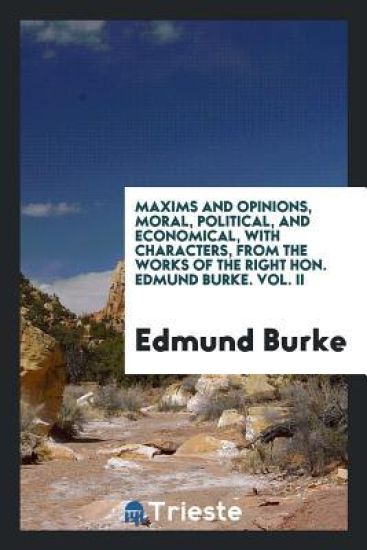
Maxims and Opinions, Moral, Political, and Economical, with Characters, from the Works of the Right Hon. Edmund Burke. Vol. II
Edmund Burke
Trieste Publishing
2018
nidottu

Maxime Weygand and Civil-Military Relations in Modern France
Philip Charles Farwell Bankwitz
Harvard University Press
1967
sidottu
Between the two World Wars, particularly in the 1930s, the relations between the French civilian government and the Army went through a series of devastating changes. These turbulent developments culminated in the refusal of the Army’s leaders to obey their civilian superiors during the catastrophe of June 1940, the first such insubordination in modern French republican history. The author examines every aspect of this disastrous process, pursuing his analysis largely through the activities and thought of General Maxime Weygand, who, although deeply affected by the loss of civil–military trust, contributed importantly to it and eventually led the Army in its disobedience.Philip Bankwitz finds the seeds of the disaffection between the French civilian authorities and the military in a variety of interconnected elements. During the early 1930s, for example, the soldiers became convinced that the Government’s policies concerning service time, military appropriations, and disarmament were pushing the Army to the brink of ruin. The Third Republic was highly unstable politically, as was shockingly demonstrated in February 1934 when the Government leaders resigned in the face of violent disorders in Paris attendant on the Stavisky Affair which climaxed two years of internal strife. Among soldiers, aware of the Government’s weakness, suspicious of its alleged antimilitarism, and fearful of the approaching conflict with Nazi Germany, there was a growing and almost unconscious tendency to think in terms of the possible need to extend the protection of the Army to the nation in its difficulties. In this way, important elements in the officer corps began, psychologically and emotionally, “to prepare for eventual intervention in national political affairs.”General Weygand, whom the author interviewed on numerous occasions, held the personal conviction that the distrust between the civilian and military establishments was the root cause of French defeat. Mr. Bankwitz is convinced that this opinion of Weygand’s is possibly the single most important clue to the puzzling connection between the civil–military relationship and the collapse of June 1940. Granting all the other factors contributing to the defeat, it would be impossible to exaggerate the historical importance of Weygand’s disobedience—an act which also opened the way for later military saviors and for the ascendant role of the Army in French politics.This is the first scholarly study in depth of the crucial prewar phase of the French army’s development into a disruptive force in national life. A chapter from the portentous twentieth-century story of the soldier in politics, it has relevance now to situations already formed or forming in other western societies. The value of the book is greatly enhanced by an encyclopedic bibliography of writing on French political history in this century.

Maxims of Washington (1854)
John Frederick Schroeder; William B. Sprague
KESSINGER PUBLISHING CO
2003
pokkari

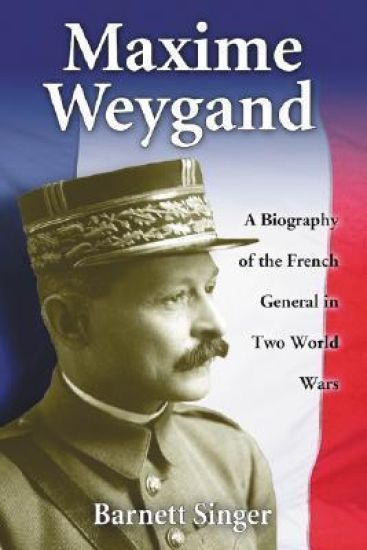
During the armistice proceedings and at the Peace Conference after World War I, French General Maxime Weygand served as chief aid to Marshal Foch. Called out of retirement in the late 1930s, Weygand again served his country during World War II, becoming commander in chief of the French Army. His call for enhanced French unity, military preparedness, and adaptation to a new kind of war dominated by tank mobility might have saved France the humiliating defeat in 1940 at the hand of the Nazis, had it been heeded. Weygand's recognition of the Nazi threat earned him the respect of Winston Churchill and Franklin Roosevelt. Weygand's Vichy Resistance led to his imprisonment from late 1942 through the end of the war. French archival sources, available oral testimony and Weygand's private papers contribute to a fascinating biography of one of World War II's unsung heroes.
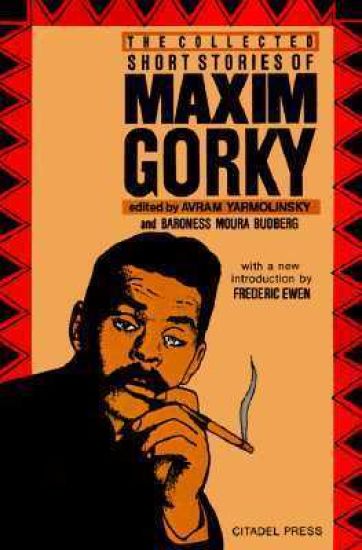
The Collected Short Stories of Maxim Gorky
Maxim Gorky
Kensington Publishing Corporation
1988
pokkari
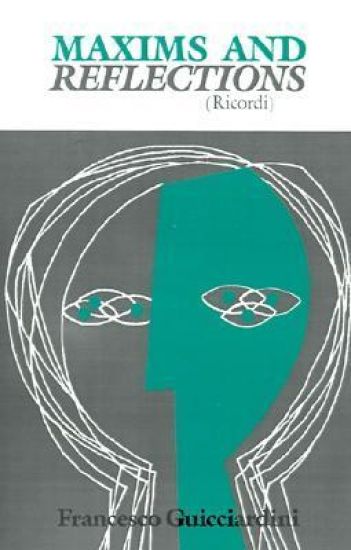
Maxims and Reflections (Ricordi)
Francesco Guicciardini
University of Pennsylvania Press
1972
pokkari
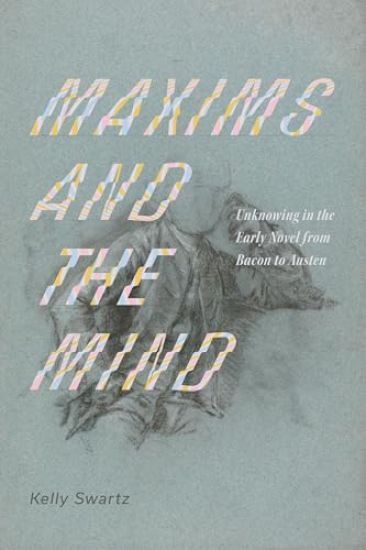
Correcting the misunderstood role of maxims at the intersection of early science and literature Eighteenth-century novels are full of maxims - pithy statements of received wisdom such as 'necessity is the mother of invention' or 'neither a borrower nor a lender be.' Maxims are ancient rhetorical forms, celebrated by no less an influential figure than Aristotle as powerful tools of persuasion. Critics have generally explained away their ubiquitous presence in eighteenth-century novels as a vestige of a premodern form. As Kelly Swartz explains, however, their presence illustrates an important yet often overlooked aspect of the novel's relationship with the early empirical sciences. Applying insights from Francis Bacon's account of aphorizing as a method of scientific writing to works by Aphra Behn, Jonathan Swift, Samuel Richardson, and Jane Austen, Swartz shows how maxims functioned in a critical role that she calls 'unknowing.' Such expressions, she argues, represented the not yet known as a way to inspire in readers a desire for ongoing, collective inquiry. Maxims also allowed these authors to invent unknowing fictional minds, at once attractive and vexing, ranging from the incoherent and banal to the unintelligibly rich. Maxims and the Mind thus offers new insight into the nature of the relationship between science and the early novel, emphasizing their shared interest in the representation of knowledge still awaiting discovery.
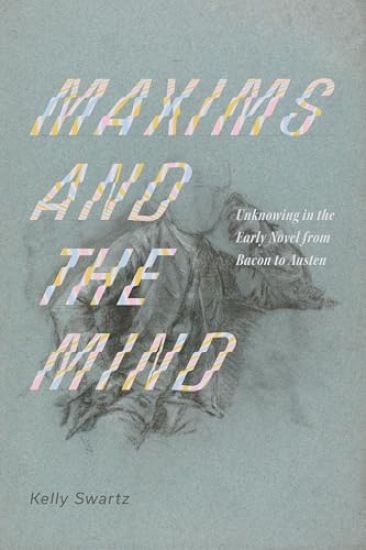
Correcting the misunderstood role of maxims at the intersection of early science and literature Eighteenth-century novels are full of maxims - pithy statements of received wisdom such as 'necessity is the mother of invention' or 'neither a borrower nor a lender be.' Maxims are ancient rhetorical forms, celebrated by no less an influential figure than Aristotle as powerful tools of persuasion. Critics have generally explained away their ubiquitous presence in eighteenth-century novels as a vestige of a premodern form. As Kelly Swartz explains, however, their presence illustrates an important yet often overlooked aspect of the novel's relationship with the early empirical sciences. Applying insights from Francis Bacon's account of aphorizing as a method of scientific writing to works by Aphra Behn, Jonathan Swift, Samuel Richardson, and Jane Austen, Swartz shows how maxims functioned in a critical role that she calls 'unknowing.' Such expressions, she argues, represented the not yet known as a way to inspire in readers a desire for ongoing, collective inquiry. Maxims also allowed these authors to invent unknowing fictional minds, at once attractive and vexing, ranging from the incoherent and banal to the unintelligibly rich. Maxims and the Mind thus offers new insight into the nature of the relationship between science and the early novel, emphasizing their shared interest in the representation of knowledge still awaiting discovery.
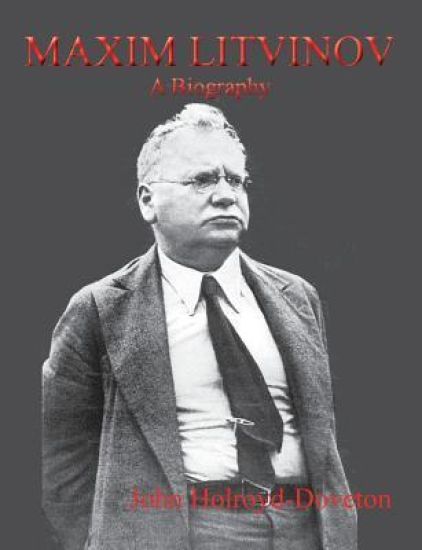
This biography of Maxim Litvinov is the most comprehensive yet written, aided (helped) considerably by information supplied by his daughter and so contains much material not previously published. The biography shows how age (maturity) and the holding of office transformed Litvinov from a young revolutionary to becoming a much more orthodox politician. It illustrates how he dominated, by his speeches, the League of Nations and relates his efforts both to prevent the Second World War and the Cold War. It describes the rivalry between Molotov and Litvinov, and speculates on how Litvinov, while being critical of Stalin, survived the Purges. The biography highlights the many inconsistencies in his career living a life style of a Tsarist foreign minister while being a Communist and both supporting and criticising the Purges.