Kirjojen hintavertailu. Mukana 11 627 220 kirjaa ja 12 kauppaa.

Kirjahaku

Etsi kirjoja tekijän nimen, kirjan nimen tai ISBN:n perusteella.

1000 tulosta hakusanalla Maya Eisel

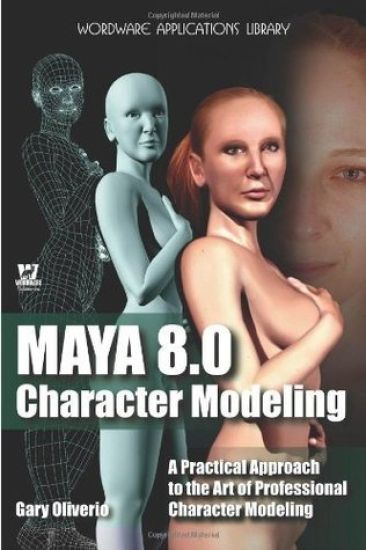
Maya 8.0 Character Modeling

Maya 8.0 Character Modeling

Gary Oliverio

Jones and Bartlett Publishers, Inc
2006
nidottu
Maya 8 Character Modeling takes a unique approach to modeling as it breaks down character creation using an easy-to-follow formula that makes the learning process less daunting. The author presents an overview of modeling basics and then shows how to block out the body, shape body parts, add details, and create joints and controls using Maya 8. By the time you've finished the book, you'll have created a figure that is textured, rigged, and ready to be animated.With this book understand the building blocks of modeling, including quads, edge loops, normals, UVs, and mapping discover how "modeling by formula" eases the character creation process find out how to create a UV layout that makes texturing easier learn how to place joints and controls and skin your character so it deforms properly when animated.Companion CD included with the images from the book, Maya files to help build the character, AVI movies that show the modeling process in real time, and Mel scripts for installing a character modeling tool menu that can improve the user's workflow!
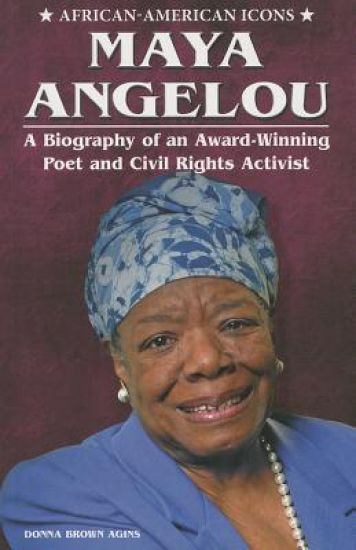
Maya Angelou: A Biography of an Award-Winning Poet and Civil Rights Activist
From the child raised by her grandmother in a small village in Arkansas to the writer known as National Treasure, Angelou has lived a remarkable life. She rose from pain and poverty to achieve success as a dancer, an actress, a teacher and an award-winning author. Readers of Donna Brown Agins's compelling new profile will understand and appreciate why Angelou is one of the best-loved and most fascinating American writers.
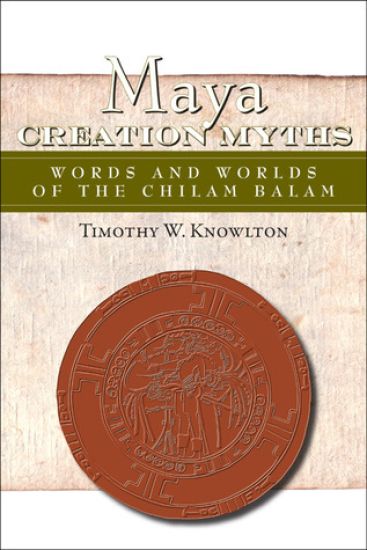
Maya Creation Myths

Maya Creation Myths

Timothy Knowlton

University Press of Colorado
2012
nidottu
There is no Classical Yucatecan Maya word for "myth." But around the close of the seventeenth century, an anonymous Maya scribe penned what he called u kahlay cab tu kinil, "the world history of the era," before Christianity came to the Peten. He collected numerous accounts of the cyclical destruction and reestablishment of the cosmos; the origins of gods, human beings, and the rituals and activities upon which their relationship depends; and finally the dawn of the sun and the sacred calendar Maya diviners still use today to make sense of humanity's place in the otherwise inscrutable march of time. These creation myths eventually became part of the documents known today as the Books of Chilam Balam.Maya Creation Myths provides not only new and outstanding translations of these myths but also an interpretive journey through these often misunderstood texts, providing insight into Maya cosmology and how Maya intellectuals met the challenge of the European clergy's attempts to eradicate their worldviews. Unlike many scholars who focus primarily on traces of pre-Hispanic culture or Christian influence within the Books of Chilam Balam, Knowlton emphasizes the diversity of Maya mythic traditions and the uniquely Maya discursive strategies that emerged in the Colonial period. This book will be of significant interest to Maya scholars, folklorists, and historians, as well as students and scholars of religion, cosmology, and anthropology.
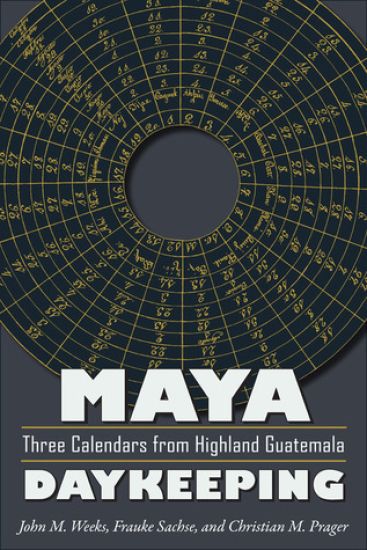
Maya Daykeeping

Maya Daykeeping

University Press of Colorado
2013
nidottu
In Maya Daykeeping, three divinatory calendars from highland Guatemala - examples of a Mayan literary tradition that includes the Popul Vuh, Annals of the Cakchiquels, and the Titles of the Lords of Totonicapan - dating to 1685, 1722, and 1855, are transcribed in K'iche or Kaqchikel side-by-side with English translations. Calendars such as these continue to be the basis for prognostication, determining everything from the time for planting and harvest to foreshadowing illness and death. Good, bad, and mixed fates can all be found in these examples of the solar calendar and the 260-day divinatory calendar.The use of such calendars is mentioned in historical and ethnographic works, but very few examples are known to exist. Each of the three calendars transcribed and translated by John M. Weeks, Frauke Sachse, and Christian M. Prager - and housed at the University of Pennsylvania Museum of Archaeology and Anthropology - is unique in structure and content. Moreover, except for an unpublished study of the 1722 calendar by Rudolf Schuller and Oliver La Farge (1934), these little-known works appear to have escaped the attention of most scholars. Introductory essays contextualize each document in time and space, and a series of appendixes present previously unpublished calendrical notes assembled in the early twentieth century. Providing considerable information on the divinatory use of calendars in colonial highland Maya society previously unavailable without a visit to the University of Pennsylvania's archives, Maya Daykeeping is an invaluable primary resource for Maya scholars. Mesoamerican Worlds Series
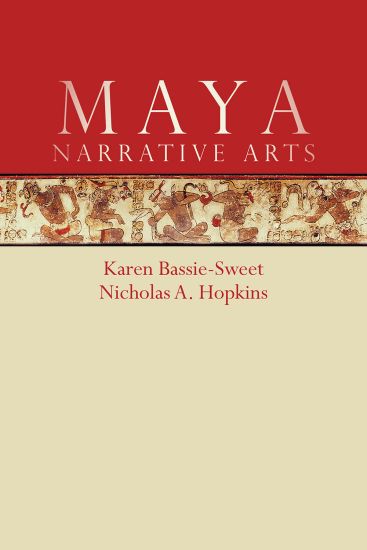
Maya Narrative Arts

Maya Narrative Arts

Karen Bassie-Sweet; Nicholas A. Hopkins

University Press of Colorado
2019
nidottu
In Maya Narrative Arts, authors Karen Bassie-Sweet and Nicholas A. Hopkins present a comprehensive and innovative analysis of the principles of Classic Maya narrative arts and apply those principles to some of the major monuments of the site of Palenque. They demonstrate a recent methodological shift in the examination of art and inscriptions away from minute technical issues and toward the poetics and narratives of texts and the relationship between texts and images. Bassie-Sweet and Hopkins show that both visual and verbal media present carefully planned narratives, and that the two are intimately related in the composition of Classic Maya monuments. Text and image interaction is discussed through examples of stelae, wall panels, lintels, benches, and miscellaneous artifacts including ceramic vessels and codices. Bassie-Sweet and Hopkins consider the principles of contrast and complementarity that underlie narrative structures and place this study in the context of earlier work, proposing a new paradigm for Maya epigraphy. They also address the narrative organization of texts and images as manifested in selected hieroglyphic inscriptions and the accompanying illustrations, stressing the interplay between the two. Arguing for a more holistic approach to Classic Maya art and literature, Maya Narrative Arts reveals how close observation and reading can be equally if not more productive than theoretical discussions, which too often stray from the very data that they attempt to elucidate. The book will be significant for Mesoamerican art historians, epigraphers, linguists, and archaeologists.
Maya Angelou

Maya Angelou

Emma E. Haldy

Cherry Lake Publishing
2017
nidottu
The My Itty-Bitty Bio series are biographies for the earliest readers. This book examines the life of Maya Angelou in a simple, age-appropriate way that will help children develop word recognition and reading skills. Includes a timeline and other informative backmatter.
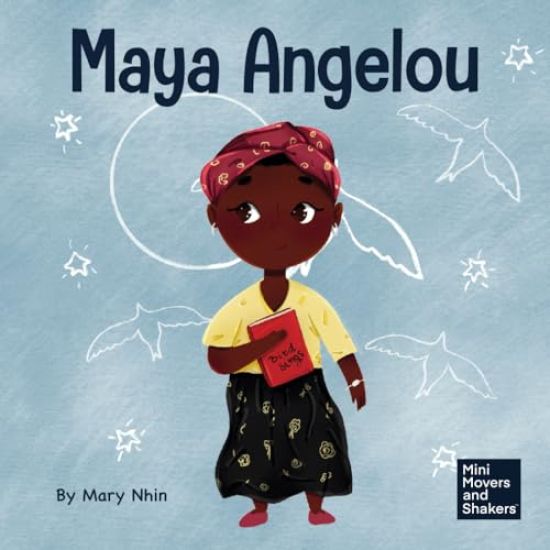
Maya Angelou

Maya Angelou

Mary Nhin

Grow Grit Press LLC
2024
pokkari
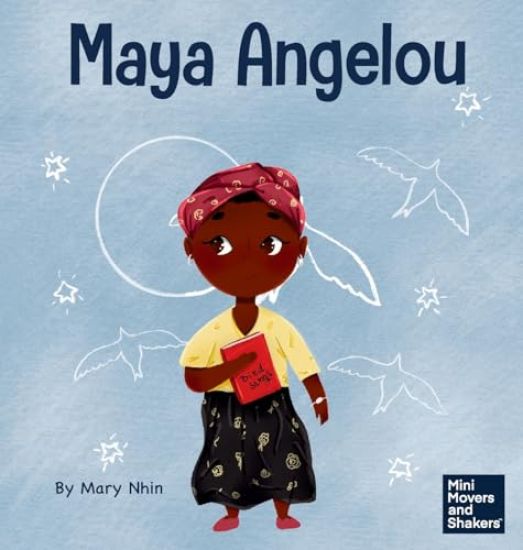
I've learned that people will forget what you said, people will forget what you did, but people will never forget how you made them feel. -Maya AngelouSometimes, we are faced with challenges that seem insurmountable. But with grit and hard work, one can achieve great things Mini Movers and Shakers was developed to inspire children to dream big and work hard. Fun, relatable characters in graphic style books easy enough for young readers, yet interesting for adults.The Mini Movers and Shakers book series is geared to kids 3-11+. Perfect for boys, girls, early readers, primary school students, or toddlers. Excellent resource for educators, parents, and teachers alike.Collect all the Mini Movers and Shakers Books
Maya Angelou

Maya Angelou

Mary Nhin

Grow Grit Press LLC
2024
sidottu
I've learned that people will forget what you said, people will forget what you did, but people will never forget how you made them feel. -Maya AngelouSometimes, we are faced with challenges that seem insurmountable. But with grit and hard work, one can achieve great things Mini Movers and Shakers was developed to inspire children to dream big and work hard. Fun, relatable characters in graphic style books easy enough for young readers, yet interesting for adults.The Mini Movers and Shakers book series is geared to kids 3-11+. Perfect for boys, girls, early readers, primary school students, or toddlers. Excellent resource for educators, parents, and teachers alike.Collect all the Mini Movers and Shakers Books
Maya Civilization

Maya Civilization

Allison Lassieur

Focus Readers
2019
sidottu
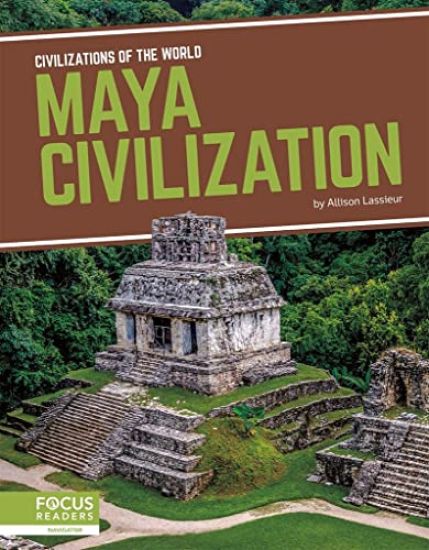
Explores the history and culture of the Maya Civilization. Eye-catching photos, fascinating sidebars, and a "Contributions" special feature guide readers through the rise and fall of this great civilization, focusing on the people and accomplishments that made it unique.
Maya Civilization

Maya Civilization

Allison Lassieur

Focus Readers
2019
pokkari
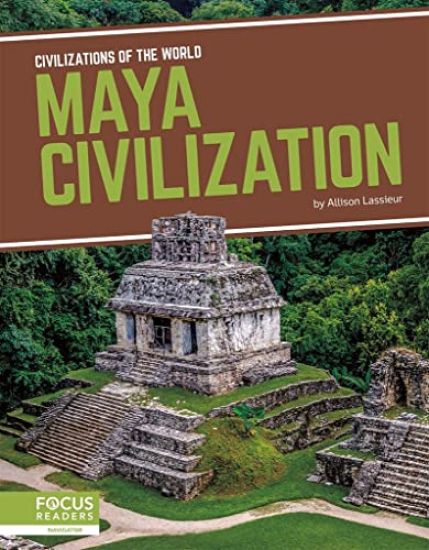
Explores the history and culture of the Maya Civilization. Eye-catching photos, fascinating sidebars, and a "Contributions" special feature guide readers through the rise and fall of this great civilization, focusing on the people and accomplishments that made it unique.
Maya in the Nimbus Valley

Maya in the Nimbus Valley

Albina Ramey

Austin Macauley Publishers LLC
2020
sidottu
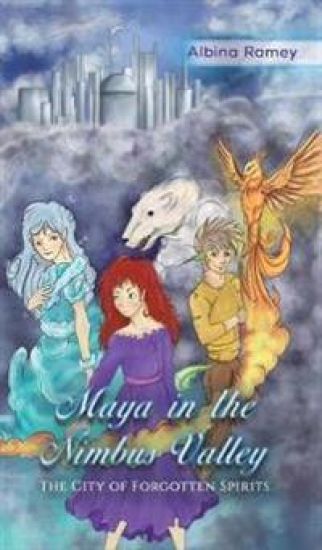
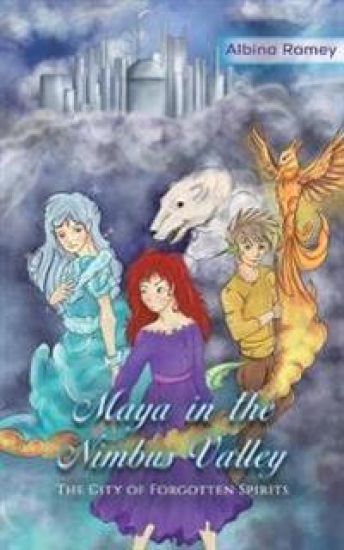
Maya is a special 11-year-old girl. Diagnosed with scoliosis as a baby, she is still a spunky, impulsive dreamer who decides to meet with her mother, who has been separated from her earthly domain. Maya has never known her, but she soon finds out her mother is a Spirit Flora of the Earth. She comes to her in human form and takes Maya to a hidden place created by Mother Nature as the last refuge for forgotten spirits. There, Maya visits the Season Palace, Elements, and Mother Nature herself. While Maya faces great challenges, she adventures with the help of some old Russian folklore figures, as well as friends Snowy, Windy, and Frosty, the spirits of winter. Maya's life in Nimbus, the city of forgotten spirits, becomes an unexpected adventure where she finds herself in the middle of a great plot created by Spirit's great enemy, Almighty Time.
Maya in the Nimbus Valley

Maya in the Nimbus Valley

Albina Ramey

Austin Macauley Publishers LLC
2020
pokkari
Maya is a special 11-year-old girl. Diagnosed with scoliosis as a baby, she is still a spunky, impulsive dreamer who decides to meet with her mother, who has been separated from her earthly domain. Maya has never known her, but she soon finds out her mother is a Spirit Flora of the Earth. She comes to her in human form and takes Maya to a hidden place created by Mother Nature as the last refuge for forgotten spirits. There, Maya visits the Season Palace, Elements, and Mother Nature herself. While Maya faces great challenges, she adventures with the help of some old Russian folklore figures, as well as friends Snowy, Windy, and Frosty, the spirits of winter. Maya's life in Nimbus, the city of forgotten spirits, becomes an unexpected adventure where she finds herself in the middle of a great plot created by Spirit's great enemy, Almighty Time.
Maya Potters' Indigenous Knowledge

Maya Potters' Indigenous Knowledge

Dean E. Arnold

University Press of Colorado
2020
nidottu
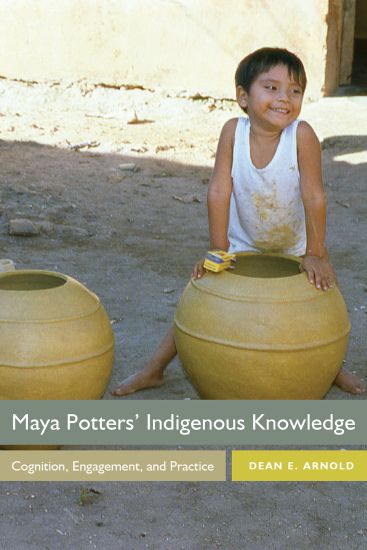
Based on fieldwork and reflection over a period of almost fifty years, Maya Potters’ Indigenous Knowledge utilizes engagement theory to describe the indigenous knowledge of traditional Maya potters in Ticul, Yucatán, Mexico. In this heavily illustrated narrative account, Dean E. Arnold examines craftspeople’s knowledge and skills, their engagement with their natural and social environments, the raw materials they use for their craft, and their process for making pottery. Following Lambros Malafouris, Tim Ingold, and Colin Renfrew, Arnold argues that potters’ indigenous knowledge is not just in their minds but extends to their engagement with the environment, raw materials, and the pottery-making process itself and is recursively affected by visual and tactile feedback. Pottery is not just an expression of a mental template but also involves the interaction of cognitive categories, embodied muscular patterns, and the engagement of those categories and skills with the production process. Indigenous knowledge is thus a product of the interaction of mind and material, of mental categories and action, and of cognition and sensory engagement—the interaction of both human and material agency. Engagement theory has become an important theoretical approach and “indigenous knowledge” (as cultural heritage) is the focus of much current research in anthropology, archaeology, and cultural resource management. While Dean Arnold’s previous work has been significant in ceramic ethnoarchaeology, Maya Potters' Indigenous Knowledge goes further, providing new evidence and opening up different concepts and approaches to understanding practical processes. It will be of interest to a wide variety of researchers in Maya studies, material culture, material sciences, ceramic ecology, and ethnoarchaeology.
Maya Gods of War

Maya Gods of War

Karen Bassie-Sweet

University Press of Colorado
2021
sidottu
Numerous archaeological projects have found substantial evidence of the military nature of Maya society, and warfare is a frequent theme of Maya art. Maya Gods of War investigates the Classic period Maya gods who were associated with weapons of war and the flint and obsidian from which those weapons were made. Author Karen Bassie-Sweet traces the semantic markers used to distinguish flint from other types of stone, surveys various types of Chahk thunderbolt deities and their relationship to flint weapons, and explores the connection between lightning and the ruling elite. Additional chapters review these fire and solar deities and their roles in Maya warfare and examine the nature and manifestations of the Central Mexican thunderbolt god Tlaloc, his incorporation into the Maya pantheon, and his identification with meteors and obsidian weapons. Finally, Bassie-Sweet addresses the characteristics of the deity God L, his role as an obsidian merchant god, and his close association with the ancient land route between the highland Guatemalan obsidian sources and the lowlands. Through analysis of the nature of the Teotihuacán deities and exploration of the ways in which these gods were introduced into the Maya region and incorporated into the Maya worldview, Maya Gods of War offers new insights into the relationship between warfare and religious beliefs in Mesoamerica. This significant work will be of interest to scholars of Maya religion and iconography.
Maya-British Conflict at the Edge of the Yucatecan Caste War

Maya-British Conflict at the Edge of the Yucatecan Caste War

Christine A. Kray

University Press of Colorado
2023
sidottu
Maya-British Conflict at the Edge of the Yucatecan Caste War interrogates the 1862 alliance forged between the San Pedro Maya and the British during the Caste War of Yucatán (1847–1901). Illuminating the complex interactions among Maya groups, Yucatecans of Spanish descent, and British settlers in what is now Belize, Christine A. Kray uses storytelling techniques, suspense, and humor, via historical documents and oral history interviews to tell a new story about the dynamics at the heart of the Social War. Official British declarations of neutrality in the Caste War were confounded by a variety of political and economic factors, including competing land claims befuddled by a tangled set of treaties, mahogany extraction by British companies in contested territories, Maya rent demands, British trade in munitions to different groups of Maya combatants, and a labor system reliant on debt servitude. All these factors contributed to uneasy alliances and opportunistic crossings of imagined geopolitical borders in both directions, ultimately leading to a new military conflict in the western and northern regions of the territory claimed by Britain. What frequently began as hyper-local disputes spun out into international affairs as actors called upon more powerful groups for assistance. Evading reductionism, this work traces the decisions and actions of key figures as they maneuvered through the miasma of violence, abuse, deception, fear, flight, and glimpses of freedom. Positioning the historiographic and ethnographic gaze on the English side without adopting the colonialist narratives and objectives found in English repositories, Maya-British Conflict at the Edge of the Yucatecan Caste War is an important and original contribution to a neglected area of study. It will appeal to students, scholars, and general readers interested in anthropology, Latin American cultures and history, Central American history, British imperialism, Indigenous rights, political anthropology, and colonialism and culture.
Maya-British Conflict at the Edge of the Yucatecan Caste War

Maya-British Conflict at the Edge of the Yucatecan Caste War

Christine A. Kray

University Press of Colorado
2023
pokkari
Maya-British Conflict at the Edge of the Yucatecan Caste War interrogates the 1862 alliance forged between the San Pedro Maya and the British during the Caste War of Yucatán (1847–1901). Illuminating the complex interactions among Maya groups, Yucatecans of Spanish descent, and British settlers in what is now Belize, Christine A. Kray uses storytelling techniques, suspense, and humor, via historical documents and oral history interviews to tell a new story about the dynamics at the heart of the Social War. Official British declarations of neutrality in the Caste War were confounded by a variety of political and economic factors, including competing land claims befuddled by a tangled set of treaties, mahogany extraction by British companies in contested territories, Maya rent demands, British trade in munitions to different groups of Maya combatants, and a labor system reliant on debt servitude. All these factors contributed to uneasy alliances and opportunistic crossings of imagined geopolitical borders in both directions, ultimately leading to a new military conflict in the western and northern regions of the territory claimed by Britain. What frequently began as hyper-local disputes spun out into international affairs as actors called upon more powerful groups for assistance. Evading reductionism, this work traces the decisions and actions of key figures as they maneuvered through the miasma of violence, abuse, deception, fear, flight, and glimpses of freedom. Positioning the historiographic and ethnographic gaze on the English side without adopting the colonialist narratives and objectives found in English repositories, Maya-British Conflict at the Edge of the Yucatecan Caste War is an important and original contribution to a neglected area of study. It will appeal to students, scholars, and general readers interested in anthropology, Latin American cultures and history, Central American history, British imperialism, Indigenous rights, political anthropology, and colonialism and culture.
Maya Blue

Maya Blue

Dean E. Arnold

University Press of Colorado
2024
sidottu
One of the great technological achievements of the ancient Maya, Maya Blue is one the world’s most unusual ancient pigments. In Maya Blue, Dean E. Arnold offers a comprehensive history of its study for almost a century, filled with personal anecdotes drawn from his decades of work uncovering the Maya knowledge of its constituents, its ancient sources, and how it was made—including previously unknown methods. The book presents a fresh holistic perspective that documents these discoveries and the scientific process that led to them and provides testable hypotheses about how the pigment and the technology used to make it moved throughout Mesoamerica. Combining the organic dye indigo and the inorganic clay mineral palygorskite in a highly stable chemical hybrid that, unlike indigo, resists attacks by acids, alkalines, and organic solvents and endures without fading, Maya Blue has a rich blue color that has survived for centuries in one of the world’s harshest climates. First used at the site of Calakmul in the tropical forest of southern Mexico during the Late Preclassic period, the Maya’s abiding hue diffused across Mesoamerica over a period of 1,700 years. It appears on Maya pottery, sculpture, murals, and codices and carries multiple meanings, standing as a symbol for cultural cornerstones from sacrifice to the rain god Chaak. It was discovered in 1931 at Chichén Itzá, and its composition was a mystery for more than three decades, but questions about its source, how and why it achieved such stability, and how and why the Maya made the pigment remained for years. In Maya Blue, Arnold summarizes ethnographic, archaeological, chemical, and material science research over the last century from an anthropological perspective. This thorough, engaging, and accessible book chronicles the history of this pigment as no work has done before.