Kirjojen hintavertailu. Mukana 12 595 353 kirjaa ja 12 kauppaa.

Kirjahaku

Etsi kirjoja tekijän nimen, kirjan nimen tai ISBN:n perusteella.

1000 tulosta hakusanalla Michael J. Perry

Literary Interventions in the Campaign Biography
Literary Interventions in the Campaign Biography considers campaign biographies written by major authors including Nathaniel Hawthorne, William Dean Howells, Lew Wallace, Jacob Riis, and Rose Wilder Lane. Whereas a number of cultural historians have previously considered campaign biographies to be marginal or isolated from the fictional output of these figures, this volume revisits the biographies in order to understand better how they inform, and are informed by, seismic shifts in the literary landscape. The book illuminates the intersection of American literature and politics while charting how the Presidency has developed in the public imagination. In so doing, it poses questions of increasing significance about how we understand the office as well as its occupants today.
Writing Politics

Writing Politics

Michael J Shapiro

Routledge
2021
sidottu
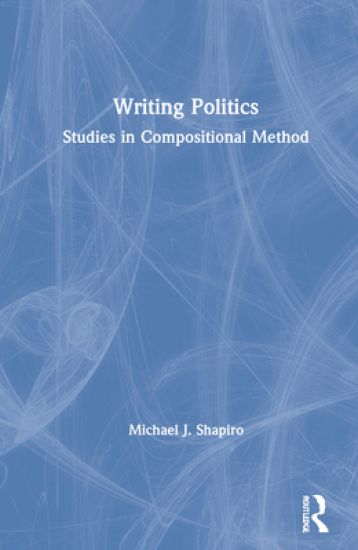
Writing Politics is a methods book designed to instruct on politically focused literary inquiry.Exploring the political sensibilities that arise from the way literary fiction re-textualizes historical periods and events, the book features a series of violence-themed inquiries that emphasize forms of writing as the vehicles for politically attuned historiography. Each investigation treats the way the literary genre, within historiographic metafiction, enables political inquiry. It’s a form of writing that inter-articulates history and fiction to rework a textual past and unsettle dominant understandings of events and situations. Central to the diverse chapters are fictional treatments of authoritarian, fascist, or zealous mentalities. Featured, for example, are Radovan Karadzic (the architect of the Bosnian genocide), Reinhard Heydrich (the architect of the Holocaust’s "final solution"), and the Trotsky assassin Ramon Mercader.Michael J. Shapiro has produced another original and sophisticated bookshelf staple; the only contemporary investigation in Political Studies that instructs on method in this way.
Writing Politics

Writing Politics

Michael J Shapiro

Routledge
2021
nidottu
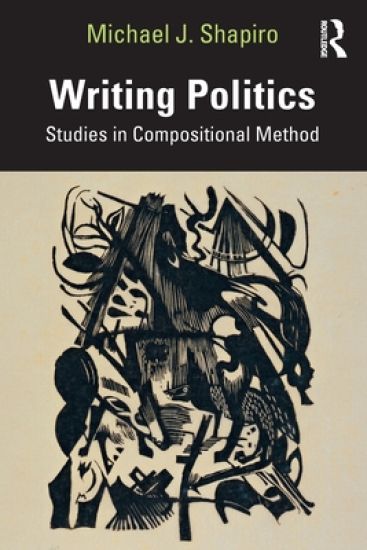
Writing Politics is a methods book designed to instruct on politically focused literary inquiry.Exploring the political sensibilities that arise from the way literary fiction re-textualizes historical periods and events, the book features a series of violence-themed inquiries that emphasize forms of writing as the vehicles for politically attuned historiography. Each investigation treats the way the literary genre, within historiographic metafiction, enables political inquiry. It’s a form of writing that inter-articulates history and fiction to rework a textual past and unsettle dominant understandings of events and situations. Central to the diverse chapters are fictional treatments of authoritarian, fascist, or zealous mentalities. Featured, for example, are Radovan Karadzic (the architect of the Bosnian genocide), Reinhard Heydrich (the architect of the Holocaust’s "final solution"), and the Trotsky assassin Ramon Mercader.Michael J. Shapiro has produced another original and sophisticated bookshelf staple; the only contemporary investigation in Political Studies that instructs on method in this way.
Doctrine and Difference

Doctrine and Difference

Michael J. Colacurcio

Routledge
2021
sidottu
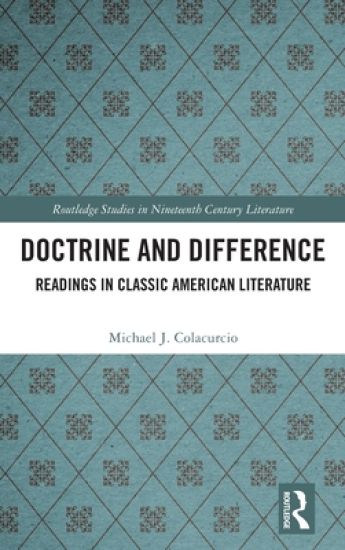
Doctrine and Difference: Readings in Classic American Literature aims to expand and deepen the inquiry begun in the volume from 2007. Beginning with an essay on the avowedly Puritan poetry of Anne Bradstreet and ending with two not-quite-secular novels from late in the 19th century, this volume seeks to uncover the religious and philosophical meanings deeply embedded in so much of 19th century American literature, and then, importantly, to identify and analyze the techniques by which the "doctrines" are differentiated into imaginative literature. Poe, Emerson, Thoreau, Hawthorne, Melville—and yes, even Howells and James—are driven by powerful thematic intentions. But they do not preach: they dramatize. And, as they talk their way through their existential issues, they often talk to one another: yes, no, maybe, ok but not so fast. Stressing the idea of a shared, poet-Puritan inheritance, the new Doctrine and Difference means to re-confirm the vitality of literary history and, in particular, the importance of reading the classic texts of American literature in context and in relation.
Doctrine and Difference

Doctrine and Difference

Michael J. Colacurcio

TAYLOR FRANCIS LTD
2023
nidottu
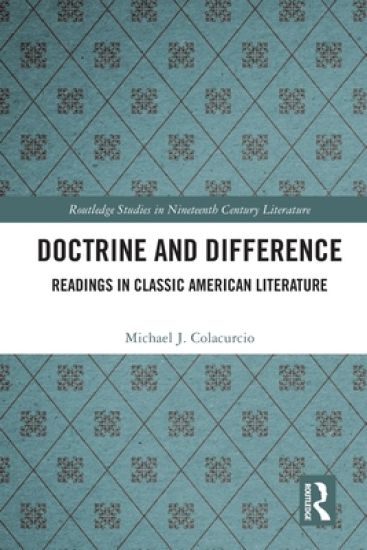
Doctrine and Difference: Readings in Classic American Literature aims to expand and deepen the inquiry begun in the volume from 2007. Beginning with an essay on the avowedly Puritan poetry of Anne Bradstreet and ending with two not-quite-secular novels from late in the 19th century, this volume seeks to uncover the religious and philosophical meanings deeply embedded in so much of 19th century American literature, and then, importantly, to identify and analyze the techniques by which the "doctrines" are differentiated into imaginative literature. Poe, Emerson, Thoreau, Hawthorne, Melville—and yes, even Howells and James—are driven by powerful thematic intentions. But they do not preach: they dramatize. And, as they talk their way through their existential issues, they often talk to one another: yes, no, maybe, ok but not so fast. Stressing the idea of a shared, poet-Puritan inheritance, the new Doctrine and Difference means to re-confirm the vitality of literary history and, in particular, the importance of reading the classic texts of American literature in context and in relation.
Masculinity and Its Discontents

Masculinity and Its Discontents

Michael J. Diamond

Routledge
2021
sidottu
Offering a uniquely psychoanalytic developmental perspective on male gender identity and the sense of maleness, this book provides an in-depth analysis of the development of masculinity in childhood and its continued evolution throughout a man’s life. Drawing on classical Freudian theory, as well as on more contemporary psychoanalytic theories, this book explores early infancy and child development, preoedipal factors and the oedipal complex, the influence of parenting and the unconscious transmission of gendered factors both by mothers and both biological and symbolic fathers, the male ego ideal, social, cultural, and biological influences, the role of inherent psychic bi-genderality in the context of gender binaries, and the inherent gendered tensions and challenges experienced as an individual progresses into adult and later life. This book is original in its characterization of the male developmental trajectory as underpinned by psychoanalytic principles pertaining to conflict and inherent tensions that continue throughout the life cycle and strongly impact other areas of life. Deeply rooted in the unconscious, a man’s multiply determined sense of masculinity requires deconstructing the mother, the feminine, and the other in the male psyche. As the text illustrates via clinical vignettes, an awareness and an understanding of these areas can improve the clinical work of psychoanalysts working with men who struggle with the intrinsic conflicts in their sense of maleness.This book will be of great clinical value to psychoanalysts, psychotherapists and other mental health practitioners, and will stimulate the thinking of scholars in such areas as gender theory, psychodynamic and sociocultural aspects of gender roles, and the changing social definition of masculinity.
Masculinity and Its Discontents

Masculinity and Its Discontents

Michael J. Diamond

Routledge
2021
nidottu
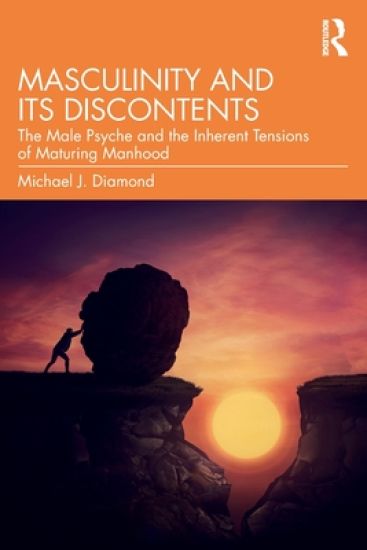
Offering a uniquely psychoanalytic developmental perspective on male gender identity and the sense of maleness, this book provides an in-depth analysis of the development of masculinity in childhood and its continued evolution throughout a man’s life. Drawing on classical Freudian theory, as well as on more contemporary psychoanalytic theories, this book explores early infancy and child development, preoedipal factors and the oedipal complex, the influence of parenting and the unconscious transmission of gendered factors both by mothers and both biological and symbolic fathers, the male ego ideal, social, cultural, and biological influences, the role of inherent psychic bi-genderality in the context of gender binaries, and the inherent gendered tensions and challenges experienced as an individual progresses into adult and later life. This book is original in its characterization of the male developmental trajectory as underpinned by psychoanalytic principles pertaining to conflict and inherent tensions that continue throughout the life cycle and strongly impact other areas of life. Deeply rooted in the unconscious, a man’s multiply determined sense of masculinity requires deconstructing the mother, the feminine, and the other in the male psyche. As the text illustrates via clinical vignettes, an awareness and an understanding of these areas can improve the clinical work of psychoanalysts working with men who struggle with the intrinsic conflicts in their sense of maleness.This book will be of great clinical value to psychoanalysts, psychotherapists and other mental health practitioners, and will stimulate the thinking of scholars in such areas as gender theory, psychodynamic and sociocultural aspects of gender roles, and the changing social definition of masculinity.
Introduction to Transportation Planning

Introduction to Transportation Planning

Michael J. Bruton

Routledge
2021
sidottu
When originally published in 1975, (here re-issuing the 3rd edition of 1985), this was the only genuinely introductory textbook to the subject of transportation planning. The introductory chapter places the issue of transport in its broader societal context, relating it to demographic, socio-economic, political and environmental considerations. The increasing importance of technology is recognized in the chapter which covers commonly used software packages. As a whole the book provides a basic introduction to the traffic estimation stage of the transport planning process and forms a general guide and survey to the whole subject.
Introduction to Transportation Planning

Introduction to Transportation Planning

Michael J. Bruton

TAYLOR FRANCIS LTD
2023
nidottu
When originally published in 1975, (here re-issuing the 3rd edition of 1985), this was the only genuinely introductory textbook to the subject of transportation planning. The introductory chapter places the issue of transport in its broader societal context, relating it to demographic, socio-economic, political and environmental considerations. The increasing importance of technology is recognized in the chapter which covers commonly used software packages. As a whole the book provides a basic introduction to the traffic estimation stage of the transport planning process and forms a general guide and survey to the whole subject.
Mathematical Analysis and Optimization for Economists
In Mathematical Analysis and Optimization for Economists, the author aims to introduce students of economics to the power and versatility of traditional as well as contemporary methodologies in mathematics and optimization theory; and, illustrates how these techniques can be applied in solving microeconomic problems.This book combines the areas of intermediate to advanced mathematics, optimization, and microeconomic decision making, and is suitable for advanced undergraduates and first-year graduate students. This text is highly readable, with all concepts fully defined, and contains numerous detailed example problems in both mathematics and microeconomic applications. Each section contains some standard, as well as more thoughtful and challenging, exercises. Solutions can be downloaded from the CRC Press website. All solutions are detailed and complete.FeaturesContains a whole spectrum of modern applicable mathematical techniques, many of which are not found in other books of this type.Comprehensive and contains numerous and detailed example problems in both mathematics and economic analysis.Suitable for economists and economics students with only a minimal mathematical background.Classroom-tested over the years when the author was actively teaching at the University of Hartford.Serves as a beginner text in optimization for applied mathematics students.Accompanied by several electronic chapters on linear algebra and matrix theory, nonsmooth optimization, economic efficiency, and distance functions available for free on www.routledge.com/9780367759018.
Mathematical Analysis and Optimization for Economists
In Mathematical Analysis and Optimization for Economists, the author aims to introduce students of economics to the power and versatility of traditional as well as contemporary methodologies in mathematics and optimization theory; and, illustrates how these techniques can be applied in solving microeconomic problems.This book combines the areas of intermediate to advanced mathematics, optimization, and microeconomic decision making, and is suitable for advanced undergraduates and first-year graduate students. This text is highly readable, with all concepts fully defined, and contains numerous detailed example problems in both mathematics and microeconomic applications. Each section contains some standard, as well as more thoughtful and challenging, exercises. Solutions can be downloaded from the CRC Press website. All solutions are detailed and complete.FeaturesContains a whole spectrum of modern applicable mathematical techniques, many of which are not found in other books of this type.Comprehensive and contains numerous and detailed example problems in both mathematics and economic analysis.Suitable for economists and economics students with only a minimal mathematical background.Classroom-tested over the years when the author was actively teaching at the University of Hartford.Serves as a beginner text in optimization for applied mathematics students.Accompanied by several electronic chapters on linear algebra and matrix theory, nonsmooth optimization, economic efficiency, and distance functions available for free on www.routledge.com/9780367759018.
Writing Postindustrial Places

Writing Postindustrial Places

Michael J. Salvo

Routledge
2019
nidottu
Exploring the relationship between postindustrial writing and developments in energy production, manufacturing, and agriculture, Michael J. Salvo shows how technological and industrial innovation relies on communicative and organizational suppleness. Through representative case studies, Salvo demonstrates the ways in which technical communicators formulate opportunities that link resources with need. His book is a supple articulation of the opportunities and pitfalls that come with great change.
European Thought and Culture, 1350-1992

European Thought and Culture, 1350-1992

Michael J. Sauter

Routledge
2021
nidottu
This book explores the main currents of European thought between 1350 and 1992, which it approaches in two principal ways: culture as produced by place and the progressive unmooring of thought from previously set religious and philosophical boundaries.The book reads the period against spatial thought’s history (spatial sciences such as geography or Euclidean geometry) to argue that Europe cannot be understood as a continent in intellectual terms or its history organized with respect to traditional spatial-geographic categories. Instead we need to understand European intellectual history in terms of a culture that defined its own place, as opposed to a place that produced a given culture. It then builds on this idea to argue that Europe’s overweening drive to know more about humanity and the cosmos continually breached the boundaries set by venerable religious and philosophical traditions. In this respect, spatial thought foregrounded the human at the unchanging’s expense, with European thought slowly becoming unmoored, as it doggedly produced knowledge at wisdom’s expense. Michael J. Sauter illustrates this by pursuing historical themes across different chapters, including European thought’s exit from the medieval period, the Renaissance, the Reformation, the Scientific Revolution, the Enlightenment and Romanticism, the Industrial Revolution, and war and culture, offering a thorough overview of European thought during this period. The book concludes by explaining how contemporary culture has forgotten what early modern thinkers such as Michel de Montaigne still knew, namely, that too little skepticism toward one’s own certainties makes one a danger to others.Offering a comprehensive introduction to European thought that stretches from the late fourteenth to the late twentieth century, this is the perfect one-volume study for students of European intellectual history.
European Thought and Culture, 1350-1992

European Thought and Culture, 1350-1992

Michael J. Sauter

Routledge
2021
sidottu
This book explores the main currents of European thought between 1350 and 1992, which it approaches in two principal ways: culture as produced by place and the progressive unmooring of thought from previously set religious and philosophical boundaries.The book reads the period against spatial thought’s history (spatial sciences such as geography or Euclidean geometry) to argue that Europe cannot be understood as a continent in intellectual terms or its history organized with respect to traditional spatial-geographic categories. Instead we need to understand European intellectual history in terms of a culture that defined its own place, as opposed to a place that produced a given culture. It then builds on this idea to argue that Europe’s overweening drive to know more about humanity and the cosmos continually breached the boundaries set by venerable religious and philosophical traditions. In this respect, spatial thought foregrounded the human at the unchanging’s expense, with European thought slowly becoming unmoored, as it doggedly produced knowledge at wisdom’s expense. Michael J. Sauter illustrates this by pursuing historical themes across different chapters, including European thought’s exit from the medieval period, the Renaissance, the Reformation, the Scientific Revolution, the Enlightenment and Romanticism, the Industrial Revolution, and war and culture, offering a thorough overview of European thought during this period. The book concludes by explaining how contemporary culture has forgotten what early modern thinkers such as Michel de Montaigne still knew, namely, that too little skepticism toward one’s own certainties makes one a danger to others.Offering a comprehensive introduction to European thought that stretches from the late fourteenth to the late twentieth century, this is the perfect one-volume study for students of European intellectual history.
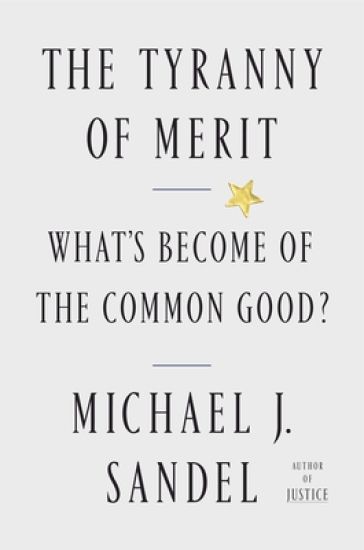
The Tyranny of Merit: What's Become of the Common Good?

The Tyranny of Merit: What's Become of the Common Good?

Michael J. Sandel

Farrar, Straus and Giroux
2020
sidottu
A Times Literary Supplement's Book of the Year 2020A New Statesman's Best Book of 2020A Bloomberg's Best Book of 2020A Guardian Best Book About Ideas of 2020The world-renowned philosopher and author of the bestselling Justice explores the central question of our time: What has become of the common good?These are dangerous times for democracy. We live in an age of winners and losers, where the odds are stacked in favor of the already fortunate. Stalled social mobility and entrenched inequality give the lie to the American credo that "you can make it if you try". The consequence is a brew of anger and frustration that has fueled populist protest and extreme polarization, and led to deep distrust of both government and our fellow citizens--leaving us morally unprepared to face the profound challenges of our time. World-renowned philosopher Michael J. Sandel argues that to overcome the crises that are upending our world, we must rethink the attitudes toward success and failure that have accompanied globalization and rising inequality. Sandel shows the hubris a meritocracy generates among the winners and the harsh judgement it imposes on those left behind, and traces the dire consequences across a wide swath of American life. He offers an alternative way of thinking about success--more attentive to the role of luck in human affairs, more conducive to an ethic of humility and solidarity, and more affirming of the dignity of work. The Tyranny of Merit points us toward a hopeful vision of a new politics of the common good.
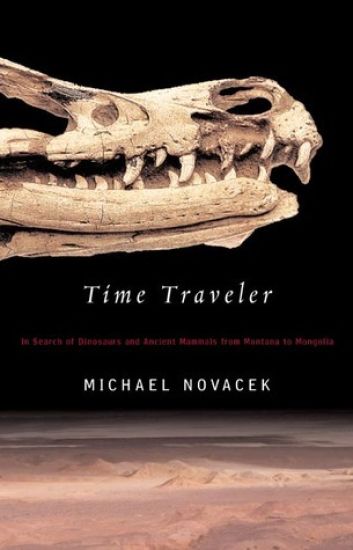
Time Traveler: In Search of Dinosaurs and Ancient Mammals from Montana to Mongolia
"A superb introduction to paleontology as it really is and how it is done, from fish to dinosaur, bird, and mammal." Edward O. WilsonMichael Novacek, a renowned paleontologist who has discovered important fossils on virtually every continent, is an authority on patterns of evolution and on the relationships among extinct and extant organisms. "Time Traveler "is his captivating account of how his boyhood enthusiasm for dinosaurs became a lifelong commitment to vanguard science. Novacek writes of the alluring perils of fieldwork with affection and discernment, and he illuminates the most exciting issues in paleontology today."
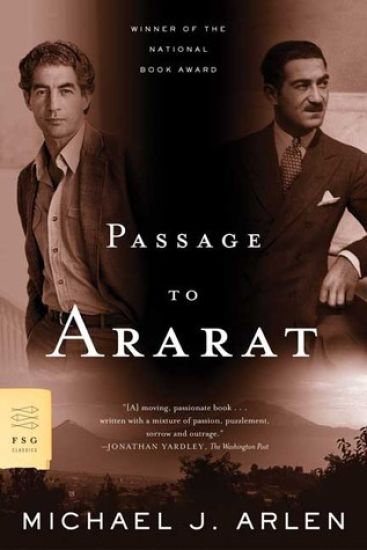
Passage to Ararat

Passage to Ararat

Michael J. Arlen

Farrar, Straus and Giroux
2006
nidottu
In "Passage to Ararat," which received the National Book Award in 1976, Michael J. Arlen goes beyond the portrait of his father, the famous Anglo-Armenian novelist of the 1920s, that he created in Exiles to try to discover what his father had tried to forget: Armenia and what it meant to be an Armenian, a descendant of a proud people whom conquerors had for centuries tried to exterminate. But perhaps most affectingly, Arlen tells a story as large as a whole people yet as personal as the uneasy bond between a father and a son, offering a masterful account of the affirmation and pain of kinship.
Branch-and-Bound Applications in Combinatorial Data Analysis

Branch-and-Bound Applications in Combinatorial Data Analysis

Michael J. Brusco; Stephanie Stahl

Springer-Verlag New York Inc.
2005
sidottu
This monograph focuses on the application of the solution strategy known as branch-and-bound to problems of combinatorial data analysis. Combinatorial data analysis problems typically require either the sel- tion of a subset of objects from a larger (master) set, the grouping of a collection of objects into mutually exclusive and exhaustive subsets, or the sequencing of objects. To obtain verifiably optimal solutions for this class of problems, we must evaluate (either explicitly or implicitly) all feasible solutions. Unfortunately, the number of feasible solutions for problems of combinatorial data analysis grows exponentially with pr- lem size. For this reason, the explicit enumeration and evaluation of all solutions is computationally infeasible for all but the smallest problems. The branch-and-bound solution method is one type of partial enume- tion solution strategy that enables some combinatorial data analysis pr- lems to be solved optimally without explicitly enumerating all feasible solutions. To understand the operation of a branch-and-bound algorithm, we d- tinguish complete solutions from partial solutions. A complete solution is one for which a feasible solution to the optimization problem has been produced (e. g. , all objects are assigned to a group, or all objects are - signed a sequence position). A partial solution is an incomplete solution (e. g. , some objects are not assigned to a group, or some objects are not assigned a sequence position).
Essays in Brewing Science

Essays in Brewing Science

Michael J. Lewis; Charles W. Bamforth

Springer-Verlag New York Inc.
2006
nidottu
Essays in Malting and Brewing is an original and comprehensive examination of brewing from the perspective of a real brewer. Brewing texts generally use a sequential barley-beer-bottle organization that takes the reader systematically through the various stages of beer-making in a logical and informative way. This approach adequately communicates the essential operation. However, brewers think about all of the stages in the process that might affect a single property, such as beer color. Alternatively brewers might ponder the influence of such affective agents as modification or oxygen throughout the process. Essays in Malting and Brewing departs from the traditional sequential approach to pursue brewing in the manner a brew master approaches the process. It is structured to look down the length of the process for causes and effects. Each essay discusses a problem, a beer component, or a flavor, by following how this one item arises and how it changes along the way. This is a crucial feature to bear this in mind when reading the book because this organization brings together information and ideas that are not usually presented side-by-side. The essay format allows the reader to understand how the raw materials of brewing and the way they are handled impact on process performance and product quality. This new approach to an enduring subject is essential for the informed reader interested in the malting and brewing process.