
Kirjahaku
Etsi kirjoja tekijän nimen, kirjan nimen tai ISBN:n perusteella.
885 tulosta hakusanalla Michaelangelo Rodriguez
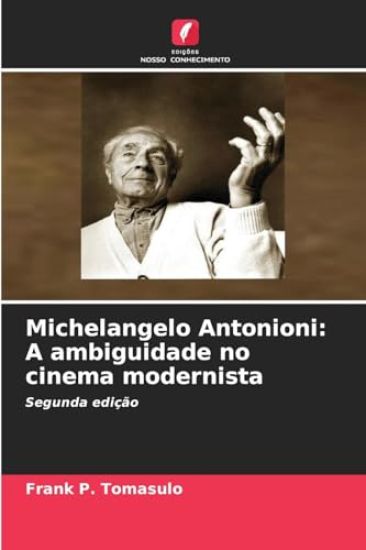
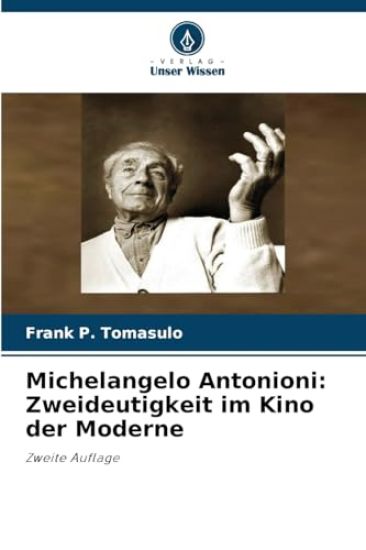
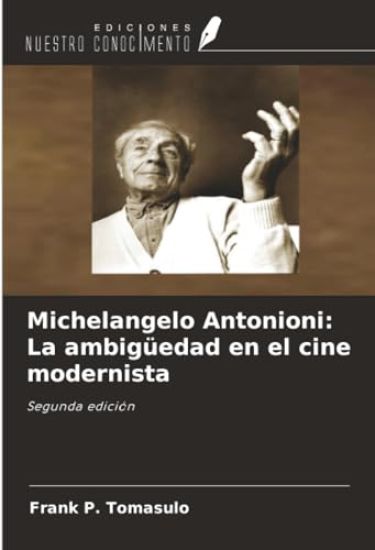
Michelangelo Antonioni: La ambigüedad en el cine modernista
Frank P. Tomasulo
Ediciones Nuestro Conocimiento
2025
nidottu
Michelangelo Antonioni: L'ambiguïté dans le cinéma moderniste
Frank P. Tomasulo
Editions Notre Savoir
2025
nidottu
La plupart des ouvrages scientifiques consacr s au cin ma de Michelangelo Antonioni se concentrent sur le style distinctif du r alisateur. De nombreuses tudes mentionnent sa relation avec divers mouvements artistiques modernes et l'ambigu t th matique de son travail, mais peu d'entre elles situent les derniers films d'Antonioni dans leur contexte moderniste et dans le ph nom ne contemporain de l'ambigu t . Cette tude tente de situer Antonioni dans le discours plus large et contextualisant du modernisme et de ses "probl matiques du langage".
Michelangelo Antonioni: L'ambiguità nel cinema modernista
Frank P. Tomasulo
Edizioni Sapienza
2025
nidottu
La maggior parte della letteratura accademica sul cinema di Michelangelo Antonioni si concentra sullo stile cinematografico distintivo del regista. Molti studi menzionano il suo rapporto con i vari movimenti artistici moderni e l'ambiguit tematica del suo lavoro, ma pochi posizionano i film successivi di Antonioni nel loro contesto modernista e nel fenomeno contemporaneo dell'ambiguit . Questo studio cerca di collocare Antonioni all'interno del discorso pi ampio e contestualizzante del modernismo e della sua "problematica del linguaggio".
Michelangelo Antonioni: Niejednoznacznośc w kinie modernistycznym
Frank P. Tomasulo
Wydawnictwo Nasza Wiedza
2025
nidottu
Większośc literatury naukowej na temat kina Michelangelo Antonioniego skupia się na charakterystycznym stylu filmowym reżysera. Wiele opracowań wspomina o jego związkach z r żnymi ruchami sztuki nowoczesnej i tematycznej niejednoznaczności jego tw rczości, ale niewiele z nich umiejscawia p źniejsze filmy Antonioniego w ich modernistycznym kontekście i we wsp lczesnym zjawisku niejednoznaczności. Niniejsze studium pr buje umiejscowic Antonioniego w szerszym, kontekstualizującym dyskursie modernizmu i jego "problematyki języka".
Michelangelo in the New Millennium presents six paired studies in dialogue with each other that offer new ways of looking at Michelangelo’s art as a series of social, creative, and emotional exchanges where artistic intention remains flexible; probe deeper into the artist’s formal borrowing and how it affects meaning regarding his early religious works; and consider the making and significance of his late papal painting projects commissioned by Paul III and Paul IV for chapels at the Vatican Palace. Contributors are: William E. Wallace, Joost Keizer, Eric R. Hupe, Emily Fenichel, Jonathan Kline, Erin Sutherland Minter, Margaret Kuntz, Tamara Smithers and Marcia B. Hall
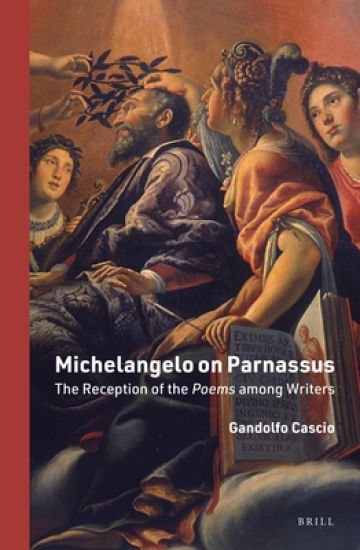
Michelangelo wrote the Poems to directly confront themes to which as an artist he could not give the type of expression that he wished. To do so, he chose harsh language, which was distant from the transparent idiom of the Cinquecento. Critics have generally been cautious, often hostile, toward his ‘second trade.' By contrast, writers, appreciating their quality, have greeted his poems in a completely different manner. This book presents an original investigation of the relationship of a variety of authors (Varchi, Aretino, Foscolo, Wordsworth, Stendhal, Mann, Montale, Morante and others) with Buonarroti’s verse. Through close analysis of the texts, it shows why Michelangelo should hold a more noble position on Parnassus than that which historiography has hitherto granted him. This book is a translation of Michelangelo in Parnaso: La ricezione delle Rime tra gli scrittori (Venice: Marsilio Editori. 2019).
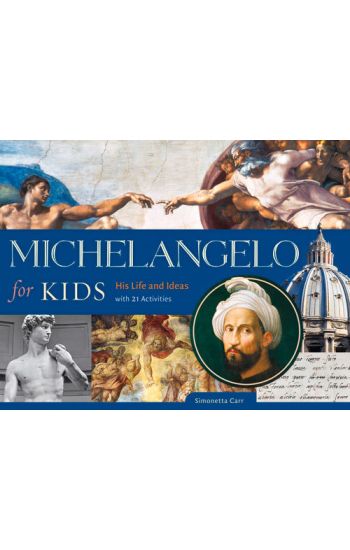
Michelangelo Buonarroti—known simply as Michelangelo—has been called the greatest artist who has ever lived. His impressive masterpieces astonished his contemporaries and remain some of today’s most famous artworks. Young readers will come to know Michelangelo the man as well as the artistic giant, following his life from his childhood in rural Italy to his emergence as a rather egotistical teenager to a humble and caring old man. They’ll learn that he did exhausting, back-breaking labor to create his art yet worked well, even with humor, with others in the stone quarry and in his workshop. Michelangelo for Kids offers an in-depth look at his life, ideas, and accomplishments, while providing a fascinating view of the Italian Renaissance and how it shaped and affected his work. Budding artists will come to appreciate Michelangelo’s techniques and understand exactly what made his work so great. Twenty-one creative, fun, hands-on activities illuminate Michelangelo’s various artistic mediums as well as the era in which he lived. Kids can: make homemade paint, learn the cross-hatching technique used by Michelangelo, make an antique statue, build a model fortification, compose a Renaissance-style poem, and much more.

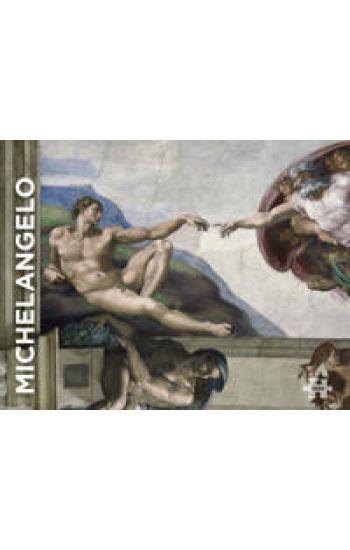
Michelangelo: The Creation of Adam 1000-Piece Jigsaw Puzzle
Pomegranate Europe Ltd
2026
muu

Michelangelo. Paintings, Sculptures and Architecture. 45th Ed.
TASCHEN GMBH
2026
sidottu
Before reaching the tender age of 30, Michelangelo Buonarroti (1475–1564) had already sculpted Pietà and David, two of the most famous sculptures in the entire history of art. As a sculptor, painter, draftsman, and architect, the achievements of this Italian master are unique—no artist before or after him has ever produced such a vast, multifaceted, and wide-ranging œuvre. This fresh TASCHEN edition traces Michelangelo’s ascent to the cultural elite of the Renaissance. Ten richly illustrated chapters cover the artist’s paintings, sculptures, and architecture, including a close analysis of the artist’s tour de force frescoes in the Sistine Chapel. Full-page reproductions and enlarged details allow readers to appreciate the finest details in the artist’s repertoire, while the book’s biographical essay considers Michelangelo’s more personal traits and circumstances, such as his solitary nature, his thirst for money and commissions, his immense wealth, and his skill as a property investor.

Michelangelo Signorile
OmniScriptum
2026
pokkari
Michelangelo (Teenage Mutant Ninja Turtles)
OmniScriptum
2026
nidottu

Michael Angelo Batio Discography
VDM Publishing House
2010
nidottu
Observera att förlaget som ger ut denna produkt baserar innehållet i sina produkter på fria källor som Wikipedia. Boken är med stor sannolikhet endast ett utdrag ur dessa informationskällor, alltså inte en vanlig bok i den bemärkelsen.
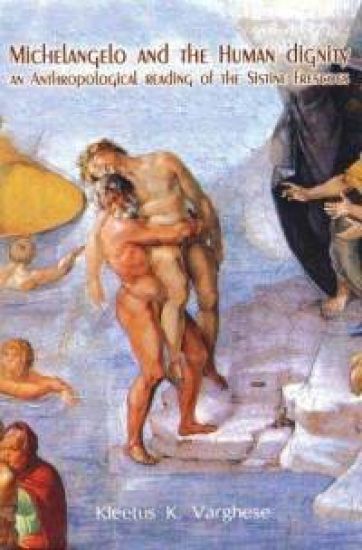
The anthropology of Michelangelo Buonarroti (1475-1564) is studied with special referecne to his frescoes in the Sistine Chapel, both the Ceiling (1508-1512) and on the altar wall: The Last Judgement (1536-1541). The analyses of the frescoes were done with the help of Florentine Neo-Platonic philosophy, which is the philosophical background of Michelangelo. The Neo-Platonic concepts such as the ascension, hierrachical structure, concept of beauty, and the image-likeness of God are evident in all the basic works by the artists, especially in the frescoes of the Sistine Chapel, which are studied in this work. The author was born in Kerala, India. he undertook postgraduate atudies in Malayalam Literature, Ghandhian Thought and Philosophy from a number of universities in India. His PHd is from the Urban University in Rome. At present he teaches Philosophy at St Joseph's Pontifical Institute in Alwaye, India.
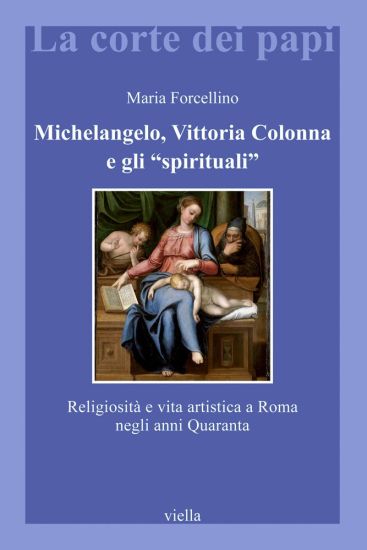
Michelangelo, Vittoria Colonna E Gli 'Spirituali': Religiosita E Vita Artistica a Roma Negli Anni Quaranta
Maria Forcellino
Viella
2009
nidottu
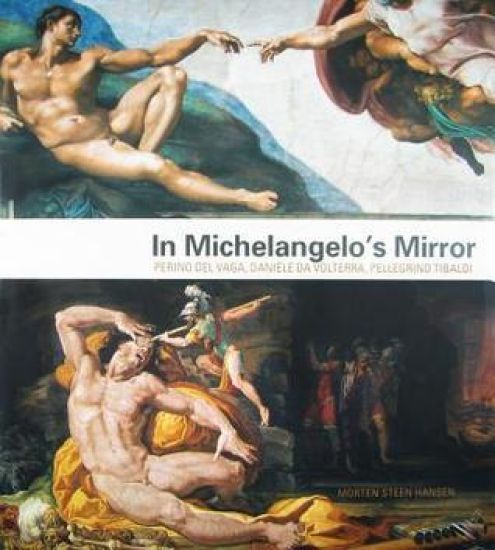
In the first decades of the sixteenth century, the pictorial arts arrived at an unprecedented level of perfection. That, at least, was a widespread perception among artists and their audiences in central Italy. Imitation, according to the artistic literature of the period, was a productive means of continuing the perfections of a predecessor. In Michelangelo’s Mirror reconsiders the question of Italian mannerism, focusing on the idea of imitation in the works of such artists as Perino del Vaga, Daniele da Volterra, and Pellegrino Tibaldi.Michelangelo was praised as an unsurpassable ideal, and more than any other artist he received the flattering epithet divino. As the cult around him grew, however, a different discourse arose. With the unveiling of the Sistine Last Judgment in 1541, Michelangelo stood accused of having set artifice above the sacred truth he was meant to serve, effectively making an idol of his art. Hansen examines the work of three of the master’s most talented followers in the light of this critical backlash. He argues that their choice to imitate Michelangelo was highly self-conscious and related to the desire to construct their own artistic identities, either by associating their work directly with the ideal paradigm (Daniele), through irony and displacement (Perino), or by incorporating both approaches (Tibaldi).