
Kirjahaku
Etsi kirjoja tekijän nimen, kirjan nimen tai ISBN:n perusteella.
1000 tulosta hakusanalla Modesto Garza
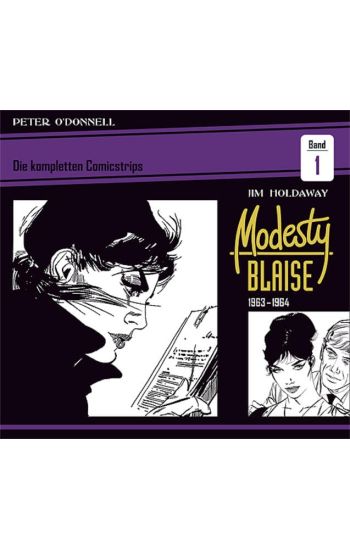
Modesty Blaise: Die kompletten Comicstrips / Band 1 1963 - 1964
Peter O'Donnell
Bocola Verlag GmbH
2024
sidottu

Modesty Blaise: Die kompletten Comicstrips / Band 2 1964 - 1965
Peter O'Donnell; Jim Holdaway
Bocola Verlag GmbH
2024
sidottu

Modesty Blaise: Die kompletten Comicstrips / Band 5 1968 - 1969
Peter O'Donnell
Bocola Verlag GmbH
2025
sidottu

Modesty Blaise: Die kompletten Comicstrips / Band 6 1969 - 1970
Peter O'Donnell
Bocola Verlag GmbH
2025
sidottu


Modeste Mignon delves into the emotional and intellectual awakening of a young woman constrained by her family's circumstances and social position. Through Modeste's experiences, the book examines the intricate balance between idealized love and the pragmatic boundaries imposed by class and convention. Balzac uses the provincial setting to highlight the contrast between romantic imagination and the structured realities of bourgeois life. The narrative explores the influences shaping Modeste's perceptions-her longing for affection, the expectations of her parents, and the quiet vigilance of those around her. Beneath the surface of domestic respectability, the novel reveals an undercurrent of yearning for freedom, both emotional and intellectual. Modeste's internal conflict reflects the broader human desire to reconcile personal aspiration with societal limitation. The work stands as a study of illusion and self-discovery, portraying how the search for love and meaning can lead to both revelation and disillusionment. In the end, Balzac crafts a timeless exploration of innocence, ambition, and the cost of emotional truth.
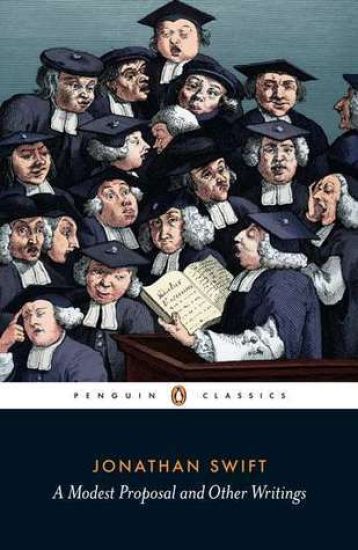
The Penguin Classics edition of Jonathan Swift's savagely satirical A Modest Proposal and Other Writings is edited with an introduction and notes by Carol Fabricant.To ease poverty in Ireland by eating the children of the poor was the satirical 'solution' suggested by Jonathan Swift in his essay 'A Modest Proposal' (1729). Here Swift unleashes the full power of his ironic armoury and corrosive wit, finding his targets - the British ruling class and avaricious landlords, and the brutalized Irish, complicit in their own oppression - with deadly precision. His masterly essay is accompanied by a generous selection of prose works, among them pamphlets attacking British rule in his native Ireland, periodical essays critiquing the new capitalist and military classes, a journal detailing his political activities in London, a loving tribute to his beloved 'Stella' after her death and pieces on such diverse subjects as the absurdities of astrology, the joys of punning and comical rules for servants. Ingenious and unconventional, Swift is revealed here as one of the greatest satirists in the English language.In her introduction to this new edition, Carol Fabricant discusses Swift's life and turbulent times, his political views and his powers as a writer of complex irony and intricate word play. This volume also includes a chronology, further reading, a glossary, notes and a biographical dictionary.Jonathan Swift (1667-1745) was born in Dublin. Sent to Kilkenny Grammar School when he was six, Swift later attended Trinity College, Dublin, where he received his BA degree in 1686. He is considered the foremost prose satirist in the English language, which stemmed from his criticism of Britain's repressive colonial policies in Ireland. Among Swift's best known works are his ironic masterpiece, 'A Modest Proposal' (1729), and his novel, Gulliver's Travels (1726).If you enjoyed A Modest Proposal, you might like Alexander Pope's The Rape of the Lock and Other Major Writings, also available in Penguin Classics.
'... a most delicious, nourishing, and wholesome food...'Swift's devastating short satire on how to solve a famineIntroducing Little Black Classics: 80 books for Penguin's 80th birthday. Little Black Classics celebrate the huge range and diversity of Penguin Classics, with books from around the world and across many centuries. They take us from a balloon ride over Victorian London to a garden of blossom in Japan, from Tierra del Fuego to 16th century California and the Russian steppe. Here are stories lyrical and savage; poems epic and intimate; essays satirical and inspirational; and ideas that have shaped the lives of millions.Jonathan Swift (1667-1745). Swift's works available in Penguin Classics are Gulliver's Travels and A Modest Proposal and Other Writings.

Scholars and mainline pastors tell a familiar narrative about the roles of women in the early church: that women held leadership roles and exercised some authority in the church, but, with the establishment of formal institutional roles, they were excluded from active leadership in the church. Evidence of women's leadership is either described as "exceptional" or relegated to (so-called) heretical groups, who differed with proto-orthodox groups precisely over the issue of women's participation. For example, scholars often contrast the Acts of Paul and Thecla (ATh) with 1Timothy. They understand the two works to represent discrete communities with opposite responses to the question of women's leadership. In A Modest Apostle Susan Hylen uses Thecla as a microcosm from which to challenge this larger narrative. In contrast to previous interpreters, Hylen reads 1Timothy and the ATh as texts that emerge out of and share a common cultural framework. In the Roman period, women were widely expected to exhibit gendered virtues like modesty, industry and loyalty to family. However, women pursued these virtues in remarkably different ways, including active leadership in their communities. Read against a background in which multiple and conflicting norms already existed for women's behavior, Hylen shows that texts like the ATh and 1Timothy begin to look different. Like the culture, 1Timothy affirms women's leadership as deacons and widows while upholding standards of modesty in dress and speech. In the ATh, Thecla's virtue is first established by her modest behavior, which allows her to emerge as a virtuous leader. The text presents Thecla as one who fulfills culturally established norms, even as she pursues a bold new way of life. Hylen's approach points to a new way of understanding women in the early church, one that insists upon the acknowledgment of women's leadership as a historical reality without neglecting the effects of the culture's gender biases.
From climate catastrophe to pandemics and economic crises, the problems facing humanity can feel impossible to solve. Critical Modesty in Contemporary Fiction argues that contemporary fiction helps those who may feel despair at the enormity of such problems — not, as usually assumed, through the ambitious search for grand solutions but rather by cultivating a temperament of modesty. This new temperament of critical modesty locates the fight for freedom and human dignity within the limited and compromised conditions in which we find ourselves. Through readings of Ian McEwan, Zadie Smith, J. M. Coetzee, and David Mitchell, Critical Modesty in Contemporary Fiction advances a claim for the value of temperament in general as a crucial analytic for understanding contemporary experience as well as for a particular temperament of critical modesty as crucial in negotiating the limits of critical and human agency that constitute our daily lives. Exploring modest forms of entangled human agency that represent an alternative to the novel of the large scale that have been most closely associated with the Anthropocene, this volume makes the surprising case that by adopting a modest stance, the novel has the potential to play a more important socio-cultural role than it has done. In doing so, it offers an engaging response to the debate over critical and surface readings, bringing novels themselves into the conversation and arguing for a fictional mode that is both critical and modest, reminding us how much we are already engaged with the world, implicated and compromised, before we start developing theories, writing stories, or acting within it.
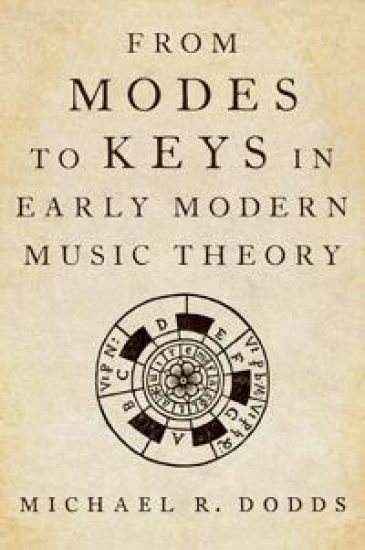
From Modes to Keys in Early Modern Music Theory
Michael R. Dodds
OXFORD UNIVERSITY PRESS INC
2024
sidottu
From Modes to Keys in Early Modern Music Theory addresses one of the broadest and most elusive open topics in music history: the transition from the Renaissance modes to the major and minor keys of the high Baroque. The system Glarean proposed in his 1547 Dodecachordon comprised twelve modes at two transposition levels; the scheme J.S. Bach used to order The Well-Tempered Clavier in 1722 featured two modes at twelve transposition levels. What took place in between? Through deep engagement with the corpus of Western music theory, author Michael R. Dodds presents a model to clarify the factors of this complex shift. The essence of this model lies in the dynamic interplay of three historical-conceptual layers arising successively in the Middle Ages, Renaissance, and Baroque, each layer continuing once introduced. Medieval theorists conceptualized mode along a continuum between tune and scale. Renaissance theorists extended mode from plainchant to polyphony, applying modal theory to such features as cadential hierarchies and contrapuntal imitation. Early Baroque mapping of vocal modality onto the keyboard catalyzed a transformation from the diatonic gamut to the chromatic keyboard as background pitch system, with a corresponding change from ladder to circle as the dominant model for tonal space, culminating in the circle of fifths. Spanning two centuries of music and music theory, and incorporating dozens of diagrams from historical treatises, Dodds provides the first comprehensive study of the transition from the Renaissance modes to the major and minor keys.
Treasury of 5 shorter works by the author of Gulliver's Travels offers ample evidence of the great satirist's inspired lampoonery. Title piece plus The Battle of the Books, A Meditation Upon a Broom-Stick, A Discourse Concerning the Mechanical Operation of the Spirit and The Abolishing of Christianity in England.

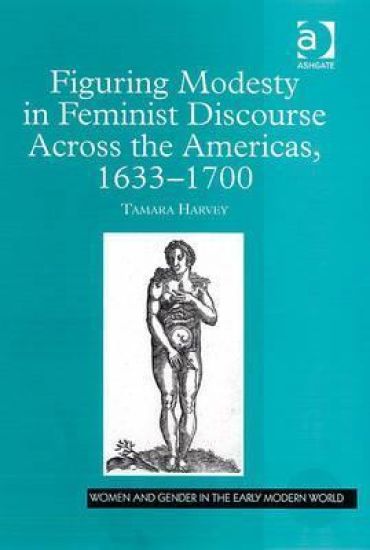
Figuring Modesty in Feminist Discourse Across the Americas, 1633-1700
Tamara Harvey
Ashgate Publishing Limited
2008
sidottu
Inventive in its approach and provocative in its analysis, this study offers fresh readings of the arguments and practices of four seventeenth-century Euro-American women: Anne Bradstreet, Anne Hutchinson, Sor Juana Inés de la Cruz, and Marie de l'Incarnation. Tamara Harvey here compares functionalist treatments of the body by these women, offering a new way to think of corporeality as a device in literary and religious expressions of modesty by women. In doing so, Harvey explores the engagement of these women in ongoing religious, political, scientific and social debates that would have been understood by the authors' contemporaries in both Europe and America.
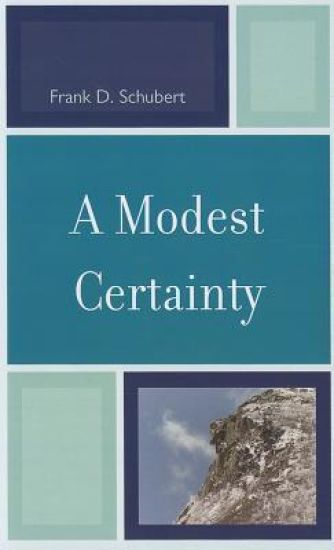
The central problem of philosophy is the problem of certainty. What does it mean to be sure? Are there ideas beyond the possibility of error or refutation? What does it mean for a notion to be incorrigible? In this book, Frank D. Schubert squarely addresses the question of whether there is a single standard of certainty that can be applied to such disparate areas as logic, mathematics, politics, religion, familial/tribal commitments, and science. Schubert proposes a common standard for assessing certainty — the certainty of knowing one’s own personal proper name — as a standard that can establish common ground within each widely disparate area. The result is a new “philosophy in a grand manner” and a powerful ethical proposal for our time.
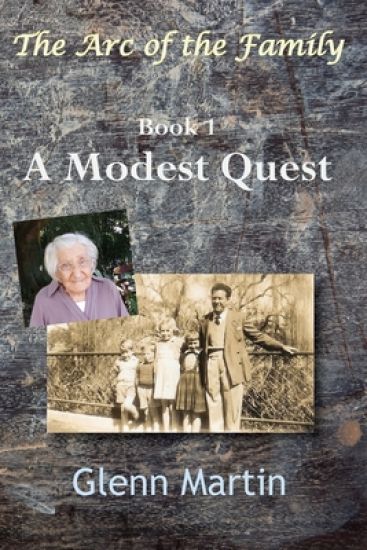
"A Modest Quest" describes the author's quest to find out about his family's past. It was intended just to find out the basic facts about his parents' brothers and sisters, and his grandparents. Growing up, he had thought that all his grandparents had died before he was born. This was not the case, but it took some serious research and more than two years to bring the facts to light, and by then the lives of the ancestors had pulled him in. The quest was extending far beyond its initially modest aims. "You don't understand a person until you know something about their parents", and so the quest has to continue. This is probably the first of several books. The book explores the ancestors of Glenn Martin, looking back from the present to about the late 1800s. Most of this book takes place in New South Wales, with some excursions into Victoria and South Australia.
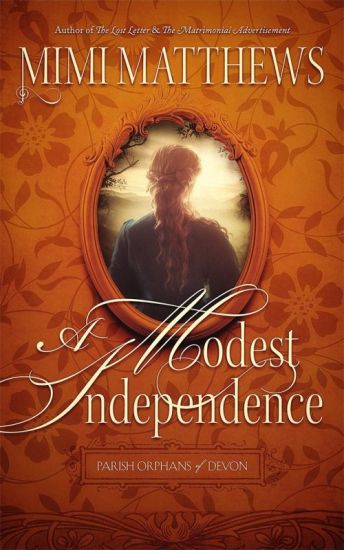
He Needed Peace...Solicitor Tom Finchley has spent his life using his devious intellect to solve the problems of others. As for his own problems, they're nothing that a bit of calculated vengeance can't remedy. But that's all over now. He's finally ready to put the past behind him and settle down to a quiet, uncomplicated life. If only he could find an equally uncomplicated woman.She Wanted Adventure...Former lady's companion Jenny Holloway has just been given a modest independence. Now, all she wants is a bit of adventure. A chance to see the world and experience life far outside the restrictive limits of Victorian England. If she can discover the fate of the missing Earl of Castleton while she's at it, so much the better.From the gaslit streets of London to the lush tea gardens of colonial India, Jenny and Tom embark on an epic quest--and an equally epic romance. But even at the farthest edges of the British Empire, the past has a way of catching up with you...
The Amazon is burning because we are not good stewards of the land. The seas and oceans are becoming depleted of life because we are not good stewards of them. The air we breathe is becoming polluted because we are not good stewards of the air. In the past 540 million years it has been estimated that there have been five major extinctions when over 50% of animal species died. Humans have been indiscriminately and arrogantly consuming the Earth's life sustaining habitats for the past 150 years or so and it is time to pay the Earth back.