Kirjojen hintavertailu. Mukana 12 152 606 kirjaa ja 12 kauppaa.

Kirjahaku

Etsi kirjoja tekijän nimen, kirjan nimen tai ISBN:n perusteella.

1000 tulosta hakusanalla Mohammad Nehal

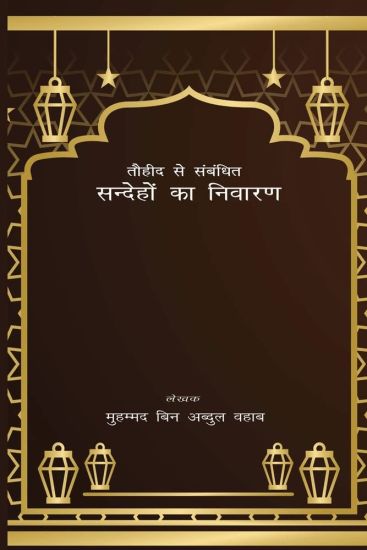
Removal of Doubts

Removal of Doubts

Mohammad Bin Abdul Wahab

TARA BOOKS
2023
pokkari
Know this, may Allah have mercy on you to worship one Allah (and "Tawheed" (not sharing in that worship) (monotheism) is called. This is what all the Rasools (messengers) Has been the religion of, by teaching which Allah Ta'alaSent messengers to his servants. The first Rasool (messenger) is Noah Alaihissalam. His qaum (community) made Wadd, Suwaa, Yaghus, Yauk And when exaggeration about virtuous people like Nasr When he started doing (gulu), Allah sent Nuh (peace be upon him) to guide him, and Last Prophet Muhammad Sallallahu Alaihi Wasallam who destroyed the idols of the above mentioned virtuous did. the community you were sent to worship and adoration of Allah, and more of hisUsed to remember (zikr), also do Hajj and charity were, but at the same time he himself and Allah righteous among Ta'ala and some people such as Isa Alaihissalam, Maryam and the angels or other righteous Used to make people medium and used to say that: their By which we get nearness and proximity to Allah want to do, and to Allah these righteousare candidates for recommendation.
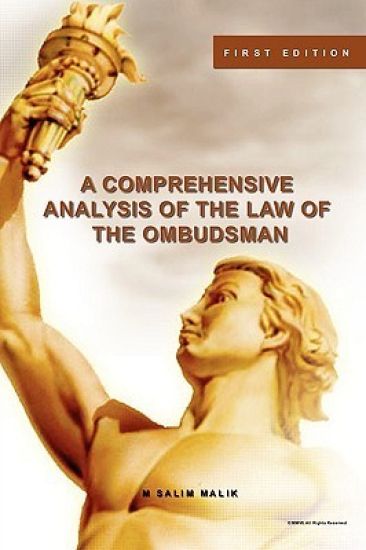
A Comprehensive Analysis of the Law of the Ombudsman

A Comprehensive Analysis of the Law of the Ombudsman

Mohammad Salim Malik

Aberdeen University Press Services
2007
pokkari
In every society a weak has always suffered at the hand of strong & resourceful. Man is social animal and hence cannot escape impact of the events confronting the society. There is no society where people have not grievances against the governmental machinery. With the lapse of time the society crafts grew complex & demanding the society require redressing their grievances. The only way to redress the grievances of the poor man of very society is to invoke the door of Ombudsman.
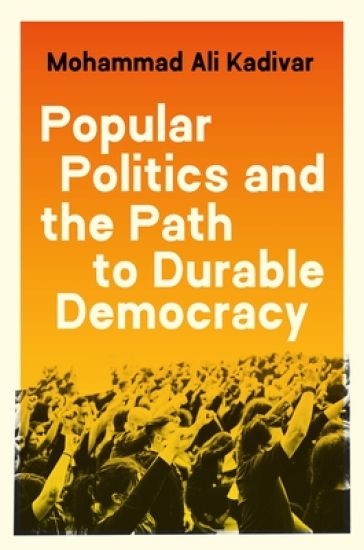
Popular Politics and the Path to Durable Democracy

Popular Politics and the Path to Durable Democracy

Mohammad Ali Kadivar

PRINCETON UNIVERSITY PRESS
2022
pokkari
A groundbreaking account of how prolonged grassroots mobilization lays the foundations for durable democratizationWhen protests swept through the Middle East at the height of the Arab Spring, the world appeared to be on the verge of a wave of democratization. Yet with the failure of many of these uprisings, it has become clearer than ever that the path to democracy is strewn with obstacles. Mohammad Ali Kadivar examines the conditions leading to the success or failure of democratization, shedding vital new light on how prodemocracy mobilization affects the fate of new democracies.Drawing on a wealth of new evidence, Kadivar shows how the longest episodes of prodemocracy protest give rise to the most durable new democracies. He analyzes more than one hundred democratic transitions in eighty countries between 1950 and 2010, showing how more robust democracies emerge from lengthier periods of unarmed mobilization. Kadivar then analyzes five case studies—South Africa, Poland, Pakistan, Egypt, and Tunisia—to investigate the underlying mechanisms. He finds that organization building during the years of struggle develops the leadership needed for lasting democratization and strengthens civil society after dictatorship.Popular Politics and the Path to Durable Democracy challenges the prevailing wisdom in American foreign policy that democratization can be achieved through military or coercive interventions, revealing how lasting change arises from sustained, nonviolent grassroots mobilization.
Popular Politics and the Path to Durable Democracy

Popular Politics and the Path to Durable Democracy

Mohammad Ali Kadivar

PRINCETON UNIVERSITY PRESS
2022
sidottu
A groundbreaking account of how prolonged grassroots mobilization lays the foundations for durable democratizationWhen protests swept through the Middle East at the height of the Arab Spring, the world appeared to be on the verge of a wave of democratization. Yet with the failure of many of these uprisings, it has become clearer than ever that the path to democracy is strewn with obstacles. Mohammad Ali Kadivar examines the conditions leading to the success or failure of democratization, shedding vital new light on how prodemocracy mobilization affects the fate of new democracies.Drawing on a wealth of new evidence, Kadivar shows how the longest episodes of prodemocracy protest give rise to the most durable new democracies. He analyzes more than one hundred democratic transitions in eighty countries between 1950 and 2010, showing how more robust democracies emerge from lengthier periods of unarmed mobilization. Kadivar then analyzes five case studies—South Africa, Poland, Pakistan, Egypt, and Tunisia—to investigate the underlying mechanisms. He finds that organization building during the years of struggle develops the leadership needed for lasting democratization and strengthens civil society after dictatorship.Popular Politics and the Path to Durable Democracy challenges the prevailing wisdom in American foreign policy that democratization can be achieved through military or coercive interventions, revealing how lasting change arises from sustained, nonviolent grassroots mobilization.
Empowerment for a New Golden Age

Empowerment for a New Golden Age

Mohammad Afzal Janjua

Maram Publications
2014
nidottu
Empowerment for a New Golden Age narrates the story of the greatest civilization that the world has ever seen. This civilization was inspired by the Qur'anic guidance which insisted on consciousness and knowledge, and engendered among its followers a spirit of intellectual curiosity and independent inquiry, ultimately resulting in that splendid era of learning and scientific research which distinguished the world of Islam at the height of its cultural vigor for over 800 years, between 8th and 17th centuries; and the culture thus fostered by the Qur'an penetrated in countless ways into the mind of medieval Europe and gave rise to that revival of Western culture which we call the Renaissance, and thus became in the course of time largely responsible for the birth of what is described as the "age of science". This work highlights the path that led to fashioning of this great civilization and the factors that set off its latter decline. This civilization flourished in a continental super state which was home to hundreds of millions of people, of different creeds and ethnic origins. It fostered invention and prosperity, developed leadership based on meritocracy, not inheritance and harnessed the full capabilities of its very diverse population. Universal justice was its hallmark as it nurtured culture, sustainability, diversity and courage. Many of the famed metropolises of the medieval times, with schools and libraries, lit streets and running water, mosques and hospitals, gardens and palaces; cities such as Baghdad, Damascus, Cordoba, Granada, and Cairo were part of this civilization. Today's technology industry owes its existence to the contributions made by master mathematicians from this civilization as its Sufi philosophers like Rumi and Ibn Al Arabi shaped our ideas about self and truth and its leaders like Suleiman the Magnificent shaped our concepts of tolerance and civic leadership. In the modern world social injustice, political hypocrisy and financial exploitation are a norm. Today, the lives of the weak are considered expendable and justice is often contingent on one's economic might and skin color. Increasingly the poor and dispossessed are castigated for their misery. Empowerment for A New Golden Age posits that the impetus which inspired the civilization eulogized in this book, if considered with an open mind, can serve as a guide for addressing much of the issues faced by mankind today.
Society, Politics and Economics in Mazandaran, Iran 1848-1914
This book is the first major study of provincial history in the Qajar period. Drawing extensively on unpublished Iranian and British documents, it explores the history of Mazandaran, a province in the Caspian region, during 1848-1914, when the province as a part of Iran was exposed to the policies of rival great powers, particularly Tzarist Russia. While showing socio-economic characteristics of Mazandaran and its potential for development, the book examines in detail the transformation of the traditional provincial community and economy in the course of the 19th and early 20th centuries.
Frank Truman

Frank Truman

Mohammad Abedi

Hermes Publishing House
2023
pokkari
Frank Truman is a one-character play. A story of an old man. An old man, who is now preparing himself for death because the shadow of the atom bomb is over his land, begins to narrate parts of his life. He has been used to recording his voice in sensitive and important situations since he was a teenager, now he shares it with the people sitting in front of him.
Neuroanatomy Basics: A Clinical Guide

Neuroanatomy Basics: A Clinical Guide

Mohammad Noureldine

Elsevier Health Sciences
2017
nidottu
A hands-on tool for medical students, Neuroanatomy Basics: A Clinical Guide covers key basic neuroanatomy material and the most important clinical correlations that a medical student is required to know. The book's style is simple and features an array of figures/illustrations that will show the student what he/she has just studied. It will follow a breadcrumbs approach that relies heavily on images/figures. Relying on photographic memory is quite helpful in grasping 'dry and rigid' neuroanatomy concepts; hence, the large number of figures contained in the book. Students will not have to refer to an atlas or other references in order to grasp the book's concepts. The peculiar order of sections will guide the student through the sequence of events/anatomical structures back and forth from cellular to structural levels, depending on the stimulus and response.
Town and Country in the Middle East

Town and Country in the Middle East

Mohammad A. Chaichian

Lexington Books
2008
sidottu
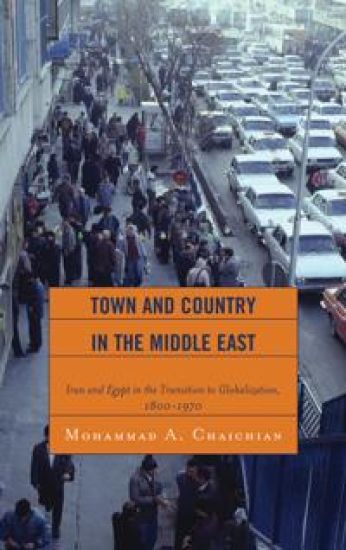
A systematic sociological study of town and country in the Middle East has long been overdue. In this book, Chaichian examines the process of dependent urbanization in Iran and Egypt related to each country's unique colonial history and dependence on a constantly changing global economy since the early nineteenth century. Using historical data, he argues that development of dependent economies has led to displacement of rural population and their migration to major urban centers such as Tehran in Iran, and Cairo and Alexandria in Egypt. However, divergent colonial interests such as extraction and production of oil in Iran and cultivation of cotton in Egypt for the world markets have created different patterns of rural-urban migration, urban hierarchies and employment structures particularly within the urban informal economy sector (petty commodity production). The findings of this study also indicate that by the mid-1970s Iran and Egypt were fully incorporated into the global economy, but in various degrees have since resisted the systemic demands of the new phase of globalization that requires open and fluid borders for utilization of labor, capital investment, and transfer of information. The 1979 revolution in Iran and persistent instability in Egypt, particularly in urban areas, are cited as signs of this resistance to the new phase of globalization.
Understanding Al Qaeda

Understanding Al Qaeda

Mohammad-Mahmoud Ould Mohamedou

Pluto Press
2011
pokkari
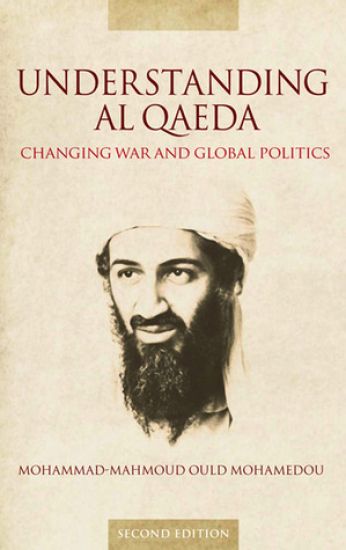
This book controversially argues that Al Qaeda has clear aims, and that the only way to defeat it is to engage with its arguments in a serious way. Since the publication of the first edition in 2006, Mohamedou has brought the text right up-to-date. Starting with Al Qaeda's creation almost twenty years ago, and sketching its global mutation, Mohamedou explains that there is a cogent strategy to Al Qaeda's actions. He shows that the 'war on terror' is failing, only serving to recruit more terrorists to Al Qaeda's cause. He also puts forward a case for how the international community can best respond. Arguing that it is dangerous to dismiss Al Qaeda as illogical and irrational, this incisive and original book is important for policy-makers and ideal for undergraduates in international relations, Middle East studies and peace/conflict studies.
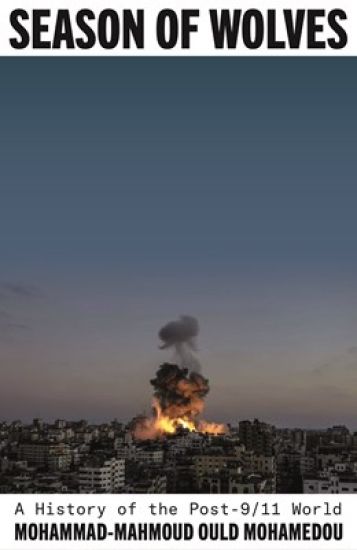
Season of Wolves

Season of Wolves

Mohammad-Mahmoud Ould Mohamedou

PLUTO PRESS
2026
nidottu
In the two decades since the attack on the Twin Towers in Manhattan, a new world has taken shape—one defined by endless war, mass surveillance, and militarisation. Season of Wolves is a sweeping and urgent account of how this post-9/11 age of brutality was born, and how it continues to shape our lives today. From the battlefields of Afghanistan and Iraq to Libya and Syria, Mohammad-Mahmoud Ould Mohamedou traces the international reverberations of the so-called 'War on Terror' and the political, economic, and cultural transformations it unleashed. He examines the rise of militarised foreign policy, the securitisation of everyday life, the global surge in authoritarianism, and the invasive creep of technology into the most private corners of our lives. Drawing on decades of research and a truly global perspective, Season of Wolves is both a damning indictment of the post-9/11 governance and a crucial guide to understanding how we got here—and what must change.
A Theory of ISIS

A Theory of ISIS

Mohammad-Mahmoud Ould Mohamedou

Pluto Press
2017
pokkari
The Islamic State of Iraq and Syria has been the subject of intense scrutiny in the West. Considered by many to be the most dangerous terrorist organisation in the world, it has become shrouded in numerous myths and narratives, many emanating from the US, which often fail to grasp its true nature. Against these narratives, Mohammad-Mahmoud Ould Mohamedou presents a bold new theory of ISIS. By tracing its genealogy and documenting its evolution in Iraq and Syria, he argues that ISIS has transcended Osama Bin Laden’s original project of Al Qaeda, mutating into an unprecedented hybrid form that distils postcolonial violence, postmodernity and the emerging post-globalisation international order. This book analyses ISIS from a social sciences perspective and unpacks its dynamics by looking beyond superficial questions such as its terrorist nature and religious rhetoric. It transforms our understanding of ISIS and its profound impact on the very nature of contemporary political violence.
A Theory of ISIS

A Theory of ISIS

Mohammad-Mahmoud Ould Mohamedou

Pluto Press
2017
sidottu
The Islamic State of Iraq and Syria has been the subject of intense scrutiny in the West. Considered by many to be the most dangerous terrorist organisation in the world, it has become shrouded in numerous myths and narratives, many emanating from the US, which often fail to grasp its true nature. Against these narratives, Mohammad-Mahmoud Ould Mohamedou presents a bold new theory of ISIS. By tracing its genealogy and documenting its evolution in Iraq and Syria, he argues that ISIS has transcended Osama Bin Laden’s original project of Al Qaeda, mutating into an unprecedented hybrid form that distils postcolonial violence, postmodernity and the emerging post-globalisation international order. This book analyses ISIS from a social sciences perspective and unpacks its dynamics by looking beyond superficial questions such as its terrorist nature and religious rhetoric. It transforms our understanding of ISIS and its profound impact on the very nature of contemporary political violence.
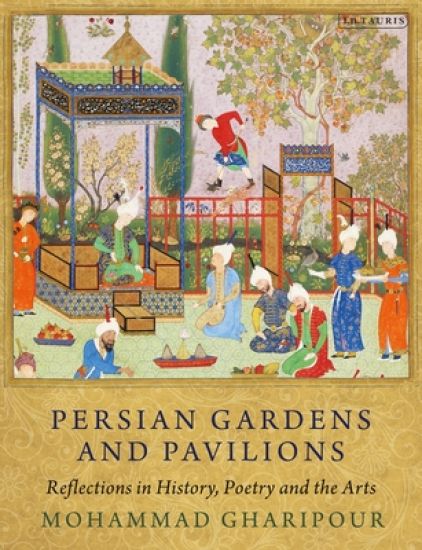
Persian Gardens and Pavilions

Persian Gardens and Pavilions

Mohammad Gharipour

I.B. Tauris
2020
nidottu
From Timur's tent in Samarqand to Shah 'Abbas's palace in Isfahan and Humayun's tomb in Delhi, the pavilion has been an integral part of Persianate gardens since its earliest appearance at the Achaemenid garden in Pasargadae in the sixth century BC. Here, Mohammad Gharipour places both the garden and the pavilion within their historical, literary and artistic contexts, emphasizing the importance of the pavilion, which has hitherto been overlooked in the study of Iranian historical architecture. Starting with an examination of the depictions and representations of gardens in religious texts, Gharipour analyses how the idea of the garden developed from the model of pre-Islamic gardens in Achaemenid and Sassanian Persia to its mentions in the Zoroastrian text of Aban Yasht and on to its central role as paradise in the Qur'an. Continuing on with an exploration of gardens and pavilions in Persian poetry, Gharipour offers in-depth analysis of their literal and metaphorical values.It is in the poetry of major Persian poets such as Ferdowsi, Naser Khosrow, Sa'di, Rumi and Hafez that Gharipour finds that whilst gardens are praised for their spiritual values, they also contain significant symbolic worth in terms of temporal wealth and power. Persian Gardens and Pavilions then goes onto examine the garden and the pavilion as reflected in Persian miniature painting, sculpture and carpets, as well as accounts of travelers to Persia. With masters such as Bizhad representing daily life as well as the more mystical prose and poetry in, for example, Sa'di's Bustan (The Orchard) and Golestan (The Rose Garden), the garden and the pavilion can be seen to have crucial semiotic significance and cultural meanings. But in addition to this, they also point to historical patterns of patronage and ownership which were of central importance in the diplomatic and social life of the royal courts of Persia. Gharipour thereby highlights the metaphorical, spiritual, symbolic and religious aspects of gardens, as well as their more materialistic and economic functions.This book reaches back through Persia's rich history to explore the material and psychological relationships between human beings, pavilions and gardens, and will be a valuable resource for Art History, Architecture and Iranian Studies.
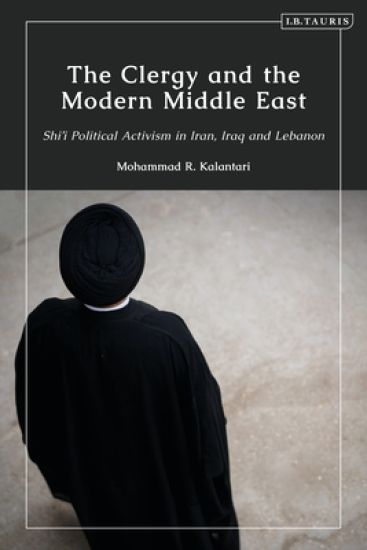
The Clergy and the Modern Middle East

The Clergy and the Modern Middle East

Mohammad R. Kalantari

BLOOMSBURY PUBLISHING PLC
2023
nidottu
The Shi’i clergy are amongst the most influential political players in the Middle East. For decades, scholars and observers have tried to understand the balance of power between, Shi'i ‘quietism’ and ‘activism’.The book is based on exclusive interviews with high-profile Shi'i clerics in order to reveal how the Shi’i clerical elite perceives its role and engages in politics today. The book focuses on three ground-breaking events in the modern Middle East: the 1979 Islamic Revolution in Iran, the 2003 Iraq War, and the 2006 July war in Lebanon. By examining the nature and evolution of a Shi'i clerical network the book finds that, far from there being strategic differences between ‘quitest’ and ‘activist’ clerics, Shi’i mujtahid statesmen matured, from 1979 in Iran to 2003 Iraq, by way of a pragmatism which led to a strong form of transnational and associated whole in Lebanon in 2006. In doing so, the book breaks down the established, and misleading, dichotomisation of the Shi’i clergy into ‘quietists’ and ‘activists’ and discovers that the decision of Shi’i clerical elites to become politically active or to stay out of politics are attributable to their ability to adapt to their political environments.