
Kirjahaku
Etsi kirjoja tekijän nimen, kirjan nimen tai ISBN:n perusteella.
1000 tulosta hakusanalla Moses Garba
Narrative of the Life of Moses Grandy
Moses Grandy
Createspace Independent Publishing Platform
2016
nidottu
Narrative of the Life of Moses Grandy is a classic American slave autobiography by Moses Grandy. About a fortnight ago, the subject of the following brief Memoir came to me, bearing with him a letter from a dear friend and distinguished abolitionist in the United States, from which the following is an extract: 'I seize my pen in haste to gratify a most worthy colored friend of mine, by giving him a letter of introduction to you, as he intends sailing this week (August 8th, 1842) for Liverpool and London, via New Orleans. His name is Moses Grandy. Moses Grandy was an African-American author, abolitionist, and, for more than the first four decades of his life, an enslaved person. At eight years of age he became the property of his playmate, James Grandy and two years later he was hired out for work. The monies Moses earned were collected and held until James Grandy turned 21. Grandy helped build the Great Dismal Swamp Canal and learned how to navigate boats. It was that skill that led him to be made commander of several boats that traveled the canal and Pasquotank River, transporting merchandise from Elizabeth City, North Carolina to Norfolk, Virginia. The position allowed him to be better fed, shod and dressed. Able to keep a portion of his earnings, Grandy arranged to buy his freedom twice and twice his owners kept the money and held him in slavery. An arrangement was made for an honorable man to buy him and Grandy earned the money to buy his freedom a third time, this time successfully. In the course of his life he had witnessed beatings and sales of family members, including his first bride when they were married but eight months. Once he obtained his freedom, he worked to make the money to free his wife and children. He was able to secure the release of his wife and 15-year-old son. He dictated a narrative of his life, Narrative of the Life of Moses Grandy, Late a Slave in the United States of America, with the intention of buying the freedom of additional family members. His slave narrative, and others, read in the United States and overseas, helped to bring awareness of slavery and fuel the abolitionist movement. Moses Grandy was hired out by James Grandy when he was 10. The second man he worked for, Jeremy Coate, beat him so severely for not hilling corn as he wanted it that the sapling broke off in his side. Enoch Sawyer, an owner of large tracts of land in Pasquotank and Camden Counties, fed him so little that Grandy ground cornhusks into flour for food. By 15 he was managing ferry crossings of a swampy river in Camden, North Carolina at Sawyer's Ferry 6] (later Lamb's Ferry); 7] He was "in charge of poling and sculling and cabling the ferry." He lived on Sawyer's plantation, placed his bare feet in heated mud from the hog's nighttime slumber for warmth, and visited his mother who lived in a cabin in a remote area, non-arable land outside of Camden after she became "too infirm to work." The money that was made through Moses Grandy's work was received and held for James Grandy until he turned 21 years of age. Moses Grandy worked jobs transporting goods to Portsmouth and Norfolk, Virginia and running boats and cutting timber for the Great Dismal Swamp Canal. Although well-skilled at managing craft on the river, he also worked for a time as field hand and a look-out for his gambling boss. Several bosses after Sawyer, Grandy worked for a man named Richard Furley who allowed Grandy to take on extra work, working nights and Sundays, taking a share of the receipts. James Grandy called in all the slaves he had rented out to others and allowed Grandy to continue doing extra work, but took twice as much as Furley's percentage of the receipts.
Moses the Heretic: Part 1: Memphis
Paul Juser
Createspace Independent Publishing Platform
2017
nidottu
The glory of the Pharaohs has fallen, and the land of Nile is in chaos. Memphis was once the seat of Pharaoh's power, but is now a ruin. In the shadow of the ancient pyramids, a shepherd harbors a secret that could upend the world.
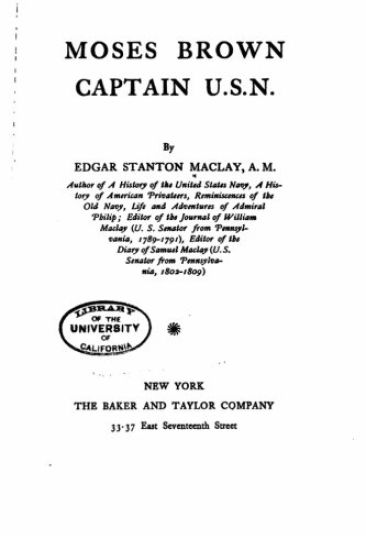
Moses Brown, captain U.S.N.
Edgar Stanton Maclay
Createspace Independent Publishing Platform
2016
nidottu
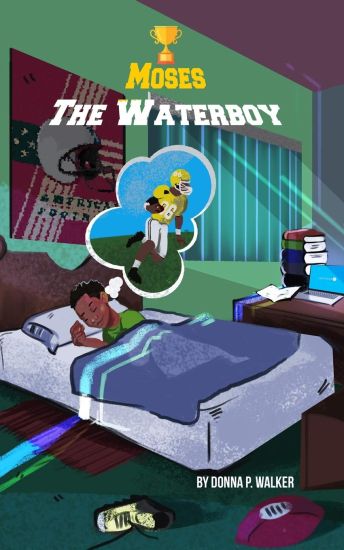
Ten-year-old Moses Spencer wanted to be on his school Junior League football team, the Randle Rams. The position he wanted: Wide receiver. The position he was given: Waterboy. Read all about the challenges Moses went through with his peers making fun of him. The lesson Moses learned: no matter what position you hold you can do great things. God had a plan for Moses, to be a champion without making a single touchdown.
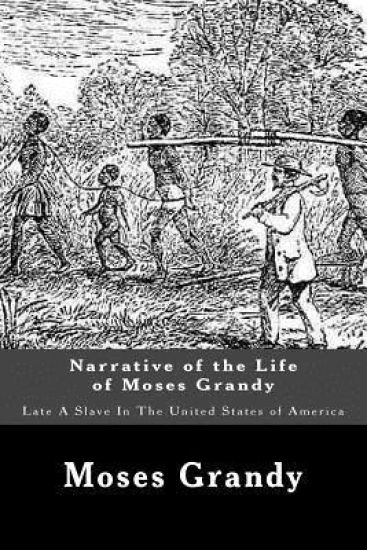
Narrative of the Life of Moses Grandy: Late A Slave In The United States of America
Moses Grandy
Createspace Independent Publishing Platform
2016
nidottu
Excerpt from Narrative of the Life of Moses Grandy: Formerly a Slave in the United States of America Another of my brothers was sold to Mr. Tyler, Dewan' s Neck, Pasquotank county. This man very much ill treated many colored boys. One very cold day, he sent my brother out, naked and hun gry, to find a yoke of steers; the boy returned Without finding them, when his master flogged him, and sent him out again. A white lady, who 'lived near, gave him food', and advised him to try again, he did so, but, it seems, again without success. He piled up a heap of leaves, and laid himself down in them, and died there He was found through a flock of turkey buzzards hovering over him; these birds had pulled his eyes out. About the Publisher Forgotten Books publishes hundreds of thousands of rare and classic books. Find more at www.forgottenbooks.com This book is a reproduction of an important historical work. Forgotten Books uses state-of-the-art technology to digitally reconstruct the work, preserving the original format whilst repairing imperfections present in the aged copy. In rare cases, an imperfection in the original, such as a blemish or missing page, may be replicated in our edition. We do, however, repair the vast majority of imperfections successfully; any imperfections that remain are intentionally left to preserve the state of such historical works.
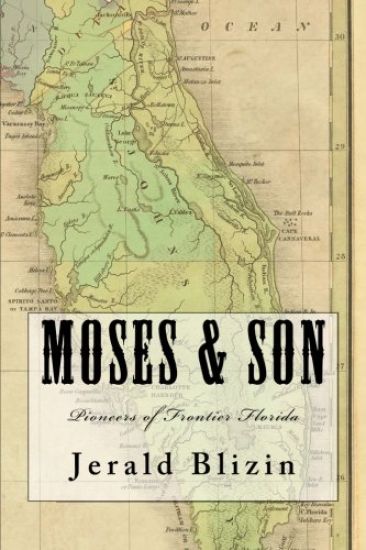
Moses & Son: Pioneers of Frontier Florida
Jerald Blizin
Createspace Independent Publishing Platform
2017
nidottu

Moses and the Revelation: Why the end of the world is not in your future
Michael Bull
Createspace Independent Publishing Platform
2017
nidottu
If we want to understand the book of Revelation, we must remember that it is at the end of the Bible, not the beginning.There are many conflicting ideas concerning what this intriguing and terrifying book is about, but the truth is that although it appears to be foreign territory - a hostile landscape filled with animal totems, confounding signs and confronting images including sacrificial virgins clad in pure white, chosen, slain and ascending with a disturbing sexual undercurrent - the Revelation is in fact a denouement, a revelation, of the natural world, like the last act of a whodunit.To solve the case, we are going to call on the testimony of an expert witness: the prophet Moses. The events, characters and patterns established in the Law are the foundation for the Prophets, and together these provide the context of this enigmatic final prophecy. The last book of the Bible cannot be understood without the first books of the Bible.
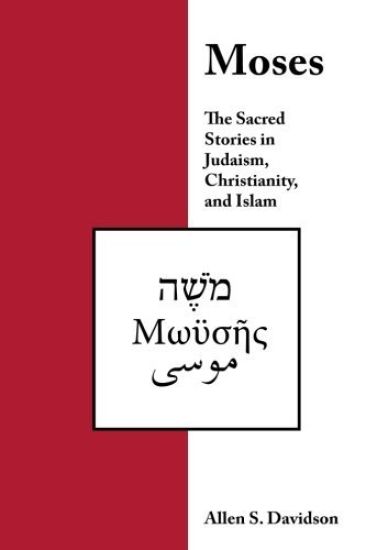
Moses: The Sacred Stories in Judaism, Christianity, and Islam
Allen S. Davidson
Createspace Independent Publishing Platform
2017
nidottu
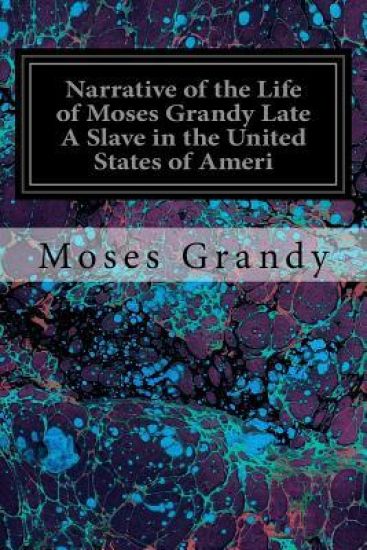
Narrative of the Life of Moses Grandy Late A Slave in the United States of Ameri
Moses Grandy
Createspace Independent Publishing Platform
2017
nidottu

To find more information about Rowman and Littlefield titles, please visit www.rowmanlittlefield.com.
Moses Mendelssohn
Brandeis University Press
2011
nidottu
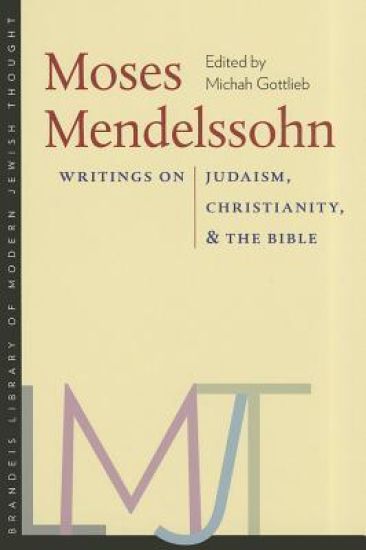
German Jewish philosopher Moses Mendelssohn (1729-1786) is best known in the English-speaking world for his Jerusalem (1783), the first attempt to present Judaism as a religion compatible with the ideas of the Enlightenment. While incorporating much of Jerusalem, Michah Gottlieb's volume seeks to expand knowledge of Mendelssohn's thought by presenting translations of many of his other seminal writings from the German or Hebrew originals. These writings include essays, commentaries, unpublished reflections, and personal letters. Part One includes selections from the three major controversies of Mendelssohn's life, all of which involved polemical encounters with Christian thinkers. Part Two presents selections from Mendelssohn's writings on the Bible. Part Three offers texts that illuminate Mendelssohn's thoughts on a diverse range of religious topics, including God's existence, the immortality of the soul, and miracles. Designed for class adoption, the volume contains annotations and an introduction by the editor.
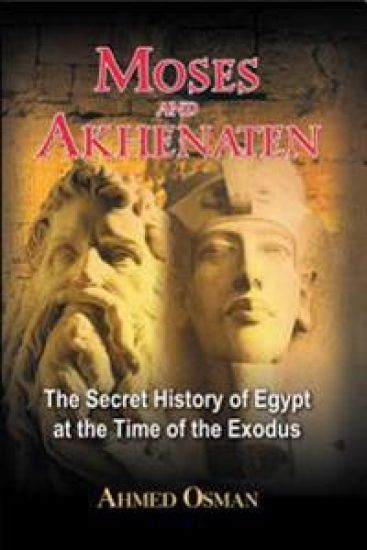
During his reign, the Pharaoh Akhenaten was able to abolish the complex pantheon of the ancient Egyptian religion and replace it with a single god, the Aten, who had no image or form. Seizing on the striking similarities between the religious vision of this “heretic” pharaoh and the teachings of Moses, Sigmund Freud was the first to argue that Moses was in fact an Egyptian. Now Ahmed Osman, using recent archaeological discoveries and historical documents, contends that Akhenaten and Moses were one and the same man. In a stunning retelling of the Exodus story, Osman details the events of Moses/Akhenaten's life: how he was brought up by Israelite relatives, ruled Egypt for seventeen years, angered many of his subjects by replacing the traditional Egyptian pantheon with worship of the Aten, and was forced to abdicate the throne. Retreating to the Sinai with his Egyptian and Israelite supporters, he died out of the sight of his followers, presumably at the hands of Seti I, after an unsuccessful attempt to regain his throne. Osman reveals the Egyptian components in the monotheism preached by Moses as well as his use of Egyptian royal ritual and Egyptian religious expression. He shows that even the Ten Commandments betray the direct influence of Spell 125 in the Egyptian Book of the Dead. Moses and Akhenatenprovides a radical challenge to long-standing beliefs concerning the origin of Semitic religion and the puzzle of Akhenaten's deviation from ancient Egyptian tradition. In fact, if Osman's contentions are correct, many major Old Testament figures would be of Egyptian origin.