Kirjojen hintavertailu. Mukana 11 342 296 kirjaa ja 12 kauppaa.

Kirjahaku

Etsi kirjoja tekijän nimen, kirjan nimen tai ISBN:n perusteella.

1000 tulosta hakusanalla Nathaniel Popper

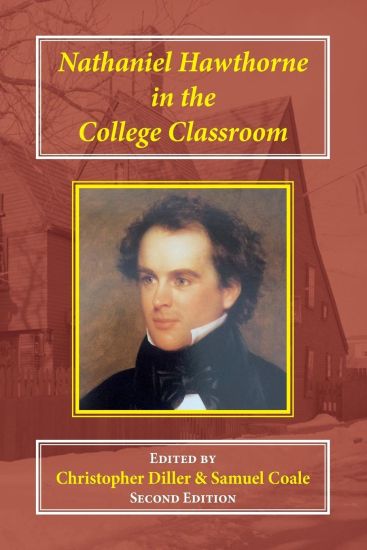
Nathaniel Hawthorne in the College Classroom
This new work is currently the only book devoted to the teaching of one of the most canonical and frequently taught American authors. In addition to a Preface by the noted Hawthorne scholar Larry J. Reynolds University Distinguished Professor and Thomas Franklin Mayo Professor of Liberal Arts Department of English Texas A&M University] the contributors include well-known and rising teacher-scholars who offer theoretical and pedagogical approaches to Hawthorne's four published novels and a wide range of his short stories. The specially commissioned essays are designed to help teachers meet students at points of genuine interest and need. They incorporate biographical, literary, historical, and multidisciplinary scholarship. The studies are further grounded in specific contexts such as literature surveys, interdisciplinary humanities courses, upper division literature seminars, and study abroad courses. Special emphasis is given to the issues of gender, science, and visual culture (including film adaptations). Offering both theoretical and practical classroom resources, this anthology confirms the continued vitality of Hawthorne's work - his critiques of religious and moral authority are more relevant than ever in today's global political environment - even as it showcases how today's "Hawthorne" is more of a diverse amalgam of texts and perspectives than ever before. Given its diversity of approaches and authors (including essayists from Germany, Israel, and Sweden), Nathaniel Hawthorne in the College Classroom charts new paths for reading and teaching Hawthorne in the 21st century.
Nathaniel Hawthorne in the College Classroom
This new work is currently the only book devoted to the teaching of one of the most canonical and frequently taught American authors.In addition to a Preface by the noted Hawthorne scholar Larry J. Reynolds [University Distinguished Professor and Thomas Franklin Mayo Professor of Liberal Arts Department of English Texas A&M University] the contributors include well-known and rising teacher-scholars who offer theoretical and pedagogical approaches to Hawthorne's four published novels and a wide range of his short stories.The specially commissioned essays are designed to help teachers meet students at points of genuine interest and need. They incorporate biographical, literary, historical, and multidisciplinary scholarship. The studies are further grounded in specific contexts such as literature surveys, interdisciplinary humanities courses, upper division literature seminars, and study abroad courses.Special emphasis is given to the issues of gender, science, and visual culture (including film adaptations). Offering both theoretical and practical classroom resources, this anthology confirms the continued vitality of Hawthorne's work - his critiques of religious and moral authority are more relevant than ever in today's global political environment - even as it showcases how today's "Hawthorne" is more of a diverse amalgam of texts and perspectives than ever before. Given its diversity of approaches and authors (including essayists from Germany, Israel, and Sweden), Nathaniel Hawthorne in the College Classroom charts new paths for reading and teaching Hawthorne in the 21st century.

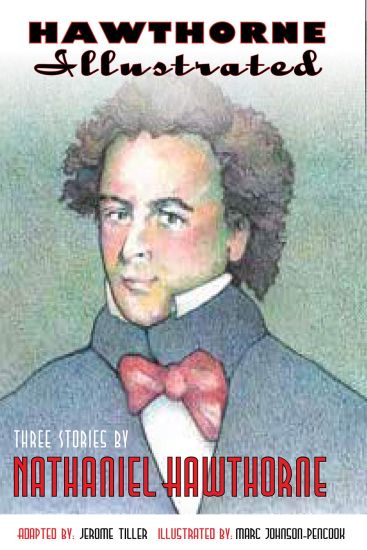
Hawthorne Illustrated: Three Stories by Nathaniel Hawthorne
Nathaniel Hawthorne has impressed many literary critics and influenced many authors over time. He became famous early in his career and his fame has endured. In Hawthorne Illustrated, master pen & ink illustrator Marc Johnson-Pencook interprets three of Nathaniel Hawthorne's best stories: "Dr. Heidegger's Experiment", "Mr. Higginbotham's Catastrophe", and "Feathertop". Here's a few of the many renowned authors and literary critics who have praised Hawthorne and his stories: Henry Wadsworth Longfellow, Famous American Poet --- Hawthorne's stories, though in prose, are written nevertheless by a poet. He looks upon all things in the spirit of love, and with lively sympathies. His stories come from the hand of a man of genius. Flannery O'Connor, Iconic American Author --- My opinion of Hawthorne is that he was a very great author indeed...I feel more kinship with him than any other American. Henry James, Author, 3-time Nobel Prize Nominee --- Hawthorne was a beautiful, natural, original genius. His work will remain; it is too original and exquisite to pass away; among the men of imagination he will always have his niche. He combined in a singular degree the spontaneity of the imagination with a haunting care for moral problems. In the field of American letters, Hawthorne is the most valuable example of the American genius.
The Complete Poems of Nathaniel Hutner

The Complete Poems of Nathaniel Hutner

Nathaniel Hutner

Onion River Press
2021
sidottu
The poems collected here are not mere versification, nor do they hide their meaning behind surrealism or cubism or any of the other movements of the 20th century that made meaning oblique in the construction of an artistic reality. Rather, they offer to the reader of the new millenium a fresh way of organizing language and discovering is import. No one should doubt that the talend displayed in this volume is a growing one that will make its audience happy to come back for more,
The Complete Plays of Nathaniel Hutner

The Complete Plays of Nathaniel Hutner

Nathaniel Hutner

Onion River Press
2021
sidottu
"One of the best off-off Broadway plays of 1993-1994."- Mel Gussow, The New York Times"Thanks for 'Godot Arrives' and the poems. I read the play and frequently smiled. It is a great relief from old Beckett. But I'm afraid I can offer no useful criticism because yours is far more perceptive than any I might venture."- Arthur Penn
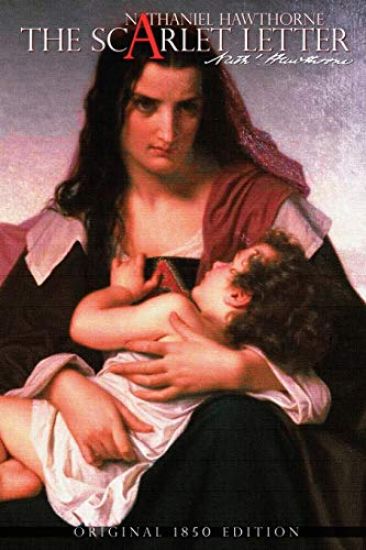
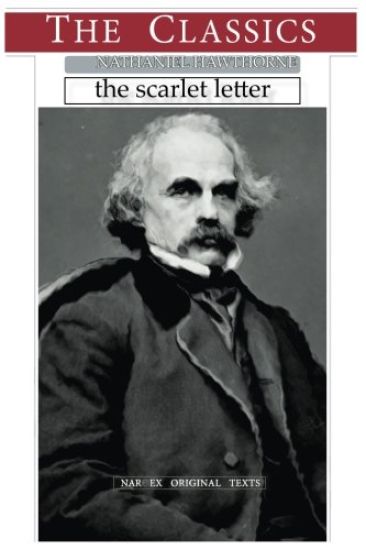
Nathaniel Hawthorne, the Scarlet Letter

Nathaniel Hawthorne, the Scarlet Letter

Nathaniel Hawthorne

Createspace Independent Publishing Platform
2017
nidottu
Hester is being led to the scaffold, where she is to be publicly shamed for having committed adultery. Hester is forced to wear the letter A on her gown at all times. She has stitched a large scarlet A onto her dress with gold thread, giving the letter an air of elegance. Hester carries Pearl, her daughter, with her. On the scaffold she is asked to reveal the name of Pearl
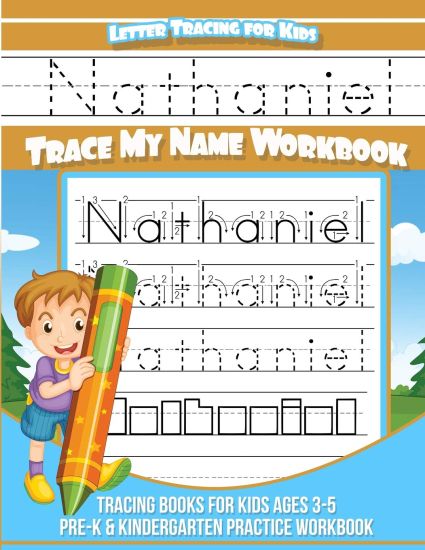
Nathaniel Letter Tracing for Kids Trace my Name Workbook: Tracing Books for Kids ages 3 - 5 Pre-K & Kindergarten Practice Workbook
NATHANIEL Name Tracing Workbook - Preschoolers Kindergarten Practice Workbook - Toddlers Writing Notebook - Learn How to Write NATHANIEL - Preschoolers Activities Teaching your child the basics of writing is a difficult task especially if he or she is full of energy and finds it more difficult to focus. In order to give him a push in the first years of school or kindergartner, we are presenting a revolutionary way of teaching your baby the basics of the alphabet: the name tracing workbook for children. Why our workbook? The name tracing workbook has been designed specifically to teach children the basic of spelling and writing. By learning to write his own name, your child will develop the abilities and skills needed in the first years of schools while having fun. The 100 pages activity book is the perfect choice if you are searching to invest in your child's education from the beginning so don't hesitate and get him the only workbook he needs LEARNING THE FIRST LETTERS teaching your toddler the first letters and how to spell his or her name is difficult, which is why we have designed a special workbook that will make the learning process easier and a lot more fun, adding to the baby's educational fund. PERSONALIZED WORKING: the name is the first word any child should learn how to spell, but it is almost impossible to find special help for that task. NATHANIEL Name Tracing Workbook is divided in 12 themed chapters that will teach your toddler how to spell his or her name in a fun and interactive way. WHAT IT CONTAINS: NATHANIEL Name Tracing Workbook counts no less than 100 pages divided in 12 themed sheets that propose recognition activities, letter tracing practice and letter games, that are sure to teach your child the basics of writing and spelling. FOR TODDLERS: NATHANIEL Name Tracing Workbook is made especially for children aged 3 to 6 so your son or daughter will be well prepared for both kindergarten and first grade Learning the alphabet will be a piece of cake if your kid will already have the foundation letter tracing so why not give him a head start in school. THE PERFECT GIFT: offering a present to a toddler that is both fun and parents-approved is an almost impossible task, but the name tracing workbook has it all: it is educational, personalized and made especially for youngsters ages 3 to 6 so, if you're trying to bring a smile on a kid's face, this is it
Fanshawe (1828). By: Nathaniel Hawthorne: Romantic novel

Fanshawe (1828). By: Nathaniel Hawthorne: Romantic novel

Nathaniel Hawthorne

Createspace Independent Publishing Platform
2018
nidottu
Fanshawe is a novel written by American author Nathaniel Hawthorne. It was his first published work, which he published anonymously in 1828. Summary: Dr. Melmoth, the President of fictional Harley College, takes into his care Ellen Langton, the daughter of his friend, Mr. Langton, who is at sea. Ellen is a young, beautiful girl and attracts the attentions of the college boys, especially Edward Walcott, a strapping though immature student, and Fanshawe, a reclusive, meek intellectual. While out walking, the three young people meet a nameless character called "the angler", a name he gets for appearing an expert fisherman. The angler asks for a word with Ellen, tells her something in secret, and apparently flusters her. Walcott and Fanshawe become suspicious of his intentions. We learn that the angler is an old friend of the reformed Inn owner, Hugh Crombie. The two had been at sea together, where Mr. Langton had been the angler's mentor and caretaker. Langton and the angler had a falling out, however, and, thinking that Langton has been killed at sea, the angler undertakes to marry Ellen in order to inherit her father's considerable wealth. Thus in his secret meeting with Ellen, the angler instructs her to sneak out of Melmoth's home and follow him, telling her he has information about her father's whereabouts. His real aim, though, is to kidnap her, to tell her of her father's death, and to manipulate her into marrying him. When the various men (Melmoth, Edward, Fanshawe) learn that she is not in her chamber, they go searching for her. The search reveals the nature of each: Melmoth, an aged scholar unused to physical labor, enlists the help of Walcott, who is the most skilled rider and the most likely to be able to contend with the angler in a fight. Fanshawe, who lags behind the search because of his weak constitution and his slow horse, is given information by an old woman in a cabin (where another old woman, Widow Butler, who turns out to be the angler's mother, has just died) that allows him to reach the angler and Ellen first. The angler has taken Ellen to a craggy cliff and cave, where he intends to hold her captive. Ellen has finally realized the angler's intentions. When Fanshawe arrives, he stands above them, looking over the edge of the cliff. The angler begins to climb up the cliff to fight Fanshawe but grabs a twig too weak to support him and tumbles to his death. Fanshawe awakens Ellen from a faint, and they travel back to town together. Fanshawe loves Ellen but knows that he will die young because of his shut-in lifestyle. When Langton offers Ellen's hand in marriage to Fanshawe in exchange for rescuing her, he refuses, sacrificing his happiness so as not to subject her to a life of widowhood. He also knows that Ellen has affections for Walcott. Fanshawe dies at 20. Ellen and Walcott marry four years later. The narrator states that Walcott grows out of his childish ways (drunkenness, impulsiveness, the suggestion of teenage affairs) and becomes content with Ellen. They are, according to the narrator, happy, but the book ends on an ambivalent note, stating that the couple did not produce children................ Nathaniel Hawthorne ( born Nathaniel Hathorne; July 4, 1804 - May 19, 1864) was an American novelist, dark romantic, and short story writer............
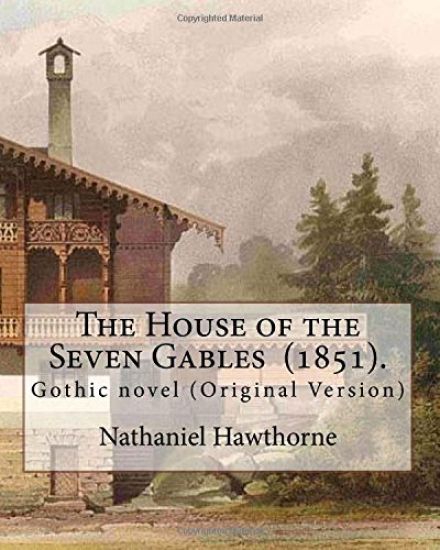
The House of the Seven Gables (1851). By: Nathaniel Hawthorne: Gothic novel (Original Version)

The House of the Seven Gables (1851). By: Nathaniel Hawthorne: Gothic novel (Original Version)

Nathaniel Hawthorne

Createspace Independent Publishing Platform
2018
nidottu
The House of the Seven Gables is a Gothic novel written beginning in mid-1850 by American author Nathaniel Hawthorne and published in April 1851 by Ticknor and Fields of Boston. The novel follows a New England family and their ancestral home. In the book, Hawthorne explores themes of guilt, retribution, and atonement and colors the tale with suggestions of the supernatural and witchcraft. The setting for the book was inspired by a gabled house in Salem belonging to Hawthorne's cousin Susanna Ingersoll and by ancestors of Hawthorne who had played a part in the Salem Witch Trials of 1692. The book was well received upon publication and later had a strong influence on the work of H. P. Lovecraft. The House of the Seven Gables has been adapted several times to film and television. Plot edit] The novel is set in the mid-19th century, but flashbacks to the history of the house, which was built in the late 17th century, are set in other periods. The house of the title is a gloomy New England mansion, haunted since its construction by fraudulent dealings, accusations of witchcraft, and sudden death. The current resident, the dignified but desperately poor Hepzibah Pyncheon, opens a shop in a side room to support her brother Clifford, who has completed a thirty-year sentence for murder. She refuses all assistance from her wealthy but unpleasant cousin, Judge Jaffrey Pyncheon. A distant relative, the lively and pretty young Phoebe, arrives and quickly becomes invaluable, charming customers and rousing Clifford from depression. A delicate romance grows between Phoebe and the mysterious attic lodger Holgrave, who is writing a history of the Pyncheon family. The house was built on ground wrongfully seized from its rightful owner, Matthew Maule, by Colonel Pyncheon, the founder of the Massachusetts branch of the family. Maule was accused of practicing witchcraft and was executed. According to legend, at his death Maule laid a curse upon the Pyncheon family. During the housewarming festivities, Colonel Pyncheon was found dead in his armchair; whether he actually died from the curse or from a congenital disease is unclear. His portrait remains in the house as a symbol of its dark past and the weight of the curse upon the spirit of its inhabitants. Phoebe arranges to visit her country home, but plans to return soon. Clifford, depressed by his isolation from humanity and his lost youth spent in prison, stands at a large arched window above the stairs and has a sudden urge to jump. The departure of Phoebe, the focus of his attention, leaves him bed-ridden. Judge Pyncheon arrives to find information about land in Maine, rumored to belong to the family. He threatens Clifford with an insanity hearing unless he reveals details about the land or the location of the missing deed. Clifford is unable to comply. Before Clifford can be brought before the Judge (which would destroy Clifford's fragile psyche), the Judge mysteriously dies while sitting in Colonel Pyncheon's chair. Hepzibah and Clifford flee by train. The next day, Phoebe returns and finds that Holgrave has discovered the Judge's body. The townsfolk begin to gossip about Hepzibah and Clifford's sudden disappearance. Phoebe is relieved when Hepzibah and Clifford return, having recovered their wits. New evidence in the crime that sent Clifford to prison proves his innocence. He was framed for the death of his uncle by Jaffrey, who was even then looking for the missing deed. Holgrave is revealed as Maule's descendant, but he bears no ill will toward the remaining Pyncheons. The missing deed is discovered behind the old Colonel's portrait, but the paper is worthless: the land is already settled by others. The characters abandon the old house and start a new life in the countryside, free from the burdens of the past.... Nathaniel Hawthorne ( born Nathaniel Hathorne; July 4, 1804 - May 19, 1864) was an American novelist, dark romantic, and short story writer.....
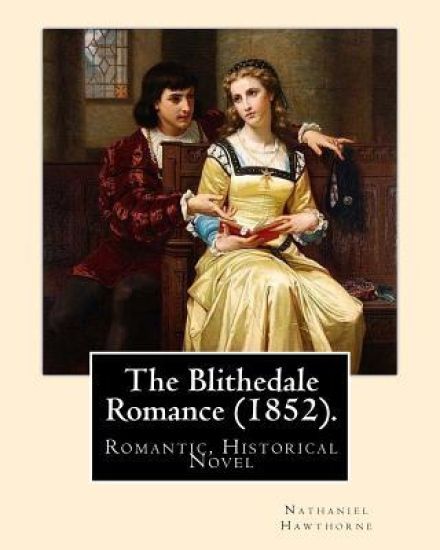
The Blithedale Romance (1852). By: Nathaniel Hawthorne: The Blithedale Romance (1852) is Nathaniel Hawthorne's third major romance. In Hawthorne (1879
The Blithedale Romance (1852) is Nathaniel Hawthorne's third major romance. In Hawthorne (1879), Henry James called it "the lightest, the brightest, the liveliest" of Hawthorne's "unhumorous fictions." Plot summary edit] The story takes place primarily in the utopian community of Blithedale, presumably in the mid-1800s. The main character, Miles Coverdale, embarks on a quest for the betterment of the world through the agrarian lifestyle and community of the Blithedale Farm. The story begins with a conversation between Coverdale and Old Moodie, a character who reappears throughout the story. The legend of the mysterious Veiled Lady is introduced; she is a popular clairvoyant who disappears unannounced from the social scene. Coverdale then makes the voyage to Blithedale, where he is introduced to such characters as Zenobia and Mr. and Mrs. Silas Foster. At their first community dinner they are interrupted by the arrival of Hollingsworth, a previous acquaintance of Coverdale's, who is carrying a frail, pale girl. Though Hollingsworth believes the girl (whose age is never clarified) is an expected guest, none of the Blithedale citizens recognize her. She immediately develops a strong attachment to Zenobia, and reveals her name to be Priscilla. Soon after, Coverdale becomes severely ill and is bedridden. During his sickness, he believes he is on the brink of death and develops a closeness with Hollingsworth due to their anxiety-ridden situation and discussion of worldly ideals. Hollingsworth and Zenobia take care of him, and he returns to health shortly. As he recovers and spring comes, the residents of the community begin to work the land successfully and prove to their neighbors the plausibility of their cause. Priscilla starts to open up, and relationships between the other characters develop as well. Tension in the friendship between Coverdale and Hollingsworth intensifies as their philosophical disagreements continue. Meanwhile, Zenobia and Hollingsworth become close and rumor flies they might build a house together. Mr. Moodie makes a reappearance and asks about Priscilla and Zenobia for reasons to be revealed later. Coverdale then meets a stranger who turns out to be a Professor Westervelt. Westervelt also asks about Zenobia and Hollingsworth. Coverdale does not like the Professor, and when he is retreating in a tree he overhears the Professor talking to Zenobia and implying that they have a prior relationship. At this point, the narrator of the story briefly switches to Zenobia as she tells a tale entitled "The Silvery Veil." She describes the Veiled Lady and her background, though it is never revealed whether her version of the story is true or not. After switching narration back to Coverdale, the story proceeds to Eliot's Pulpit, a place of rest and discourse for the four main characters (Coverdale, Hollingsworth, Priscilla, and Zenobia). There they discuss women's rights, and Zenobia and Hollingsworth agree, against Coverdale, on a more misogynistic point of view. Their disagreements intensify the next day when Hollingsworth and Coverdale discuss their hopes for the future of Blithedale. They disagree so thoroughly that Coverdale renounces Hollingsworth and effectively ends their friendship. A turning point in the novel, the drama culminates with Coverdale's leaving the farm and returning to the city. He there shows a sort of voyeurism, peeping through hotel windows at a young man and another family. Whilst peeping, he spies Zenobia and Westervelt in another window..... Nathaniel Hawthorne ( born Nathaniel Hathorne; July 4, 1804 - May 19, 1864) was an American novelist, dark romantic, and short story writer...............
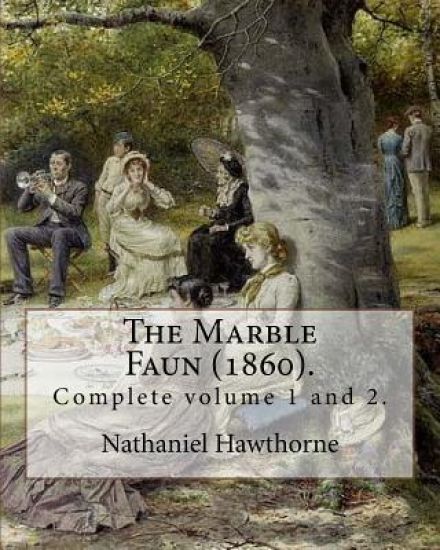
The Marble Faun (1860). By: Nathaniel Hawthorne: (Complete volume 1 and 2). The Marble Faun: Or, The Romance of Monte Beni, also known by the Brit
The Marble Faun: Or, The Romance of Monte Beni, also known by the British title Transformation, was the last of the four major romances by Nathaniel Hawthorne, and was published in 1860. The Marble Faun, written on the eve of the American Civil War, is set in a fantastical Italy. The romance mixes elements of a fable, pastoral, gothic novel, and travel guide. Characters edit] This romance focuses on four main characters: Miriam, Hilda, Kenyon, and Donatello. Miriam is a beautiful painter with an unknown past. Throughout the novel, she is compared to many other women including Eve, Beatrice Cenci, Judith, and Cleopatra. Miriam is pursued by a mysterious, threatening man who is her "evil genius" through life. Hilda is an innocent copyist. She is compared to the Virgin Mary and the white dove. Her simple, unbendable moral principles can make her severe in spite of her tender heart. Miriam and Hilda are often contrasted. Kenyon is a sculptor who represents rationalist humanism. He cherishes a romantic affection towards Hilda. Donatello, the Count of Monte Beni, is often compared to Adam and is in love with Miriam. Donatello amazingly resembles the marble Faun of Praxiteles, and the novel plays with the characters' belief that the Count may be a descendant of the antique Faun. Hawthorne, however, withholds a definite statement even in the novel's concluding chapters and postscript...................... Nathaniel Hawthorne ( born Nathaniel Hathorne; July 4, 1804 - May 19, 1864) was an American novelist, dark romantic, and short story writer. He was born in 1804 in Salem, Massachusetts to Nathaniel Hathorne and the former Elizabeth Clarke Manning. His ancestors include John Hathorne, the only judge involved in the Salem witch trials who never repented of his actions. He entered Bowdoin College in 1821, was elected to Phi Beta Kappa in 1824, and graduated in 1825. He published his first work in 1828, the novel Fanshawe; he later tried to suppress it, feeling that it was not equal to the standard of his later work. He published several short stories in periodicals, which he collected in 1837 as Twice-Told Tales. The next year, he became engaged to Sophia Peabody. He worked at the Boston Custom House and joined Brook Farm, a transcendentalist community, before marrying Peabody in 1842. The couple moved to The Old Manse in Concord, Massachusetts, later moving to Salem, the Berkshires, then to The Wayside in Concord. The Scarlet Letter was published in 1850, followed by a succession of other novels. A political appointment as consul took Hawthorne and family to Europe before their return to Concord in 1860. Hawthorne died on May 19, 1864, and was survived by his wife and their three children. Much of Hawthorne's writing centers on New England, many works featuring moral metaphors with an anti-Puritan inspiration. His fiction works are considered part of the Romantic movement and, more specifically, dark romanticism. His themes often center on the inherent evil and sin of humanity, and his works often have moral messages and deep psychological complexity. His published works include novels, short stories, and a biography of his college friend Franklin Pierce, the 14th President of the United States...............
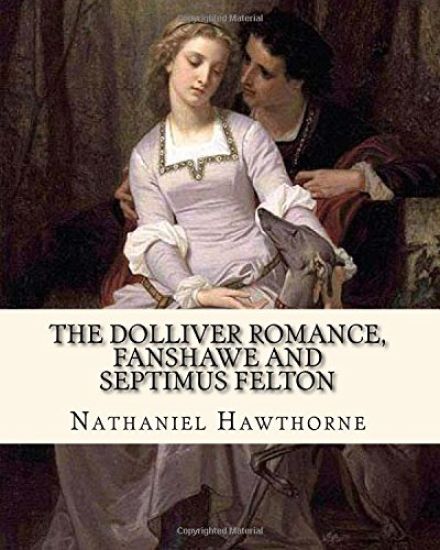
The Dolliver Romance, Fanshawe, and Septimus Felton By: Nathaniel Hawthorne: With an appedix containing The ancestral footstep
Nathaniel Hawthorne ( born Nathaniel Hathorne; July 4, 1804 - May 19, 1864) was an American novelist, dark romantic, and short story writer. He was born in 1804 in Salem, Massachusetts to Nathaniel Hathorne and the former Elizabeth Clarke Manning. His ancestors include John Hathorne, the only judge involved in the Salem witch trials who never repented of his actions. He entered Bowdoin College in 1821, was elected to Phi Beta Kappa in 1824, and graduated in 1825. He published his first work in 1828, the novel Fanshawe; he later tried to suppress it, feeling that it was not equal to the standard of his later work. He published several short stories in periodicals, which he collected in 1837 as Twice-Told Tales. The next year, he became engaged to Sophia Peabody. He worked at the Boston Custom House and joined Brook Farm, a transcendentalist community, before marrying Peabody in 1842. The couple moved to The Old Manse in Concord, Massachusetts, later moving to Salem, the Berkshires, then to The Wayside in Concord. The Scarlet Letter was published in 1850, followed by a succession of other novels. A political appointment as consul took Hawthorne and family to Europe before their return to Concord in 1860. Hawthorne died on May 19, 1864, and was survived by his wife and their three children. Much of Hawthorne's writing centers on New England, many works featuring moral metaphors with an anti-Puritan inspiration. His fiction works are considered part of the Romantic movement and, more specifically, dark romanticism. His themes often center on the inherent evil and sin of humanity, and his works often have moral messages and deep psychological complexity. His published works include novels, short stories, and a biography of his college friend Franklin Pierce, the 14th President of the United States.