Kirjojen hintavertailu. Mukana 11 717 486 kirjaa ja 12 kauppaa.

Kirjahaku

Etsi kirjoja tekijän nimen, kirjan nimen tai ISBN:n perusteella.

1000 tulosta hakusanalla Nigel Hamilton

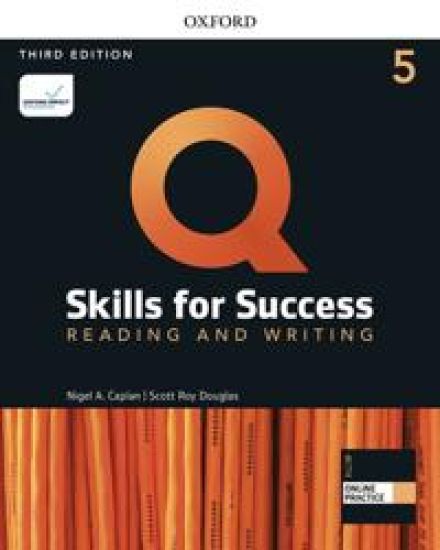
Q: Skills for Success: Level 5: Reading and Writing Student Book with iQ Online Practice
Think critically. Succeed academically. Q Skills for Success Level 5: Reading and Writing Student Book with iQ Online Practice, third edition, builds on its question-centered approach to help students achieve academic success. It helps students to develop the techniques and critical thinking skills they need for academic study with new Critical Thinking Strategies, updated texts and topics and 100% new assessment. This Level 5 Reading and Writing Student Book is suitable for CEFR language level C1. New to this Edition Each unit video now has new Work with the Video pages in the Student Book to guide students in watching, understanding, and discussing the unit videosNew Critical Thinking Strategies and activities in every unit help students analyse, develop and justify their ideas.New skills videos provide illustrated explanations of skills and grammar points in the Student Book to support students' skills developmentiQ Online Practice is now suitable for mobile use which gives students greater flexibility in where and when they get extra skills practice, access audio and video, and check their progressVocabulary from the new Oxford Phrasal Academic Lexicon helps students to develop essential spoken and written language for their academic studiesVocabulary from the Oxford 3000 (TM) and new Oxford 5000 (TM) provide students with the most frequent and relevant words they need in English, as chosen by language expertsThe updated Writing Tutor supports students to practice their academic writing skills.This student book is also available as an eBook. For more information please contact your Oxford Learning Resource Consultant. To purchase this product, please contact us and list this ISBN in the 'detailed information' field.
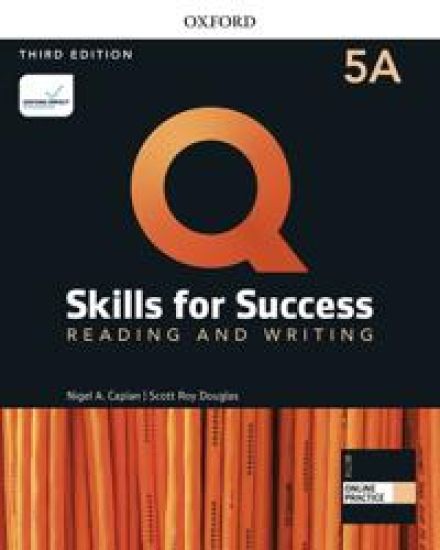
Q: Skills for Success: Level 5: Reading and Writing Split Student Book B with iQ Online Practice
Each unit video now has NEW "Work with the Video" pages in the Student Book to guide students in watching, understanding, and discussing the unit videos.NEW Critical Thinking Strategies and activities in every unit help students analyze, develop and justify their ideas. Online videos accompany each strategy to help students gain a deeper understanding.NEW skills videos provide illustrated explanations of skills and grammar points in the Student Book to support students' skills development.100% NEW unit, placement, midterm and final tests have been developed with feedback from real teachers.Clear learning outcomes and reflection worksheets encourage students to evaluate their own progress, reflect on their learning, and identify areas for improvement.iQ Online Practice is now suitable for mobile use which gives students greater flexibility in where and when they get extra skills practice, access audio and video, and check their progress. The NEW Extensive Reading program offers an Oxford Graded Reader aligned to each unit to motivate students in their reading.Vocabulary from the NEW Oxford Phrasal Academic Lexicon helps students to develop essential spoken and written language for their academic studies.Vocabulary from the Oxford 3000(TM) and new Oxford 5000(TM) provide students with the most frequent and relevant words they need in English, as chosen by language experts.
The Amazon River Forest

The Amazon River Forest

Nigel J. H. Smith

Oxford University Press Inc
1999
sidottu
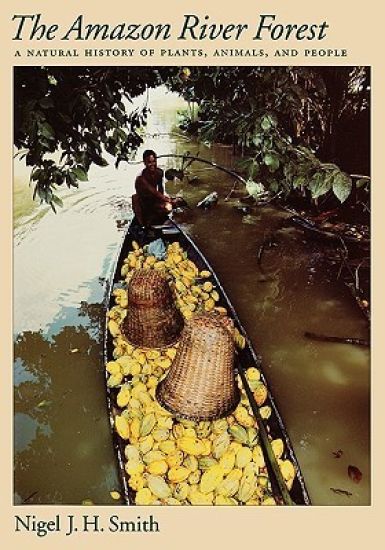
The floodplain forest of the Amazon is the last major agricultural frontier of the Americas. This unique habitat, inundated in some places to a depth of thirty feet a year, contains a marvellous variety of plant and animal resources that inhabitants have long reaped--fruit, nuts, building materials, fuelwood, and medicinal plants. While the floodplain has great potential for food production, its natural resource base is becoming increasingly threatened by ranching and agricultural expansion and impaired by inappropriate land-use practices. This important book, based both on field observations carried out over the past quarter century and historical material, demonstrates that knowledge possessed by area dwellers offers vital insights for promoting the sound economic development of the floodplain. Nigel Smith argues for the importance of balance between land-use systems, and suggests that research and development should be realigned to incorporate both modern science and traditional systems. Beautifully illustrated with the author's own photographs, this authoritative volume explores a broad range of ecological, historical, cultural, and socioeconomic issues, and offers practical suggestions for developing the floodplain that enhance, rather than destroy, biodiversity.
The Amazon River Forest

The Amazon River Forest

Nigel J. H. Smith

Oxford University Press Inc
1999
nidottu
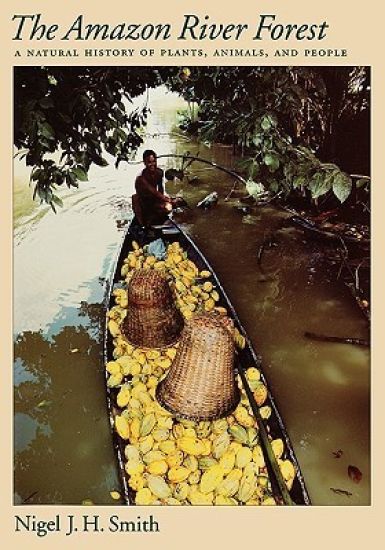
The floodplain forest of the Amazon is the last major agricultural frontier of the Americas. This unique habitat, inundated in some places to a depth of thirty feet a year, contains a marvellous variety of plant and animal resources that inhabitants have long reaped--fruit, nuts, building materials, fuelwood, and medicinal plants. While the floodplain has great potential for food production, its natural resource base is becoming increasingly threatened by ranching and agricultural expansion and impaired by inappropriate land-use practices. This important book, based both on field observations carried out over the past quarter century and historical material, demonstrates that knowledge possessed by area dwellers offers vital insights for promoting the sound economic development of the floodplain. Nigel Smith argues for the importance of balance between land-use systems, and suggests that research and development should be realigned to incorporate both modern science and traditional systems. Beautifully illustrated with the author's own photographs, this authoritative volume explores a broad range of ecological, historical, cultural, and socioeconomic issues, and offers practical suggestions for developing the floodplain that enhance, rather than destroy, biodiversity.
Victory and Celebration

Victory and Celebration

Nigel Nicholson

OXFORD UNIVERSITY PRESS INC
2025
sidottu
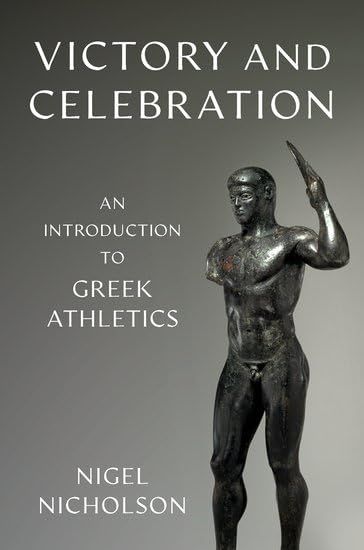
Victory and Celebration traces how athletic success was transformed into broader social and political capital in ancient Greece in the sixth and fifth centuries BCE--how being a good boxer or wrestler, or having a fast son or superior horses was made into something of significance beyond the stadium or hippodrome. Athletic success did not speak for itself. Its meanings had to be produced and defended, and this was the work of the victory memorials--the poems, statues, and other dedications produced to commemorate the athletic victories. Through readings of these victory memorials, Victory and Celebration explores, first, how Greek athletics was intertwined with general ideas of excellence, beauty, and a closeness to gods and heroes, and second, how the memorials communicated more directly political visions of leadership, inherited ability, and the victor's place in their city and the wider world. Finally, the book examines how specific events, such as boxing, contests for youths, and chariot and horse races were shaped and made valuable, or kept valuable, by the memorials. The significance of athletic victory was not a given; by addressing what meanings were attributed to athletic success, and the often-innovative ways in which these meanings were made to seem true, Victory and Celebration emphasizes how much work had to be done to make that success count.
Victory and Celebration

Victory and Celebration

Nigel Nicholson

OXFORD UNIVERSITY PRESS INC
2025
nidottu
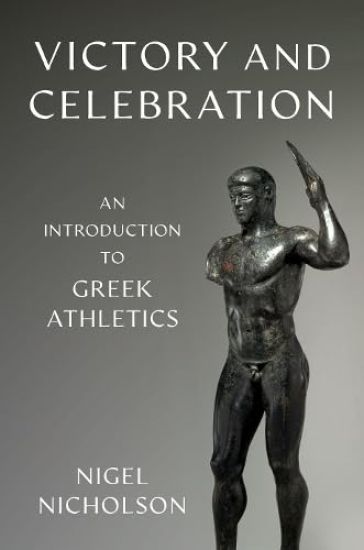
Victory and Celebration traces how athletic success was transformed into broader social and political capital in ancient Greece in the sixth and fifth centuries BCE--how being a good boxer or wrestler, or having a fast son or superior horses was made into something of significance beyond the stadium or hippodrome. Athletic success did not speak for itself. Its meanings had to be produced and defended, and this was the work of the victory memorials--the poems, statues, and other dedications produced to commemorate the athletic victories. Through readings of these victory memorials, Victory and Celebration explores, first, how Greek athletics was intertwined with general ideas of excellence, beauty, and a closeness to gods and heroes, and second, how the memorials communicated more directly political visions of leadership, inherited ability, and the victor's place in their city and the wider world. Finally, the book examines how specific events, such as boxing, contests for youths, and chariot and horse races were shaped and made valuable, or kept valuable, by the memorials. The significance of athletic victory was not a given; by addressing what meanings were attributed to athletic success, and the often-innovative ways in which these meanings were made to seem true, Victory and Celebration emphasizes how much work had to be done to make that success count.
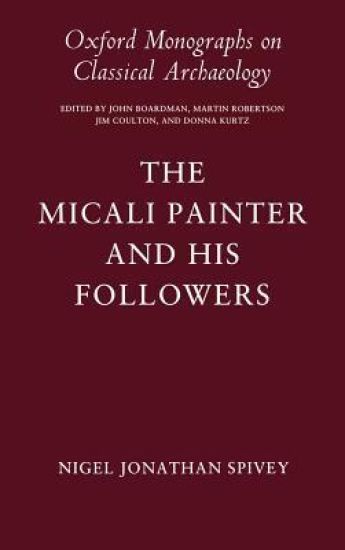
The Micali Painter and his Followers

The Micali Painter and his Followers

Nigel Jonathan Spivey

Clarendon Press
1987
sidottu
One of the first personalities to be identified in Etruscan art, the Micali Painter (sixth century BC), is also one of the liveliest of ancient vase-painters, and the leading exponent of a black-figure style that owed more to native imagination than the influence of imported Athenian vases. He is named after Guiseppe Micali (1769-1844), who recognized the hoard of vases discussed in this book as being the work of one man. This book presents the first full stylistic study of the painter, together with a catalogue of his surviving work (some two hundred pieces) and an account of his development and influence within the course of archaic Etruscan painting. Much of the material is hitherto unpublished, and the illustrations have been chosen to furnish a full documentation of the Micali Painter's range and originality.
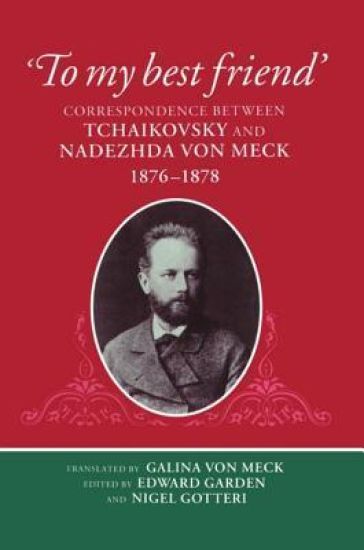
'To My Best Friend'

'To My Best Friend'

Nigel Gotteri

Clarendon Press
1993
sidottu
Tchaikovsky dedicated his original and emotionally vibrant Fourth Symphony to his newly found correspondent Nadezhda von Meck in this way: `To my best friend'. This correspondence started at the end of 1876, when Tchaikovsky was in need of funds. On the recommendation of Nikolai Rubinstein, Director of the Moscow Conservatoire where Tchaikovsky was a professor, Nadezhda von Meck generously commissioned Tchaikovsky to arrange some of his smaller pieces for violin and piano. In this way started their extraordinary pen-relationship in which each seemed to bare the soul before the other, Nadezhda von Meck sincerely and increasingly gushingly, Tchaikovsky less sincerely to begin with, but much more so before the elapse of many months. Each was determined never to meet the other in the flesh for fear of destroying their very special relationship. The years covered by the present book are by far the most important in the correspondence. They cover the period of Tchaikovsky's tempestuously abortive marriage, about which he is surprisingly candid; in addition to the Fourth Symphony, for which he gives a detailed programme in a very revealing letter to her, the compositions of the period include his finest and most sensitive opera, Eugene Onegin, and the ever-popular Violin Concerto, as well as numerous other smaller works. Their views on many musical, literary, philosophical, and other matters are stated frankly and, though they are often in accord, they are not afraid to agree to differ either. For Tchaikovsky, his correspondence with Nadezhda von Meck was therapeutic; he often wrote to her when he was depressed - sometimes in despair - and the very act of putting pen to paper in the knowledge that she would be supportive was enough to alleviate his condition, not to mention the fact that she eventually granted him a monthly allowance which gave him artistic `freedom', as he wrote joyously when he had resigned from the Conservatoire. Not only giving a unique insight into Tchaikovsky the composer, these letters are perhaps as fascinating as any ever printed. Many are published in English for the first time. The translations, by a native-born Russian who lived the latter part of her life in England, and edited by a music scholar who reads Russian and a Slavist who is qualified in music, are as close to the letter and spirit of the original as it is possible to get. The correspondence will be of interest both to musicians and music lovers, and to all who are interested in the arts and culture of the nineteenth century.
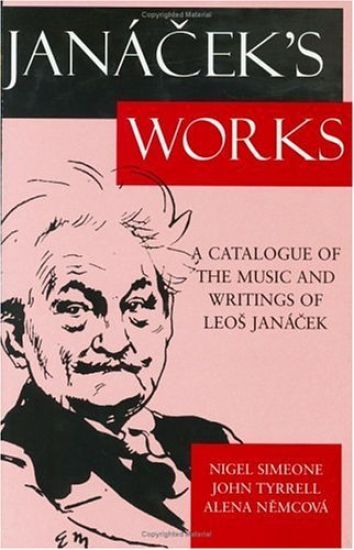
Jancek's Works

Jancek's Works

Nigel Simeone

Clarendon Press
1997
sidottu
Leos Janacek (1854-1928) is one of the few great opera composers of the twentieth century; his operas, orchestral, chamber, and vocal works are all part of the international repertory. This catalogue is by far the most comprehensive to appear in any language, with up-to-date and reliable information on all his works. Each entry provides detailed information on date of composition (and shows on what basis dating has been arrived at); source of text orprogramme; performing forces; duration; manuscripts and their locations; publication (a complete listing); performances and productions; dedication; literature. A special feature is the explanation of terms which may be unfamiliar to the western reader such as 'Glagolitic', 'Varyto', 'Lachian', and 'Indian ClubSwinging'. This catalogue is also the first to include a complete, annotated list of the composer's varied and extensive writings.
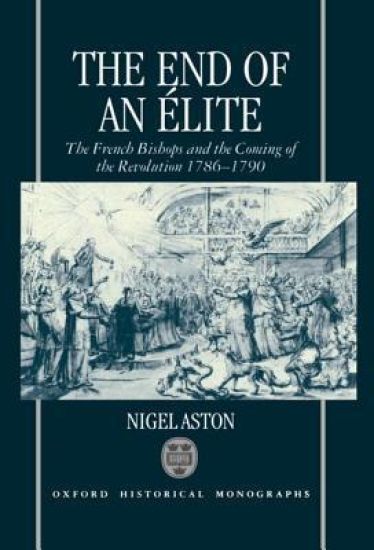
The End of an Élite

The End of an Élite

Nigel Aston

Clarendon Press
1992
sidottu
The End of an Élite is the first scholarly study in English of the bishops of the French church at the outbreak of the French Revolution. The 130 members of the episcopate formed an élite within an élite, the First Estate of France. Nigel Aston explores the role of the episcopate in national and provincial politics in the last years of the ancien régime. He traces the policies and patronage of episcopal ministers such as Lomiénie de Brienne and J.-M. Champion de Cicé, who were as much politicians as pastors, and examines their relationships with their fellow bishops. Dr Aston emphasizes the leading role of the bishops in the Assemblies of Notables and offers a fresh interpretation of clerical elections to the Estates-General of 1789. This is an intensively researched and immensely readable account, which will be invaluable to all historians of late eighteenth-century France.
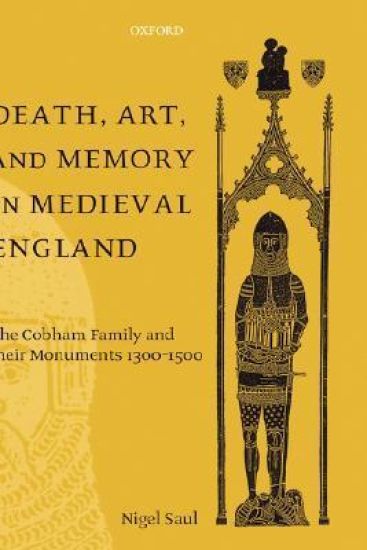
Death, Art, and Memory in Medieval England

Death, Art, and Memory in Medieval England

Nigel Saul

Oxford University Press
2001
sidottu
In this innovative and compelling book Nigel Saul approaches the world of the medieval gentry through the monuments they left behind them. The Cobham family left the largest and most spectacular collection of brasses in Britain in their church at Cobham, and other magnificent brasses in Lingfield, and elsewhere. Medieval brasses have hitherto been studied chiefly from an antiquarian or technical perspective; Nigel Saul for the first time shows how they served as a link between the living and the dead. Commemoration was inseparable from the wider dynamics of society. Through the brasses and through family history he takes us to the heart of gentry aspirations and fears, successes and disappointments. This extensively illustrated study offers a new paradigm for the study of medieval church monuments and makes a major contribution to our understanding of gentry culture.
Community Policing

Community Policing

Nigel Fielding

Clarendon Press
1995
sidottu
Community policing seems always in vogue, yet its essential qualities remain elusive. There has been a rush to evaluate community policing before commentators have got to grips with what community police officers do which is distinctive. This book demonstrates, in detail, how community police officers go about such matters as gathering crime-relevant information from people in the local community, how they apply informal social control to public disorder situations, and how they 'play' the police organization itself in order to obtain resources they need and to secure their own advancement. However, such a brief is not sufficient in itself. The point is to use such a discussion of working practices to assess the conceptual apparatus which has been developed to understand community policing, and to evaluate the potential of community policing to achieve the objectives which policy-makers have set for it. That is the agenda of this book.
The Hastening that Waits

The Hastening that Waits

Nigel Biggar

Clarendon Press
1995
nidottu
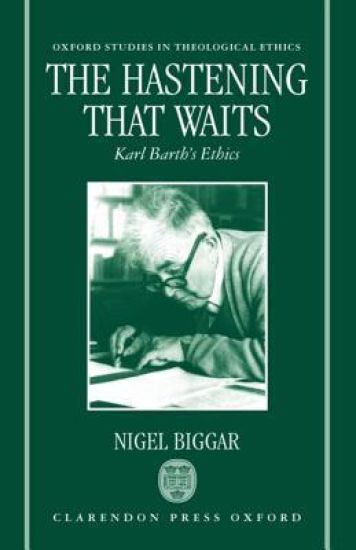
A fresh and up-to-date account of the ethical thought of one of the twentieth century's greatest theologians, Karl Barth. Dr Biggar recovers Barth's ethics from some widespread misunderstandings, and goes on to relate Barth's ideas to many of the central issues debated in contemporary Christian ethics - including the concept of human freedom and of created moral order; moral norms and their relation to individual vocation; the relative ethnical roles of the Bible, the Church, philosophy, and empirical science; moral character and its formation; and the problem of war.
The Hastening that Waits

The Hastening that Waits

Nigel Biggar

Clarendon Press
1993
sidottu
This book offers a fresh and up-to-date account of the ethical thought of one of the twentieth century's greatest theologians: Karl Barth. In it, the author seeks to recover Barth's ethics from some widespread misunderstandings, and also presents a picture of it as a whole. Drawing on recently published sources, Dr Biggar construes the ethics of the Church Dogmatics as it might have been had Barth lived to complete it. However, The Hastening that Waits is more than apology and description. For it recommends to contemporary Christian ethics the theological rigour with which Barth expounds the good life in terms of the living presence of God-in-Christ to his creatures; his conception of right human action as that which is able to hasten in the service of humanity precisely by waiting prayerfully upon God; and his discriminate openness to moral wisdom outside the Christian church. Among particular topics treated are: the concept of human freedom and of created moral order; moral norms and their relation to individual vocation; the relative ethical roles of the Bible, the Church, philosophy, and empirical science; moral character and its formation; and the problem of war.
Anglican Ritualism in Victorian Britain 1830-1910
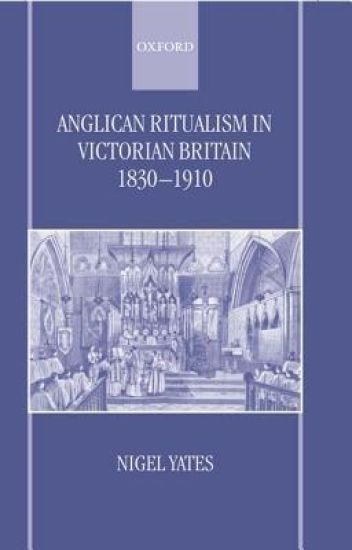
This innovative book challenges many of the widely held assumptions about the impact of ritualism on the Victorian church. Through a detailed analysis of the geographical spread of ritualist churches in the British Isles, Dr Yates shows that the impact of ritualism was as strong, if not stronger, in middle-class and rural parishes as in working-class and urban areas. He gives a detailed reassessment of the debates and controversies surrounding the attitudes of the Anglican bishops towards ritualism, the impact of public opinion on discussions in parliament, and the implementation of the Public Worship Regulation Act of 1874. The book examines the wider historical implications by not simply focusing on ritualism during the Victorian period but extrapolating this to show the impact that ritualism has had on the longer-term development of Anglicanism in the twentieth century.
Buildings, Faith and Worship

Buildings, Faith and Worship

Nigel Yates

Oxford University Press
2001
nidottu
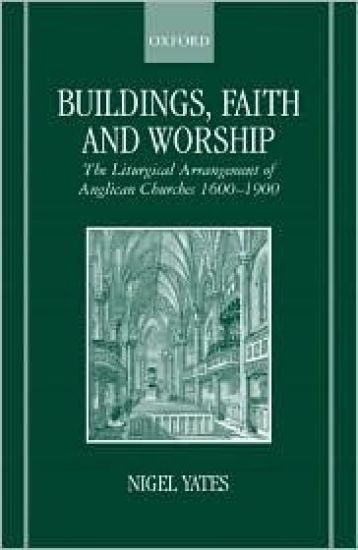
This is the first major study for over forty years of the liturgical arrangement of Anglican churches in the period between the Reformation and the Oxford Movement. The study is based both on surviving buildings and on a wide range of archival sources, such as seating plans, which are used to document internal changes and to suggest reasons behind them. In the course of the book Nigel Yates challenges many widely held assumptions about the liturgical outlook of the Pre-Tractarian period, and about the impact of ecclesiology on the Church of England. In particular, he emphasizes the existence, hitherto disregarded, of a Church of England movement for liturgical renewal between 1780 and 1840, which to a degree anticipated some of the ideas previously attributed solely to the ecclesiologists. The discussion is firmly set within the context of European Protestantism, and comparisons are drawn with the liturgical practices both of Calvinists and Lutherans.
OCR Gateway Chemistry for GCSE Combined Science Student Book
Please note this book is suitable for any student studying: Exam board: OCR Level: GCSE (9-1) Subject: Chemistry First teaching: September 2016 First exams: June 2018 These resources have been created specifically for the new 2016 OCR Gateway GCSE (9-1) specifications, providing support for the new harder GCSE content and increased maths requirements, as well as all required practicals. As OCR's Publishing Partner for Science, we work with OCR throughout the development of the qualifications to deliver high quality resources. - Created specfically for the new OCR Gateway (9-1) specifications - Built-in assessment and differentiation makes progress tracking easy - Students of all abilities are supported through the new, more demanding GCSE with ramped questions and differentiated objectives for every topic - Maths skills are built through exclusive direct, specification-matched links to MyMaths via Kerboodle, alongside worked examples and practice questions throughout the Student Books. - Practical skills are developed throughout the Student Books, with specific practice for the new practical questions and a bank of practical activities on Kerboodle - Multiple-choice, maths, practical and synoptic questions are included throughout
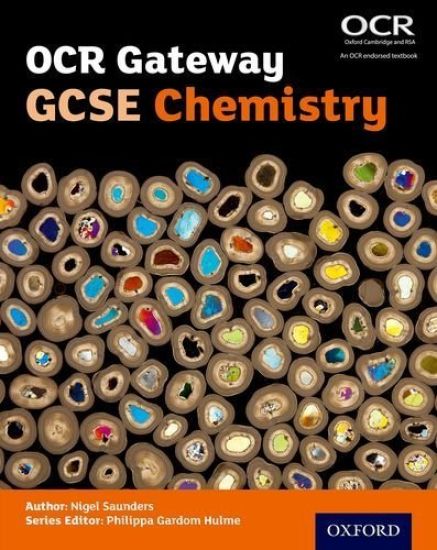
OCR Gateway GCSE Chemistry Student Book

OCR Gateway GCSE Chemistry Student Book

Nigel Saunders

Oxford University Press
2016
nidottu
Please note this book is suitable for any student studying: Exam board: OCR Level: GCSE (9-1) Subject: Chemistry First teaching: September 2016 First exams: June 2018 These resources have been created specifically for the new 2016 OCR Gateway GCSE (9-1) specifications, providing support for the new harder GCSE content and increased maths requirements, as well as all required practicals. As OCR's Publishing Partner for Science, we work with OCR throughout the development of the qualifications to deliver high quality resources. - Endorsed by OCR for the new OCR Gateway (9-1) specifications - Built-in assessment and differentiation makes progress tracking easy - Students of all abilities are supported through the new, more demanding GCSE with ramped questions and differentiated objectives for every topic - Maths skills are built through exclusive direct, specification-matched links to MyMaths via Kerboodle, alongside worked examples and practice questions throughout the Student Books. - Practical skills are developed throughout the Student Books, with specific practice for the new practical questions and a bank of practical activities on Kerboodle - Multiple-choice, maths, practical and synoptic questions are included throughout