This book is a socioeconomic interpretation of Puerto Rico's first and most significant attempt to end its colonial relationship with Spain. Looking at the imperial policies and conditions within Puerto Rico that led to the 1868 rebellion known as "El Grito de Lares," Dr. Jiménez de Wagenheim compares the colonization of Puerto Rico with that of Spanish America and explores the reasons why the island's independence movement began decades after Spain's other colonies in the region had revolted. Through the extensive use of previously unresearched archive material, she examines the economic and social backgrounds of the leaders of the rebel movement, corrects many errors of earlier accounts of the revolt, and offers new interpretations of its impact on Spanish-Puerto Rican relations.
The second volume in the Studying Lacan’s Seminars series, this book is the first comprehensive study of Lacan’s Seminar VI: Desire and its Interpretation. A natural companion to Bruce Fink’s recent translation of the seminar into English (2019), this book offers a genuine opportunity to delve deeply into the seminar, and a hospitable introduction to Lacan’s teachings of the 1950s.This important book brings together various aspects of Cox Cameron’s teachings and systematic, careful, and critical readings of Seminar VI. Lacan’s theorizing and conceptualizing of the object a, the fundamental fantasy, and aphanisis, as well as the ambiguous treatment of the phallus in his work at the time, are all introduced, contextualized, and explored in detail. The trajectories of his thinking are traced in terms of future developments and elaborations in the seminars that follow closely on the heels of Seminar VI – Seminars VII (Ethics of Psychoanalysis), VIII (Transference), IX (Identification), and X (Anxiety). Consideration is also given to how certain themes and motifs are recapitulated or reworked in his later teachings such as in Seminars XX (Encore), and XXIII (The Sinthome). Also included in this volume are two further essays by Cox Cameron, a most valuable critique of the concept of the phallus in Lacan’s theories of the 1950s, and an overview of Seminar VI originally presented as a keynote address to the APW congress in Toronto 2014.The book is of great interest to Lacanian scholars and students, as well as psychoanalytic therapists and analysts interested in Lacan’s teachings of the 1950s and in how important concepts developed during this period are treated in his later work.
This book is a toolbox for PhD students to plan and prepare for the PhD defence regardless of their scientific discipline or location. The authors discuss various defence formats that are used internationally and identify the main differences and similarities. With international examples, practical strategies, and tips from former PhD students and supervisors, this book unpacks the principles and unwritten rules underpinning the defence. Addressing planning and preparing for the doctoral defence, and what to do afterwards, this book covers topics such as: understanding your defence format preparing for committee questions preparing mentally and dealing with anxiety dealing with corrections, finalizing your graduation requirements and marking the end of your PhD trajectory.This book is crucial reading for students across the world looking to defend their PhD thesis, and also for their supervisors and examiners. The 'Insider Guides to Success in Academia' offers support and practical advice to doctoral students and early-career researchers. Covering the topics that really matter, but which often get overlooked, this indispensable series provides practical and realistic guidance to address many of the needs and challenges of trying to operate, and remain, in academia.These neat pocket guides fill specific and significant gaps in current literature. Each book offers insider perspectives on the often implicit rules of the game -- the things you need to know but usually aren't told by institutional postgraduate support, researcher development units, or supervisors -- and will address a practical topic that is key to career progression. They are essential reading for doctoral students, early-career researchers, supervisors, mentors, or anyone looking to launch or maintain their career in academia.
This book is a toolbox for PhD students to plan and prepare for the PhD defence regardless of their scientific discipline or location. The authors discuss various defence formats that are used internationally and identify the main differences and similarities. With international examples, practical strategies, and tips from former PhD students and supervisors, this book unpacks the principles and unwritten rules underpinning the defence. Addressing planning and preparing for the doctoral defence, and what to do afterwards, this book covers topics such as: understanding your defence format preparing for committee questions preparing mentally and dealing with anxiety dealing with corrections, finalizing your graduation requirements and marking the end of your PhD trajectory.This book is crucial reading for students across the world looking to defend their PhD thesis, and also for their supervisors and examiners. The 'Insider Guides to Success in Academia' offers support and practical advice to doctoral students and early-career researchers. Covering the topics that really matter, but which often get overlooked, this indispensable series provides practical and realistic guidance to address many of the needs and challenges of trying to operate, and remain, in academia.These neat pocket guides fill specific and significant gaps in current literature. Each book offers insider perspectives on the often implicit rules of the game -- the things you need to know but usually aren't told by institutional postgraduate support, researcher development units, or supervisors -- and will address a practical topic that is key to career progression. They are essential reading for doctoral students, early-career researchers, supervisors, mentors, or anyone looking to launch or maintain their career in academia.
Random Light Beams: Theory and Applications contemplates the potential in harnessing random light. This book discusses light matter interactions, and concentrates on the various phenomena associated with beam-like fields. It explores natural and man-made light fields and gives an overview of recently introduced families of random light beams. It outlines mathematical tools for analysis, suggests schemes for realization, and discusses possible applications. The book introduces the essential concepts needed for a deeper understanding of the subject, discusses various classes of deterministic paraxial beams and examines random scalar beams. It highlights electromagnetic random beams and matters relating to generation, propagation in free space and various media, and discusses transmission through optical systems. It includes applications that benefit from the use of random beams, as well as the interaction of beams with deterministic optical systems.• Includes detailed mathematical description of different model sources and beams• Explores a wide range of man-made and natural media for beam interaction • Contains more than 100 illustrations on beam behavior• Offers information that is based on the scientific results of the last several years • Points to general methods for dealing with random beams, on the basis of which the readers can do independent researchIt gives examples of light propagation through the human eye, laser resonators, and negative phase materials. It discusses in detail propagation of random beams in random media, the scattering of random beams from collections of scatterers and thin random layers as well as the possible uses for these beams in imaging, tomography, and smart illumination.
Despite a worldwide increase in demand for fresh-cut fruit and vegetables, in many countries these products are prepared in uncontrolled conditions and have the potential to pose substantial risk for consumers. Correspondingly, researchers have ramped up efforts to provide adequate technologies and practices to assure product safety while keeping nutritional and sensory properties intact. With contributions from experts from industry, research centers, and academia, Advances in Fresh-Cut Fruits and Vegetables Processing collates and presents new scientific data in a comprehensive update on technologies and marketing considerations.Taking a multidisciplinary approach, this work discusses the basics and recent innovations in fresh-cut fruit and vegetable processing. It addresses scientific progress in the fresh-cut area and discusses the industry and the market for these commodities. The book covers the regulations that affect the quality of the final products and their processing as well as consumers’ attitude and sensory perceptions. The chapters cover the design of plants and equipment, taking into account engineering aspects, safety, and HACCP guidelines. They also examine innovations in creating healthy and attractive products.Use of innovative packaging technology that could improve product quality and shelf life, new fruit mixtures with more variety, incorporation of flavors, or the use of steamer bags for vegetables are just a few considerations that could expand the markets of fresh-cut products. With its focus on science, including biochemical, physiological, microbiological, and quality aspects, as well as heath considerations and consumer science, this book reports on cutting-edge advances and the practical applications of these advances.
This book contains the major works of Ivan Georgievich Petrowsky on systems of partial differential equations and algebraic geometry. The articles are of crucial importance for the topology of real algebraic manifolds and are the source of intensive development of theory of real algebraic manifolds.
This textbook examines fashion luxury brand management, providing students with a comprehensive understanding of its origins, unique components, current practices, global trade and, most importantly, the application of sustainable models to the industry. It also highlights what makes brands fail and how they can become more resilient. The key content covers the heritage of luxury brands, the importance of craftsmanship and creative direction, the role of luxury conglomerates, cultural awareness and internationalisation, risks of failure and opportunities for revitalisation as well as the application of sustainable measures for a resilient and ethical brand future. Each chapter includes a combination of industry insights, case studies or expert interviews. Coupled with theoretical frameworks and business models, these examples and case studies show how sustainable models can be applied to existing luxury brands and how practices can be embedded into the brand concept. Students are encouraged to think about opportunities and solutions, unique to luxury brand management, and will gain knowledge and skills for a successful future career. A truly global and holistic textbook, Luxury Fashion Brand Management and Sustainability should be core and recommended reading for advanced undergraduate and postgraduate students studying luxury fashion management, luxury brand management, sustainable fashion and responsible business and fashion marketing and communications. Supplementary online resources include chapter-by-chapter PowerPoint slides and a test bank.
This textbook examines fashion luxury brand management, providing students with a comprehensive understanding of its origins, unique components, current practices, global trade and, most importantly, the application of sustainable models to the industry. It also highlights what makes brands fail and how they can become more resilient. The key content covers the heritage of luxury brands, the importance of craftsmanship and creative direction, the role of luxury conglomerates, cultural awareness and internationalisation, risks of failure and opportunities for revitalisation as well as the application of sustainable measures for a resilient and ethical brand future. Each chapter includes a combination of industry insights, case studies or expert interviews. Coupled with theoretical frameworks and business models, these examples and case studies show how sustainable models can be applied to existing luxury brands and how practices can be embedded into the brand concept. Students are encouraged to think about opportunities and solutions, unique to luxury brand management, and will gain knowledge and skills for a successful future career. A truly global and holistic textbook, Luxury Fashion Brand Management and Sustainability should be core and recommended reading for advanced undergraduate and postgraduate students studying luxury fashion management, luxury brand management, sustainable fashion and responsible business and fashion marketing and communications. Supplementary online resources include chapter-by-chapter PowerPoint slides and a test bank.
Geomagnetic Disturbances Impacts on Power Systems: Risk Analysis & Mitigation Strategies provides a full risk assessment tool for assessing power systems confronted geomagnetic disturbances (GMDs) and specifies mitigation opportunities for various stakeholders.“This book deals comprehensively with the threat of solar storms on the world’s power systems. It provides a context to GMDs with respect to other natural hazards, and describes methods to evaluate a particular grid’s risk factors in a straightforward fashion. This is extremely useful to power grid operators, as they are not experts in the field of space weather, but they must be able to deal with its impacts. This is the critical message of this extremely valuable book.” – William A. Radasky, Ph.D., P.E., IEEE Life Fellow, Metatech Corporation, California USAAimed at risk engineers, policy-makers, technical experts and non-specialists such as power system operators, this book seeks to provide an insight into the GMD as a natural hazard and to perform the risk assessment of its potential impacts on the power systems as critical infrastructures. The reader gets familiar with how the Sun can endanger ground-based technological systems and the physics of solar activity manifestation on the Earth as Geomagnetically Induced Currents (GICs). The reaction of power systems to GMDs and mitigation strategies aiming at reducing and controlling the risks are then addressed. The GMD mitigation strategies, the power systems critical factors analysis, the high-risk zones identification and an estimation of economic loss, which is a valuable input for the (re)insurance sector, are also brought to the attention of the reader. Thereby, this book provides a full risk assessment tool for assessing power systems confronted with space weather risks. Key features:• Brings together interdisciplinary perspectives on the topic in one, cohesive book• Practical guideline on mitigation actions for diverse users and even non-specialists• Dealing comprehensively with the threat of geomagnetic disturbance on the worlds power systems• Introducing unique methods to evaluate a particular system risk factors in a straightforward fashionAuthorsOlga Sokolova, Ph.D., is a risk analyst and electrical engineer with expertise in the domain of critical infrastructure risk assessment to natural catastrophes. Nikolay Korovkin, Ph.D., is a full professor and head of Theoretic Electrical Engineering Department at Peter the Great Saint-Petersburg Polytechnic University (SPbPU).Masashi Hayakawa, Ph.D., is an emeritus professor of the University of Electro-Communications, and also CEO of Hayakawa Institute of Seismo Electromagnetics, Co.Ltd.
Geomagnetic Disturbances Impacts on Power Systems: Risk Analysis & Mitigation Strategies provides a full risk assessment tool for assessing power systems confronted geomagnetic disturbances (GMDs) and specifies mitigation opportunities for various stakeholders.“This book deals comprehensively with the threat of solar storms on the world’s power systems. It provides a context to GMDs with respect to other natural hazards, and describes methods to evaluate a particular grid’s risk factors in a straightforward fashion. This is extremely useful to power grid operators, as they are not experts in the field of space weather, but they must be able to deal with its impacts. This is the critical message of this extremely valuable book.” – William A. Radasky, Ph.D., P.E., IEEE Life Fellow, Metatech Corporation, California USAAimed at risk engineers, policy-makers, technical experts and non-specialists such as power system operators, this book seeks to provide an insight into the GMD as a natural hazard and to perform the risk assessment of its potential impacts on the power systems as critical infrastructures. The reader gets familiar with how the Sun can endanger ground-based technological systems and the physics of solar activity manifestation on the Earth as Geomagnetically Induced Currents (GICs). The reaction of power systems to GMDs and mitigation strategies aiming at reducing and controlling the risks are then addressed. The GMD mitigation strategies, the power systems critical factors analysis, the high-risk zones identification and an estimation of economic loss, which is a valuable input for the (re)insurance sector, are also brought to the attention of the reader. Thereby, this book provides a full risk assessment tool for assessing power systems confronted with space weather risks. Key features:• Brings together interdisciplinary perspectives on the topic in one, cohesive book• Practical guideline on mitigation actions for diverse users and even non-specialists• Dealing comprehensively with the threat of geomagnetic disturbance on the worlds power systems• Introducing unique methods to evaluate a particular system risk factors in a straightforward fashionAuthorsOlga Sokolova, Ph.D., is a risk analyst and electrical engineer with expertise in the domain of critical infrastructure risk assessment to natural catastrophes. Nikolay Korovkin, Ph.D., is a full professor and head of Theoretic Electrical Engineering Department at Peter the Great Saint-Petersburg Polytechnic University (SPbPU).Masashi Hayakawa, Ph.D., is an emeritus professor of the University of Electro-Communications, and also CEO of Hayakawa Institute of Seismo Electromagnetics, Co.Ltd.
Advanced Regression Models with SAS and R exposes the reader to the modern world of regression analysis. The material covered by this book consists of regression models that go beyond linear regression, including models for right-skewed, categorical and hierarchical observations. The book presents the theory as well as fully worked-out numerical examples with complete SAS and R codes for each regression. The emphasis is on model accuracy and the interpretation of results. For each regression, the fitted model is presented along with interpretation of estimated regression coefficients and prediction of response for given values of predictors. Features: Presents the theoretical framework for each regression. Discusses data that are categorical, count, proportions, right-skewed, longitudinal and hierarchical. Uses examples based on real-life consulting projects. Provides complete SAS and R codes for each example. Includes several exercises for every regression. Advanced Regression Models with SAS and R is designed as a text for an upper division undergraduate or a graduate course in regression analysis. Prior exposure to the two software packages is desired but not required. The Author:Olga Korosteleva is a Professor of Statistics at California State University, Long Beach. She teaches a large variety of statistical courses to undergraduate and master’s students. She has published three statistical textbooks. For a number of years, she has held the position of faculty director of the statistical consulting group. Her research interests lie mostly in applications of statistical methodology through collaboration with her clients in health sciences, nursing, kinesiology, and other fields.
This textbook provides a practical guide to grammar and style choices for college writers, giving students a basic vocabulary for thinking and talking about language use and enabling them to make purposeful choices in their writing.Each section includes a short overview of a grammatical topic accompanied by exercises for raising the students’ awareness of and skills in using specific grammatical structures. It focuses on the practical and rhetorical functions of grammatical structures as they are used in expository and analytic writing, rather than on de-contextualized grammatical rules. Students will develop a repertoire of grammatical choices and understand the strategic reasons for making these choices in their writing for various audiences. It particularly attends to the structures that present the most difficulty for college students from multilingual communities and communities where a non-standard dialect of English is used on a daily basis. This textbook can be used as a core textbook for grammar course as well as a supplementary text for composition courses. It is also suitable for courses tailored to multilingual, advanced non-native, or non-standard speakers of English.
This textbook provides a practical guide to grammar and style choices for college writers, giving students a basic vocabulary for thinking and talking about language use and enabling them to make purposeful choices in their writing.Each section includes a short overview of a grammatical topic accompanied by exercises for raising the students’ awareness of and skills in using specific grammatical structures. It focuses on the practical and rhetorical functions of grammatical structures as they are used in expository and analytic writing, rather than on de-contextualized grammatical rules. Students will develop a repertoire of grammatical choices and understand the strategic reasons for making these choices in their writing for various audiences. It particularly attends to the structures that present the most difficulty for college students from multilingual communities and communities where a non-standard dialect of English is used on a daily basis. This textbook can be used as a core textbook for grammar course as well as a supplementary text for composition courses. It is also suitable for courses tailored to multilingual, advanced non-native, or non-standard speakers of English.
The second volume in the Studying Lacan’s Seminars series, this book is the first comprehensive study of Lacan’s Seminar VI: Desire and its Interpretation. A natural companion to Bruce Fink’s recent translation of the seminar into English (2019), this book offers a genuine opportunity to delve deeply into the seminar, and a hospitable introduction to Lacan’s teachings of the 1950s.This important book brings together various aspects of Cox Cameron’s teachings and systematic, careful, and critical readings of Seminar VI. Lacan’s theorizing and conceptualizing of the object a, the fundamental fantasy, and aphanisis, as well as the ambiguous treatment of the phallus in his work at the time, are all introduced, contextualized, and explored in detail. The trajectories of his thinking are traced in terms of future developments and elaborations in the seminars that follow closely on the heels of Seminar VI – Seminars VII (Ethics of Psychoanalysis), VIII (Transference), IX (Identification), and X (Anxiety). Consideration is also given to how certain themes and motifs are recapitulated or reworked in his later teachings such as in Seminars XX (Encore), and XXIII (The Sinthome). Also included in this volume are two further essays by Cox Cameron, a most valuable critique of the concept of the phallus in Lacan’s theories of the 1950s, and an overview of Seminar VI originally presented as a keynote address to the APW congress in Toronto 2014.The book is of great interest to Lacanian scholars and students, as well as psychoanalytic therapists and analysts interested in Lacan’s teachings of the 1950s and in how important concepts developed during this period are treated in his later work.
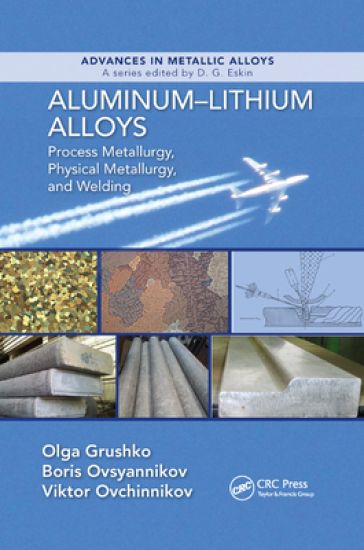
Aluminum–Lithium Alloys: Process Metallurgy, Physical Metallurgy, and Welding provides theoretical foundations of the technological processes for melting, casting, forming, heat treatment, and welding of Al–Li alloys. It contains a critical survey of the research in the field and presents data on commercial Al–Li alloys, their phase composition, microstructure, and heat treatment of the ingots, sheets, forgings, and welds of Al–Li alloys. It details oxidation kinetics, protective alloying, hydrogen in Al–Li alloys, and crack susceptibility. It also discusses grain structure and solidification, as well as structural and mechanical properties. The book is illustrated with examples of Al–Li alloy applications in aircraft structures. Based on the vast experience of the coauthors, the book presents recommendations on solving practical problems involved with melting and casting ingots, welding of Al–Li alloys, and producing massive stampings for welded products.Provides comprehensive coverage of Al–Li alloys, not available in any single source.Presents research that is at the basis of the production technology for of ingots and products made of Al–Li alloys.Combines basic science with applied research, including upscaling and industrial implementation.Covers welding of Al–Li alloys in detail.Discusses gas and alkali-earth impurities in Al–Li alloys. Describes technological recommendations on casting and deformation of Al–Li alloys.
Understanding the Modern Russian Police represents the culmination of ten years of research and an ongoing partnership between the Volgograd Academy of Russian Internal Affairs Ministry (VA MVD) and the Volgograd branch of the Russian Presidential Academy of National Economy and Public Administration (VAPA). The book provides a timely and comprehensive analysis of the historical development, functions, and contemporary challenges faced by the modern Russian police.Spanning more than two centuries of history, the book covers: The tsarist police evolution that witnessed the creation of the Ministry of Internal Affairs of the Russian Federation (MVD) in 1802 and concluding with the 1917 October Revolution The Soviet era from the 1917 October Revolution until Stalin’s death in 1953The Khrushchev and Brezhnev periods, and the Soviet police’s maturation into a professionally educated and well-equipped law enforcement systemThe transformational period of police development beginning with Gorbachev’s perestroika and concluding with the first term of Putin in 2008The structure, authority, and workforce of the modern Russian policePublic-police relationships existing today in RussiaReports by Amnesty International and Human Rights Watch on corruption and abuse of power, along with a legal analysis of practices by the European Court of Human Rights (ECHR)The 2011 Police Reform by Medvedev The book concludes with some predictions on the future of the Russian police and its potential reforms. Encompassing the efforts of many great researchers from Russia, this exhaustive review of the history of policing in Russia enables readers to comprehend the societal and political forces that have shaped policing in this country.
Software-Implemented Hardware Fault Tolerance addresses the innovative topic of software-implemented hardware fault tolerance (SIHFT), i.e., how to deal with faults affecting the hardware by only (or mainly) acting on the software. The first SIHFT techniques were proposed and adopted several decades ago, but they have been the object of new interest in the past few years, mainly due to the need for developing low-cost safety-critical computer-based applications in fields such as automotive, biomedics, and telecommunications. Therefore, several new approaches to detect, and when possible correct, transient and permanent faults in the hardware have been recently proposed. These approaches are innovative (with respect to those proposed in the past) since they are of higher applicability (often starting from the source-level code of an application) and generality, being capable of coping with many different fault types. The book presents the theory behind software-implemented hardware fault tolerance, as well as the practical aspects related to put it at work on real examples. By evaluating accurately the advantages and disadvantages of the already available approaches, the book provides a guide to developers willing to adopt software-implemented hardware fault tolerance in their applications. Moreover, the book identifies open issues for researchers willing to improve the already available techniques.
This book traces the major political developments in Eastern Europe from de-Stalinization in 1956 to the present situation of unrest. The author covers the period thematically, tracing events and outlining the nature of politics, society and economy. She looks at political organization, economic reforms, the relations between the Soviet Union and the countries of the region, and at the major outbreaks: in Hungary in 1956, in Czechoslovakia in 1968, and in Poland in 1980 to 1982.