
Kirjahaku
Etsi kirjoja tekijän nimen, kirjan nimen tai ISBN:n perusteella.
1000 tulosta hakusanalla Olga Primachenko
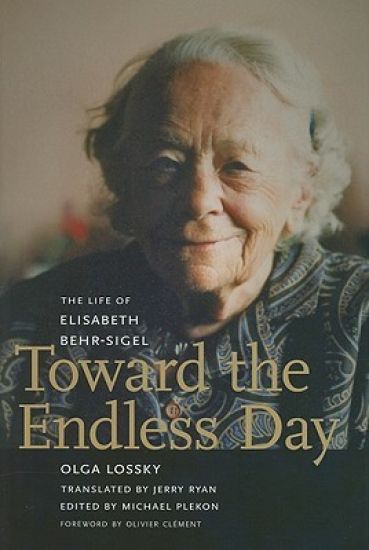
Elisabeth Behr-Sigel (1907-2005) was one of the most important Orthodox theologians of the twentieth century. For seventy years she helped her church, dispersed and uprooted from its cultural heritage, adapt to a new world. Born in Alsace, France, to a Protestant father and a Jewish mother, Behr-Sigel received a master's degree in theology from the Protestant Faculty of Theology at Strasbourg and began a pastoral ministry. It lasted only a year. Already attracted by the beauty of its liturgy and by its characteristic spirituality, Behr-Sigel officially embraced the Orthodox faith at age twenty-four. During World War II her family (husband André Behr and their three children) lived in Nancy, France, where Behr-Sigel taught in the public school system. She later referred to this time as her real apprenticeship in ecumenism, when people of different traditions came together in opposition to Nazism, hiding Jews and providing escape routes. After the war she took advantage of courses at St. Sergius Theological Institute in Paris, where she later joined the faculty. Behr-Sigel also taught at the Catholic Institute of Paris, the Dominican College of Ottowa, and the Ecumenical Institute of Tantur near Jerusalem. She wrote and published books in Orthodox theology, spirituality, and the role of women in the Orthodox Church. In her retirement she continued to work on behalf of women and of the ecumenical movement. Published in 2007 in France as Vers le jour sans déclin, this biography by the Orthodox writer Olga Lossky will bring to English-speaking readers of all religious persuasions the life and career of a remarkable and admirable woman of faith. Behr-Sigel fully cooperated with this biography, meeting with Lossky weekly during the last year of her life and giving Lossky access to her journal and personal letters.

The first generation of Russian modernists experienced a profound sense of anxiety. What made them unique was their utopian prescription for overcoming the inevitability of decline and death. They theorized their defiance of death by suggesting the immortalization of the body through the power of erotic love. Matich suggests that same-sex desire underlay their most radical proposal of abolishing the traditional procreative family in favor of erotically induced abstinence. She shows how a brilliant group of Russian writers - among them the late Tolstoy, Vladimir Solov'ev, Zinaida Gippius, Alexander Blok, and Vasilii Rozanov - addressed the pressing concerns of a culture in transition, ranging from physical and psychological health, marriage, sexuality, and gender to anti-Semitism and the meaning of history.
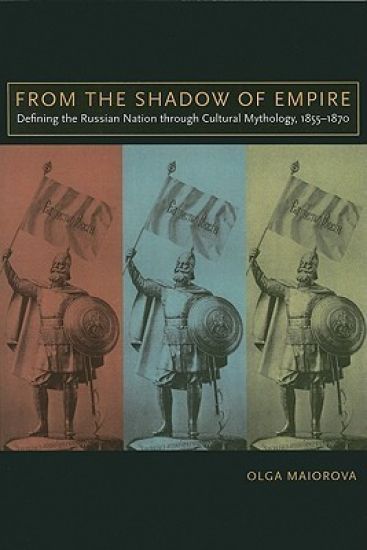
As nationalism spread across nineteenth-century Europe, Russia's national identity remained murky: there was no clear distinction between the Russian nation and the expanding multiethnic empire that called itself 'Russian.' When Tsar Alexander II's Great Reforms (1855-1870s) allowed some freedom for public debate, Russian nationalist intellectuals embarked on a major project - which they undertook in daily press, popular historiography, and works of fiction - of finding the Russian nation within the empire and rendering the empire in nationalistic terms. From the Shadow of Empire traces how these nationalist writers refashioned key historical myths - the legend of the nation's spiritual birth, the tale of the founding of Russia, stories of Cossack independence - to portray the Russian people as the ruling nationality, whose character would define the empire. In an effort to press the government to alter its traditional imperial policies, writers from across the political spectrum made the cult of military victories into the dominant form of national myth-making: in the absence of popular political participation, wars allowed for the people's involvement in public affairs and conjured an image of unity between ruler and nation. With their increasing reliance on the war metaphor, Reform-era thinkers prepared the ground for the brutal Russification policies of the late nineteenth century and contributed to the aggressive character of twentieth-century Russian nationalism.

For 872 days during World War II, the city of Leningrad endured a crushing blockade at the hands of German forces. Close to one million civilians died, most from starvation. Amid the devastation, Olga Berggolts broadcast her poems on the one remaining radio station, urging listeners not to lose hope. When the siege had begun, the country had already endured decades of revolution, civil war, economic collapse, and Stalin's purges. Berggolts herself survived the deaths of two husbands and both of her children, her own arrest, and a stillborn birth after being beaten under interrogation.Berggolts wrote her memoir Daytime Stars in the spirit of the thaw after Stalin's death. In it, she celebrated the ideals of the revolution and the heroism of the Soviet people while also criticizing censorship of writers and recording her doubts and despair. This English translation by Lisa A. Kirschenbaum makes available a unique autobiographical work by an important author of the Soviet era. In her foreword, Katharine Hodgson comments on experiences of the Terror about which Berggolts was unable or unwilling to write.

To view the familiar from a different perspective is always enlightening. This engaging collection of travel accounts by Russian writers who visited America around the turn of the century offers fresh insights into both the American experience and the Russian mind. The documents, most of which appear in English for the first time, and interwoven with explanatory comments by Olga Peters Hasty and Susanne Fusso.The anthology begins in 1874 with young Machtet, who enthusiastically describes his journey across the prairie to a tiny utopian community in Kansas. Next Vladimir Korolenko gives his impressions of the stockyards of Chicago, and Vladimir Bogoraz observes fellow-passengers coming into New York harbor and traveling on a trans-continental train. With Gorky's visit in 1906, the tone of the Russian visitors' renderings of America changes. Because of the rise of Bolshevism, Russian travelers are inclined to convey negative impressions of America and to focus on its dramatic rise as an industrial power. Gorky's invective is followed by the commentaries of Sergei Esenin and Vladimir Mayakovsky that are also critical of American life but express admiration for American technology and know-how.
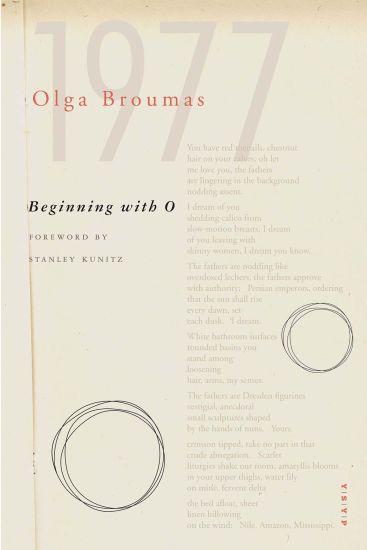
Imaginative and uninhibited, Beginning with O is the 72nd volume of the Yale Series of Younger Poets This is a book of letting go, of wild avowals, of unabashed eroticism; at the same time it is a work of integral imagination, steeped in the light of Greek myth that is part of the poet’s heritage and imbued with an intuitive sense of dramatic conflicts and resolutions, high style, and musical form.

Product information not available.
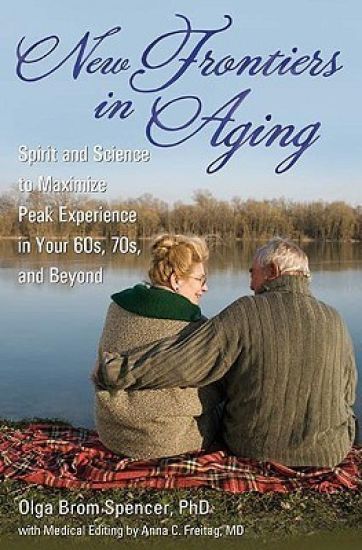
As elders are living longer and healthier lives, these additional years call for what author Olga Spencer explains is a new vision and fulfillment of the senior stage. Here psychologist Spencer pinpoints how we can transform our perception of aging, changing from seeing senior years as a time of decline, to seeing this stage as a great opportunity for final, ultimate development. We can all transform our lives, to recognize new, unexpected and vital experiences and potentials, she explains. Enlisting fields as diverse as psychology, medical science, physics and cosmology, Spencer shows us the new frontiers in aging, and how our choices determine our destiny. Spencer also focuses on peak experiences, those moments that are for us validation of life lived fully and with passion, and their importance to seniors to not only fulfillment but also biological wellness and independence ce. Three of her book's major points are that aging begins in the mind, that aging is an obsolete concept, and that lifestyle (not age) determines successful aging. This thought-provoking book, written with the assistance of two medical doctors and a registered dietician, will interest any readers over 50 who want to live their senior years to their fullest, as well as their family members and loved ones, in addition to social workers, mental health professionals, medical professionals, clergy and other professionals in roles caring for seniors.
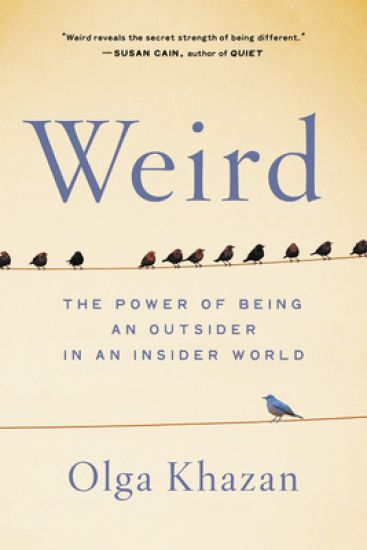
Learn why the concept of "weird" is being reclaimed and turned into a badge of honor, used to show how being different--culturally, socially, physically, or mentally--can be a person's greatest strength. Most of us have at some point in our lives felt like an outsider, sometimes considering ourselves "too weird" to fit in. Growing up as a Russian immigrant in West Texas, Olga Khazan always felt there was something different about her. This feeling has permeated her life, and as she embarked on a science writing career, she realized there were psychological connections between this feeling of being an outsider and both her struggles and successes later in life. She decided to reach out to other people who were unique in their environments to see if they had experienced similar feelings of alienation, and if so, to learn how they overcame them. Weird is based on in-person interviews with many of these individuals, such as a woman who is professionally surrounded by men, a liberal in a conservative area, and a Muslim in a predominantly Christian town. In addition, it provides actionable insights based on interviews with dozens of experts and a review of hundreds of scientific studies. Weird explores why it is that we crave conformity, how that affects people who are different, and what they can do about it. First, the book dives into the history of social norms and why some people hew to them more strictly than others. Next, Khazan explores the causes behind-and the consequences of-social rejection. She then reveals the hidden upsides to being "weird," as well as the strategies that people who are different might use in order to achieve success in a society that values normalcy. Finally, the book follows the trajectories of unique individuals who either decided to be among others just like them; to stay weird; or to dwell somewhere in between. Combining Khazan's own story with those of others and with fascinating takeaways from cutting-edge psychology research, Weird reveals how successful individuals learned to embrace their weirdness, using it to their advantage.

Oral Pathology for the Dental Hygienist
Olga A. C. Ibsen; Scott Peters
Elsevier - Health Sciences Division
2022
sidottu
**Selected for Doody’s Core Titles® 2024 in Dental Hygiene & Auxiliaries** Oral Pathology for the Dental Hygienist: With General Pathology Introductions, 8th Edition offers the most trusted general and oral pathology information that’s tailored to the specific role and responsibilities of the dental hygienist, while reflecting the content on the national board exam. Authors Ibsen and Peters incorporate the ideal mix of clinical photographs, radiographs, and focused discussions to help you learn how to successfully identify, understand, evaluate, and document disease formations at the skeletal and cellular levels. Tailored content focuses on the role of the dental hygienist in oral health care. Trusted author team makes this a text you can rely on to provide authoritative coverage of oral pathology. Pathology synopsis tables provide at-a-glance summaries to help you focus on the most critical information for each lesion, disease, or condition. Learning objectives clearly define expected outcomes for each chapter. Vocabulary resources include key term listings with definitions and pronunciations and a back-of-book glossary for handy UPDATED! Art program includes the latest high-quality radiographs and color clinical photos. REVISED! Chapter review questions written in the same multiple-choice style and formats as the National Board Dental Hygiene Examination provide valuable study and review opportunities.


'Niksen is an increasingly popular Dutch relaxation technique where you relinquish control and just ... stop. At a time when meditative practices can feel like yet another thing to do, niksen is liberatingly simple' the Guardian The Dutch concept of niksen comes at no cost and zero effort. It's literally doing nothing, but consciously so.In this concise and witty book, Olga Mecking will provide tips on how to niksen in the most important areas of your life: work, home and leisure. Talking to experts from around the world, she reveals how doing nothing can make you happier, more productive and creative. In addition, we are given a fun glimpse of Dutch culture to show us why the Dutch are one of the happiest people in the world and why they are so good at doing nothing every once in a while. We all have a concept of what doing nothing means to us, but do our ideas actually correspond with the truth behind niksen? A common hurdle towards embracing idleness, for example, is that we feel the need to be productive, contributing members of society. In fact, even the Dutch tend to say, niksen is niks or, in English, doing nothing is good for nothing. That constant need to work can lead to more stress, decreased mental wellbeing and paradoxically, being less productive. Stress and burnout are on the rise. The antidote: Niksen.
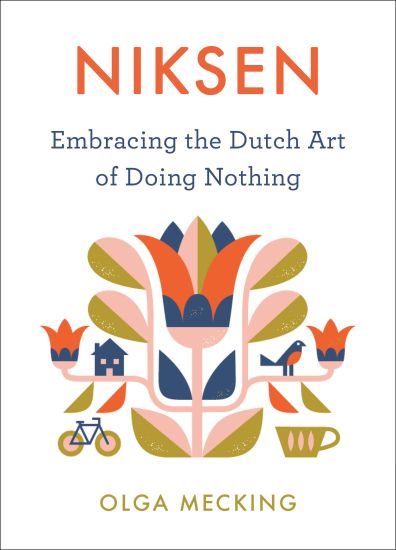
The Dutch people are some of the happiest in the world. Their secret? They are masters of niksen, or the art of doing nothing. Niksen is not a form of meditation, nor is it a state of laziness or boredom. It's not scrolling through social media, or wondering what you're going to cook for dinner. Rather, to niks is to make a conscious choice to sit back, let go, and do nothing at all. With this book, learn how to do nothing in the most important areas of your life, such as: AT HOME: Find a comfy nook and sit. No technology or other distractions. AT WORK: Stare at your computer. Take in the view from your office. Close your eyes.IN PUBLIC: Forget waiting for the bus, enjoy some relaxing niksen time.Backed with advice from the world's leading experts on happiness and productivity, this book examines the underlying science behind niksen and how doing less can often yield so much more. Perfect for anyone who feels overwhelmed, burnt out, or exhausted, NIKSEN does not tell you to work harder. Instead, it shows you how to take a break from all the busyness while giving you sincere, heartfelt permission to do nothing.
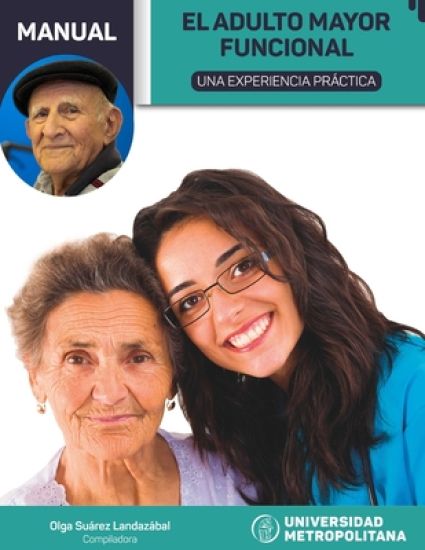
El envejecimiento es inherente al ser humano, por tanto, a medida que avanzamos en edad se van dando cambios en los diferentes sistemas del organismo, que lentamente har n evidente la disminuci n de las capacidades y habilidades, aunque esto no significa que se llegue a la discapacidad que limite en gran consideraci n las diferentes actividades. La meta al llegar a la ltima etapa de nuestra vida, la vejez, y convertirnos en adultos mayores es seguir siendo funcionales y aut nomos para seguir siendo productivos, activos y dispuestos a seguir creciendo en alguno de los mbitos escogidos por nosotros.

This book is a socioeconomic interpretation of Puerto Rico's first and most significant attempt to end its colonial relationship with Spain. Looking at the imperial policies and conditions within Puerto Rico that led to the 1868 rebellion known as "El Grito de Lares," Dr. Jiménez de Wagenheim compares the colonization of Puerto Rico with that of Spanish America and explores the reasons why the island's independence movement began decades after Spain's other colonies in the region had revolted. Through the extensive use of previously unresearched archive material, she examines the economic and social backgrounds of the leaders of the rebel movement, corrects many errors of earlier accounts of the revolt, and offers new interpretations of its impact on Spanish-Puerto Rican relations.

This book is a socioeconomic interpretation of Puerto Rico's first and most significant attempt to end its colonial relationship with Spain. Looking at the imperial policies and conditions within Puerto Rico that led to the 1868 rebellion known as "El Grito de Lares," Dr. Jiménez de Wagenheim compares the colonization of Puerto Rico with that of Spanish America and explores the reasons why the island's independence movement began decades after Spain's other colonies in the region had revolted. Through the extensive use of previously unresearched archive material, she examines the economic and social backgrounds of the leaders of the rebel movement, corrects many errors of earlier accounts of the revolt, and offers new interpretations of its impact on Spanish-Puerto Rican relations.
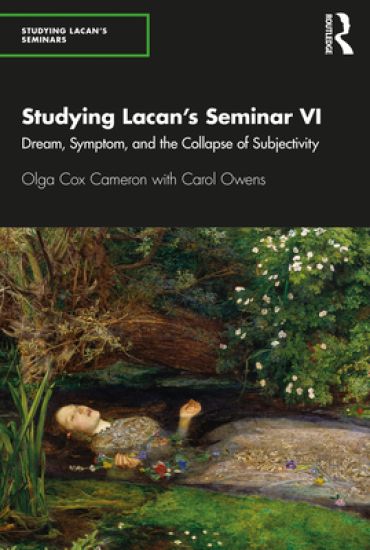
The second volume in the Studying Lacan’s Seminars series, this book is the first comprehensive study of Lacan’s Seminar VI: Desire and its Interpretation. A natural companion to Bruce Fink’s recent translation of the seminar into English (2019), this book offers a genuine opportunity to delve deeply into the seminar, and a hospitable introduction to Lacan’s teachings of the 1950s.This important book brings together various aspects of Cox Cameron’s teachings and systematic, careful, and critical readings of Seminar VI. Lacan’s theorizing and conceptualizing of the object a, the fundamental fantasy, and aphanisis, as well as the ambiguous treatment of the phallus in his work at the time, are all introduced, contextualized, and explored in detail. The trajectories of his thinking are traced in terms of future developments and elaborations in the seminars that follow closely on the heels of Seminar VI – Seminars VII (Ethics of Psychoanalysis), VIII (Transference), IX (Identification), and X (Anxiety). Consideration is also given to how certain themes and motifs are recapitulated or reworked in his later teachings such as in Seminars XX (Encore), and XXIII (The Sinthome). Also included in this volume are two further essays by Cox Cameron, a most valuable critique of the concept of the phallus in Lacan’s theories of the 1950s, and an overview of Seminar VI originally presented as a keynote address to the APW congress in Toronto 2014.The book is of great interest to Lacanian scholars and students, as well as psychoanalytic therapists and analysts interested in Lacan’s teachings of the 1950s and in how important concepts developed during this period are treated in his later work.

This book is a toolbox for PhD students to plan and prepare for the PhD defence regardless of their scientific discipline or location. The authors discuss various defence formats that are used internationally and identify the main differences and similarities. With international examples, practical strategies, and tips from former PhD students and supervisors, this book unpacks the principles and unwritten rules underpinning the defence. Addressing planning and preparing for the doctoral defence, and what to do afterwards, this book covers topics such as: understanding your defence format preparing for committee questions preparing mentally and dealing with anxiety dealing with corrections, finalizing your graduation requirements and marking the end of your PhD trajectory.This book is crucial reading for students across the world looking to defend their PhD thesis, and also for their supervisors and examiners. The 'Insider Guides to Success in Academia' offers support and practical advice to doctoral students and early-career researchers. Covering the topics that really matter, but which often get overlooked, this indispensable series provides practical and realistic guidance to address many of the needs and challenges of trying to operate, and remain, in academia.These neat pocket guides fill specific and significant gaps in current literature. Each book offers insider perspectives on the often implicit rules of the game -- the things you need to know but usually aren't told by institutional postgraduate support, researcher development units, or supervisors -- and will address a practical topic that is key to career progression. They are essential reading for doctoral students, early-career researchers, supervisors, mentors, or anyone looking to launch or maintain their career in academia.

This book is a toolbox for PhD students to plan and prepare for the PhD defence regardless of their scientific discipline or location. The authors discuss various defence formats that are used internationally and identify the main differences and similarities. With international examples, practical strategies, and tips from former PhD students and supervisors, this book unpacks the principles and unwritten rules underpinning the defence. Addressing planning and preparing for the doctoral defence, and what to do afterwards, this book covers topics such as: understanding your defence format preparing for committee questions preparing mentally and dealing with anxiety dealing with corrections, finalizing your graduation requirements and marking the end of your PhD trajectory.This book is crucial reading for students across the world looking to defend their PhD thesis, and also for their supervisors and examiners. The 'Insider Guides to Success in Academia' offers support and practical advice to doctoral students and early-career researchers. Covering the topics that really matter, but which often get overlooked, this indispensable series provides practical and realistic guidance to address many of the needs and challenges of trying to operate, and remain, in academia.These neat pocket guides fill specific and significant gaps in current literature. Each book offers insider perspectives on the often implicit rules of the game -- the things you need to know but usually aren't told by institutional postgraduate support, researcher development units, or supervisors -- and will address a practical topic that is key to career progression. They are essential reading for doctoral students, early-career researchers, supervisors, mentors, or anyone looking to launch or maintain their career in academia.