Kirjahaku
Etsi kirjoja tekijän nimen, kirjan nimen tai ISBN:n perusteella.
1000 tulosta hakusanalla Pat Patterson
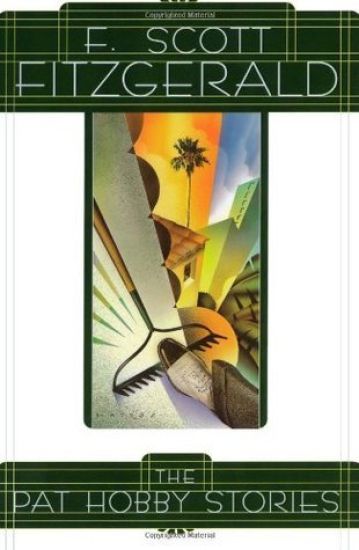
A fascinating study in self-satire that brings to life the Hollywood years of F. Scott Fitzgerald The setting: Hollywood: the character: Pat Hobby, a down-and-out screenwriter trying to break back into show business, but having better luck getting into bars. Written between 1939 and 1940, when F. Scott Fitzgerald was working for Universal Studios, the seventeen Pat Hobby stories were first published in "Esquire" magazine and present a bitterly humorous portrait of a once-successful writer who becomes a forgotten hack on a Hollywood lot. "This was not art" Pat Hobby often said, "this was an industry" where whom "you sat with at lunch was more important than what you dictated in your office." The Pat Hobby sequence, as Arnold Gingrich writes in his introduction, is Fitzgerald's "last word from his last home, for much of what he felt about Hollywood and about himself permeated these stories."
Postman Pat
Egmont UK Ltd
2000
nidottu
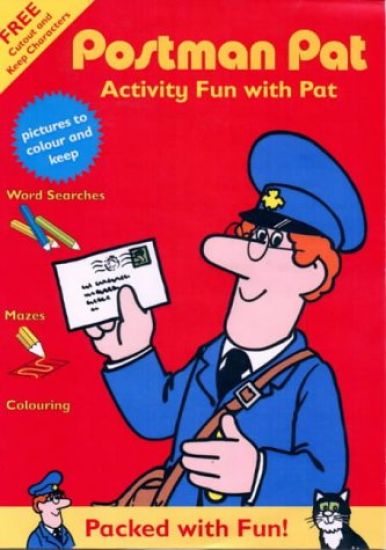
A colouring and puzzle book featuring Postman Pat and his Greendale friends. There are many activities to do, including dot-to-dot, crosswords, wordsearches, mazes, spot-the-difference, and colouring.

Postman Pat
Egmont UK Ltd
2000
nidottu
This activity pack is filled with pictures of Barbie and all different kinds of animals from dogs and cats, to elephants and dolphins. Activities incldue colour the pictures, dot-to-dot, spot the differences, mazes, copy colouring and matching.
Postman Pat Annual
Egmont UK Ltd
2001
sidottu
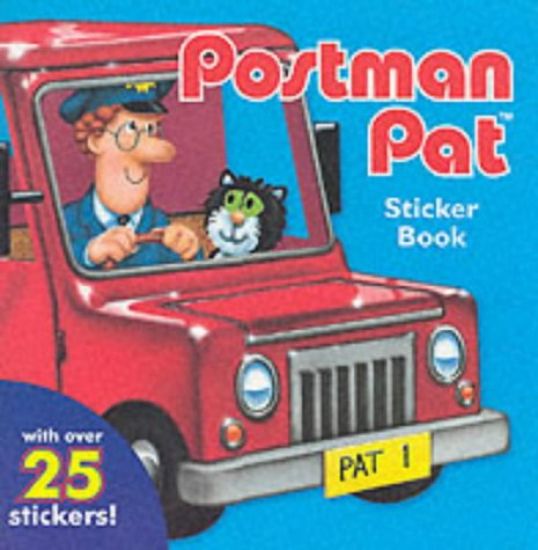

Postman Pat Colouring & Activity
Egmont UK Ltd
2002
sidottu
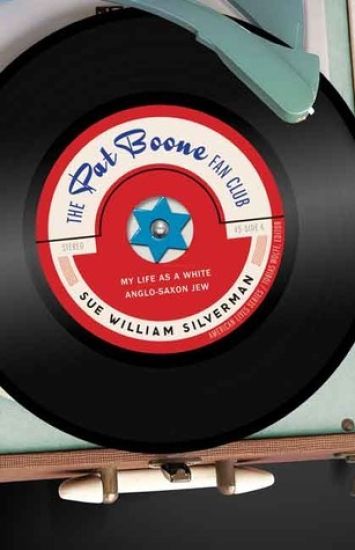
Gentile reader, and you, Jews, come too. Follow Sue William Silverman, a one-woman cultural mash-up, on her exploration of identity among the mishmash of American idols and ideals that confuse most of us-or should. Pat Boone is our first stop. Now a Tea Party darling, Boone once shone as a squeaky-clean pop music icon of normality, an antidote for Silverman’s own confusing and dangerous home, where being a Jew in a Christian school wasn’t easy, and being the daughter of the Anti-Boone was unspeakable. And yet somehow Silverman found her way, a “gefilte fish swimming upstream,” and found her voice, which in this searching, bracing, hilarious, and moving book tries to make sense of that most troubling American condition: belonging, but to what?Picking apricots on a kibbutz, tramping cross-country in a loathed Volkswagen camper, appearing in a made-for-television version of her own life: Silverman is a bobby-soxer, a baby boomer, a hippy, a lefty, and a rebel with something to say to those of us-most of us-still wondering what to make of ourselves.
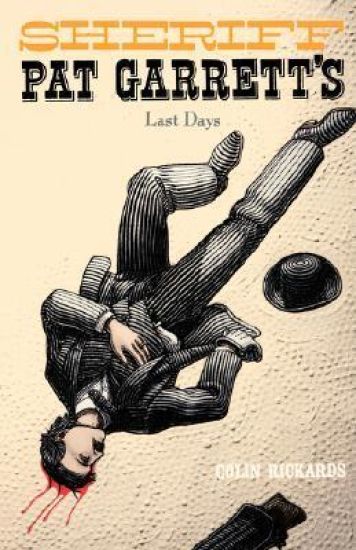
Patrick Floyd Garrett, widely known as "Pat," (1850-1908) had tracked down and killed the outlaw Billy the Kid but also became a victim of the tangled politics of the time. He has been maligned by writers, libeled by Hollywood and deprecated by many of his contemporaries. But despite them, all his deeds retain for him a niche in the gallery of fast shooting peace officers who helped to bring law and order to the frontier West. When he died, there was rejoicing in some quarters and relief in others--as might be expected in the case of a controversial figure. There was also genuine and profound sorrow in the rugged hearts of many in New Mexico, Texas and Arizona, as well as farther afield, and the circumstances surrounding his death, ostensibly at the hands of a most unlikely cowboy named Wayne Brazel, have puzzled and intrigued historians since that spring day in 1908 when he was shot to death and left lying in a sand drift on a lonely road. But was Pat Garrett shot by Wayne Brazel, or hired killer Jim Miller? Brazel confessed, but few believed his story and he was acquitted. Colin Rickards' book sheds light on this unhappy affair which still remains a source of controversy. Colin Rickards has done extensive research on Pat Garrett including checking official court records, investigating contemporary accounts and conducting interviews. He separates fact from fantasy in this meticulously documented account. An authority on frontier history, the author has written numerous articles and books on the Old West. A journalist by profession, Rickards has applied the same techniques to ferreting out the true stories of life and death adventures in western history. More information on this controversial period in American Southwestern history, the heroes and the villains can be found in these and other Sunstone Press books: "Alias Billy the Kid" by Donald Cline and "Sheriff William Brady" by Donald R. Lavash. www.sunstonepress.com
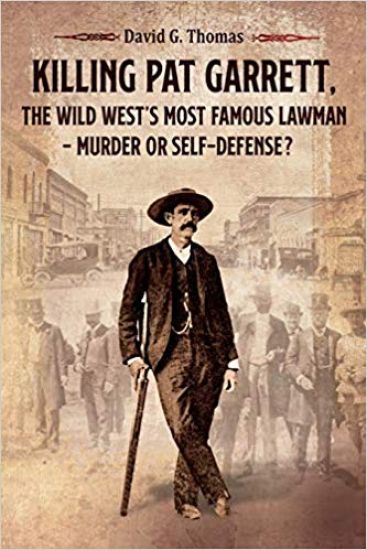
Killing Pat Garrett, The Wild West's Most Famous Lawman - Murder or Self-Defense?
David G Thomas
Doc45 Publishing
2019
pokkari
Pat Garrett, the Wild West's most famous lawman - the man who killed Billy the Kid - was himself killed on leap day, February 29, 1908.Who killed him?Was it murder?Was it self-defense?No biographer of Garrett has been able to answer these questions. All have expressed opinions. None have presented evidence that would stand up in a court of law. Here, for the first time, drawing on previously undiscovered information, is the definitive answer to these questions, the Wild West's most famous unsolved killing. The true actions of "Deacon Jim" Miller, a professional killer, who was in Las Cruces the day Garrett was killed. The place on the now abandoned old wagon road in New Mexico where Garrett was killed. The coroner's jury report on Garrett's death, lost for over 100 years Garrett's original burial location. The sworn courtroom testimony of the only witness to Garrett's killing. The policeman who provided the decisive evidence in the trial of the man accused of murdering Garrett. The location of Garrett's Rock House and Home Ranches. The marriage of his confessed killer and the birth of his son. New family details: Garrett had a four-month-old daughter the day he killed Billy the Kid. She died tragically at 15. Another daughter was blinded by a well-intended eye treatment; a son was paralyzed by childhood polio; and Pat Garrett, Jr., named after his father, lost his right leg to amputation at age 12. 102 images, including six of Pat Garrett and his family which have never been published before. Pat Garrett's life was a remarkable adventure, with enormous highs. He met two US presidents: William McKinley Jr. and Theodore Roosevelt. President Roosevelt he met five times, three times in the White House. He brought the law to hardened gunmen. He oversaw hangings. His national fame was so extensive the day he died that newspapers from the East to the West Coast only had to write "Pat Garrett" for readers to know to whom they were referring. He also had devastating lows. He experienced heartbreaking family tragedy. He was blocked for re-appointment as El Paso Customs Collector by unjustified personal animus. He was pursued ruthlessly for a loan that he had co-signed as a favor for a friend. He had his ranches and livestock confiscated and sold on the Las Cruces public square. In spite of his reputation as a gunman, when faced with public humiliation, he responded with commendable dignity. Queried after losing his Custom Collector job, he replied: "I simply take my medicine." This book is written so you experience his life as he did, as it happened, event by event.
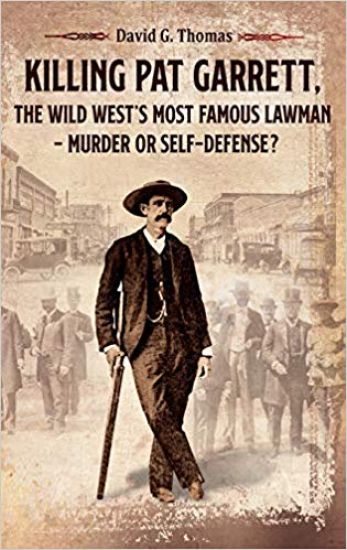
Killing Pat Garrett, The Wild West's Most Famous Lawman - Murder or Self-Defense?
David G Thomas
Doc45 Publishing
2019
sidottu
Pat Garrett, the Wild West's most famous lawman - the man who killed Billy the Kid - was himself killed on leap day, February 29, 1908.Who killed him? Was it murder? Was it self-defense?No biographer of Garrett has been able to answer these questions. All have expressed opinions. None have presented evidence that would stand up in a court of law. Here, for the first time, drawing on previously undiscovered information, is the definitive answer to these questions, the Wild West's most famous unsolved killing. The true actions of "Deacon Jim" Miller, a professional killer, who was in Las Cruces the day Garrett was killed. The place on the now abandoned old wagon road in New Mexico where Garrett was killed. The coroner's jury report on Garrett's death, lost for over 100 years Garrett's original burial location. The sworn courtroom testimony of the only witness to Garrett's killing. The policeman who provided the decisive evidence in the trial of the man accused of murdering Garrett. The location of Garrett's Rock House and Home Ranches. The marriage of his confessed killer and the birth of his son. New family details: Garrett had a four-month-old daughter the day he killed Billy the Kid. She died tragically at 15. Another daughter was blinded by a well-intended eye treatment; a son was paralyzed by childhood polio; and Pat Garrett, Jr., named after his father, lost his right leg to amputation at age 12. 102 images, including six of Pat Garrett and his family which have never been published before. Pat Garrett's life was a remarkable adventure, with enormous highs. He met two US presidents: William McKinley Jr. and Theodore Roosevelt. President Roosevelt he met five times, three times in the White House. He brought the law to hardened gunmen. He oversaw hangings. His national fame was so extensive the day he died that newspapers from the East to the West Coast only had to write "Pat Garrett" for readers to know to whom they were referring. He also had devastating lows. He experienced heartbreaking family tragedy. He was blocked for re-appointment as El Paso Customs Collector by unjustified personal animus. He was pursued ruthlessly for a loan that he had co-signed as a favor for a friend. He had his ranches and livestock confiscated and sold on the Las Cruces public square. In spite of his reputation as a gunman, when faced with public humiliation, he responded with commendable dignity. Queried after losing his Custom Collector job, he replied: "I simply take my medicine." This book is written so you experience his life as he did, as it happened, event by event.
A Pat on Your Back: Think first and then do it
Joseph G. Asselin (Jasselin)
Amazon Digital Services LLC - Kdp Print Us
2018
nidottu
Little thought that makes me thinking. Short and aiming positively.A little thought is like fishing with a nice glowing bait, trying to get a fresh idea from your mind. Good thoughts, kind words and good manners could be eternals; expending them could help and have no ends influencing people.Maybe one little thought can do a lot.
When an ordinary little boy accidentally shoots a cardinal out of the sky in his backyard with a stick, an entire world of conspiracy is opened up to him, and Owen Pat soon comes to realize that he is the only one who can find the three headed monster and stop him from stealing the imaginations of children before it is too late. With the help of his four extraordinary sisters, his toys, and a flock of cardinals, he is commissioned to find and destroy the evil monster that grows more and more powerful the more imaginations he steals. In his attempts to find the monster, Owen Pat must encounter many surprising enemies, all of whom are trying to get their hands on the greatest prize of all... his baby sister. The story may be considered magical realism, a quirky adventure consisting of wolf-dragons, fairies, bird children, and storybook characters coming to life yet set in the real world. It depicts bravery, valor, perseverance, and the importance of the imagination as the greatest weapon for defending hope and freedom.
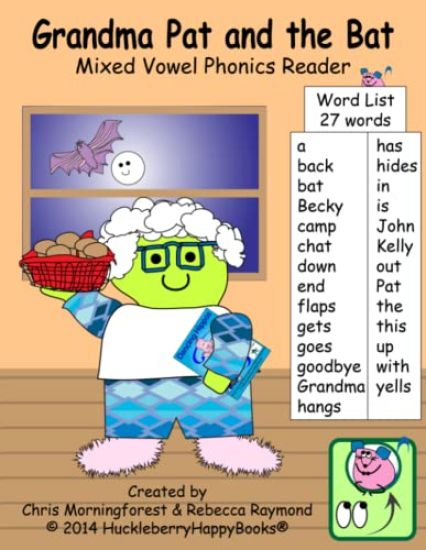
Do you have a Grandma Pat? Does she enjoy talking to bats at camp? Grandma Pat and the Bat is a Level One Phonics Reader about a Happy little bat who visits camp. Grandma Pat and the others at camp interact with the bat as he flaps his way through the pages of this book for young readers having a wonderful time at camp. Of course there is mouse who shows up on every page just for the fun of it. In the end, Grandma Pat convinces the bat to head back out of camp. There are 4 activity pages, as well, for young readers to enjoy. Come join other children around the world as they use our Phonics Series to reinforce their reading skills. Find them on this and other internet sites...and keep coming back. We are-Creating A Happy World of Stories for Kids Everywhere.

This work has been selected by scholars as being culturally important and is part of the knowledge base of civilization as we know it.This work is in the public domain in the United States of America, and possibly other nations. Within the United States, you may freely copy and distribute this work, as no entity (individual or corporate) has a copyright on the body of the work.Scholars believe, and we concur, that this work is important enough to be preserved, reproduced, and made generally available to the public. To ensure a quality reading experience, this work has been proofread and republished using a format that seamlessly blends the original graphical elements with text in an easy-to-read typeface.We appreciate your support of the preservation process, and thank you for being an important part of keeping this knowledge alive and relevant.