Kirjojen hintavertailu. Mukana 11 699 587 kirjaa ja 12 kauppaa.

Kirjahaku

Etsi kirjoja tekijän nimen, kirjan nimen tai ISBN:n perusteella.

1000 tulosta hakusanalla Paul Tengesdal

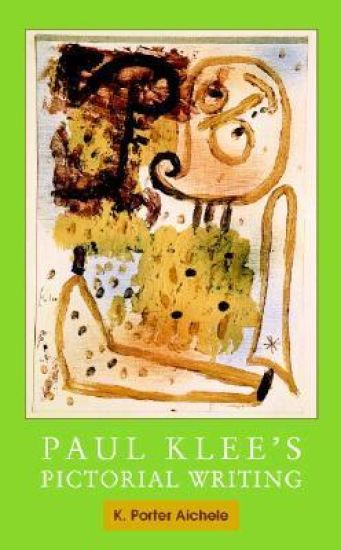
Paul Klee's Pictorial Writing

Paul Klee's Pictorial Writing

K. Porter Aichele

Cambridge University Press
2002
sidottu
Paul Klee's Pictorial Writing examines the artist's appropriation of verbal signs, literary texts and written scripts in his pictorial works. K. Porter Aichele's study is the first to examine how linguistic symbols function in Klee's work and what they mean. Reconstructing the artist's rich cultural milieu from his diaries, letters, lecture notes and visual allusions, Aichele shows how these sources provide the framework for fresh interpretations of works ranging from letter forms in pictorial settings to visual texts. Historically contextualized and interpreted as pictorial writing, Klee's familiar line drawings are shown to be a radical reinterpretation of the ut pictora poesis tradition through which the artist questioned whether there is a substantive difference between writing and drawing. Aichele's multilayered readings of works from every decade of Klee's career demonstrate that the artist's doubly coded language was his most far–reaching contribution to the aesthetics of modernism.
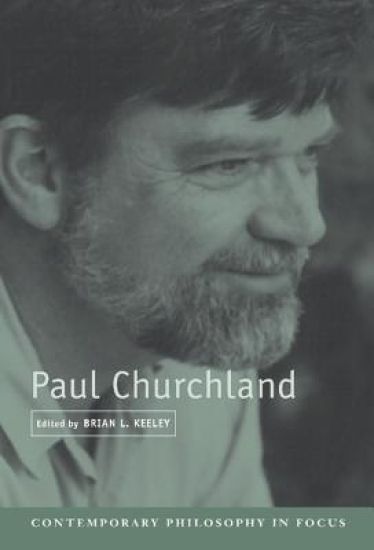
Paul Churchland

Paul Churchland

Cambridge University Press
2005
sidottu
For over three decades, Paul Churchland has been a provocative and controversial philosopher of mind and of science. He is most famous as an advocate of 'eliminative materialism', whereby he suggests that our commonsense understanding of our own minds is radically defective and that the science of brain demonstrates this (just as an understanding of physics reveals that our commonsense understanding of a flat and motionless earth is similarly false). This collection offers an introduction to Churchland's work, as well as a critique of some of his most famous philosophical positions. Including contributions by both established and promising young philosophers, it is intended to complement the growing literature on Churchland, focusing on his contributions in isolation from those of his wife and philosophical partner, Patricia Churchland, as well as on his contributions to philosophy as distinguished from those to Cognitive Science.
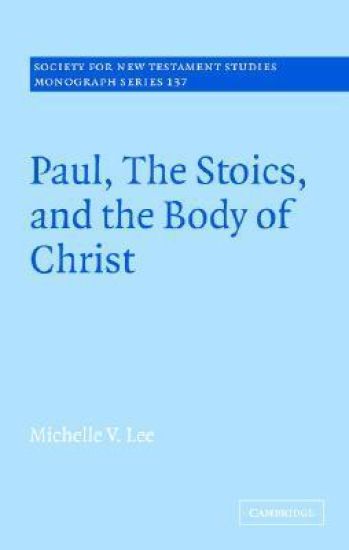
Paul, the Stoics, and the Body of Christ

Paul, the Stoics, and the Body of Christ

Michelle V. Lee

Cambridge University Press
2006
sidottu
At first glance, Paul's words to the Corinthians about being the body of Christ seem simple and straightforward. He compares them with a human body so that they may be encouraged to work together, each member contributing to the good of the whole according to his or her special gift. However, the passage raises several critical questions which point to its deeper implications. Does Paul mean that the community is 'like' a body or is he saying that they are in some sense a real body? What is the significance of being specifically the body of Christ? Is the primary purpose of the passage to instruct on the correct use of spiritual gifts or is Paul making a statement about the identity of the Christian community? Michelle Lee examines Paul's instructions in 1 Corinthians 12-14 against the backdrop of Hellenistic moral philosophy, and especially Stoicism.
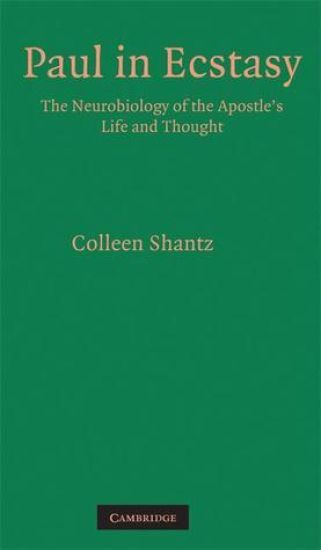
Paul in Ecstasy

Paul in Ecstasy

Colleen Shantz

Cambridge University Press
2009
sidottu
While many readers of Paul's letters recognize how important his experience was to his life and thought, Biblical scholars have not generally addressed this topic head-on. Colleen Shantz argues that they have been held back both by a bias against religious ecstasy and by the limits of the Biblical texts: How do you responsibly access someone else's experience, particularly experience as unusual and debated as religious ecstasy? And how do you account responsibly for the role of experience in that person's thought? Paul in Ecstasy pursues these questions through a variety of disciplines - most notably neuroscience. This study provides cogent explanations for bewildering passages in Paul's letters, outlines a much greater influence of such experience in Paul's life and letters, and points to its importance in Christian origins.
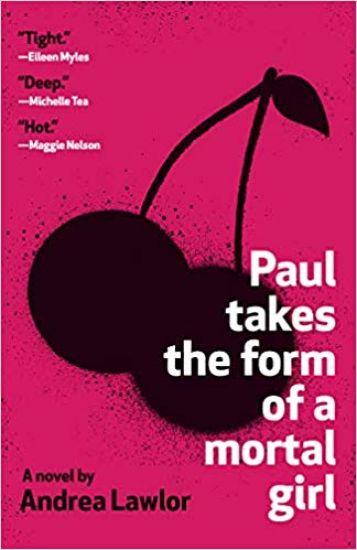
Paul Takes the Form of a Mortal Girl
"In these irreverent pages, a shapeshifter gets a crash course in gender and sexuality by inhabiting both sides of the binary and arriving precisely somewhere in the middle." --O, The Oprah Magazine "HOT" (Maggie Nelson) - "TIGHT" (Eileen Myles) - "DEEP" (Michelle Tea) A Kirkus Reviews Best Fiction Book of the Century It's 1993 and Paul Polydoris tends bar at the only gay club in a university town thrumming with politics and partying. He studies queer theory, has a dyke best friend, makes zines, and is a flaneur with a rich dating life. But Paul's also got a secret: he's a shapeshifter. Oscillating wildly from Riot Grrrl to leather cub, Paul transforms his body and his gender at will as he crossed the country--a journey and adventure through the deep queer archives of struggle and pleasure. Paul Takes the Form of a Mortal Girl is a riotous, razor-sharp bildungsroman whose hero/ine wends his/her way through a world gutted by loss, pulsing with music, and opening into an array of intimacy and connections.