Kirjojen hintavertailu. Mukana 11 717 486 kirjaa ja 12 kauppaa.

Kirjahaku

Etsi kirjoja tekijän nimen, kirjan nimen tai ISBN:n perusteella.

1000 tulosta hakusanalla Peter J. Perry

Hell to Pay: A Korean Conflict Novel: A Navy Pilot's Life-Changing Adventure
This updated second edition of a historic fiction about the 1950s Korean Conflict couldn't be more timely. Folded skillfully into this riveting tale the reader will find naval action, history, espionage, government corruption, personal challenge, romance and so much more. It's July 1950, a mere month since the North Korean People's Army stormed overwhelmingly across the 38th parallel. Captain "Hal" Kirby, U.S. Navy, is a pilot's pilot and happy to be on the leading edge of a war held in balance by Naval air power. North Korea wants South Korea at all costs. Kirby's Air Group on the USS Valley Forge is playing a major role in holding the NKPA at bay until significant military forces can be mobilized. A disgruntled officer's six-year-old promise to get even with Kirby and the Navy for ending his career as a pilot also occupies Kirby's attention. The multifaceted plot also includes Kirby becoming an unknowing victim of government corruption that thrusts him into a political incident with the Soviet Union. Throughout the story, Kirby is faced with many life-changing experiences that impact his professional and personal life.You will not want to put this novel down.

America's School for War

America's School for War

Peter J. Schifferle

University Press of Kansas
2017
nidottu
Army Historical Foundation Distinguished Writing AwardWhen the United States entered World War II, it took more than industrial might to transform its tiny army—smaller than even Portugal's—into an overseas fighting force of more than eight and a half million. Peter Schifferle contends that the determination of American army officers to be prepared for the next big war was an essential component in America's ultimate triumph over its adversaries. Crucial to that preparation were the army schools at Fort Leavenworth.Interwar Army officers, haunted by the bloodshed of World War I's Meuse-Argonne Offensive, fully expected to return to Europe to conclude the ""unfinished business"" of that conflict, and they prepared well. Schifferle examines for the first time precisely how they accomplished this through a close and illuminating look at the students, faculty, curriculum, and essential methods of instruction at Fort Leavenworth. He describes how the interwar officer corps there translated the experiences of World War I into effective doctrine, engaged in intellectual debate on professional issues, conducted experiments to determine the viability of new concepts, and used military professional education courses to substitute for the experience of commanding properly organized and resourced units.Schifferle highlights essential elements of war preparation that only the Fort Leavenworth education could provide, including intensive instruction in general staff procedures, hands-on experience with the principles and techniques of combined arms, and the handling of large division-sized formations in combat. This readied army officers for an emerging new era of global warfare and enabled them to develop the leadership decision making they would need to be successful on the battlefield. But Schifferle offers more than a recitation of curriculum development through the skillful interweaving of personal stories about both school experiences and combat operations, collectively recounting the human and professional development of the officer corps from 1918 to 1945. Well crafted and insightful, Schifferle's meticulously researched study shows how and why the Fort Leavenworth experience was instrumental in producing that impressive contingent of military officers who led the U.S. Army to final victory in World War II. By the end of the book, the attentive reader will also fully comprehend why the military professionals at Fort Leavenworth have come to think of it as the ""Intellectual Center of the Army.
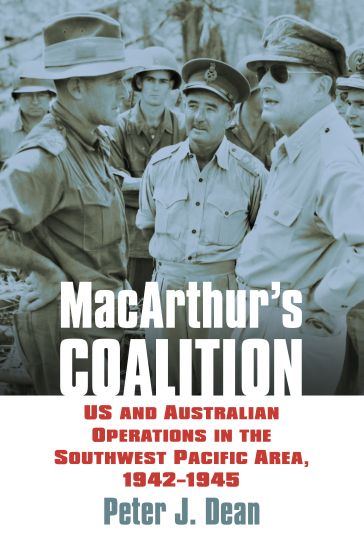
MacArthur's Coalition

MacArthur's Coalition

Peter J. Dean

University Press of Kansas
2018
sidottu
From 1942–1945 the Allies’ war in the Southwest Pacific was effectively a bilateral coalition between the United States and Australia under the command of General Douglas MacArthur. By charting the evolution of the military effectiveness of the US-Australian alliance, MacArthur’s Coalition puts the relationship between the United States and Australia at the center of the war against Japan.Drawing on new primary source material, Peter J. Dean has written the first substantial book-length treatment of the coalition as a combined military force. This expansive and ambitious book provides a fresh perspective on the Pacific War by providing a close-up, in-depth account of operations in the Southwest Pacific from the Kokoda Trail campaign to the reconquest of the Philippines and Borneo. Dean’s work takes the reader deep into the key military headquarters in the Southwest Pacific and reveals the discussions, debates, and arguments between key commanders and staff officers during the course of planning and waging a monumental conflict. Drawing upon archival records across three continents, Dean brings the qualities of these senior officers to life by exploring the critical importance of personalities and leadership in overcoming cultural, doctrinal, and organizational divides in the largely unequal alliance. Set against the practicalities of fighting a fanatical enemy in some of the most inhospitable terrain in the war, his book shows how, despite these divides and MacArthur’s difficult personality, the US-Australian coalition was able to forge a highly effective and ultimately triumphant fighting machine.With its unprecedented view of the joint nature of operations in the Southwest Pacific and its focus on frontline commanders and units in forging a successful fighting force, MacArthur’s Coalition illuminates a critical aspect of the Allied victory in World War II.
King's Cardinal

King's Cardinal

Peter J Gwyn

VINTAGE
1992
pokkari
The Wolsey who emerges is a man of prodigious energy and ability, a tireless dispenser of justice, an enlightened reformer wholly dedicated to his king and country - a man who has been consistently misrepresented and maligned for four-and-a-half centuries.
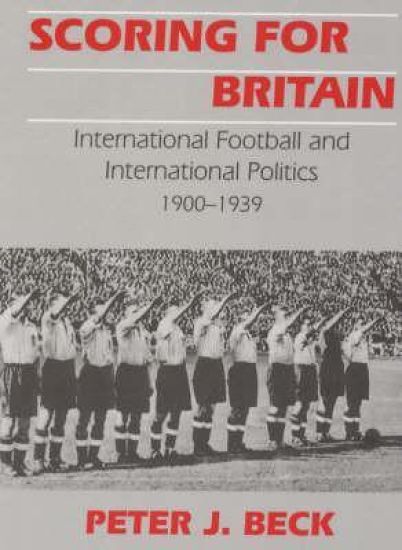
Scoring for Britain

Scoring for Britain

Peter J. Beck

Routledge
1999
nidottu
This work studies the links between international football and politics in Britain between 1900 and 1939. It shows how the British government saw sport as an instrument of policy and cultural propaganda.
Sounds and Society

Sounds and Society

Peter J. Martin

Manchester University Press
1996
nidottu
In this introduction to the social analysis of music, the author argues that musical meaning must be understood as socially constructed, rather than inherent, and that the notion of a correspondance between social and musical structures is highly problematic. An alternative approach, based on the "social action" perspective is outlined, and the book concludes with a discussion of the social situation of music in advanced capitalist society. The text draws on studies spanning the whole spectrum of Western music - rock bands to symphony orchestras, medieval plainchant to avant-garde jazz.
The Debate on the French Revolution

The Debate on the French Revolution

Peter J. Davies

Manchester University Press
2006
nidottu
This book deals with the various types of revolutionary history and the numerous schools of historical thought concerned with the French Revolution. By the time of the Bicentenary celebrations in 1989, the historiographical field had been opened up so much that it was impossible to speak with certainty about any kind of new 'orthodoxy' at all. The fact that the decade and a half following the Bicentenary offered up its own hotchpotch of theorising merely confirmed this. The survey of writings presents a cross-section of historians of the Revolution from the early nineteenth century right up to the present day. From liberals to conservatives and from Marxists to revisionists, it focuses on those individuals who are generally perceived to be the 'major' or 'pre-eminent' figures within revolutionary historiography. A ‘history of the histories’, this book will be an ideal starting point for those students seeking to better-understand the French Revolution and its history.
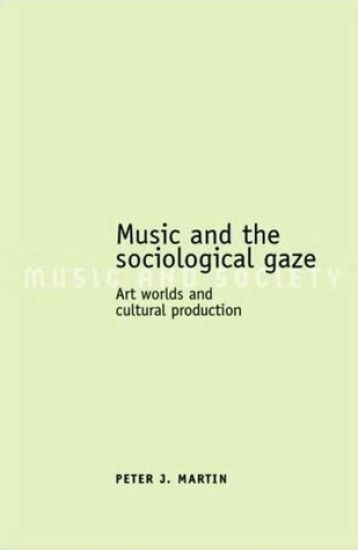
Music and the Sociological Gaze

Music and the Sociological Gaze

Peter J. Martin

Manchester University Press
2006
sidottu
In this important new book, Peter J. Martin explores the interface between musicological and sociological approaches to the analysis of music, and in doing so reveals the differing foundations of cultural studies and sociological perspectives more generally. Building on the arguments of his earlier book Sounds and society, Dr Martin initially contrasts text-based attempts to develop a ‘social’ analysis of music with sociological studies of musical activities in real cultural and institutional contexts. It is argued that the difficulties encountered by some of the ‘new’ musicologists in their efforts to introduce a social dimension to their work are often a result of their unfamiliarity with contemporary sociological discourse.Just as linguistic studies have moved from a concern with the meaning of words to a focus on how they are used, a sociological perspective directs our attention towards the ways in which the production and reception of music inevitably involve the collaborative activities of real people in particular times and places.
Music and the Sociological Gaze

Music and the Sociological Gaze

Peter J. Martin

Manchester University Press
2006
nidottu
In this important new book, Peter J. Martin explores the interface between musicological and sociological approaches to the analysis of music, and in doing so reveals the differing foundations of cultural studies and sociological perspectives more generally. Building on the arguments of his earlier book Sounds and society, Dr Martin initially contrasts text-based attempts to develop a ‘social’ analysis of music with sociological studies of musical activities in real cultural and institutional contexts. It is argued that the difficulties encountered by some of the ‘new’ musicologists in their efforts to introduce a social dimension to their work are often a result of their unfamiliarity with contemporary sociological discourse.Just as linguistic studies have moved from a concern with the meaning of words to a focus on how they are used, a sociological perspective directs our attention towards the ways in which the production and reception of music inevitably involve the collaborative activities of real people in particular times and places.
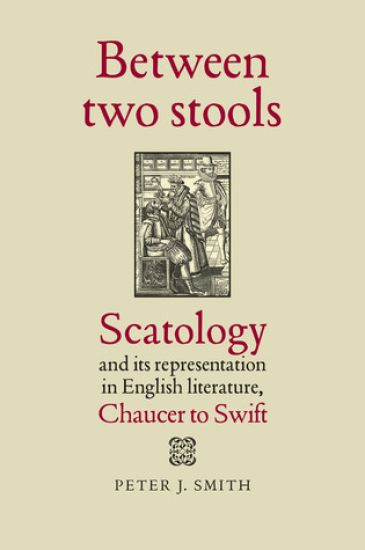
Between Two Stools

Between Two Stools

Peter J. Smith

Manchester University Press
2012
sidottu
Between two stools investigates the representation of scatology – humorous, carnivalesque, satirical, damning and otherwise – in English literature from the middle ages to the eighteenth century. Smith contends that the ‘two stools’ stand for two broadly distinctive attitudes towards scatology. The first is a carnivalesque, merry, even hearty disposition, typified by the writings of Chaucer and Shakespeare. The second is self-disgust, an attitude characterised by withering misanthropy and hypochondria. Smith demonstrates how the combination of high and low cultures manifests the capacity to run canonical and carnivalesque together so that sanctioned and civilised artefacts and scatological humour frequently co-exist in the works under discussion, evidence of an earlier culture’s aptitude (now lost) to occupy a position between two stools. Of interest to cultural and literary historians, this ground-breaking study testifies to the arrival of scatology as an academic subject, at the same time recognising that it remains if not outside, then at least at the margins of conventional scholarship.
Between Two Stools

Between Two Stools

Peter J. Smith

Manchester University Press
2015
nidottu
Now available in paperback, Between two stools investigates the representation of scatology – humorous, carnivalesque, satirical, damning and otherwise – in English literature from the middle ages to the eighteenth century. Smith contends that the ‘two stools’ stand for two broadly distinctive attitudes towards scatology. The first is a carnivalesque, merry, even hearty disposition, typified by the writings of Chaucer and Shakespeare. The second is self-disgust, an attitude characterised by withering misanthropy and hypochondria. Smith demonstrates how the combination of high and low cultures manifests the capacity to run canonical and carnivalesque together so that sanctioned and civilised artefacts and scatological humour frequently co-exist in the works under discussion, evidence of an earlier culture’s aptitude (now lost) to occupy a position between two stools. Of interest to cultural and literary historians, this ground-breaking study testifies to the arrival of scatology as an academic subject, at the same time recognising that it remains if not outside, then at least at the margins of conventional scholarship.
Abc of diabetes

Abc of diabetes

Peter J. Watkins

Bmj Publishing Group
2002
pokkari
This title comprises a comprehensive view of the practical issues relating to diagnosis and treatment of diabetes together with very practical advice on the management of its complications. The entire emphasis relates to clinical practice.
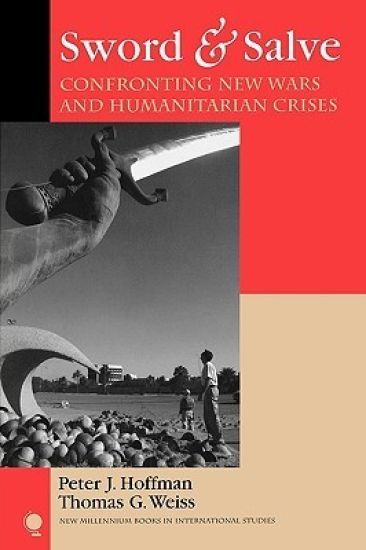
Sword & Salve

Sword & Salve

Peter J. Hoffman; Thomas G. Weiss

Rowman Littlefield Publishers
2006
nidottu
Arguing forcefully that changing times are a clarion call for new thinking, this book convincingly shows that if humanitarian organizations continue to operate as they have in the past, they will fail to help the very victims whom they try to save. Focusing especially on the emergence of 'new wars,' Hoffman and Weiss insist that humanitarian organizations must recognize that they live in a political world and that their actions and goals are invariably affected by military action. The brand of warfare that erupted in the 1990s-marked by civil or transnational armed conflicts featuring potent non-state actors, altered political economies, a high proportion of civilian casualties, and a globalized media-produced horrors that shocked consciences and led humanitarian agencies to question their unyielding stance of neutrality and impartiality. Indeed, in a departure from earlier norms and practices, some have reinvented their policies and tools and created 'new humanitarianisms.' This authoritative book traces the evolution of the international humanitarian system from its inception in the 1860s, parses the dynamics of war and emergency response from the 1980s through the current disasters in Afghanistan and Iraq, and provides a strategic roadmap for practitioners. By bringing historical perspective to bear, this volume provides an invaluable analytical framework for grasping the nature of humanitarian crises and how agencies can respond strategically rather than reactively to change. Students will find its blend of clearly presented theory and case studies a powerful tool for understanding the roles of state and non-state actors in international relations. By charting the tides of continuity and change, this book will prepare agencies to dodge both figurative and actual bullets that threaten humanitarian action at the outset of the millennium.
Budgeting for Beginners

Budgeting for Beginners

Peter J. Sander; Jonathan Sander

DK
2024
nidottu
Make the most of your money with this simple step-by-step guide to creating a budget!Does opening your credit card bill make you anxious? Do you always run out of money before your next paycheck? Do you want help establishing and sticking to a budget? Budgeting for Beginners will help you build the confidence you need to take on short-term and long-term financial problems and goals.This revised pocket guide includes how to:Save and invest money.Set up a budget you can stick to.Pay off your credit cards in a timely manner.Avoid habitual budgeting mistakes.Along the way, you’ll complete a 12-step program for creating a reasonable budget you won’t want to break. This will help start you on the road to financial freedom and control!
John Dee: The World of the Elizabethan Magus
First published in 1987. John Dee was Renaissance England's first Hermetic magus, a philosopher magician. He was also a respected practical scientist, an immensely learned man who investigated all areas of knowledge. In this fine biography, Peter French shows that not only magic and science, but geography, antiquarianism, theology and the fine arts were fields in which Dee was deeply involved. Through his teaching, writing and friendships with many of the most important figures of the age, Dee was at the centre of great affairs and had a profound influence on major developments in sixteenth-century England. Peter French places this extraordinary individual within his proper historical context, describing the whole world of Renaissance science, Platonism and Hermetic magic.
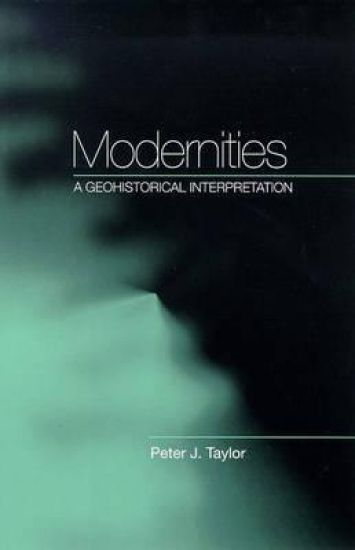
Modernities

Modernities

Peter J. Taylor

Polity Press
2003
sidottu
Taylor develops a geohistorical argument which focuses on the periods and places of modernities, offering a grounded analysis of what it is to be modern. He identifies three 'prime modernities' which have defined the development of our modern world: today's consumer modernity preceded by the industrial modernity of the nineteenth century which was itself preceded by mercantile modernity.
Modernities

Modernities

Peter J. Taylor

Polity Press
1999
nidottu
Taylor develops a geohistorical argument which focuses on the periods and places of modernities, offering a grounded analysis of what it is to be modern. He identifies three 'prime modernities' which have defined the development of our modern world: today's consumer modernity preceded by the industrial modernity of the nineteenth century which was itself preceded by mercantile modernity.
Angus Wilson

Angus Wilson

Peter J. Conradi

Liverpool University Press
1997
nidottu
Sir Angus Wilson shot to fame in the late 1940’s – his first stories were greeted by Sean O’Faolain and Evelyn Waugh alike with delight. He was championed at once as an odd realist providing new social maps of post-war England – V S Pritchett was to see him as revising the conventional picture of English Character, and recovering “broadness” without losing humanity. He has many faces as a writer. If he inherits the comic Dickensian novel of social depth and density, he also marries this to a recognisably modern anxiety and insecurity about the ‘self’. Wilson’s major books often concern ‘creative breakdown’: they depict people who undergo a crisis and/or collapse of self-belief, and then have to find the courage to invent themselves anew.
Electron Microscopy and Analysis

Electron Microscopy and Analysis

Peter J. Goodhew; John Humphreys

Taylor Francis Ltd
2000
nidottu
Electron Microscopy and Analysis deals with several sophisticated techniques for magnifying images of very small objects by large amounts - especially in a physical science context. It has been ten years since the last edition of Electron Microscopy and Analysis was published and there have been rapid changes in this field since then. The authors have vastly updated their very successful second edition, which is already established as an essential laboratory manual worldwide, and they have incorporated questions and answers in each chapter for ease of learning. Equally as relevant for material scientists and bioscientists, this third edition is an essential textbook.
The Content Of Science: A Constructive Approach To Its Teaching And Learning

The Content Of Science: A Constructive Approach To Its Teaching And Learning

Peter J. Fensham; Richard F. Gunstone; Richard T. White

Routledge Falmer
1994
sidottu
A group of science educators with experience of being involoved in curriculum development, and in conducting extensive research on many aspects of teaching and learning science, have combined their findings in this volume.; Each author has conducted research into his or her own area of science education and presents the implications of this research for a specific area of science teaching. The experiences of members of the Monash Children's Science Group; specifically three primary teachers and one biology teacher, have also been included so as to present the voices of teachers for whom writing a personal account of their teaching is often an unappealing task.