Kirjojen hintavertailu. Mukana 12 390 323 kirjaa ja 12 kauppaa.

Kirjahaku

Etsi kirjoja tekijän nimen, kirjan nimen tai ISBN:n perusteella.

1000 tulosta hakusanalla Philo

Philosophy of Physics

Philosophy of Physics

Lawrence Sklar

Oxford University Press
1992
nidottu
The systematic study of the physical world had its orgins in philosophy; two-and-a-half millennia later, the scientific advances of the twentieth century are bringing the two fields closer together again. In this brilliant new textbook, Lawrence Sklar gives a broad overview of contemporary philosophy of physics which readers at all levels, especially students, should find accessible and engaging. Professor Sklar provides a clear and accurate guide to the key topics: the nature of space and time, the problems of probability and irreversibility in statistical mechanics, and, of course, the many notorious problems raised by quantum mechanics. He discusses sophisticated scientific questions, but avoids the use of technical formalism, so that the discussion will be accessible to those without a training in philosophy or physics.
Philosophical Texts

Philosophical Texts

G. W. Leibniz

Oxford University Press
1998
nidottu
The Oxford Philosophical Texts series consists of authoritative teaching editions of canonical texts in the history of philosophy from the ancient world down to modern times. Each volume provides a clear, well laid out text together with a comprehensive introduction by a leading specialist, giving the student detailed critical guidance on the intellectual context of the work and the structure and philosophical importance of the main arguments. Endnotes are supplied which provide further commentary on the arguments and explain unfamiliar references and terminology, and a full bibliography and index are also included. The series aims to build up a definitive corpus of key texts in the Western philosophical tradition, which will form a reliable and enduring resource for students and teachers alike. This volume contains Leibniz's most important texts, starting with the Discourse on Metaphysics (1686), which marks the beginning of maturity in Leibniz's ideas and ending with the Monadology (1714), written in response to requests for a systematic, organized account of his overall philosophy. In between fall other key works including the New System of Nature (1695), the Specimen of Dynamics (1695), Nature Itself (1698), and the Principles of Nature and Grace (1714). Also included in the volume are critical reactions to the Discourse and the New System by Leibniz's contemporaries, Antoine Arnauld, Pierre Bayle, and Simon Foucher, together with Leibniz's responses. All the texts are newly translated into English for this edition, and each is preceded by a summary explaining its background, structure, and content. Also containing a substantial introduction, notes, and bibliography, the volume offers a comprehensive introduction to Leibniz's philosophy.
Philosophy of Religion

Philosophy of Religion

Oxford University Press
2000
nidottu
Philosophy of Religion: A Guide and Anthology provides a comprehensive, authoritative, and accessible overview of the philosophy of religion. Under the careful editorship of Brian Davies, the book contains a selection of the best classical and contemporary writings on the philosophy of religion together with substantial commentary, introductory material, discussion questions, and detailed guides to further reading. The editorial material sets the extracts in context and guides the reader through them. Taken as a whole, the book offers the ideal, self-contained introduction to the questions which have most preoccupied Western philosophers when thinking about religion. The selection is both very comprehensive and very generous. 65 sizeable extracts map out the full range of topics most commonly encountered in courses on the philosophy of religion. Part I looks at the relation between philosophy and religious belief; Parts II-IV consider the existence and nature of God; Part V addresses the 'problem of evil'; and Parts VI and VII are devoted to the relationship between morality and religion and to the question of life after death.
Philosophy 1

Philosophy 1

Oxford University Press
1998
nidottu
This is the first volume of a two-volume introduction to and guide through philosophy. It is intended to orientate, assist, and stimulate the reader at every stage in the study of the subject. Eleven extended essays have been specially commissioned from leading philosophers; each surveys a major area of the subject and offers an accessible but sophisticated account of the main debates. An extended introduction maps out the philosophical terrain and explains how the different subjects relate to each other. The first part of the book deals with the foundations of philosophical enquiry: epistemology; philosophical logic; methodology; metaphysics; and the philosophy of mind. The second part offers four historical chapters, two on ancient and two on modern philosophy, introducing great thinkers from the past, explaining and discussing their ideas, and showing the value of studying them today. The third part comprises two chapters devoted to questions of value, in ethics and aesthetics. Full annotated bibliographies are provided at the ends of chapters to serve as guides to further reading. This is real philosophy, not simplified philosophy; it will be accessible for the beginner but equally valuable for the third-year student. Deep and challenging questions are not shirked; the reader will be given a sense of involvement in the practice of philosophy today.
Philosophers Take On the World

Philosophers Take On the World

Oxford University Press
2016
sidottu
Every day the news shows us provoking stories about what's going on in the world, about events which raise moral questions and problems. In Philosophers Take On the World a team of philosophers get to grips with a variety of these controversial issues, from the amusing to the shocking, in short, engaging, often controversial pieces. Covering topics from guns to abortion, the morality of drinking alone, hating a sports team, and being rude to cold callers, the essays will make you think again about the judgements we make on a daily basis and the ways in which we choose to conduct our lives. Philosophers Take On the World is based on the blog run by the Uehiro Centre for Practical Ethics at the University of Oxford, one of the world's leading centres for applied ethics.
Philosophical Foundations of Constitutional Law
Constitutional law has been and remains an area of intense philosophical interest, and yet the debate has taken place in a variety of different fields with very little to connect them. In a collection of essays bringing together scholars from several constitutional systems and disciplines, Philosophical Foundations of Constitutional Law unites the debate in a study of the philosophical issues at the very foundations of the idea of a constitution: why one might be necessary; what problems it must address; what problems constitutions usually address; and some of the issues raised by the administration of a constitutional regime. Although these issues of institutional design are of abiding importance, many of them have taken on new significance in the last few years as law-makers have been forced to return to first principles in order to justify novel practices and arrangements in their constitutional orders. Thus, questions of constitutional 'revolutions,' challenges to the demands of the rule of law, and the separation of powers have taken on new and pressing importance. The essays in this volume address these questions, filling the gap in the philosophical analysis of constitutional law. The volume will provoke specialists in philosophy, politics, and law to develop new philosophically grounded analyses of constitutional law, and will be a valuable resource for graduate students in law, politics and philosophy.
Philosophical Foundations of Constitutional Law
Constitutional law has been and remains an area of intense philosophical interest, and yet the debate has taken place in a variety of different fields with very little to connect them. In a collection of essays bringing together scholars from several constitutional systems and disciplines, Philosophical Foundations of Constitutional Law unites the debate in a study of the philosophical issues at the very foundations of the idea of a constitution: why one might be necessary; what problems it must address; what problems constitutions usually address; and some of the issues raised by the administration of a constitutional regime. Although these issues of institutional design are of abiding importance, many of them have taken on new significance in the last few years as law-makers have been forced to return to first principles in order to justify novel practices and arrangements in their constitutional orders. Thus, questions of constitutional 'revolutions', challenges to the demands of the rule of law, and the separation of powers have taken on new and pressing importance. The essays in this volume address these questions, filling the gap in the philosophical analysis of constitutional law. The volume will provoke specialists in philosophy, politics, and law to develop new philosophically grounded analyses of constitutional law, and will be a valuable resource for graduate students in law, politics, and philosophy.
Philosophy of Religion

Philosophy of Religion

Tim Bayne

Oxford University Press
2018
nidottu
What is the philosophy of religion? How can we distinguish it from theology on the one hand and the psychology/sociology of religious belief on the other? What does it mean to describe God as 'eternal'? And should religious people want there to be good arguments for the existence of God, or is religious belief only authentic in the absence of these good arguments? In this Very Short Introduction Tim Bayne introduces the field of philosophy of religion, and engages with some of the most burning questions that philosophers discuss. Considering how 'religion' should be defined, and whether we even need to be able to define it in order to engage in the philosophy of religion, he goes on to discuss whether the existence of God matters. Exploring the problem of evil, Bayne also debates the connection between faith and reason, and the related question of what role reason should play in religious contexts. Shedding light on the relationship between science and religion, Bayne finishes by considering the topics of reincarnation and the afterlife. ABOUT THE SERIES: The Very Short Introductions series from Oxford University Press contains hundreds of titles in almost every subject area. These pocket-sized books are the perfect way to get ahead in a new subject quickly. Our expert authors combine facts, analysis, perspective, new ideas, and enthusiasm to make interesting and challenging topics highly readable.
Philosophy and the Novel

Philosophy and the Novel

Alan H. Goldman

Oxford University Press
2016
nidottu
Alan H. Goldman presents an original and lucid account of the relationship between philosophy and the novel. In the first part, on philosophy of novels, he defends theories of literary value and interpretation. Literary value, the value of literary works as such, is a species of aesthetic value. Goldman argues that works have aesthetic value when they simultaneously engage all our mental capacities: perceptual, cognitive, imaginative, and emotional. This view contrasts with now prevalent narrower formalist views of literary value. According to it, cognitive engagement with novels includes appreciation of their broad themes and the theses these imply, often moral and hence philosophical theses, which are therefore part of the novels' literary value. Interpretation explains elements of works so as to allow readers maximum appreciation, so as to maximize the literary value of the texts as written. Once more, Goldman's view contrasts with narrower views of literary interpretation, especially those which limit it to uncovering what authors intended. One implication of Goldman's broader view is the possibility of incompatible but equally acceptable interpretations, which he explores through a discussion of rival interpretations of Ernest Hemingway's The Sun Also Rises. Goldman goes on to test the theory of value by explaining the immense appeal of good mystery novels in its terms. The second part of the book, on philosophy in novels, explores themes relating to moral agency--moral development, motivation, and disintegration--in Jane Austen's Pride and Prejudice, Mark Twain's Huckleberry Finn, John Irving's The Cider House Rules, and Joseph Conrad's Nostromo. By narrating the course of characters' lives, including their inner lives, over extended periods, these novels allow us to vicariously experience the characters' moral progressions, positive and negative, to learn in a more focused way moral truths, as we do from real life experiences.
Philosophical Foundations of Fiduciary Law
Fiduciary law is a critically important body of law. Fiduciary duties ensure the integrity of a remarkable variety of relationships, institutions, and organizations. They apply to relationships of great personal significance, including in some jurisdictions the relationship between parents and children. They structure a wide variety of commercial relationships, and they are essential to the regulation of relationships between professional service providers and their clients, including relationships between lawyer and client, doctor and patient, and investment manager and client. Fiduciary duties, perhaps uniquely in private law, challenge traditional ways of marking the boundaries between private and public law, inasmuch as they figure prominently in public governance. Indeed, there is even a storied tradition of thinking of the authority of the state in fiduciary terms. Notwithstanding its importance, fiduciary law has been woefully under-analysed by legal theorists. Filling this gap with a series of chapters by leading theorists, this book includes chapters on: the nature of fiduciary relationships, the connection between fiduciary duties and morality, the content and significance of fiduciary loyalty, the economic significance of fiduciary law, the application of fiduciary principles to public law and international law, the import of fiduciary relationships to theories of authority, and various other fundamental topics in the field. In many cases, new and important questions are raised by the book's chapters. Indeed, this book not only offers a much-needed theoretical assessment of fiduciary topics, it defines the field going forward, setting an agenda for future philosophical study of fiduciary law.
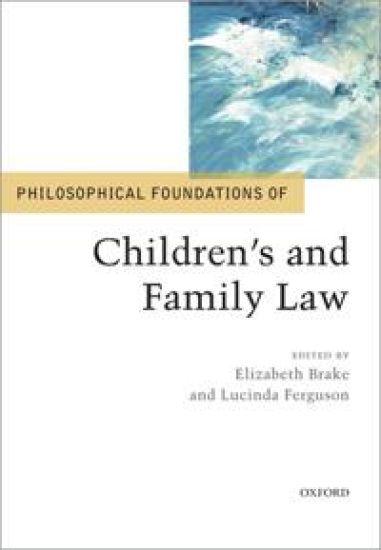
Philosophical Foundations of Children's and Family Law
This volume brings together new essays in law and philosophy on a broad range of topics in children's and family law. It is the first volume to bring together essays by legal scholars and philosophers for an integrated, critical analysis of key issues in this area, marking the 'coming of age' of a comparatively new field of family law. Debates in children's and family law are at once theoretical and empirical in nature. Not only does children's and family law have significant consequences for individuals' intimate lives, the field's impact on lived experience highlights the socially constructed nature of law. Approaching this area of law often involves exploring a legal concept familiar from daily life, such as the very notion of 'marriage' or 'family', and examining it within its social, economic, and historical context. The normative basis for law regulating intimate personal and family life extends beyond any narrow legal philosophy or social context to its broader foundations in theories of morality or justice. The chapters included bring together a representative and broad range of pieces that engage with long-standing and contemporary debates. A wide range of perspectives is represented on topics such as same-sex marriage, polygamy and polyamory, alimony, unmarried cohabitation, gestational surrogacy and assisted reproductive technologies, child support, parental rights and responsibilities, children's rights, family immigration, religious freedom, and the rights of paid caregivers. There is also philosophical discussion of concepts such as care, intimacy, and the nature of family and family law itself.
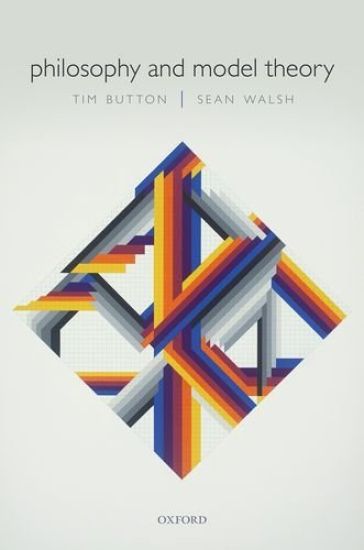
Philosophy and Model Theory

Philosophy and Model Theory

Tim Button; Sean Walsh

Oxford University Press
2018
sidottu
Model theory is used in every theoretical branch of analytic philosophy: in philosophy of mathematics, in philosophy of science, in philosophy of language, in philosophical logic, and in metaphysics. But these wide-ranging uses of model theory have created a highly fragmented literature. On the one hand, many philosophically significant results are found only in mathematics textbooks: these are aimed squarely at mathematicians; they typically presuppose that the reader has a serious background in mathematics; and little clue is given as to their philosophical significance. On the other hand, the philosophical applications of these results are scattered across disconnected pockets of papers. The first aim of this book, then, is to explore the philosophical uses of model theory, focusing on the central topics of reference, realism, and doxology. Its second aim is to address important questions in the philosophy of model theory, such as: sameness of theories and structure, the boundaries of logic, and the classification of mathematical structures. Philosophy and Model Theory will be accessible to anyone who has completed an introductory logic course. It does not assume that readers have encountered model theory before, but starts right at the beginning, discussing philosophical issues that arise even with conceptually basic model theory. Moreover, the book is largely self-contained: model-theoretic notions are defined as and when they are needed for the philosophical discussion, and many of the most philosophically significant results are given accessible proofs.
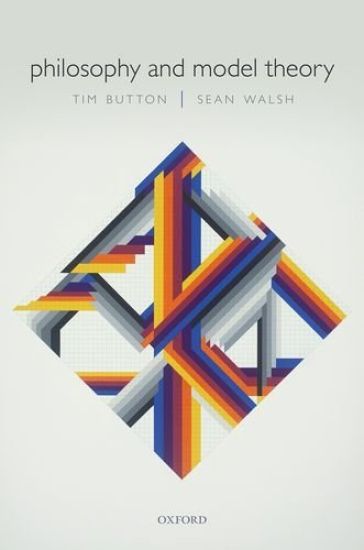
Philosophy and Model Theory

Philosophy and Model Theory

Tim Button; Sean Walsh

Oxford University Press
2018
nidottu
Model theory is used in every theoretical branch of analytic philosophy: in philosophy of mathematics, in philosophy of science, in philosophy of language, in philosophical logic, and in metaphysics. But these wide-ranging uses of model theory have created a highly fragmented literature. On the one hand, many philosophically significant results are found only in mathematics textbooks: these are aimed squarely at mathematicians; they typically presuppose that the reader has a serious background in mathematics; and little clue is given as to their philosophical significance. On the other hand, the philosophical applications of these results are scattered across disconnected pockets of papers. The first aim of this book, then, is to explore the philosophical uses of model theory, focusing on the central topics of reference, realism, and doxology. Its second aim is to address important questions in the philosophy of model theory, such as: sameness of theories and structure, the boundaries of logic, and the classification of mathematical structures. Philosophy and Model Theory will be accessible to anyone who has completed an introductory logic course. It does not assume that readers have encountered model theory before, but starts right at the beginning, discussing philosophical issues that arise even with conceptually basic model theory. Moreover, the book is largely self-contained: model-theoretic notions are defined as and when they are needed for the philosophical discussion, and many of the most philosophically significant results are given accessible proofs.
Philosophical Organization Theory

Philosophical Organization Theory

Haridimos Tsoukas

Oxford University Press
2018
sidottu
When it comes to the field of organization and management theory, a philosophical perspective enables us to conduct organizational research imbued with the attitude of 'wonder'; it helps researchers question dominant images of thought underlying mainstream thinking, and provides fresh distinctions that enable the development of new theory. In bringing together a collection of key essays by Haridimos Tsoukas, this volume explores fundamental concepts, such as organizational routine, that have gained currency in the field, as well as revisiting traditional concepts such as change, strategy, and organization. It discusses organizational knowledge, judgment, and reflection-in-action, and, at the meta-theoretical level, suggests complex forms of theorizing that do justice to the complexity of organizations. The conceptual attention throughout is on process and practice, underlain by performative phenomenology and an emphasis on agents' lived experience. This provides us with the language to appreciate the dynamic character of organizational behaviour, the embeddedness of action, and the complexity of organizational life. The theoretical claims presented in this volume have important implications for practice, insofar as they help retrain our attention; from seeing structures and individuals, we can now appreciate processes, experiences, and practices. A phenomenological attitude makes organization theory more open, more creative, and more reflexive, and this book will be essential reading for researchers and students in the field of organization studies.
Philosophical Issues in Psychiatry IV
The revisions of both DSM-IV and ICD-10 have again focused the interest of the field of psychiatry and clinical psychology on the issue of nosology. This interest has been further heightened by a series of controversies associated with the development of DSM-5 including the fate of proposed revisions of the personality disorders, bereavement, and the autism spectrum. Major debate arose within the DSM process about the criteria for changing criteria, leading to the creation of first the Scientific Review Committee and then a series of other oversight committees which weighed in on the final debates on the most controversial proposed additions to DSM-5, providing important influences on the final decisions. Contained within these debates were a range of conceptual and philosophical issues. Some of these - such as the definition of mental disorder or the problems of psychiatric "epidemics" - have been with the field for a long time. Others - the concept of epistemic iteration as a framework for the introduction of nosologic change - are quite new. This book reviews issues within psychiatric nosology from clinical, historical and particularly philosophical perspectives. The book brings together a range of distinguished authors - including major psychiatric researchers, clinicians, historians and especially nosologists - including several leaders of the DSM-5 effort and the DSM Steering Committee. It also includes contributions from psychologists with a special interest in psychiatric nosology and philosophers with a wide range of orientations. The book is organized into four major sections: The first explores the nature of psychiatric illness and the way in which it is defined, including clinical and psychometric perspectives. The second section examines problems in the reification of psychiatric diagnostic criteria, the problem of psychiatric epidemics, and the nature and definition of individual symptoms. The third section explores the concept of epistemic iteration as a possible governing conceptual framework for the revision efforts for official psychiatric nosologies such as DSM and ICD and the problems of validation of psychiatric diagnoses. The book ends by exploring how we might move from the descriptive to the etiologic in psychiatric diagnoses, the nature of progress in psychiatric research, and the possible benefits of moving to a living document (or continuous improvement) model for psychiatric nosologic systems. The result is a book that captures the dynamic cross-disciplinary interactions that characterize the best work in the philosophy of psychiatry.
Philosophy and Climate Change

Philosophy and Climate Change

Oxford University Press
2021
sidottu
Climate change is poised to threaten, disrupt, and transform human life, and the social, economic, and political institutions that structure it. Philosophy and Climate Change argues that understanding climate change, and discussing how to address it, should be at the very center of our public conversation. It shows that philosophy can make an enormous contribution to that conversation, but only if both philosophers and non-philosophers understand what it can contribute. The sixteen original articles collected in this volume both illustrate the diverse ways that philosophy can contribute to this conversation, and ways in which thinking about climate change can help to illuminate a range of topics of independent interest to philosophers.
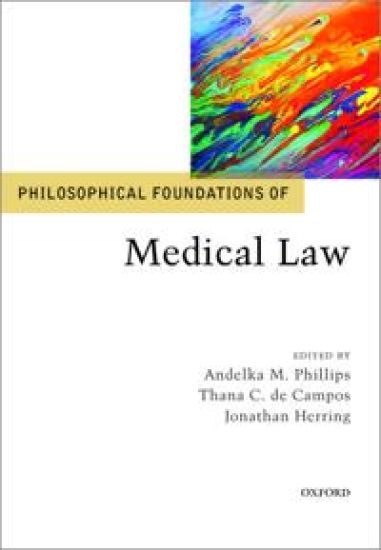
Philosophical Foundations of Medical Law
With advances in personalised medicine, the field of medical law is being challenged and transformed. The nature of the doctor-patient relationship is shifting as patients simultaneously become consumers. The regulation of emerging technologies is being thrown into question, and we face new challenges in the context of global pandemics. This volume identifies significant questions and issues underlying the philosophy of medical law. It brings together leading philosophers, legal theorists, and medical specialists to discuss these questions in two parts. The first part deals with key foundational theories, and the second addresses a variety of topical issues, including euthanasia, abortion, and medical privacy. The wide range of perspectives and topics on offer provide a vital introduction to the philosophical underpinnings of medical law.
Philosophical Foundations of Tax Law
Tax law changes at a startling rate - not only does societal change bring with it demands for change in the tax system, but changes in the political climate will force change, as will many other competing pressures. With this pace of change, it is easy to focus on the practical and forget the core underpinnings of the tax system and their philosophical justifications. Taking a pause to remind ourselves of those principles and how they can operate in the modern tax system is crucial to ensuring that the tax system does not diverge too far from what it should be or could be. It is essential to understand the answers to some of the seemingly basic questions that surround tax before we can even begin to think about what a tax system should look like. This collection brings together major themes and difficult questions in the philosophical foundations of tax law. The chapters consider practical issues such as justification, enforcement, design, and mechanics, and provide a full and coherent analysis of the basis for tax law. Philosophical Foundations of Tax Law allows the reader to consider how tax systems should move forward in the modern world, with a sound philosophical basis, to provide the practical tax system that the state requires and citizens deserve.
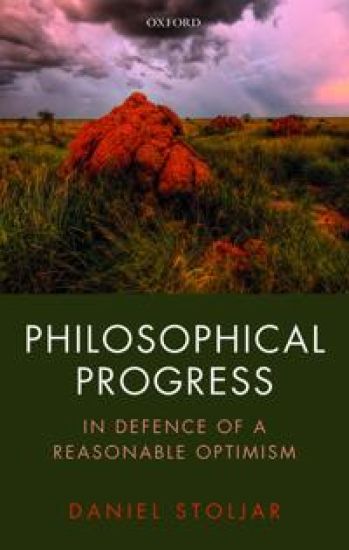
Philosophical Progress

Philosophical Progress

Daniel Stoljar

Oxford University Press
2017
sidottu
Many people believe that philosophy makes no progress. Members of the general public often find it amazing that philosophers exist in universities at all, at least in research positions. Academics who are not philosophers often think of philosophy either as a scholarly or interpretative enterprise, or else as a sort of pre-scientific speculation. And - amazingly - many well-known philosophers argue that there is little genuine progress in philosophy. Daniel Stoljar argues that this is all a big mistake. When you think through exactly what philosophical problems are, and what it takes to solve them, the pattern of success and failure in philosophy is similar to that in other fields. In philosophy, as elsewhere, there is a series of overlapping topics that determine what the subject is about. In philosophy, as elsewhere, different people in different historical epochs and different cultures ask different big questions about these topics. And in philosophy, as elsewhere, big questions asked in the past have often been solved: Stoljar provides examples. Philosophical Progress presents a strikingly optimistic picture of philosophy - not a radical optimism that says that there is some key that unlocks all philosophical problems, and not the kind of pessimism that dominates both professional and non-professional thinking about philosophy, but a reasonable optimism that views philosophy as akin to other fields.
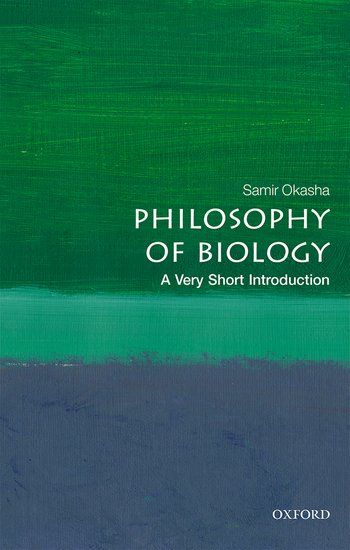
Philosophy of Biology

Philosophy of Biology

Samir Okasha

Oxford University Press
2019
nidottu
Over the last forty years the philosophy of biology has emerged as an important sub-discipline of the philosophy of science. Covering some of science's most divisive topics, such as philosophical issues in genetics, it also encompasses areas where modern biology has increasingly impinged on traditional philosophical questions, such as free will, essentialism, and nature vs nurture. In this Very Short Introduction Samir Okasha outlines the core issues with which contemporary philosophy of biology is engaged. Offering a whistle-stop tour of the history of biology, he explores key ideas and paradigm shifts throughout the centuries, including areas such as the theory of evolution by natural selection; the concepts of function and design; biological individuality; and the debate over adaptationism. Throughout Okasha makes clear the relevance of biology for understanding human beings, human society, and our place in the natural world, and the importance of engaging with these issues. ABOUT THE SERIES: The Very Short Introductions series from Oxford University Press contains hundreds of titles in almost every subject area. These pocket-sized books are the perfect way to get ahead in a new subject quickly. Our expert authors combine facts, analysis, perspective, new ideas, and enthusiasm to make interesting and challenging topics highly readable.