Kirjojen hintavertailu. Mukana 11 717 486 kirjaa ja 12 kauppaa.

Kirjahaku

Etsi kirjoja tekijän nimen, kirjan nimen tai ISBN:n perusteella.

1000 tulosta hakusanalla Rod Lee

Spare the Rod

Spare the Rod

Campbell F. Scribner; Bryan R. Warnick

University of Chicago Press
2021
sidottu
Spare the Rod traces the history of discipline in schools and its ever increasing integration with prison and policing, ultimately arguing for an approach to discipline that aligns with the moral community that schools could and should be. In Spare the Rod, historian Campbell F. Scribner and philosopher Bryan R. Warnick investigate the history and philosophy of America’s punishment and discipline practices in schools. To delve into this controversial subject, they first ask questions of meaning. How have concepts of discipline and punishment in schools changed over time? What purposes are they supposed to serve? And what can they tell us about our assumptions about education? They then explore the justifications. Are public school educators ever justified in punishing or disciplining students? Are discipline and punishment necessary for students’ moral education, or do they fundamentally have no place in education at all? If some form of punishment is justified in schools, what ethical guidelines should be followed? The authors argue that as schools have grown increasingly bureaucratic over the last century, formalizing disciplinary systems and shifting from physical punishments to forms of spatial or structural punishment such as in-school suspension, school discipline has not only come to resemble the operation of prisons or policing, but has grown increasingly integrated with those institutions. These changes and structures are responsible for the school-to-prison pipeline. They show that these shifts disregard the unique status of schools as spaces of moral growth and community oversight, and are incompatible with the developmental environment of education. What we need, they argue, is an approach to discipline and punishment that fits with the sort of moral community that schools could and should be.
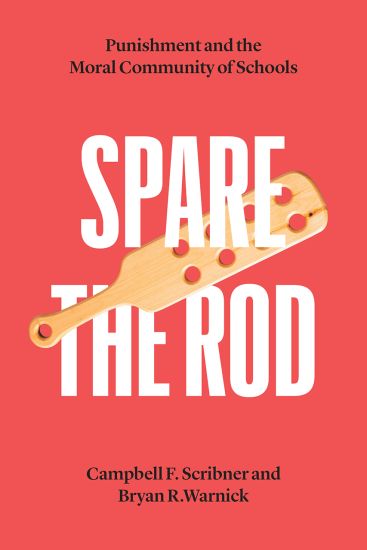
Spare the Rod

Spare the Rod

Campbell F. Scribner; Bryan R. Warnick

University of Chicago Press
2021
nidottu
Spare the Rod traces the history of discipline in schools and its ever increasing integration with prison and policing, ultimately arguing for an approach to discipline that aligns with the moral community that schools could and should be. In Spare the Rod, historian Campbell F. Scribner and philosopher Bryan R. Warnick investigate the history and philosophy of America’s punishment and discipline practices in schools. To delve into this controversial subject, they first ask questions of meaning. How have concepts of discipline and punishment in schools changed over time? What purposes are they supposed to serve? And what can they tell us about our assumptions about education? They then explore the justifications. Are public school educators ever justified in punishing or disciplining students? Are discipline and punishment necessary for students’ moral education, or do they fundamentally have no place in education at all? If some form of punishment is justified in schools, what ethical guidelines should be followed? The authors argue that as schools have grown increasingly bureaucratic over the last century, formalizing disciplinary systems and shifting from physical punishments to forms of spatial or structural punishment such as in-school suspension, school discipline has not only come to resemble the operation of prisons or policing, but has grown increasingly integrated with those institutions. These changes and structures are responsible for the school-to-prison pipeline. They show that these shifts disregard the unique status of schools as spaces of moral growth and community oversight, and are incompatible with the developmental environment of education. What we need, they argue, is an approach to discipline and punishment that fits with the sort of moral community that schools could and should be.
Surf & Hot Rod Music of the '60s

Surf & Hot Rod Music of the '60s

R Duane Cozzen

Lulu.com
2019
pokkari
"This is the revised color edition " Surf & Hot Rod Music of the 60's Collectors Quick Reference is a must have for record collectors The book includes 43 of the most sought after surf and hot rod music artists records of the '60s. From Aki Aleong to The Ventures. Includes short bios of each artist and complete U.S. Discographies (albums, single 45's, Extended Play 45's (EP's) and Mini Albums (jukebox editions) plus track listings. Also includes photos of album jackets. Discography years covered are from 1959 through 1967, including rare, hard-to-find releases.
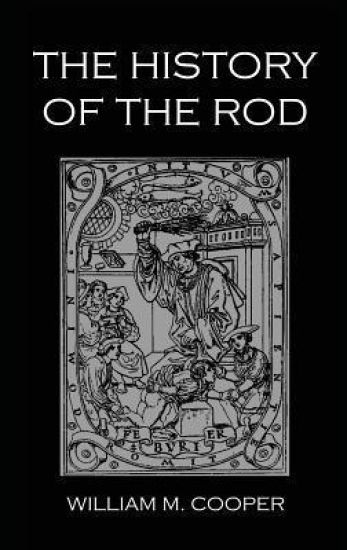
The History Of The Rod

The History Of The Rod

William M. Cooper

Kegan Paul
2005
sidottu
First published in 2005. The line between pain and pleasure is as thin as the tail of a whip, and this classic work is the definitive history of flagellation through the ages. As it shows, flagellation is much more than a punishment - it is also intimately tied to discipline and eroticism, has a romantic and even comic side, and has also been used for medical purposes. No one is above the bite of the birch or rod - convent nuns were chastised severely, queens have been flogged, and even favourites of the sultan have had to endure the whip in the great seraglios. The author deals in great detail with whipping in ancient Egypt, Greece and Rome, the favourite parts of the body for whipping, flagellation and discipline in monasteries and convents, whipping in prisons, the rod in Russia, flagellation in America, whipping in Europe and the Far East, the flogging of slaves, military flogging, school punishments and the birch in the boudoir, all enlivened with colourful anecdotes. There is a chapter on the instruments of whipping, a selection of ribald and erotic poems on whipping, a section on eccentric forms of whipping such as that practised on prostitutes, many detailed line drawings, descriptive accounts and a full index. The work shows the fundamental place whipping has always played in human history, both publicly and in private, and continues to play today.