Kirjojen hintavertailu. Mukana 11 627 067 kirjaa ja 12 kauppaa.

Kirjahaku

Etsi kirjoja tekijän nimen, kirjan nimen tai ISBN:n perusteella.

1000 tulosta hakusanalla S. Elizabeth Cook

The Aesthetic of Elizabeth Bowen’s Novels

The Aesthetic of Elizabeth Bowen’s Novels

Diana Hirst

TAYLOR FRANCIS LTD
2025
sidottu
This is the first monograph to evaluate Elizabeth Bowen’s ‘verbal painting’, and the first to acknowledge the influence of the East Kent landscape in her novels. Drawing on the work of critics and on Bowen’s own essays and articles, Hirst introduces Bowen to the reader, outlining the range of her literary work and elaborating on Bowen’s advice that the reader needs to work at understanding her prose. She examines Bowen’s use of light and the eye from the perspective of neuropsychology, before considering the importance to Bowen of place. She discusses her ‘verbal painting’, drawing parallels with different genres (Post-Impressionism, Surrealism, Futurism, Collage) and artists (Paul Cézanne, Pierre Bonnard, Edouard Vuillard, Giorgio de Chirico, Umberto Boccioni, Paul Nash), and the films of French Left Bank Cinema directors (Alain Resnais, Jean Cocteau). Finally, using the neologism ‘dyslocution’ for Bowen’s fragmented syntax, she suggests this has been influenced by French syntax and by poetic techniques, all of which combine in a Cubist style.
Elizabeth Meeke’s The Abbey of Clugny
The Abbey of Clugny itself is a formulaic novel, using misattributions of identity, disguises, and alternative identities to make up for an often-lackluster plot. While such a description is hardly a glowing endorsement of the text, one corrective a critical edition of the novel could offer is to provide a character list to help readers track these various character names and identities. The novel centers around a young man alternately known as Alexis de Wielbourg, the Marquis de St. Cernin and Alphonso, who as an infant was mysteriously delivered into the care of the Baron Wielbourg. On the eve of marriage to his adopted sister, the Baron’s niece Alphonsine, Alexis’s supposed father, the Duke de Longueville, discovers he is still living and brings him back to Paris. Over the course of the novel, Alexis’s true parentage is revealed, through a series of coincidental encounters with various parties who slowly unravel the mystery of his birth. In the intervening sections of the narrative, Alexis and his compatriots visit the eponymous Abbey of Clugny, located just outside of Souvigny, which is supposedly haunted by the ghost of its recently-deceased Abbess. Borrowing the popularity of Ann Radcliffe’s “explained supernatural,” the ghosts that appear in the novel are almost immediately revealed to the reader as fraudulent, suggesting Meeke’s discomfort with the idea of true belief in ghosts. The narrator’s attitude toward religion—particularly Catholicism—and French politics and culture more broadly are ambivalent and complex throughout the text. The critical introduction will offer some context based on what is known about Meeke’s travels in France to help situate the reader within the text.
Mr. Bennet's Daughter: An Elizabeth and Darcy Story

Mr. Bennet's Daughter: An Elizabeth and Darcy Story

Timothy Underwood

Independently Published
2019
nidottu
Elizabeth would never admit that woman was really her mother... Two months after Elizabeth was born, Mr. Bennet discovered Mrs. Bennet in the midst of an affair with her father's clerk. And two nights later, the woman who had been his wife fled north with her lover and Jane, tearfully leaving behind little Elizabeth with Mr. Bennet. Mr. Bennet dedicated his life to raising Elizabeth the best he could. He loved her. Mr. Bennet had loved Elizabeth, far more than he ever loved Jane, from the first time he picked his little girl up and she grabbed at his sideburns. When the new tenant of Netherfield arrived in the neighborhood, Elizabeth began to fall in love with the mind and thoughtful frowns of his friend, Mr. Darcy. He made her heart flutter. But what will happen when Elizabeth's long departed mother returns with her sister Jane to Meryton after being absent for twenty years? A heartwarming and romantic novel about true family and love from the author of Too Gentlemanly and The Netherfield Fire.
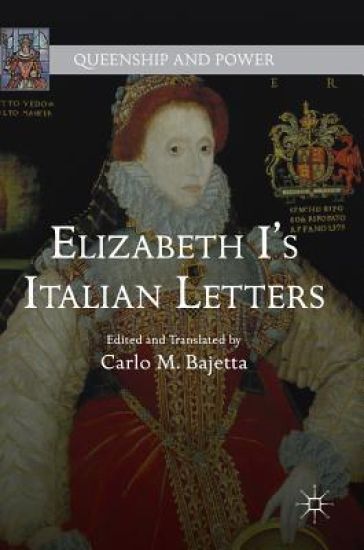
Elizabeth I's Italian Letters

Elizabeth I's Italian Letters

Carlo M. Bajetta

Palgrave Macmillan
2017
sidottu
This is the first edition ever of the Queen’s correspondence in Italian. These letters cast a new light on her talents as a linguist and provide interesting details as to her political agenda, and on the cultural milieu of her court. This book provides a fresh analysis of the surviving evidence concerning Elizabeth’s learning and use of Italian, and of the activity of the members of her ‘Foreign Office.’ All of the documents transcribed here are accompanied by a short introduction focusing on their content and context, a brief description of their transmission history, and an English translation.
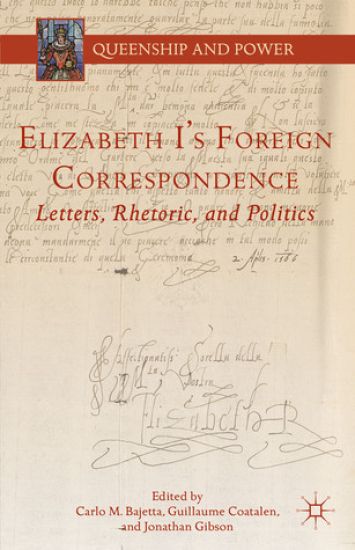
Elizabeth I's Foreign Correspondence
Though Elizabeth I never left England, she wrote extensively to correspondents abroad, and these letters were of central importance to the politics of the period. This volume presents the findings of a major international research project on this correspondence, including newly edited translations of 15 of Elizabeth's letters in foreign languages.
Elizabeth Inchbald's Reputation

Elizabeth Inchbald's Reputation

Ben P Robertson

Routledge
2016
nidottu
Through an examination of her complete works and public response to them, Robertson gauges the extent of Inchbald's reputation as the dignified Mrs Inchbald, as well as providing a clear sense of what it meant to be a female Romantic writer.
Elizabeth Gaskell's "North and South" and the 'Monstrosity' of Manchester
Il volume si incentra sulla rivalutazione di un classico vittoriano di Elizabeth Gaskell "North and South" attraverso un'analisi multi-livellare, dallo studio topologico del setting, agli aspetti sociologicamente e antropologicamente rilevanti della diegesi, per finire alla critica letteraria e sociolinguistica. Vincenzo Longo, docente di lingua e cultura inglese, specializzato in letteratura inglese. Da diversi anni, ricerca e si occupa di studi vittoriani ed edoardiani, in particolare di Thomas Hardy, Elizabeth Gaskell e Virginia Woolf. E' autore di The Paradigm of Childhood in Thomas Hardy's Narrative e L'Armonia della Morte: il Simbolismo dell'Acqua da Shakespeare a Virginia Woolf. Nel 2018 ha ricoperto una cattedra di letteratura inglese al Clare College, presso l'Universit di Cambridge.
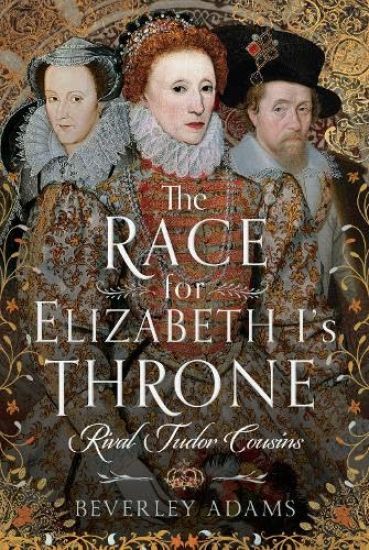
The Race for Elizabeth I's Throne

The Race for Elizabeth I's Throne

Beverley Adams

PEN SWORD BOOKS LTD
2025
sidottu
As the childless Elizabeth I lay on her deathbed, discussions over who would succeed her as ruler of England raged on amongst her advisors. The succession to Elizabeth’s throne was hotly debated throughout her reign (1558-1603) and despite having no direct heir, the queen refused to name her successor over safety concerns, being convinced a plot would be raised to oust her in favour of the heir. There were many contenders to the crown, but Elizabeth’s main rival was Mary, Queen of Scots but her Catholic faith and ill-advised marriage to fellow claimant Lord Darnley, against Elizabeth’s wishes, damaged her claim. Her claim was ended when the English queen had her Scottish counterpart executed in 1587. Other claims came from the Grey sisters Katherine and Mary, and later Margaret Clifford and Arbella Stuart. But the crown finally came to King James VI of Scotland, son of Mary and Darnley, in what was a smooth transition. His accession marked the end of the Tudor dynasty and the start of the Stuart era in England.
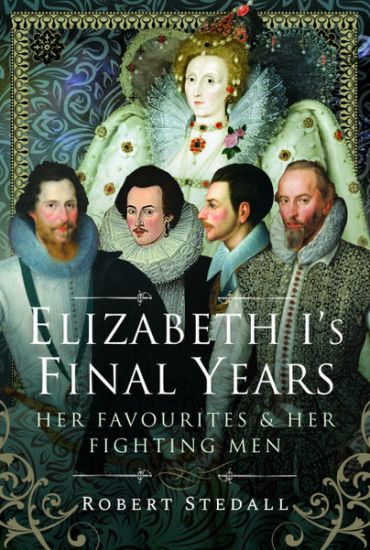
Elizabeth I's Final Years

Elizabeth I's Final Years

Robert Stedall

PEN SWORD BOOKS LTD
2022
sidottu
Elizabeth I's Final Years outlines the interwoven relationships and rivalries between politicians and courtiers surrounding England's omnipotent queen in the years following the death in 1588 of the Earl of Leicester. Elizabeth now surrounded herself with magnetically attractive younger men with the courtly graces to provide her with what Alison Weir has called an eroticised political relationship'. With these favourites' holding sway at court, they saw personal bravery in the tiltyard or on military exploits as their means to political authority. They failed to appreciate that the parsimonious queen would always resist military aggression and resolutely backed her meticulously cautious advisors, William Cecil, Lord Burghley, and later his son Robert. With its access to New World treasure, it was Spain who threatened the fragile balance of power in Continental Europe. With English military intervention becoming inevitable, the Cecils diverted the likes of Walter Raleigh and the Earl of Essex, despite their lack of military experience, away from the limelight at court into colonial and military expeditions, leaving them just short of the resources needed for success. The favourites' promotions caused friction when seasoned soldiers, like Sir Francis Vere with his unparalleled military record in the Low Countries, were left in subordinate roles. When Spanish support for rebellion in Ireland threatened English security, Robert Cecil encouraged Elizabeth to send Essex, knowing that high command was beyond his capabilities. Essex retorted by rebelling against Cecil's government, for which he lost his head. Both Elizabeth and Cecil realised that only the bookish Lord Mountjoy, another favourite, had the military acumen to resolve the Irish crisis, but his mistress, Essex's sister, the incomparable Penelope Rich, was mired by involvement in her brother's conspiracy. Despite this, Cecil gave Mountjoy unstinting support, biding his time to tarnish his name with James I, as he did against Raleigh and his other political foes.
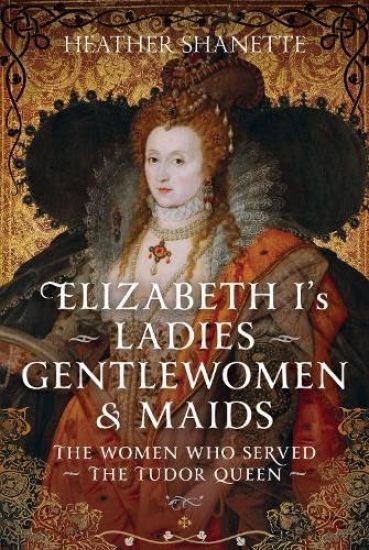
Elizabeth I's Ladies, Gentlewomen and Maids

Elizabeth I's Ladies, Gentlewomen and Maids

Heather Shanette

PEN SWORD BOOKS LTD
2025
sidottu
‘What do you think of my ladies?’ Queen Elizabeth I is said to have asked a visitor to her court. The visitor, an experienced courtier, is said to have given the perfect answer: ‘It is hard to judge of stars in the presence of the sun’. Although overlooked for centuries, as the eye of history has been on the chivalrous and stately men who surrounded the Virgin Queen, the women of the Queen’s world, who attended upon her in public and in private, were of no less influence and sway than the more famous men around her. Indeed, the women of the Queen’s inner circle were far more than just attendants. They were the Queen’s friends and confidantes, her all-important support network in a treacherous political world, and by blood or by bond they were her ‘family’. This book tells their stories, the stories of the Queen’s ladies, gentlewomen and maids who, between them, served her from the cradle to the grave. From governesses to laundresses, this book features them all, with a comprehensive overview of the main positions of attendance accompanied by a biographical index of all the women known to have served the Queen over the course of her life and reign, from the matronly ladies who headed her nursery to the vivacious maids who dazzled her court with their wit and beauty.
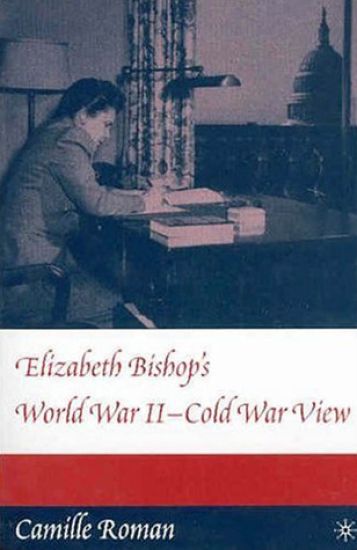
Elizabeth Bishop's World War II - Cold War View
Elizabeth Bishop's World War II-Cold War View offers the first comprehensive portrayal of the poet in mid-century America. The elusive story of Bishop's national, cultural, and literary politics during the World War II-Cold War period is finally brought into sharp focus as the book traces her life and writing from the war years spent in Key West through her tenure as the 1949-1950 national poet laureate. Our understanding of Bishop is completely reshaped by this study's unique ability to easily move back and forth between a wide-ranging cultural critique of mid-twentieth-century America and a careful, close, and chronological reading of the poet. Roman's study is ideal for students of American poetry, contemporary poetry, and American literature.